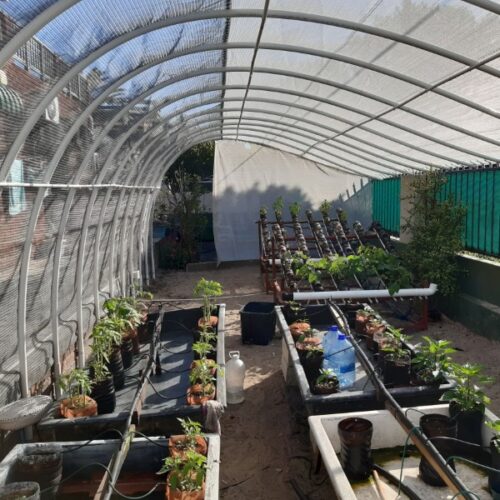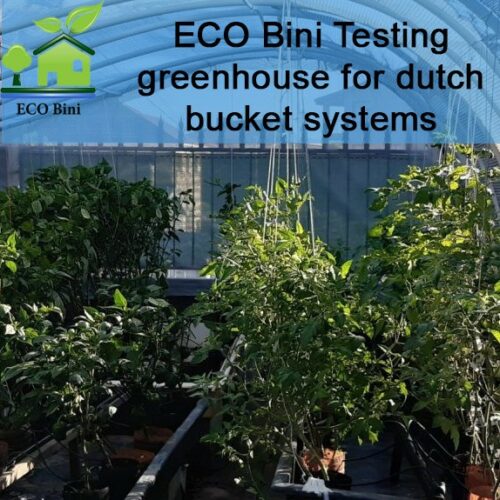
The Problem: Feeding Plants Without Chemicals, Organically.
Summary
For years, we’ve been chasing the dream of hydroponics – growing plants without soil. It sounds efficient, and it is, but the standard methods rely on chemical fertilisers. That’s fine for some, but we’re looking for a more natural way, a way that works with nature, not against it. We want the efficiency of hydroponics, but the goodness of organic. The question is, can we have both? This lab note chronicles the Journey to Vermiponics
1. Failure Modes of Organic Hydroponic Systems: Hitting a Wall.
A conventional hydroponic system works because the nutrient solution is predictable. The minerals are dissolved, the water moves through the system, the roots take up what they need, and the solution returns to the reservoir. There is very little in the water that can grow, decompose, settle or change the chemistry of the system.
Hydroponic systems are designed around biologically sterile, water-soluble nutrient chemistry, typically using mineral salts with predictable ionic behaviour and measurable electrical conductivity (EC). This allows precise control of nutrient delivery and rapid correction of imbalances.
When we tried to introduce organic inputs like compost teas, fish emulsions, or even just decomposing plant matter, things went south fast. These organic materials are teeming with life. They bring microbes, they bring insoluble organics, and they throw the whole system out of whack. We saw three main problems crop up consistently:
1. Biofilm Formation: Those microbes, bless their hearts, produce sticky layers that coat everything – pipes, emitters, pumps. It clogs things up, restricting flow and can even break the pumps
2. Nutrient Unpredictability: Organic compounds don’t ionise neatly like mineral salts, being largely insoluble. Our EC meters became practically useless, giving us readings that were misleading or just plain wrong. We had no real clue what the plants were actually getting.
3. Oxygen Depletion Zones: The solid insoluble bits of organic matter would settle at the bottom of the reservoirs, creating stagnant, anaerobic pockets. This sucked up all the dissolved oxygen, starving the roots and creating a breeding ground for nasty stuff.
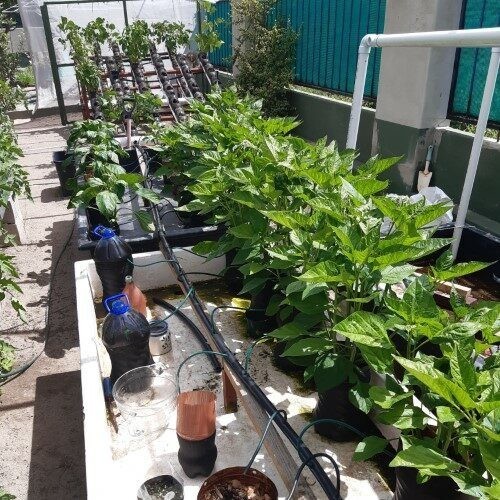
So the question became much more interesting:
Could you build a hydroponic system in which the biology did the work, without allowing that biology to take over the circulation system, and supply nutrient to the plants?
That was the beginning of the search.
2. The first experiments – The Long Road to Stability.
Our search for a solution wasn’t a straight line; it was a series of field trials, learning from our failures. My first attempts were fairly crude, because that was the point of the exercise. I was not trying to build a commercial hydroponic installation. I was trying to find out what could actually be made to work with materials that were available – in the Bundu’s.
a) Sawdust-Based Hybrid Growing Systems: A Carbon Hiccup.
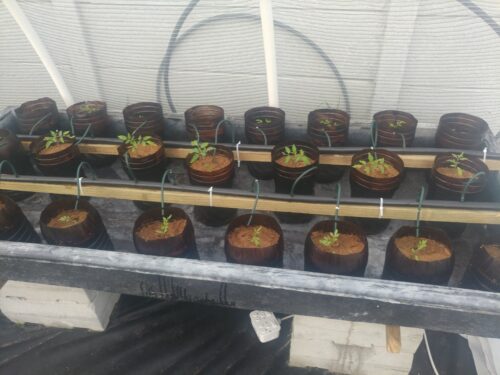
Our first real attempts involved using locally sourced pine sawdust. It was readily available, had good water retention, provided root support, and is used often in commercial tomato hydroponic setups.
We integrated it into hydroponic-style containers.
This was more an early test into replacing costly inert hydroponic media.
It worked — up to a point.
The sawdust did a decent job initially. The plants could grow, but the system was not stable enough to call it a solution. Sawdust is carbon-rich material but nitrogen poor. Microbes colonise it, decomposition begins and the balance between moisture, oxygen and biological activity becomes important. What looked like a inert growing medium was actually becoming part of the nutrient-processing system.
That was useful.
It demonstrated that the problem wasn’t necessarily that organic hydroponics was impossible. The problem was that I was trying to make one part of the system perform too many jobs at once.
The search continued.
b) Spent Mushroom Substrate (SMS) BioPonics Trials: Fungal Folly.
Next, we tried integrating spent mushroom substrate (SMS). This stuff is packed with biological activity from the fungi, and supplemented with protein. We thought we could close the loop from fungal production systems right into our hydroponics.
By this stage mushroom cultivation was already becoming part of the STS Urban Farm, so the idea of taking a waste stream from mushroom production and feeding it into food production made considerably more sense than buying another bag of commercial growing medium.
The spent substrate had already been biologically processed by fungi. It contained partially decomposed organic material and a substantial microbial population. If the mushroom had already done some of the difficult work, perhaps the plants could make use of what remained.
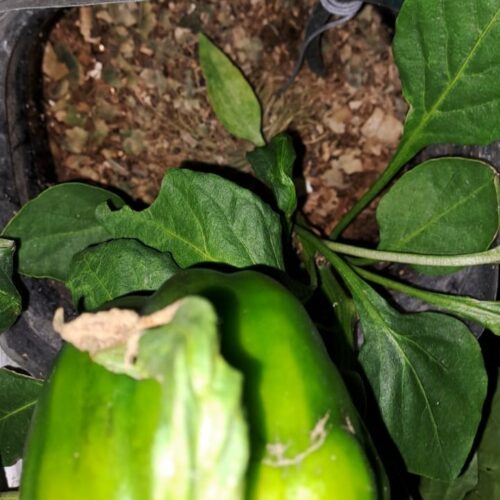
Initially, the SMS showed high biological activity and released nutrients quickly. But the system degraded even faster than with sawdust. The wet conditions in the hydroponic buckets accelerated the decomposition of the SMS. We saw:
Rapid Volume Loss: The substrate would break down and compact, reducing aeration.
Anaerobic Zones: The base of the containers became stagnant and oxygen-deprived.
Odour and Root Stress: The decomposition created unpleasant smells and stressed the plant roots.
During these trials, we noticed something interesting; earthworms – they love SMS – often the Dutch buckets would have populations in them, before even planting. At this point I never even knew about vermicomposting!
Then Covid struck, after which we went on a cross-country venture, from Gansbaai – Durban via Transkei – Pretoria – Augrabies via Tugela falls – Aggeneys – Springbok back via Wellington. In that 6800 km loop I could not get a single bag of Calcium Nitrate (like Calcinit) a hydroponic macronutrient!
The search had become a mission!
3. The “Aha!” Moment: Earthworms as Biological Processors.
Strangely I got a bag of Calcinit at the Agri Depot in Villiersdorp (hour from home), but even a greater treasure was in the boot. In a secluded valley East of Pretoria had sourced a farmer who made Vermicompost and bought a couple of bags.
From the BioPonic trials where we found worms in the SMS buckets. They had apparently found exactly what they needed in the material and had moved in without any particular invitation from me.
- At first, this was simply another observation.
- But the worms were doing something rather interesting.
- They were not merely sitting in the substrate. They were processing it.
- Material that had previously been part of a messy, biologically active mixture was passing through a completely different biological process and emerging as mature vermicompost.
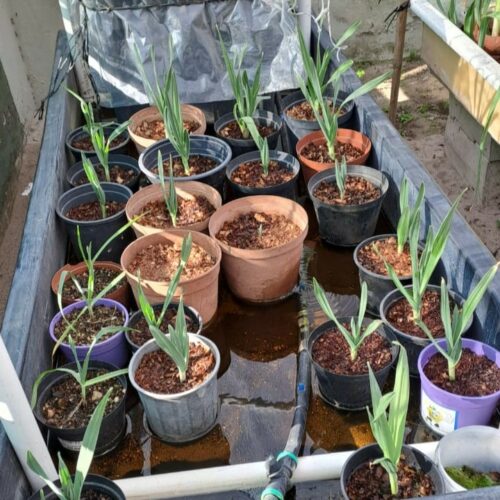
And that raised a much better question than the one I had started with.
Instead of asking:
How do I get organic nutrients into a hydroponic system?
I could ask:
What if I let biology finish processing the organic material first?
That was the turning point.
We realised we weren’t just looking for a source of organic matter; we were looking for a biological engine to process that matter.
Earthworms, we discovered, are not just passive composters; they are active biological processing units. They do three crucial things for us:
- Conversion: They take unstable organic matter and convert it into structured vermicast.
- Microbial Selection: Their digestive process helps to select for beneficial microbes and reduce the numbers of potential pathogens.
- Humus Production: They create a stable, nutrient-rich humus that’s much more plant-friendly with slow-release functionality.
Mature vermicompost is not simply another pile of organic waste waiting to decompose. Once the biological processing is complete, it becomes a remarkably stable material. Completed Vermicompost can be left in a breathable bag for a long time without going rancid – as all the Organics have already being converted into plant available nutrients and humus – it was pasteurized by the worms as I like to say – of pathogens.
This was the key insight: use earthworms to pre-process the organic material into a stable form (vermicast) before it enters the growing system. This removed the primary source of instability – uncontrolled decomposition inside the irrigation environment.
The Search had gone full cycle?
4. From Worms to VermiPonics
Once the worms appeared, the problem changed. I no longer needed to ask how to put more organic material into the hydroponic system. I needed to work out how to let the biological system process that material without putting the biological mess into the irrigation system.
That distinction turned out to be the key.
The worms could process the organic material in the root-zone environment, while the hydroponic system could still do what it was good at: move water. The two processes did not need to happen in the same place.
This led to a much simpler way of looking at the system. The biological material could sit in the growing medium, where microbes and worms could work on it, while water moved through the system separately. The roots would then have access to the moisture and soluble nutrition produced by that biological activity without requiring the entire reservoir, pump and pipework to become part of the composting process.
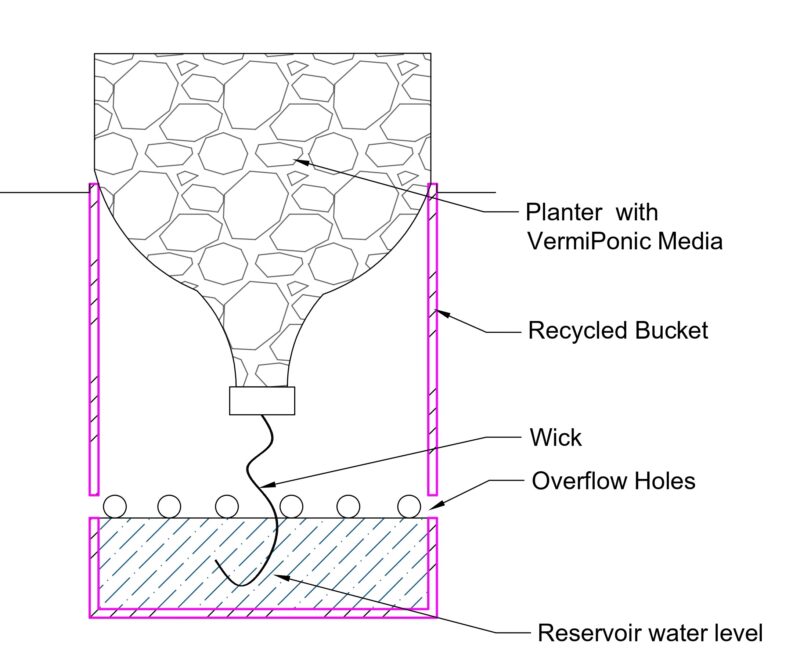
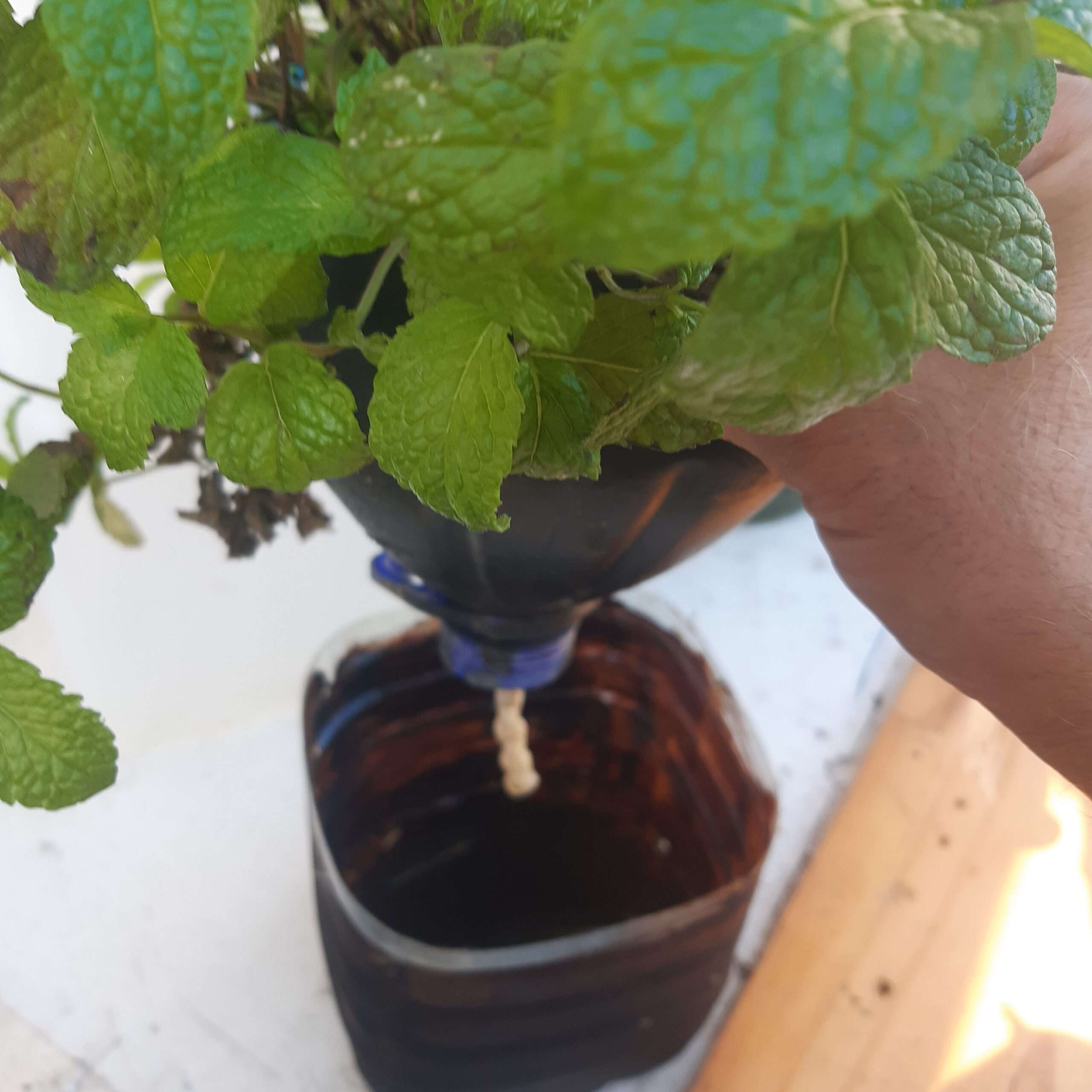
Yep it was a faceplant moment, Duh!, instead of forcing water through the media as in typical drip-feed Dutch bucket systems – we simply make it bottom feed with a wicking system. This led to our Vermiponic Planters.
5. Let the roots find the water
The experiments showed that the roots did not need to be continuously flooded with nutrient solution. They needed access to moisture, oxygen and dissolved nutrition. That opened the possibility of using the growing medium itself as the interface.
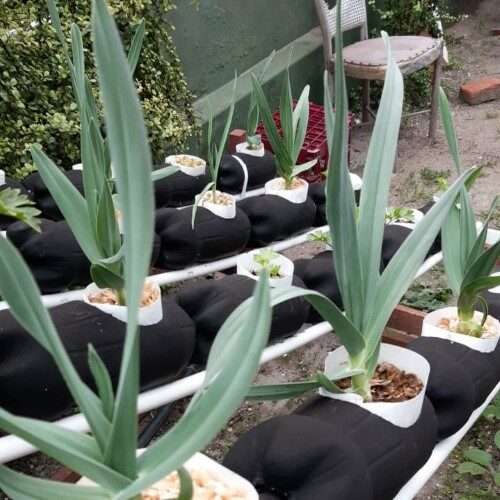
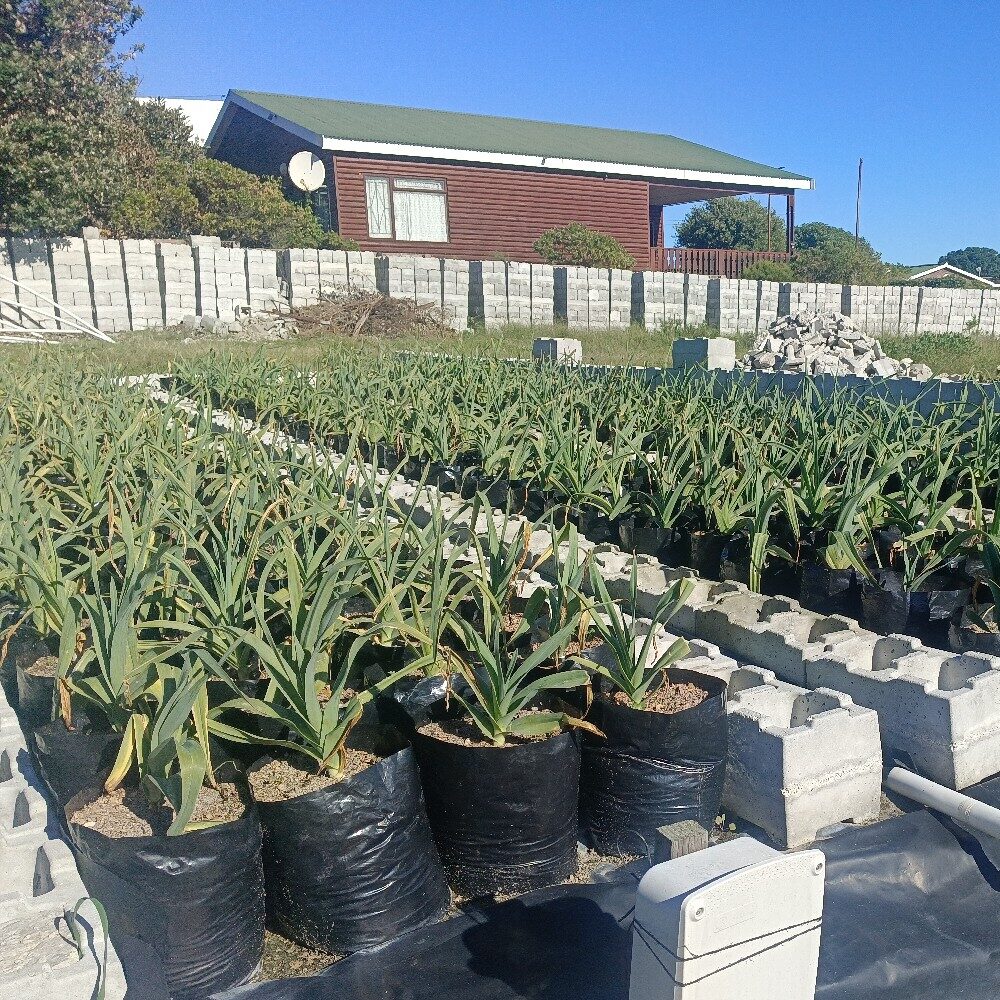
We use a passive bottom-feed irrigation method. Water is introduced at the base of the container. It moves up through the substrate via capillary rise and the plants’ own uptake. This prevents the top layers from getting waterlogged, reduces surface biofilm, and keeps the upper root zone oxygenated. The roots naturally grow down towards the moisture, creating a stable interaction zone.
This was particularly interesting in the CBB-Teq bottle systems I had already been prototyped.
The bottles naturally formed individual growing chambers. Their shape created a lower section where water could collect, while the growing medium above it remained moist rather than permanently submerged.
The result was effectively a passive bottom-feed system.
The pump no longer had to continuously deliver water to the roots. It only had to replenish the moisture reservoir periodically.
That was a major change -the hydraulic system became simpler, while the biological system became more capable.
The worms and microorganisms could work continuously in the organic growing medium. The roots could access the resulting moisture and soluble nutrition. The reservoir and irrigation lines remained comparatively clean because they were no longer being asked to carry raw organic material. This was beginning to look less like conventional hydroponics with an organic fertiliser added and more like a deliberately engineered partnership between biology and hydraulics.

System Evolution: From Hydroponics to Biological Agriculture.
This Lab Note is a snapshot of our ongoing journey. True engineering is never static. At the Sustainability Testing Station (STS), our pursuit of circular food security has systematically evolved. We’ve moved from chemically controlled hydroponics towards biologically regulated agricultural systems.

By utilising vermi-charged BAM! (Bio-Active Microbes) within our vermiponic substrate matrix, we’ve maximised nutrient bioavailability and neutralised pathogens before the media even hits the cultivation lines. This fulfils the “Organic” standard for produce.
Conventional hydroponics relies on:
- Mineral nutrient precision
- Sterile water chemistry
- External nutrient control
VermiPonics replaces this model with:
- Biological pre-processing of nutrients
- Microbial stabilisation of root environments
- Passive water delivery systems
- Reduced dependence on external chemical inputs
This shift allows nutrient availability and root environment stability to be governed by biological processes, not constant mechanical intervention. It’s a move towards a more natural, regenerative way of growing.
The original question had been:
How can I make organic nutrients work in hydroponics?
The better question became:
How can I engineer the system so that biology produces the nutrition where the plant needs it, while the hydraulic system simply supplies the water?
That is the principle behind VermiPonics.
And it was this shift in thinking — rather than any particular container, pump or recipe — that eventually carried the experiment beyond the original hydroponic system and into the much larger biological engineering framework that would become Bundu Teq.
Pasteurizing Bio-Engineers
Plant-Available Nutrients
Selective Nutrition
Bundu Teq Hub
-
STS
Elephant Garlic Start Kit | GroCormZ
Original price was: R75.R49Current price is: R49. Add to basket🌱 Produces Authentic Ajo Macho (Solo Garlic)
🌱 Encapsulated Elephant Garlic Corm Included
🦠 Terra Preta Nova Biological Grow Ball
💧 Just Plant, Water & Grow — Pointy Side Up! -
STS
Eco Bini™ Shield BAM! Biological Foliar Defense Concentrate | Natural Pest Deterrent
Original price was: R280.R195Current price is: R195. Add to basket🌱 Living microbial foliar concentrate
🧄 Contains Garlic Extract, Mint and Castile Soap
🛡 Helps deter common soft-bodied garden pests.
🐝 Bee-friendly, animal-friendly and GRAS. -
STS

Eco Bini™ BioaKt Media/Substrate Conditioner | 2000 ml
Original price was: R195.R149Current price is: R149. Add to basket🏗 Bundu-Tek additive with kelp alginates – No autoclave needed.
🏗 Alkaline pH Pasteurizer
🏗 Self-sterilizing formula
🏗Boost yields and colonizing times -
STS
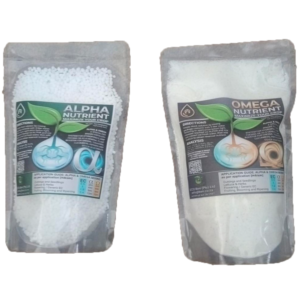
Binary Hydroponic Nutrient Kit – 2 x 5L Concentrates
Original price was: R275.R149Current price is: R149. Add to basket🌱 Makes 2 x 5L professional nutrient concentrate
🌱 Binary Alpha & Omega formula prevents nutrient lockout
🌱 Complete macro & chelated micronutrients
🌱 Professional hydroponics made simple
Socratic Questions
- Why do organic hydroponic systems fail in closed-loop environments?
- How does vermicompost stabilise nutrient availability in hydroponic systems?
- What is the difference between hydroponic nutrient solutions and biological growing systems?
- Can earthworms replace synthetic nutrient inputs in controlled environment agriculture?
- How does bottom-feed irrigation reduce biofilm formation in hydroponic systems?