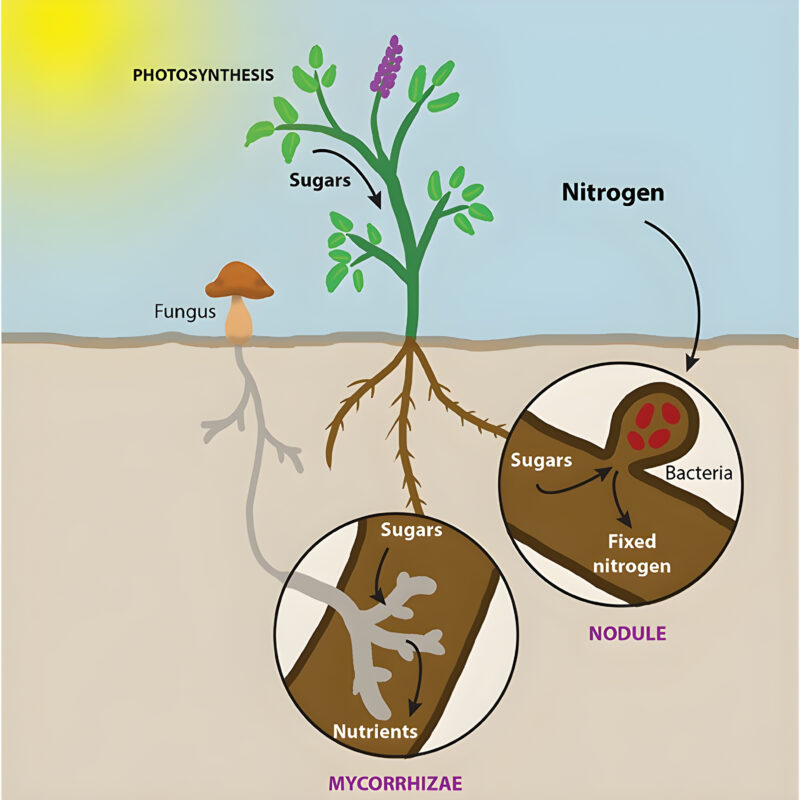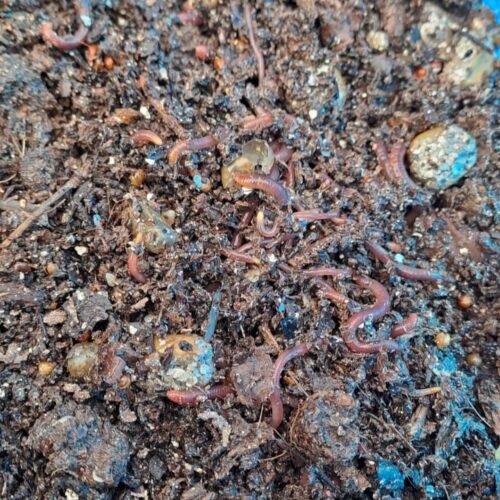
Before you can engineer a living nutrient solution, you must understand the failure modes of sterile water.
Summary
Trace the raw mechanics of the third kingdom that bridges fish waste to plant roots. We evaluate the structural physics and biological mechanics of closed-loop aquaponic systems. It analyzes the strict multi-kingdom dependency between aquaculture effluents and plant nutrient assimilation, breaks down the core structural components of active bio-filters, and maps out the evolutionary transition from vulnerable fish-dependent systems to robust, microbial-driven Bioponics.
1. Introduction: The Organic Hydroponic Conundrum
In the early phases of configuring the Sustainability Testing Station (STS), a core agronomic barrier became clear: standard hydroponics is an entirely artificial, sterile environment. While highly efficient, it relies on completely refined, mineral-grade inputs. For growers seeking sovereign, closed-loop independent production, the ultimate goal has always been “Organic Hydroponics.”
Historically, aquaponics—the symbiotic cultivation of aquatic animals and plants within a recirculating loop—was the first, and for a long time the only, soilless architecture to legally claim the “Organic” designation.
However, managing an aquaponic footprint is not simple gardening; it is a complex, delicate balancing act across three distinct biological kingdoms: Animals (Fish), Plants (Crops), and Monera (Bacteria).
To master true organic fluid systems without the extreme structural liabilities of aquaculture, we must look closely at the underlying biological mechanics of these loops.
2. The Incompatibility Crisis and the Third Kingdom
The most critical operational failure point in raw organic farming is a simple chemical mismatch: Plants cannot eat organic matter. If you introduce raw fish feces, chicken manure, or organic compost directly into a sterile water reservoir, the root zones cannot absorb it. Furthermore, raw aquaculture effluent is heavily saturated with un-ionized Ammonia (NH3) and Ammonium (NH4+), which are highly toxic to fish nervous systems and completely un-assimilable by plant vascular networks.
To unlock this closed loop, you must actively engineer a home for the third kingdom: Autotrophic Nitrifying Bacteria.
[ Raw Aquaculture Effluent: Toxic Ammonia (NH3/NH4+) ]
                         │
                         ▼  (Vector 1: Nitrosomonas Bacteria)
         [ Intersubstrate Nitrite (NO2-) ]
                         │
                         ▼  (Vector 2: Nitrobacter / Nitrospira)
[ Clean Bio-Available Plant Food: Nitrate (NO3-) ]
This multi-stage biological conversion requires stable thermodynamic conditions. While a pure mineral hydroponic reservoir can be built and stabilized in 48 hours, an organic, bio-catalyzed system can take up to 90 days to naturally establish a microbial population dense enough to balance the system’s chemistry.
3. Structural Anatomy of a Closed-Loop Bio-Array
To achieve a self-cleaning, hands-free aquatic array, the fluid path must follow a strict mechanical separation protocol. Whether managing an industrial greenhouse loop or a localized, hands-free backyard tank, the system architecture requires five key zones:
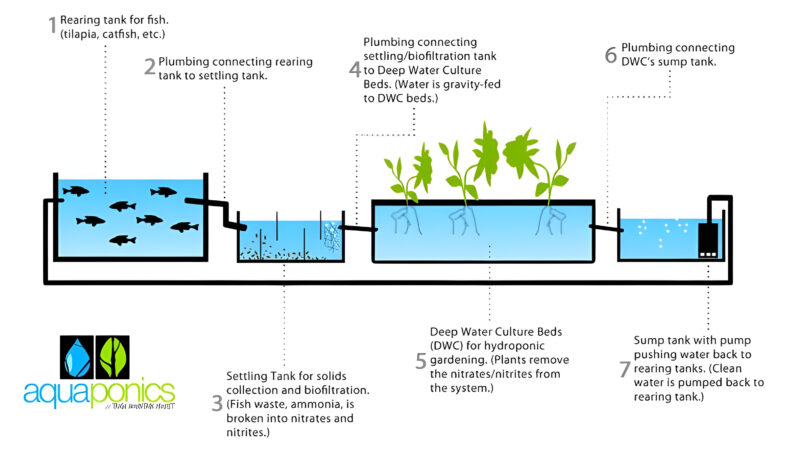
- The Rearing Tank: The core aquatic zone optimized strictly for raising and feeding fish or aquatic produce.
- Plumbing: Hands free barometric loop often used to maintain level in rearing tank and to scavenge waste from bottom of rearing tank.
- The Settling Basin (Solid Separator): A passive, low-velocity mechanical trap designed to drop out heavy uneaten food chunks, waste and sloughed biofilms before they can enter the downstream lines and choke the system.
- The Oxygenated Biofilter: The heart of the Monera kingdom. A high-surface-area, heavily aerated media bed optimized exclusively to house millions of Nitrosomonas and Nitrobacter microbes. Biofilter often mounted on plumbing from settling tank to hydroponic NFT.
- The Hydroponic Sub-System: The plant production zone (utilizing DWC, NFT or Hybrid layouts) where roots strip the highly accessible, converted Nitrates from the water column, purifying the stream.
- Piping: Overflow from the hydroponics directed to the sump.
- The Sump: The lowest physical pool in the plumbing layout, gathering clean, filtered effluent and providing a centralized safety reservoir for automated pump returns.
4. Deconstructing the “Bioponic” Sector
As commercial horticulture has evolved, the term “Bioponics” has been heavily co-opted, creating immense confusion across different international agricultural sectors:
- The Waste Streams of the East: In intensive Asian agricultural layouts, “Bioponics” often defines a highly rustic method where raw, non-composted livestock waste (such as chicken manure) is dissolved into open water channels to feed highly resilient local crops. This method is incredibly vulnerable to dangerous pathogen outbreaks.
- The Commercial Bottled Monopolies: In Western markets, brands like Terra Aquatica (a technical spin-off from General Hydroponics) registered “Bioponics” as a proprietary process. This system utilizes highly refined liquid mineral bases blended with soft organic humic fractions, allowing growers to claim an “Organically Grown” label while still relying on specialized commercial supply chains.
- The Australian Closed-Loop Sandwiches: Alternative urban farming models like Bioponica utilize a clever vertical stratification strategy:
[ Top Layer: Hydroponic Vegetation ]   ──> Strips Nutrients & Purifies Water
[ Middle Layer: Duckweed / Microflora ] ──> Fueled by Liquid Organic Tea NPK
[ Bottom Layer: Aquaculture Production ]──> Consumes Grown Duckweed Biomass5. The Fatal Flaw of Early Organics: The Electrical Charge Deficit
In the early days of running the STS, we attempted to bypass fish stocks entirely by brewing makeshift liquid organic concentrates, as found on the WWW. Recipes can be found of precise ratios of fish emulsion (for trace minerals), liquid seaweed (for potassium and auxins), and blood meal (for high nitrogen kicks) directly into a standard water column. But as we learned later this is because people were not conversant with our first Paradigm Shift: Plants cannot access nutrients in organics, it first has to be converted by Monera, typically in the Soil Biome.
A major problem of organics also is: Organic nutrients carry no electrical charge.
In modern ag-tech, field monitoring relies completely on Electrical Conductivity (EC) or Total Dissolved Solids (TDS) meters. These devices pass a micro-current through the fluid to measure the electrical resistance of ionized mineral salts (NO3–, K+, Ca2+, etc.) Because raw organic molecules are non-ionized complexes, they are completely invisible to digital meters. A reservoir can be dangerously over-saturated with raw organic compounds, yet a digital EC meter will read absolute zero—leaving the grower completely blind until the root zone suffocates, drops into an anaerobic tailspin, and kills the crop.
The STS Evolution: From Aquaponics to True Vermiponics
[Traditional Aquaponics] ---> High Animal Liability + Severe Nutrient Imbalances

                                       VS.

[Living Vermiponics]     ---> Earthworm Micro-Pasteurization + Total Ionic Clarity
Ultimately, standard fish-driven aquaponics contains a major design flaw: You must always prioritize the fish over the plants. You are locked into the specific temperature, pH, and oxygen boundaries of an animal. If you attempt to boost nutrient concentrations to match the heavy fruiting demands of a tomato crop, you instantly kill your aquaculture stock.
This structural dead-end is exactly what drove our research at the STS away from fish tanks and directly into the development of Vermiponics.
By replacing delicate aquatic animals with earthworms, we eliminate the risk of animal mortality, bypass the need for heavy mechanical bio-filters, and utilize the earthworm’s gut as a living, micro-targeted bacterial pasteurizer. This approach allows us to transform raw organic waste streams into clean, ionized, bio-available plant food with total clarity.
-
STS
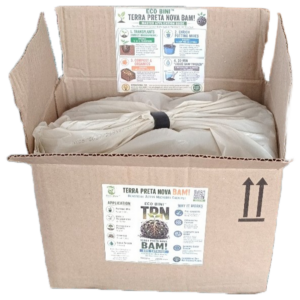
Eco Bini™ Terra Preta Nova BAM! Soil Catalyst | 5 Litre
Original price was: R340.R239Current price is: R239. Add to basket🛠️ Biologically pre-charged Terra Preta Nova Soil Catalyst
🛠️ Premium macadamia shell Granular Activated Carbon (GAC)
🛠️ Beneficial Active Microbes (BAM!)
🛠️ Zero nutrient lockout • Permanent microbial habitat • Ready to use -
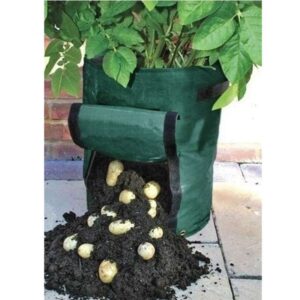
Potato Grow Bag – Heavy Duty (38L) with Harvest Flap
R149 Add to basket🌱 Grow Potatoes anywhere!
🌱 UV-resistant 38L bag with easy-harvest flap.
🌱 Reinforced handles, and aeration holes.
🌱 Ideal for small urban spaces. -
STS
Passive Organic Hydroponics Start Kit & Course | Vermiponics
Original price was: R499.R359Current price is: R359. Add to basket🛠 5L Passive Vermiponic Starter System
🛠 Includes 2 dm³ VermiCore Living Growth Medium
🛠 Free STS Practical #11 Digital Manual Included
🛠 Learn to Build & Scale Your Own Vermiponic Systems -
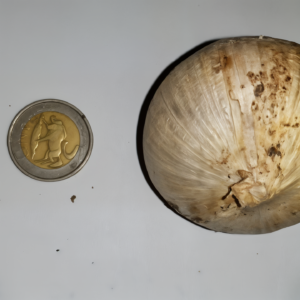
Organic Elephant Garlic Rounds (Ajo Macho / Solo Garlic)
R90 Read more🌱 Large, mild-flavoured single Ajo Macho bulbs
🌱Organic Elephant Garlic Rounds / Pearl / Solo
🌱 Vernalized for immediate planting or roasting
🌱 Seasonal – Limited Stock
Socratic Questions
how to balance nitrifying bacteria in aquaponicswhy organic nutrients cannot be measured with an ec meterbioponics vs hydroponics organic regulationshow to cycle a biofilter for organic hydroponicsdiy fish emulsion and blood meal hydroponic recipe