Unlock the secret to microbial preservation: Understand water activity and osmotic pressure.
Summary
Discover how concentrated sugar solutions put Lactic Acid Bacteria (LAB) into a dormant state. Learn why dilution reactivates these microbes, explaining LAB-X’s unique stasis and reactivation. Explore the science behind concentrated microbial preservation systems.
The Problem: Keeping Microbes Alive and Ready
When we work with beneficial microorganisms, like the Lactic Acid Bacteria (LAB) found in products such as LAB-X, a key challenge is keeping them viable and ready for action when needed. Traditional methods of storing microbial cultures often involve refrigeration or freezing, which can be energy-intensive and may still lead to a gradual loss of microbial activity over time. Furthermore, many microbial inoculants are aqueous solutions, meaning they are primarily water. This water, while essential for life, can also facilitate degradation processes if not managed carefully.
Imagine wanting to store a concentrated population of beneficial bacteria for an extended period, without them dying off, but also without them actively metabolising and consuming their stored resources.
How can we achieve this state of suspended animation? Simply mixing them with water won’t work, as it allows for normal metabolic activity, which can lead to spoilage or depletion of the microbial food source. We need a way to effectively “pause” their biological clock, making them available for reactivation at a later time. This presents a fundamental problem in microbial preservation: how to maintain viability without maintaining active metabolism.
The Principle: Water Activity, Osmotic Pressure, and Biological Stasis
The solution lies in understanding a critical concept in microbiology and food science: water activity (aw). It’s often confused with water content, but they are fundamentally different.
Water Content: This refers to the total amount of water present in a substance. For example, a piece of fresh fruit has high water content.
Water Activity (aw): This measures the biologically available water – the water that microorganisms can actually use for their metabolic processes. It’s essentially the “free” water in a system, not the water bound to solutes or trapped within structures. Water activity is a value ranging from 0 to 1. Pure water has a water activity of 1.
The key to preserving microbes lies in manipulating their environment to lower the water activity. This is achieved through osmotic pressure.
Osmotic Pressure Explained
Osmosis is the movement of water across a semi-permeable membrane (like a microbial cell wall) from an area of high water concentration (low solute concentration) to an area of low water concentration (high solute concentration). This movement is driven by the difference in water potential, often referred to as osmotic pressure.
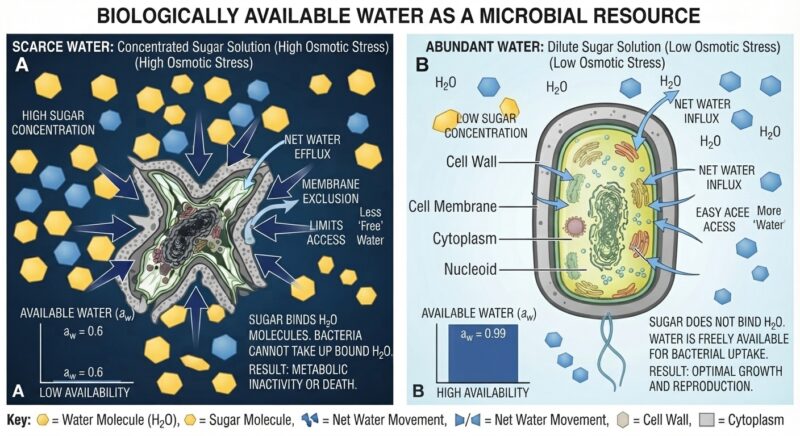
When a microbial cell is placed in a solution with a very high concentration of solutes (like sugars or salts), the water concentration outside the cell is much lower than inside the cell. To try and equalise this concentration, water is drawn out of the microbial cell and into the surrounding solution. This loss of water from the cell causes it to shrink and dehydrate.
The Stasis Effect
For Lactic Acid Bacteria (LAB), as with most bacteria, a significant reduction in their internal water content (due to high external osmotic pressure) has a profound effect:
1. Metabolic Restriction: Microbes need water to carry out their biochemical reactions. When water is scarce, their metabolic processes slow down dramatically, essentially entering a state of dormancy or stasis. Their enzymes become less active, nutrient uptake is severely limited, and reproduction ceases.
2. Preservation: This state of low metabolic activity prevents the bacteria from consuming their energy reserves or degrading their cellular components. It effectively halts their “life clock” without killing them. They are not dead, but they are not actively living either.
A practical example of this is Archaeologists that discovered sealed jars of honey over 3,000 years old in ancient Egyptian tombs, including a famous find by Howard Carter in the 1922 excavation of Tutankhamun’s tomb. This honey remained chemically preserved and famously edible.

Microorganisms, like the lactic acid bacteria (LAB) in LAB-X, need water to carry out their metabolic processes – to grow, reproduce, and function. In a honey environment, the osmotic pressure created by the high sugar concentration is so intense that it literally draws water out of any microbial cells that come into contact with it. This dehydrates the cells, rendering them dormant and unable to grow or cause spoilage. It’s not that the honey kills the microbes; rather, it creates an environment so hostile to their survival that they are essentially put into suspended animation.
Reactivation: The Reversal of Stasis
The beauty of this system is its reversibility. When the concentrated solution is diluted, the concentration of solutes outside the microbial cell decreases. This lowers the osmotic pressure, and the balance shifts. Water begins to move back into the microbial cells. As the cells rehydrate and their internal water activity increases, their metabolic processes can restart. The bacteria become metabolically active again, ready to perform their intended functions.
This principle is the foundation for concentrated microbial preservation systems. By using highly concentrated solutions of non-toxic solutes like sucrose or dextrose, we can create an environment where LAB are placed into a dormant state. When the product is diluted with water according to instructions, the osmotic stress is removed, and the bacteria are reactivated.
LAB-X: A Biological Concentrate
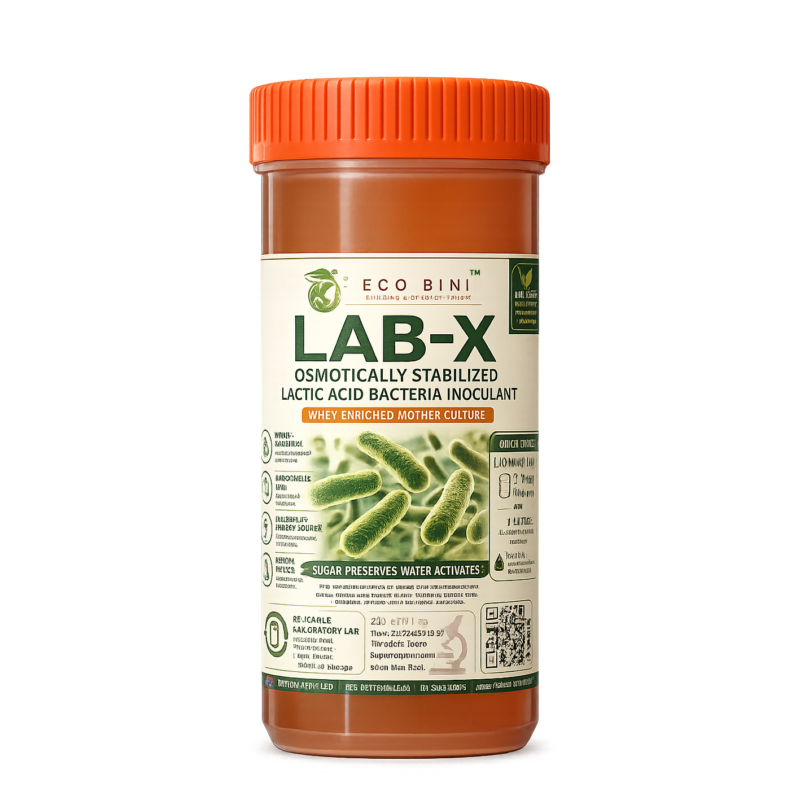
This understanding of water activity and osmotic pressure is crucial for explaining the behaviour of products like LAB-X. Unlike a standard liquid inoculant that is mostly water and contains actively metabolising microbes, LAB-X is formulated as a concentrated solution. The high concentration of solutes (like sugars) creates a high osmotic pressure environment. This pulls water away from the LAB cells, placing them into a state of stasis.
This means LAB-X doesn’t require refrigeration to maintain viability for extended periods. It’s not actively “alive” and metabolising in the same way a refrigerated liquid culture would be. Instead, it’s a concentrated biological product where the microbes are held in a metabolically restricted state, preserving their potential. When you dilute LAB-X, you are lowering the water activity and osmotic pressure, allowing the LAB to rehydrate, reactivate, and begin their beneficial work. This is why LAB-X behaves more like a biological concentrate than an ordinary aqueous microbial inoculant – its preservation mechanism is based on physical principles rather than purely biological ones like refrigeration.
Application: Concentrated Microbial Preservation Systems
The principle of using water activity and osmotic pressure for microbial preservation is applied in various fields:
1. Food Preservation:
Many traditional and modern food preservation techniques rely on lowering water activity. Drying foods (like fruits or jerky) removes water, making them shelf-stable. High sugar concentrations in jams and jellies, and high salt concentrations in cured meats, also create high osmotic pressure that inhibits microbial growth. While these methods often kill microbes, they are based on the same fundamental principle of reducing available water.
2. Microbial Inoculants and Cultures:
This is where the principle is directly relevant to LAB-X. Creating a concentrated solution allows for:
Extended Shelf Life: Products can be stored for much longer periods without significant loss of viability compared to liquid cultures.
No Refrigeration Required: This reduces logistical challenges and energy costs associated with cold chain management.
Ease of Transport: Concentrated products are lighter and less prone to damage during shipping.
Controlled Reactivation: The microbes are “on standby” until deliberately reactivated by dilution, ensuring they are active when applied.
3. Pharmaceutical and Biotechnological Applications:
Similar principles are used in preserving enzymes, vaccines, and other biological products where maintaining viability and activity is critical. Lyophilization (freeze-drying) is another method that drastically reduces water content, but concentrated solutions leverage osmotic pressure.
4. Understanding LAB-X Performance:
For users of LAB-X, understanding this principle explains:
Storage: Why it can be stored at room temperature.
Application: Why it needs to be diluted with water before use – this is the reactivation step.
Longevity: Why it remains effective over time when stored correctly.
Conclusion: Stasis Through Osmosis
Water activity is a fundamental concept that governs the life and death (or rather, the activity and stasis) of microorganisms. By manipulating the osmotic pressure of the environment, we can effectively “pause” the biological clock of beneficial bacteria like LAB. This principle allows for the creation of highly stable, concentrated microbial products like LAB-X, which can be stored for extended periods without refrigeration and reactivated on demand. Understanding that LAB-X is a biological concentrate, leveraging the physical principle of water activity to hold microbes in stasis, is key to appreciating its unique properties and ensuring its effective application. It’s a sophisticated biological preservation strategy, elegantly simple in its underlying physical mechanism.
-
STS
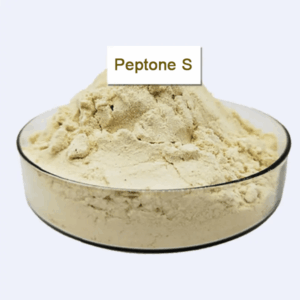
Organic Soy Peptone Powder (40g)
Original price was: R195.R165Current price is: R165. Add to basket🧫 High-purity, organic vegan soy peptone
🧫 Water-soluble nitrogen source
🧫 Ecocert Organically Certified (40g) -
STS
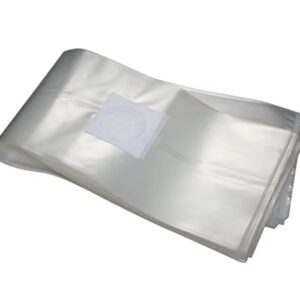
10x8x35cm Mother Spawn Bag [0.2μm Filter]
Price range: R12 through R745 Select options This product has multiple variants. The options may be chosen on the product page📦 Commercial-grade 60 Micron Polypropylene.
📦 Non-woven 0.2µm ePTFE filter patch.
📦 Maximum sterility during grain spawn production.
📦 Gusseted design – Autoclavable up to 126°C. -
STS
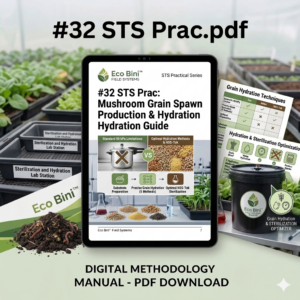
#32 STS Prac: Mushroom Grain Spawn Production & Hydration Guide (PDF Download)
Original price was: R450.R149Current price is: R149. Add to basket🧫Learn five grain hydration methods + NSS-Tek
🧫Decode no-US 80 kPa pressure cooker limitations
🧫Trichoderma / Endospore Trouble Shooting
🧫Why grain spawn hits a metabolic cliff -
STS
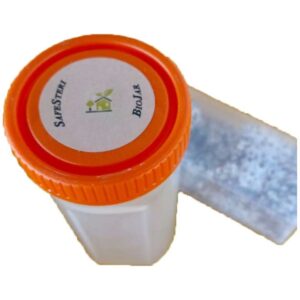
Mushroom Spawn Jar 320ml – Sterilized Sorghum Grain
Price range: R150 through R720 Select options This product has multiple variants. The options may be chosen on the product page📦 Sterilized Sorghum Grain Mother Spawn Jar
📦 320ml Reusable BioJar, Shatterproof PP5.
📦 Positive-Seal (No Gaskets).
📦 0.25μm ePTFE filter.
Socratic Questions:
1. What happens if I dilute LAB-X with something other than plain water?
2. How long does it take for LAB-X bacteria to reactivate after dilution?
3. Can extreme temperatures affect the stasis of LAB-X before dilution?
4. What specific solutes are used in LAB-X to create the high water activity?
5. Is there a risk of the LAB dying if they are left in stasis for too long?