
Smash through the “Wall of Frustration” in hydrocolloid processing, Sodium Alginate.
Summary
Master the pressure-cooked hydration method for Sodium Alginate to create rock-solid, zero-leak biological delivery systems and agricultural matrices. This laboratory brief breaks down the material science behind Sodium Alginate cross-linking. It diagnoses common execution errors—like micro-air entrapment, acid-crashing, and hard-water pre-gelling—and details the STS Pressure Cooker protocol.
1. The Material Science: Understanding Alginate Cross-Linking
Spherification is not a parlor trick; it is a precise piece of chemical engineering first utilized by the pharmaceutical industry in the 1940s to encapsulate sensitive payloads for targeted drug delivery.
The Polymer Backbone
Sodium Alginate is a natural polysaccharide extracted from brown seaweeds (kelp). In South Africa, our local Kelp (Ecklonia maxima) yields an exceptionally high raw concentration of alginate, often hitting 55% to 59% dry weight.
At a molecular level, when sodium alginate is dissolved in pure water, it forms a loose, free-flowing polymer chain. However, the moment this solution encounters divalent metal ions—specifically Calcium (Ca2+)—a dramatic structural transformation occurs. The Calcium ion has two sites so it kicks the Na+ out and interlinks two alginate strings.
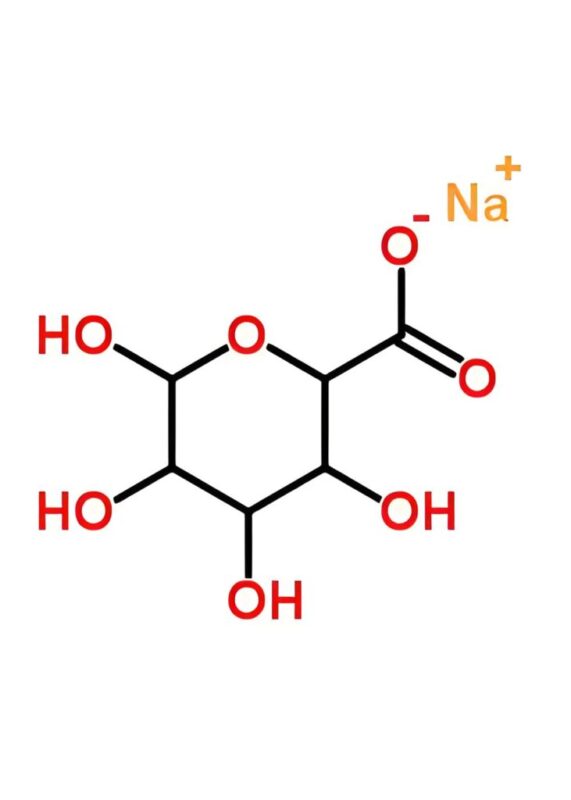
[ Free-Flowing Sodium Alginate ] + [ Calcium Ions ] ──> [ Rigid Calcium Alginate 3D Grid ]
The calcium ions ruthlessly kick out the sodium ions and lock onto the polymer chains, binding them tightly together like a molecular zipper. This creates a dense, insoluble, three-dimensional hydrogel matrix that traps whatever liquid payload you mixed into it.
2. The Three Methods of Structural Encapsulation
Depending on your target payload and timeline, you manipulate this cross-linking reaction using three operational methodologies:
- Direct Spherification (The Inside-Out Gelled Bead):
- The Logic: You mix your Sodium Alginate stock into your chosen liquid payload and drip it into a Calcium Lactate bath.
- The Catch: The “Ticking Clock.” Calcium ions continuously migrate inward toward the center of the sphere. If the bead is not utilized within 15 to 20 minutes, the reaction runs to completion and turns your liquid-centered pearl into a solid, rubbery jelly ball. Furthermore, as calcium rushes in, sodium is forced out, often pulling your valuable nutrients or flavors out into the bath water.
- Reverse Spherification (The Outward-Growing Jacket):
- The Logic: You mix your Calcium Lactate directly into your liquid payload and drop it into a Sodium Alginate bath.
- The Advantage: The reaction grows outward, creating a “Zero-Leak” protective skin. Once you pull the pod out of the bath and rinse it in clean water, the reaction halts instantly. The core stays fluid indefinitely.
- Frozen Reverse Spherification (The Moulded Matrix):
- The Logic: You mix your calcium-laced payload and freeze it solid in silicone moulds before dropping the ice blocks directly into a warm Alginate bath.
- The Advantage: This is the ultimate operational shortcut for large, complex, or low-viscosity shapes. As the outer surface of the core thaws, it builds a heavy-duty, uniform skin without breaking on surface impact.
3. Smashing the “Wall of Frustration” (Troubleshooting)
If you follow standard internet instructions and throw alginate into a high-speed blender, you will inevitably hit a wall of mechanical failures. Here is the direct science behind why those batches fail and how to fix them:
A. The Air Bubble Trap (Tadpole Tails & Floating Drops)
- The Failure: Blending alginate powder into water traps millions of microscopic air bubbles, radically dropping the density of your fluid. When you try to drip it, the lightweight drops float on the surface of your bath, splatter on impact, or form deformed “tadpoles” with long tails.
- The Fix: Eliminate the high-speed blender entirely. Use heat and pressure (detailed in Section 4) to de-gas and dissolve the solution simultaneously. Alternative add 3:1 with Dextrose to keep alginate molecules separate and allow dissolving of powder
B. The pH Acid Crash (Clumping Snot)
- The Failure: Sodium Alginate is highly sensitive to acidity. If your payload liquid has a pH below 4.0 (like vinegars, citrus juices, or certain unbuffered extracts), the polymer backbone collapses instantly upon contact. It turns into an un-mixable, curdled lump called Alginic Acid.
- The Fix: Buffer your acid line before adding the alginate. Add a precise pinch of Sodium Citrate (approx. 1/4 teaspoon per 100ml) to shift the pH into the safe zone above 4.5.
C. Hard Water Interference (Pre-Gelling)
- The Failure: Municipal tap water contains dissolved calcium and magnesium. If you mix your alginate powder into hard water, it will cross-link inside the mixing container before you even start beading, turning your master stock into a thick, pre-gelled mess.
- The Fix: Always use pure distilled water. If you have no choice but to use tap water, mix a small pinch of Sodium Citrate into the water first; it acts as a molecular scavenger to bind up and neutralize stray calcium ions before they can ruin the polymer chains.
4. The SPeS Protocol: Pressure Cooker (PC) De-Gassing
Traditional lab protocols tell you to blend your alginate and then let the bottle sit in a refrigerator for 24 hours to let the air bubbles escape. We do not have time for that. This protocol uses heat and pressure to completely hydrate and de-gas your solution in minutes.
The Fail-Safe 2% Master Stock Concentrate (500ml Batch)
This is your base stock bottle. It can be stored long-term and diluted as needed for any operational layout.
- The Initial Mix: Measure out exactly 10g of high-viscosity (800 cP) Sodium Alginate powder and 500ml of distilled water. Pour half the water into an autoclavable 1000ml Polypropylene (PP) screw-top tub. Start stirring the water with the tip of a spoon while slowly dusting the powder in. Whip it until fish-eye gel clumps form and no dry white powder remains, then pour in the rest of the water while stirring rapidly.
- The Thermal Shock: Set the lid of your PP tub one-quarter turn open (do not seal it completely, or it will explode under pressure). Place the tub inside your pressure cooker and run it for 15 minutes at 15 PSI.
- The Result: The intense heat and pressure forcefully dissolve the fish-eye clumps into a uniform solution while simultaneously driving every trapped micro-air bubble out of the liquid. You walk away with a crystal-clear, sterile, perfectly de-gassed 2% Master Stock in under an hour.

[ Clumpy, Aerated Alginate Mix ] ──> [ 15 Mins @ 15 PSI ] ──> [ Sterile, Bubble-Free 2% Master Stock ]
Dilution Ratios From Master Stock:
- For Direct Spherification Payloads: Mix 1 part Master Stock with 4 parts of your buffered liquid payload (e.g., 50ml Stock to 200ml liquid) to yield a 0.4% working solution.
- For Reverse Spherification Baths (0.5%): Mix 1 part Master Stock with 3 parts distilled water (e.g., 250ml Stock to 750ml water) in your wide-mouth dipping vat.
- Operational Tip: If your payload drop is too thin and watery to sink into a thick 0.5% Reverse bath, blend 1/4 tsp of Xanthan Gum per 250ml of your payload to increase its density and viscosity so it punches cleanly below the surface.
5. Master Field Recipes
Recipe 1: Direct Spherification (The “Balsamic Pearl”)
Best For: Low-calcium, highly acidic liquids like vinegars or fruit juices.
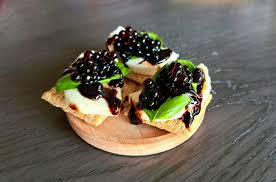
- Step 1: Add 1/4 tsp of Sodium Citrate to 200ml of Balsamic Vinegar to buffer the acid crash. Stir until dissolved.
- Step 2: Add 50ml of your 2% Alginate Master Stock into the vinegar and stir gently until uniform.
- Step 3: Prepare the activator bath by dissolving 10g of Calcium Lactate into 500ml of distilled water.
- Step 4: Draw the vinegar mix into a 50cc syringe and drip it steadily into the bath from a height of 6 to 8 cm. Let the pearls sit for exactly 60 seconds to form a skin, then scoop them out and rinse in clean water.
Recipe 2: Reverse Spherification (The “Spiced Yogurt Pod”)
Best For: High-calcium payloads or extracts where you need a permanent liquid core.
- Step 1: Blend 200ml of thin Greek yogurt with a pinch of spices and 1/4 tsp of Calcium Lactate.
- Step 2: Prepare a 0.5% Alginate bath by mixing 250ml of your 2% Master Stock with 750ml of distilled water in a wide 1000ml tub.
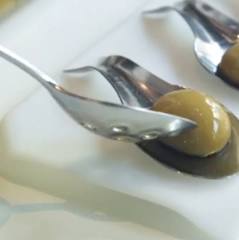
- Step 3: Use a round, deep measuring spoon to scoop up the yogurt mixture, and gently lower the spoon completely below the surface of the alginate bath, sliding the yogurt ball off. Let it sit for 2 minutes to build a durable outer jacket. Rinse in fresh water.

Recipe 3: Frozen Reverse (The “Melting Mango Ravioli”)
Best for: Large, perfectly shaped moulded portions or difficult-to-handle liquids.
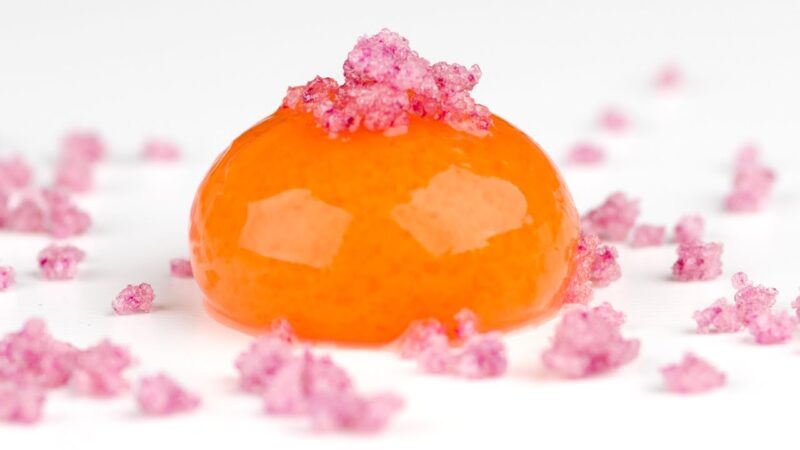
- The Preparation: Mix 200ml of mango puree with 2g (approx. 1/2 tsp) of CL.
- The Freezing: Pour the mix into silicone semi-sphere molds and freeze until solid.
- The Bath: Prepare the same 0.5% Alginate bath as the Yogurt Pod.
- The Action: Drop the frozen mango balls into the room-temperature (or slightly warmed) bath for 1–2 minutes.
- The Advantage: As the core thaws, it creates a perfect, heavy-duty skin. This is the “cheat code” for large, egg-yolk-sized ravioli.
Sneak Peek – The “Black Pearl” Molecular Inoculant
- Application: Advanced biological encapsulation and strain banking.
- The Protocol: Combine 15ml of living Liquid Culture (LC) with 5ml of an specialized Black Pearl Activator (a sterilized matrix containing 2% Alginate Stock + 0.2% ultra-fine Activated Carbon).
- The Reaction: Drip this dark mixture through a precision syringe into a sterilized Calcium Lactate bath. The result is an armored, 3D carbon-scaffold bead that shields living biological cores from environmental shock, providing multi-year preservation capabilities when stored in sterile water vials.
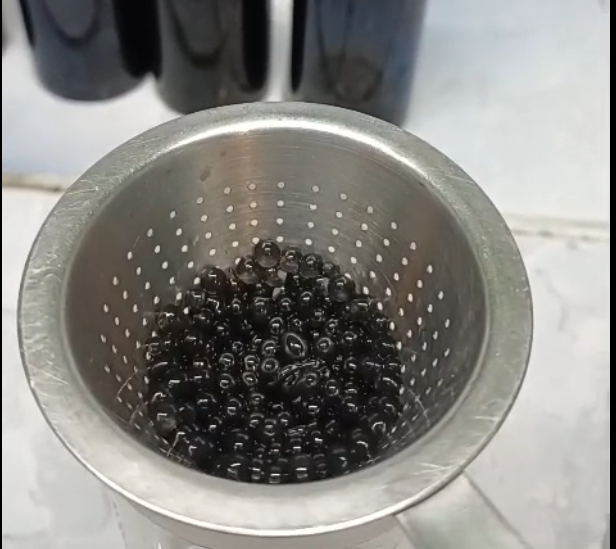
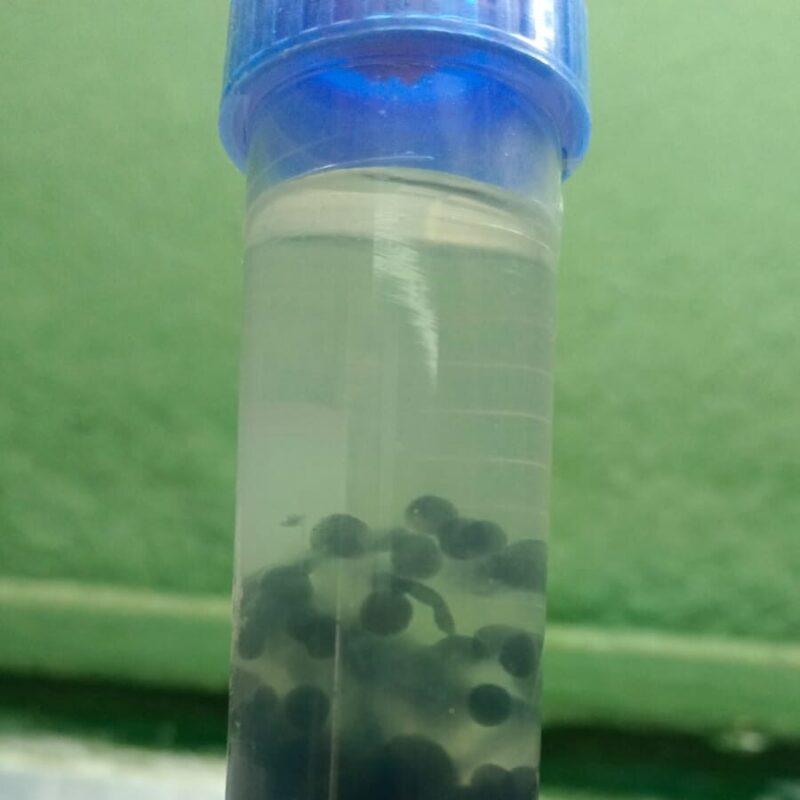
- The Protocol: Long Term storage of Black Pearl alginate spawn
- The Deployment: add spheres to 30ml/liter VermiLIN in preservation vial.
- The Result: Armored mycelial engines that show visible white growth within 4 days, protected by a 3D carbon scaffold.
- The Vault: his mimics the Bundu Castellani Method, keeping the Pearls in a high-vitality state for years.
Conclusion
By tossing out high-speed blenders and mastering the pressure-cooked hydration technique, you bypass the structural failures that plague amateur setups. Whether you are running fine-dining modifications or building carbon-shielded biological engines, a clean, bubble-free alginate matrix gives you complete engineering control over your delivery systems.
Evolutionary Leap: While this tutorial covers the basics of Spherification, we have evolved this tech for Mycology. See our Tutorial to learn about Molecular Inoculation—the zero-leak system for mushroom spawn.
Happy Creating from the STS Lab!
-
STS
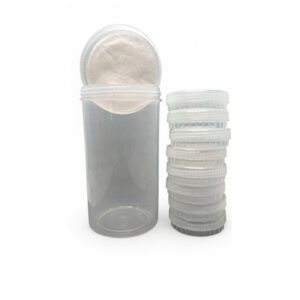
Reusable Laboratory Petri Dish System – Autoclavable Polypropylene 70mm
Original price was: R399.R195Current price is: R195. Add to basket🧫 8 × 70 mm Autoclavable Screw-Top PP Petri Dishes
📦 1000 ml Protective Polypropylene Storage Container
🦠 Medical-Grade Tyvek® 1073B Filtered Lid
♻ Reusable • Sterilizable • Laboratory Grade • Made in South Africa -
STS
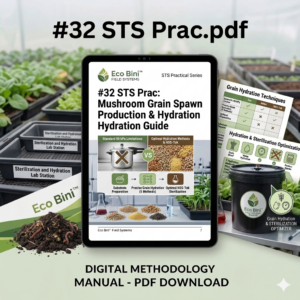
#32 STS Prac: Mushroom Grain Spawn Production & Hydration Guide (PDF Download)
Original price was: R450.R149Current price is: R149. Add to basket🧫Learn five grain hydration methods + NSS-Tek
🧫Decode no-US 80 kPa pressure cooker limitations
🧫Trichoderma / Endospore Trouble Shooting
🧫Why grain spawn hits a metabolic cliff -
STS
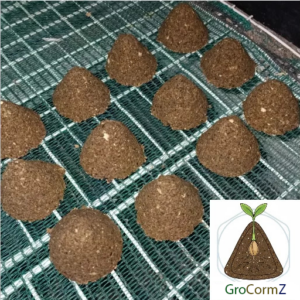
Elephant Garlic Start Kit | GroCormZ
Original price was: R75.R49Current price is: R49. Add to basket🌱 Produces Authentic Ajo Macho (Solo Garlic)
🌱 Encapsulated Elephant Garlic Corm Included
🦠 Terra Preta Nova Biological Grow Ball
💧 Just Plant, Water & Grow — Pointy Side Up! -
STS
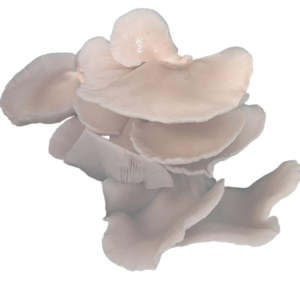
Braai White Oyster Mushroom Spawn Kit
Original price was: R1,399.R995Current price is: R995. Add to basket✔ Braai White Oyster Mushroom Spawn Kit (Pleurotus ostreatus)
✔ Includes 100 ml Living Inoculant (LI) in a reusable Culture Bottle
✔ Includes 1 kg Sterilized Sorghum Grain Spawn with SHIP & 0.2 µm PTFE filter
✔ STS-selected commercial strain producing large, meaty mushrooms ideal for the braai
Socratic Questions
how to hydrate sodium alginate without bubblespressure cooker method for dissolving sodium alginatesodium alginate spherification low ph fix sodium citratecalcium lactate vs calcium chloride spherification tastereverse spherification vs direct spherification stability