
Stop fighting with alginate! Pressure-cook your way to perfect, leak-proof spheres every time.
Summary
Forget the frustration of clumpy, leaky, or air-filled alginate creations. This lab note cracks the code on Sodium Alginate, showing you how to achieve flawless results using a simple pressure cooker. We’ll dive into the science behind it, troubleshoot common failures, and demonstrate how this technique can be used for everything from culinary delights to advanced biological encapsulation.
The Problem: The Alginate “Wall of Frustration”
Many people hit a brick wall when trying to work with Sodium Alginate. They follow online recipes, throw the powder into a blender, and end up with a lumpy, bubbly mess that either floats, splatters, or turns into a solid rubber ball. This isn’t a lack of skill; it’s a misunderstanding of the material science and the common pitfalls that sabotage the process. The goal is to create stable, controlled structures, not random globs.
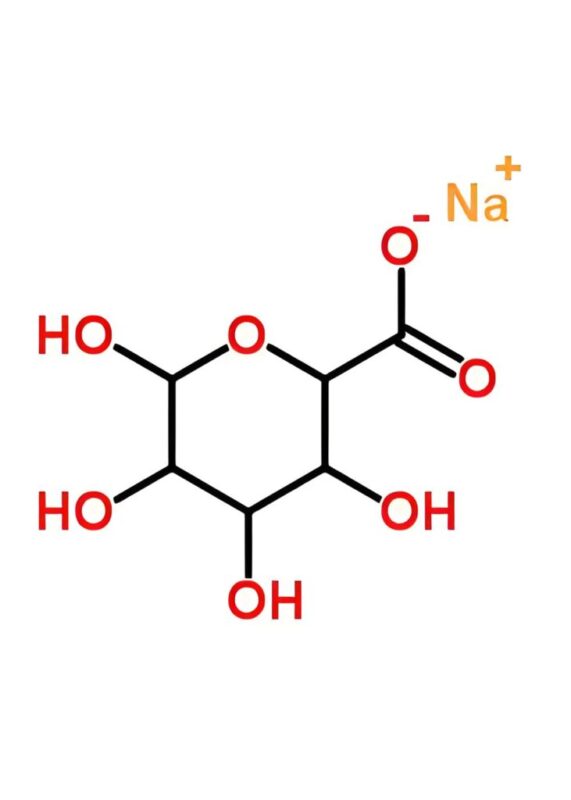
The Principle: The Magic of Cross-Linking
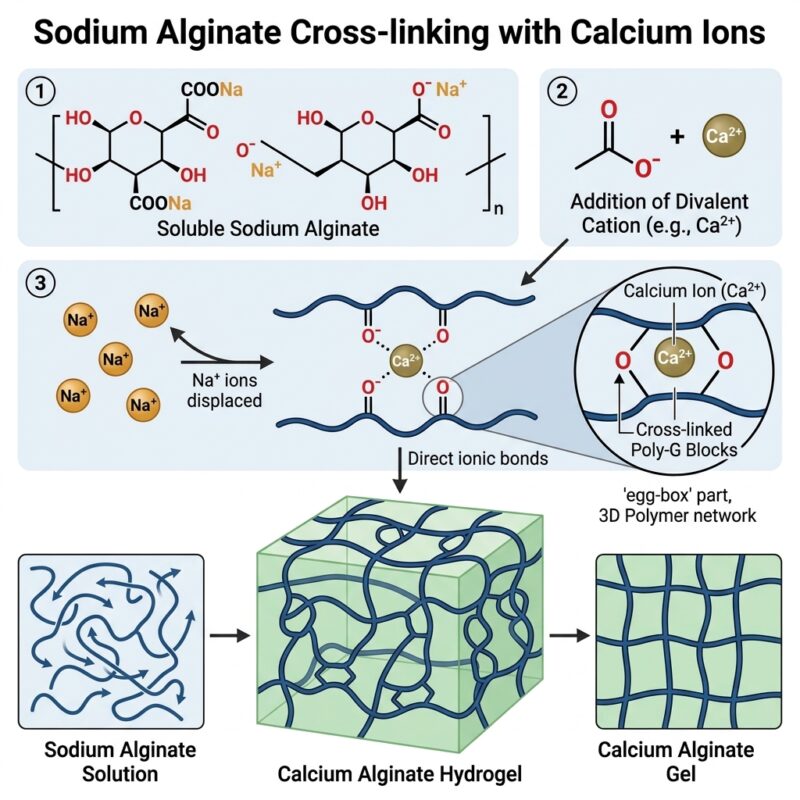
Sodium Alginate is a natural polymer, like a long chain, extracted from seaweed. In its pure form, dissolved in water, these chains are loose and free-flowing. The magic happens when these chains meet calcium ions (Ca²⁺).
Think of calcium as a tiny, two-armed organiser. It grabs onto two alginate chains at once, pulling them together and forcing out the sodium ions (Na⁺). This creates a strong, three-dimensional network, like a molecular net or a zipper, that traps whatever liquid you’ve mixed in. This process is called cross-linking, and it’s the heart of spherification.
[Free-Flowing Sodium Alginate] + [Calcium Ions] ──> [Rigid Calcium Alginate 3D Grid]
This reaction is the foundation for creating stable gels that can hold liquids without leaking.
The Application: Three Ways to Control the Reaction
We can manipulate this cross-linking reaction in three main ways, each with its own advantages:
1. Direct Spherification (The Inside-Out Gelled Bead):
How it works: You mix Sodium Alginate into your liquid payload, then drip this mixture into a bath of calcium ions.
The catch: The calcium starts cross-linking from the outside in. This reaction continues over time, making the sphere firmer and potentially turning a liquid centre into a solid jelly. It also means valuable flavours or nutrients can be lost into the calcium bath as sodium ions are exchanged. These beads are best used quickly, within 15-20 minutes.
2. Reverse Spherification (The Outward-Growing Jacket):
How it works: You mix calcium ions into your liquid payload and then drop this into a bath of Sodium Alginate.
The advantage: The gel forms from the outside in, creating a liquid-tight “skin” around your payload. Once you remove it from the alginate bath and rinse it, the reaction stops, preserving the liquid core indefinitely. This is your “zero-leak” method.
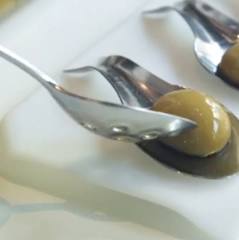
3. Frozen Reverse Spherification (The Moulded Shape):
How it works: You mix your calcium-laced liquid, freeze it into a specific shape (like a sphere or cube) using moulds, and then drop these frozen blocks into a warm alginate bath.
The advantage: This is brilliant for making large, complex shapes or for liquids that are too thin to form a stable sphere on their own. As the frozen core thaws, it builds a strong, uniform gel casing.
Smashing the “Wall of Frustration”
Troubleshooting Common Failures: Most problems with alginate stem from a few key issues:
The Air Bubble Trap (Tadpole Tails & Floating Drops):
The Problem: Using high-speed blenders whips millions of tiny air bubbles into your alginate solution. This makes the mixture less dense, causing the drops to float on the bath surface, splatter, or form those annoying “tadpole” shapes with long tails.
The Fix: Ditch the blender! The solution is to use heat and pressure to dissolve the alginate and drive out the air simultaneously. We’ll cover this in the SPeS Protocol.
The pH Acid Crash (Clumping Snot):
The Problem: Sodium Alginate is sensitive to acid. If your liquid has a pH below 4.0 (like citrus juices or vinegars), the alginate chains collapse and clump up into an unworkable, snot-like mess.
The Fix: You need to buffer the acidity before adding the alginate. Adding a small amount of Sodium Citrate (about 1/4 teaspoon per 100ml of liquid) will raise the pH to a safe level (above 4.5) and prevent this collapse.

Hard Water Interference (Pre-Gelling):
The Problem: Ordinary tap water contains calcium and magnesium. If you try to dissolve alginate powder in hard water, it starts cross-linking inside your mixing container before you even get to the bath, turning your master stock into a thick, useless gel.
The Fix: Always use distilled water, or Low EC bottled water. If you must use tap water, add a pinch of Sodium Citrate first. It acts like a molecular shield, grabbing onto the stray calcium ions and preventing them from messing with your alginate.
The SPeS Protocol: Pressure Cooker Hydration
Forget waiting 24 hours for air bubbles to escape. This method uses heat and pressure to get perfect, bubble-free alginate solution in minutes.
The Fail-Safe 2% Master Stock Concentrate (500ml Batch):
This is your go-to base. Store it, dilute it as needed.
1. The Initial Mix: Get 10g of high-viscosity Sodium Alginate powder and 500ml of distilled water. Pour half the water into a heat-proof, sealable tub (like a polypropylene food container). Slowly sprinkle the alginate powder into the water while stirring. Keep stirring until it forms “fish-eye” clumps and there’s no dry powder left. Then, add the rest of the water and stir rapidly.
2. The Thermal Shock: Loosely screw the lid on the tub – just a quarter turn, not sealed tight, or it could explode. Place the tub inside your pressure cooker. Run it for 15 minutes, do not vent – allow to cool with stove off.
3. The Result: The heat and pressure force the alginate to dissolve properly and drive out all the air bubbles. You get a crystal-clear, sterile, perfectly de-gassed 2% master stock in under an hour.
[Clumpy, Aerated Alginate Mix, ‘Fish-eyes’] ──> [15 Mins @ 15 PSI] ──> [Sterile, Bubble-Free 2% Master Stock]
Dilution Ratios:
For Direct Spherification Payloads: Mix 1 part Master Stock with 4 parts of your buffered liquid payload (e.g., 50ml Stock + 200ml liquid) for a 0.4% working solution.
For Reverse Spherification Baths (0.5%): Mix 1 part Master Stock with 3 parts distilled water (e.g., 250ml Stock + 750ml water) in a wide container.
Tip for Thin Payloads: If your payload is too watery to sink properly in a reverse bath, mix in about 1/4 teaspoon of Xanthan Gum per 250ml of payload to thicken it.
Master Field Recipes
Here are some tried-and-tested recipes:
Recipe 1: Direct Spherification (The “Balsamic Pearl”)
Best for: Acidic liquids like vinegars or fruit juices.
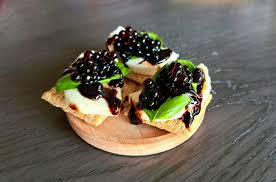
1. Buffer: Add 1/4 tsp Sodium Citrate to 200ml Balsamic Vinegar. Stir well.
2. Mix: Gently stir 50ml of your 2% Alginate Master Stock into the vinegar.
3. Bath: Dissolve 10g Calcium Lactate in 500ml distilled water.
4. Drip: Use a syringe to drip the vinegar mix into the bath from about 6-8 cm high. Let the pearls sit for 60 seconds, then scoop and rinse in clean water.
Recipe 2: Reverse Spherification (The “Spiced Yogurt Pod”)
Best for: High-calcium payloads or when you need a permanent liquid core.
- Payload: Blend 200ml thin Greek yogurt with spices and 1/4 tsp Calcium Lactate.
- Bath: Mix 250ml of your 2% Master Stock with 750ml distilled water in a wide tub.
- Form: Use a spoon to scoop the yogurt mix, then gently lower the spoon into the alginate bath and slide the yogurt off. Let it form a jacket for 2 minutes, then rinse.

Recipe 3: Frozen Reverse (The “Melting Mango Ravioli”)
Best for: Large, perfectly shaped portions or tricky liquids.
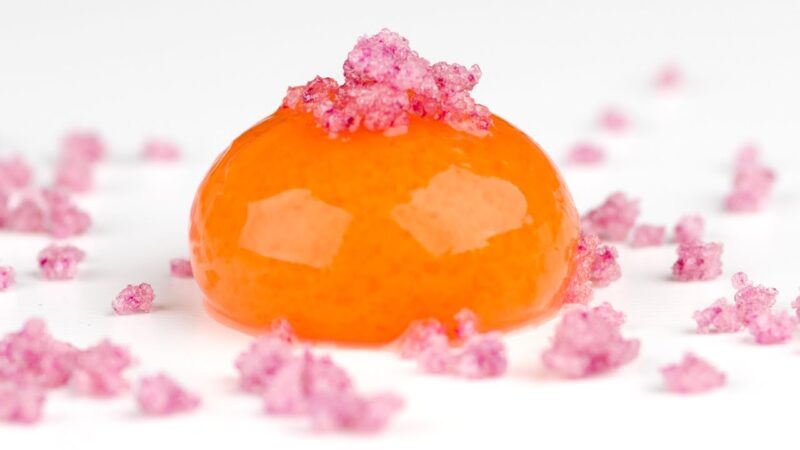
1. Prepare: Mix 200ml mango puree with 2g (approx. 1/2 tsp) Calcium Lactate.
2. Freeze: Pour into silicone moulds (like semi-spheres) and freeze solid.
3. Bath: Use the same 0.5% Alginate bath as Recipe 2.
4. Action: Drop the frozen mango blocks into the bath for 1-2 minutes. The core thaws and forms a perfect, strong skin.
Advanced Application: Molecular Inoculation (The “Black Pearl”)
This is where it gets serious. We’ve adapted this technology for mycology – creating incredibly stable biological delivery systems.
The Concept: Encapsulate living biological material (like mushroom liquid culture) in a protective, leak-proof sphere.
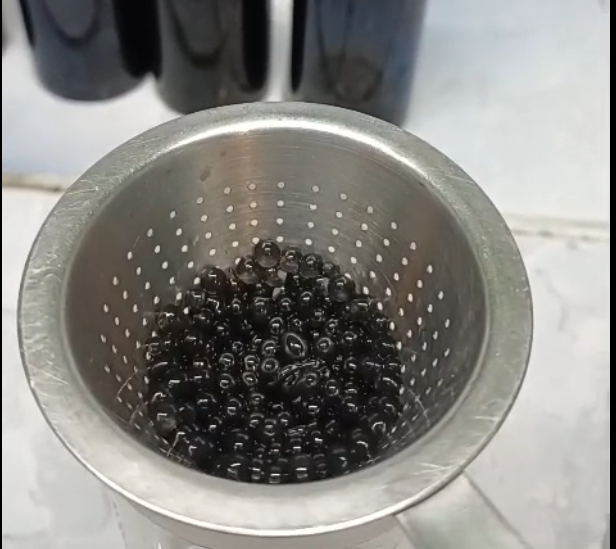
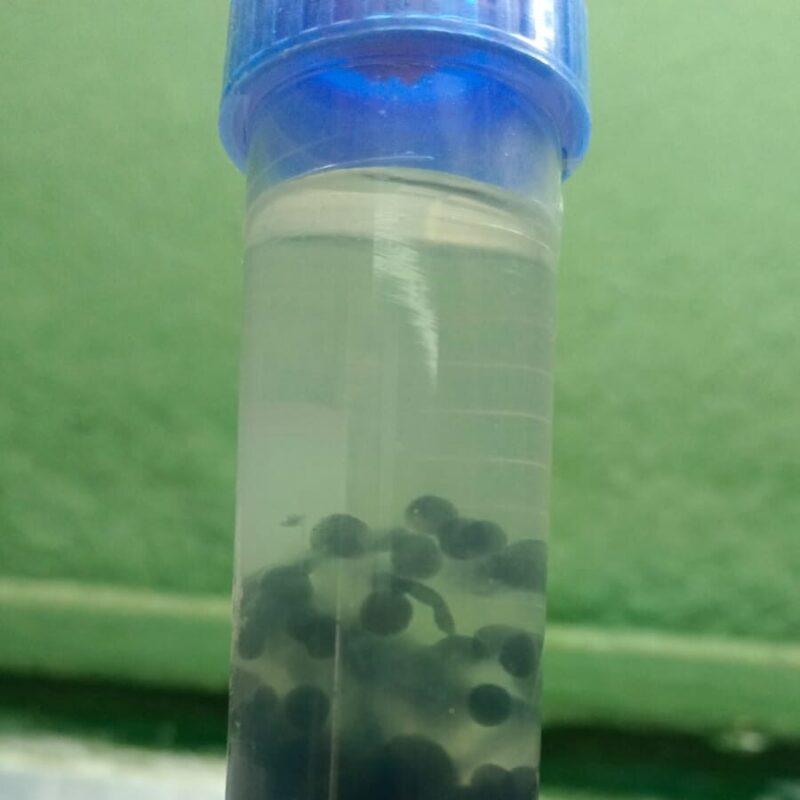
The “Black Pearl” Mix: Combine 15ml of living Liquid Culture (LC) with 5ml of a special “Black Pearl Activator.” This activator is a sterile mix of your 2% Alginate Master Stock and ultra-fine Activated Carbon.
The Reaction: Drip this dark mixture into a sterile Calcium Lactate bath. You get an armored, 3D carbon-scaffold bead that shields the living core.
The Result: These “Black Pearls” can preserve biological strains for years when stored in sterile water. We’ve seen visible mycelial growth within 4 days of inoculating them. This mimics the Bundu Castellani Method for long-term storage.
Conclusion: Engineering Control with Alginate
By ditching the blender and mastering the pressure cooker method, you bypass the common failures and gain complete control over your alginate creations. Whether you’re aiming for a gourmet dish or a robust biological delivery system, a clean, bubble-free alginate matrix is the key. This technique opens doors to precise material engineering, from the kitchen to advanced agricultural and mycological applications.
Happy Creating from the STS Lab!
-
STS
Elephant Garlic Start Kit | GroCormZ
Original price was: R75.R49Current price is: R49. Add to basket🌱 Produces Authentic Ajo Macho (Solo Garlic)
🌱 Encapsulated Elephant Garlic Corm Included
🦠 Terra Preta Nova Biological Grow Ball
💧 Just Plant, Water & Grow — Pointy Side Up! -
STS

Eco Bini™ BioaKt Media/Substrate Conditioner | 2000 ml
Original price was: R195.R149Current price is: R149. Add to basket🏗 Bundu-Tek additive with kelp alginates – No autoclave needed.
🏗 Alkaline pH Pasteurizer
🏗 Self-sterilizing formula
🏗Boost yields and colonizing times -
STS
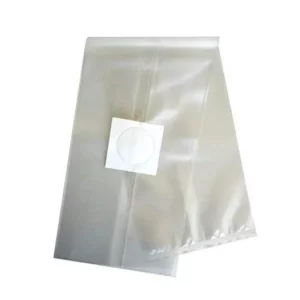
20x12x50 cm Gusseted Spawn Bag [0.2μm Filter]
Price range: R23 through R1,760 Select options This product has multiple variants. The options may be chosen on the product page📦 Commercial-grade 60 Micron Polypropylene.
📦 Non-woven 0.2µm ePTFE filter patch.
📦 Maximum sterility during grain spawn production.
📦 Gusseted design – Autoclavable up to 126°C. -
STS
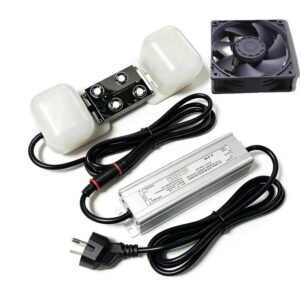
STS 2kg/h Industrial 4-Head Ultrasonic Humidifier Kit
Original price was: R4,599.R3,499Current price is: R3,499. Made to Order🧫Industrial 4-head 24/7 mist output
🧫Stainless steel encased discs for durability
🧫Waterproof power for safety
🧫HDPE floaters for optimal depth
🧫Waterproof 220V High-flow Axial Fan
Socratic Questions
how to hydrate sodium alginate without bubblespressure cooker method for dissolving sodium alginatesodium alginate spherification low ph fix sodium citratecalcium lactate vs calcium chloride spherification tastereverse spherification vs direct spherification stability