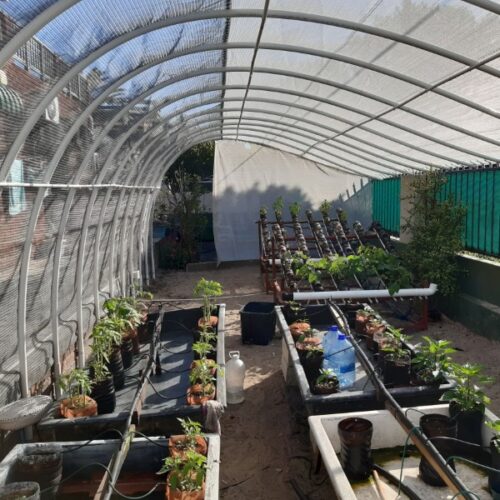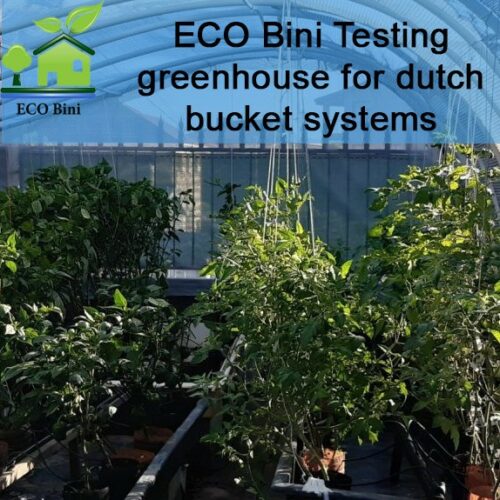
Reuse plastic waste into thriving hydroponics! Build high-yield Dutch Bucket arrays from recycled 5L bottles.
Summary
This Lab Note details the mechanical conversion of everyday plastic containers into high-efficiency, drip-irrigated Dutch Bucket (Bato) configurations. Explore the fluid mechanics of the bottom-draw barometric overflow loop, which creates a vital internal water buffer to shield crops during load-shedding. Discover crucial STS field modifications, including leak-free friction pipe fitting, root-clogging prevention with internal grow bag liners, and thermal reservoir management for abundant, sustainable harvests.
High Costs, Grid Instability, and Environmental Waste
Hydroponics offers significant advantages in terms of growth speed, yield, and water efficiency. However, the perceived high entry cost of commercial systems and the environmental impact of new plastic components often deter home growers and small-scale operations. Beyond the financial and ecological barriers, growers in regions like South Africa face the critical challenge of grid instability and load-shedding. Traditional hydroponic systems, particularly those reliant on continuous pump operation, are vulnerable to power outages, which can quickly lead to plant stress, nutrient deficiencies, and even catastrophic crop loss due to root desiccation.
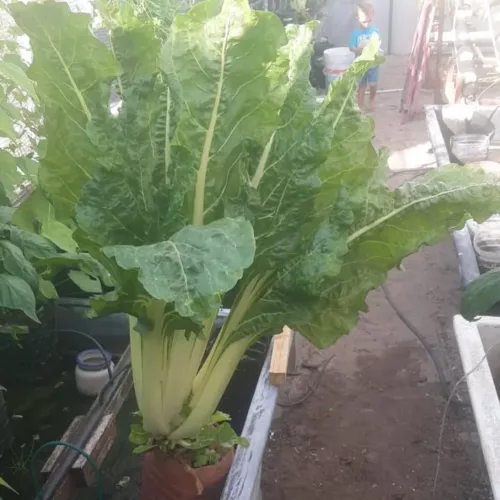
Many existing DIY hydroponic guides fail to address these real-world constraints, leaving growers exposed to the risks of power interruptions and the ongoing expense of new materials. The problem, therefore, is multifaceted: how to make advanced hydroponic techniques like the Dutch Bucket system not only affordable and environmentally responsible through recycling, but also resilient against unpredictable power supply, ensuring continuous plant health and productivity. We need a system that thrives on repurposing and ingenuity, providing a buffer against external disruptions while promoting sustainable cultivation.
Resilient Recirculation with an Integrated Barometric Buffer

The Dutch Bucket system, historically known as the Bato Bucket system, is a specialized drip-irrigation framework renowned for its efficiency and adaptability.
Its core principle lies in providing individual plants with a consistent supply of nutrient-rich water while conserving resources through a recirculating design.
However, the STS Dutch Bucket takes this a step further by integrating a critical design feature: the bottom-draw barometric overflow loop, which creates a permanent internal water buffer.
Here’s a breakdown of the mechanical architecture and fluid dynamics:
- Nutrient Cycling & Electrical Efficiency: Unlike systems requiring continuous, 24-hour water circulation, the Dutch Bucket operates on an intermittent cycle. A submersible pump in a central reservoir delivers fresh, highly oxygenated nutrient solution via microjets to the top of the growing medium in each bucket.
- Internal Overflow Drain: Each Dutch Bucket incorporates an internal overflow drain mechanism, typically a siphon elbow, positioned 25mm to 40mm above the floor of the container. This crucial component creates a permanent, shallow internal nutrient reservoir at the base of the root zone.
- Bottom-Draw Siphon Action: As the nutrient solution is pumped into the bucket and the water level rises past the internal baseline, hydrostatic pressure triggers a bottom-draw siphon through a specialised barometric U-loop or 90° elbow. This action is key: it actively pulls old, stagnant, de-oxygenated fluid from the absolute bottom of the bucket and flushes it out into a shared drain manifold, simultaneously replacing it with fresh solution from the top. This ensures constant renewal and oxygenation of the root zone.
- Load-Shedding Resilience: When the pump cycles off (due to a timer or power outage), the critical 25-40mm moisture pool remains behind in each bucket. This internal reservoir keeps deep root networks hydrated for hours—or even days—during extended grid failure or load-shedding blocks, providing an invaluable buffer against environmental stress.
This ingenious design offers exceptional advantages:
- Water and Nutrient Conservation: The recirculating nature, combined with intermittent pumping, significantly reduces consumption.
- Individualised Plant Care: Separate containers simplify pest and disease management, preventing widespread contamination.
- Optimal Root Environment: The consistent drip feeding, combined with the bottom-draw siphon ensuring fresh, oxygenated water, promotes vigorous root growth and reduces the risk of root rot.
- Scalability and Flexibility: The modular design allows for easy expansion and customisation of plant spacing.
- Unparalleled Resilience: The built-in water buffer makes the system robust against power interruptions, a vital feature for growers in unstable grid environments.
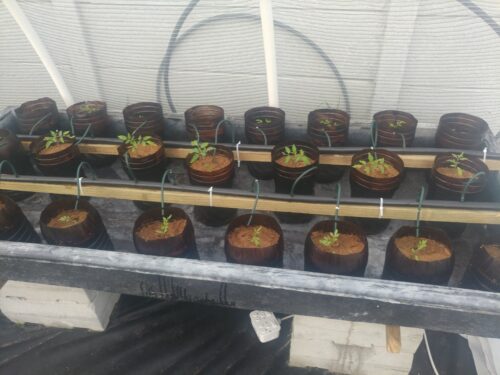
The Dutch Bucket system, particularly with the STS modifications, is ideally suited for larger, heavy-feeding, and vining plants such as tomatoes, English cucumbers, sweet peppers, and squash, offering a practical, efficient, and resilient method for achieving high yields.
Application: Building Your Recycled, Resilient Dutch Bucket System
The STS Dutch Bucket system leverages the ingenuity of repurposing everyday items into a highly productive and resilient hydroponic garden. This approach dramatically cuts costs and minimises environmental impact, while integrating solutions for common field challenges.
Core Materials required:
- 5-litre square water bottles: Ideal for annual herbs and smaller crops due to their manageable size.
- 9L to 20L buckets/drums: Required for large perennials, heavy vine crops (like tomatoes and cucumbers), and to provide a more stable root environment.
- Drainage Manifold: 50mm (2-inch) PVC pipe, running the full length of your system array, slightly sloped towards the main nutrient reservoir. An alternative which we use is just to place the buckets in a geyser drip tray that collects the water and funnels to single outlet over reservoir.
- Feeder Loop: 20mm (1-inch) Class 1 HDPE black agricultural pipe for the main feed line, 5mm microjet feeder lines for individual buckets, and a reliable mechanical timer.
- Submersible Pump: Calibrated to deliver low-pressure, intermittent volume across your total bucket count.
- Sterile Media Support: Pure coarse perlite, washed expanded clay (LECA), or a gravel base layer topped with porous aggregate.
- Thermal Reservoir: A larger, opaque plastic container (20-50 litres or more) to serve as your main nutrient reservoir – this get buried in the ground to keep thermally stable and prevent root rot.
Assembly Instructions (Step-by-Step DIY Construction Blueprint):
1. Container Preparation: Thoroughly scrub and clean your recycled buckets or bottles. If using transparent 5L water bottles, slice off the top neck shoulder. Crucially, coat the entire exterior with a thick layer of white acrylic waterproofing paint (such as Super Laykold). This absolute light barrier is mandatory to prevent root-killing green algae blooms.
- 2. The Overflow Outlet: Drill a precise hole in the side of each bucket. The bottom lip of this hole must rest exactly 25mm (1 inch) above the internal floor for 5L bottles, or 40mm above the floor for larger 20L drums. This sets the level of your internal water buffer.
- 3. The Leak-Free Piping Secret (Friction Fit): Traditional rubber grommets often warp, degrade, and leak along thin-walled recycled plastics. For a bulletproof, watertight seal without toxic chemical glues, drill your hole slightly smaller than your 20mm drainage pipe. Force the pipe through using a tight friction-fit. If minor weeping occurs, seal the external joint using raw beeswax.
- 4. The Barometric Loop Assembly: On the inside of the bucket, connect two PVC elbows and a short pipe length to form a downward-facing U-shaped barometric siphon loop. The open intake of this internal loop must sit 5mm above the absolute floor of the bucket to ensure it pulls fluid from the bottom stratum, removing stagnant water effectively.

5. Manifold Alignment: Arrange your buckets along a sturdy frame or stand, ensuring the entire array is sloped slightly towards your main nutrient reservoir. Direct each bucket’s external 20mm drainage stub straight into the top of the common 50mm PVC main drain line. Ensure all connections are watertight.
6. Feeder Line Setup: Place your submersible pump inside the main nutrient reservoir. Connect the pump to your 20mm HDPE main feed line. Run this feed line along the top of your row of buckets.
7. Drip Line Installation: Attach 5mm microjet feeder lines from the main feed line to each bucket, securing them with emitters that direct the nutrient solution onto the growing medium.
8. Fill and Plant: Fill your prepared buckets with your chosen growing medium (e.g., perlite). Transplant your seedlings or rooted cuttings into net pots placed in the bucket lids or directly into the medium.
9. System Test: Fill your reservoir with water and your chosen hydroponic nutrient solution. Turn on the pump and meticulously check for leaks across the entire system. Observe the drip rate and ensure all buckets are receiving solution and draining correctly into the return manifold and back to the reservoir.
4. Operational Maintenance & STS Field Secrets
- The Inner-Bucket Root Management Strategy: Plant roots are aggressive moisture seekers. In 5L containers, they can rapidly fill the bucket and choke the barometric loop, leading to catastrophic overflow.
- STS Solution: Insert a perforated grow bag or a perforated 40mm pipe section around the barometric loop suction. This acts as a screen, preventing roots from directly entering the siphon. It also allows you to easily lift the entire plant out of the housing to inspect, trim, and manage wandering roots before they cause a block.
- Thermal Reservoir Optimization: High water temperatures drastically reduce dissolved oxygen levels, creating ideal conditions for destructive root rot pathogens like Pythium.
- STS Solution: Dig a trench and bury your main nutrient reservoir directly into the ground in a heavily shaded zone. The natural thermal mass of the earth acts as an insulation jacket, stabilising liquid temperatures within the ideal 18°C to 24°C window, regardless of harsh summer peaks.
- Timer & Nutrients Tuning: Due to the built-in lower liquid buffer, continuous pumping is highly inefficient and unnecessary.
- Pumping Schedule: Configure your mechanical timer to run the pump for 15 minutes every 3 hours during peak summer, and dial it back to 15 minutes every 6 hours during winter. Adjust based on plant size and environmental conditions.
- Nutrient Management: When charging the system with our Binary Concentrate Alpha and Omega DIY Kit, always initiate seedlings at a low Electrical Conductivity (EC) range. Gradually step up nutrient concentration as vegetative canopy increases, reaching full strength only when the crop begins heavy flowering and fruiting. Regularly check and adjust pH (optimal 5.8-6.3) and EC.
Conclusion: Cultivating Sustainability, Resilience, and Abundance
The STS Dutch Bucket Hydroponic system, meticulously designed with recycled materials and enhanced with critical field modifications, stands as a powerful testament to sustainable innovation. By repurposing everyday 5L bottles and larger buckets, we not only drastically reduce waste but also make advanced, high-yield hydroponic techniques accessible and resilient against real-world challenges like load-shedding.
This system provides an incredibly robust and electrically efficient platform for cultivating large, heavy-feeding, and vining plants with impressive yields. The ingenious barometric overflow loop ensures a vital internal water buffer, safeguarding crops during power outages. Furthermore, STS field secrets like leak-free friction pipe fitting, internal grow bag liners for root management, and thermal reservoir optimisation address common operational pitfalls, ensuring system longevity and plant health.
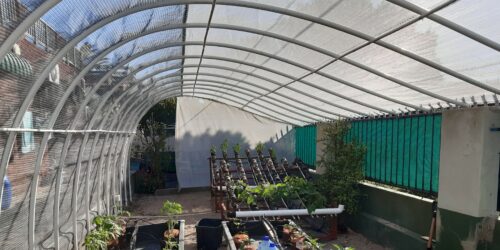
Embracing the recycled STS Dutch Bucket system is more than just a gardening technique; it’s a practical, impactful step towards a more sustainable and self-sufficient future. It empowers home growers, urban farmers, and educational initiatives to:
- Maximise Resource Utilisation: Give new life to plastic containers, significantly reducing landfill waste and the demand for virgin materials.
- Enhance Resilience: The integrated water buffer provides crucial protection against grid instability, ensuring continuous plant hydration and growth.
- Optimise Efficiency: Achieve superior yields with significantly reduced water and nutrient consumption, thanks to the recirculating design and intermittent pumping.
- Promote Self-Reliance: Cultivate fresh, healthy produce at home, fostering food security and reducing reliance on external supply chains.
- Inspire Innovation: Demonstrate that effective, high-tech gardening doesn’t require expensive, new equipment, but rather ingenuity, resourcefulness, and a deep understanding of fluid dynamics and plant needs.
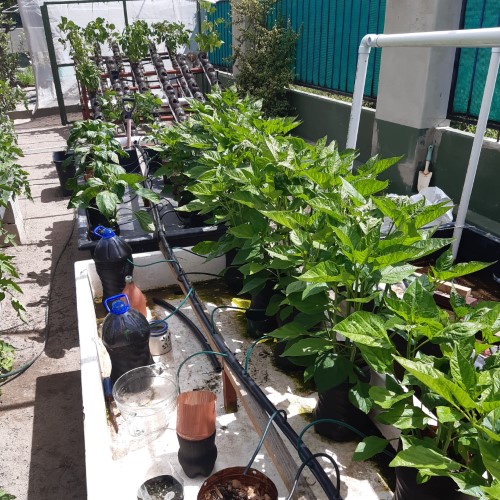
The STS Dutch Bucket system proves that with a bit of creativity, engineering insight, and a commitment to sustainability, anyone can establish a thriving, eco-friendly hydroponic garden that delivers abundant harvests and contributes positively to both their household and the planet. This innovative adjustment, especially the use of grow bags within the bucket and a drip-feed in the space between, opens up possibilities for organic hydroponic cultivation with VermiPonics, transforming the system into a bottom-feed fragmented bed. Anyone, with a bit of creativity and resourcefulness, can establish a Dutch bucket system, repurpose plastic waste, and relish the advantages of hydroponic gardening.
An interesting advancement to the Dutch bucket system is the use of grow bags within the bucket, along with the application of a drip-feed in the annulus space between the grow bag and the bucket. This innovative adjustment transforms the system into a bottom-feed fragmented bed, opening up the possibility for Organic Hydroponic cultivation with VermiPonics.
-
STS
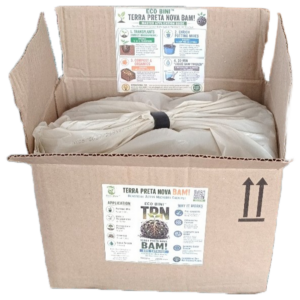
Eco Bini™ Terra Preta Nova BAM! Soil Catalyst | 5 Litre
Original price was: R340.R239Current price is: R239. Add to basket🛠️ Biologically pre-charged Terra Preta Nova Soil Catalyst
🛠️ Premium macadamia shell Granular Activated Carbon (GAC)
🛠️ Beneficial Active Microbes (BAM!)
🛠️ Zero nutrient lockout • Permanent microbial habitat • Ready to use -
STS
Alpha & Omega [Kratky & Passive Hydro] Nutrient Kit – 2x 500ml
Original price was: R195.R95Current price is: R95. Add to basket🛠 Dual-part liquid Kratky hydroponic nutrient concentrates
🛠 Refined Hoagland solution pre-dissolved in 2x 500ml UV-opaque white bottles
🛠 perfect for passive indoor herb gardens — Just Dose and Grow -
STS
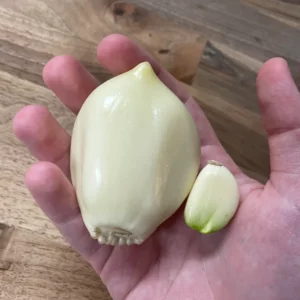
Elephant Garlic Tincture (1:5 AGE Extract ) | 20.4% ABV
Original price was: R450.R295Current price is: R295. Add to basket🛠️Concentrated, Biologically Active Phytochemical Extract
🛠️ Optimized 1o-Min Air-activated Allicin window (AGE)
🛠️1:5 Fresh Organic Garlic Ratio
🛠️Stable 20% ABV Matrix – Long shelf life -
STS
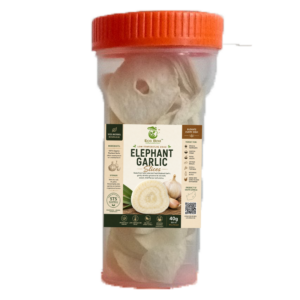
Dried Fermented Elephant Garlic Slices – Sweet, Mild Flavour (40g)
Original price was: R115.R95Current price is: R95. Add to basket🧄Organic Elephant Garlic
🧄Low-temp dried gourmet slices
🧄Naturally sweet & mild
🧄Small-batch South African
Socratic Questions
1. How does the internal water buffer in STS Dutch Buckets protect plants during load-shedding?
2. What specific recycled materials are essential for building a cost-effective Dutch Bucket system?
3. How can friction pipe fitting prevent leaks in DIY hydroponic setups using thin plastics?
4. Why is thermal management of the nutrient reservoir crucial for preventing root rot?
5. What are the key benefits of using grow bags inside Dutch Buckets for root management?