Master the complete cultivation cycle of perennial Elephant Garlic (Allium ampeloprasum),
Summary
from corm to giant multi-cloved bulbs. This STS Lab Note covers planting, growth stages, harvesting, curing, storage, and propagation of one of the easiest and most rewarding perennial food crops for South African gardens.
1. Botanical Profile & The Biochemical Magic
Elephant Garlic (Allium ampeloprasum) is a towering giant among alliums. The genus Allium also contains the onion, garlic, shallot, scallion, chives, and Chinese onion. While frequently mistaken for true garlic (Allium sativum), it is genetically a variant of the leek family, creating a unique biochemical profile that bridges both garlic and leek.
It delivers a mild, delicate, and slightly sweet fusion of garlic, onion, and leek flavours in a single massive package. Or medical benefits as found in Kashmiri Garlic, or the Elephant Garlic Corms.

The Climate Advantage
Elephant Garlic is often called “Magic Garlic” in parts of the southern United States (Florida panhandle) because it does not require a prolonged winter freeze (vernalization) to trigger bulb differentiation. It thrives in temperate zones with mild winters and warm summers, making it an exceptional year-round perennial asset for coastal or temperate microclimates. It requires little to no vernalization under South African conditions.
2. The Multi-Phase Lifecycle Continuum
Propagating Elephant Garlic requires an understanding of its unique, three-stage evolutionary loop. What you plant directly dictates the structural architecture of your harvest at the end of the season:
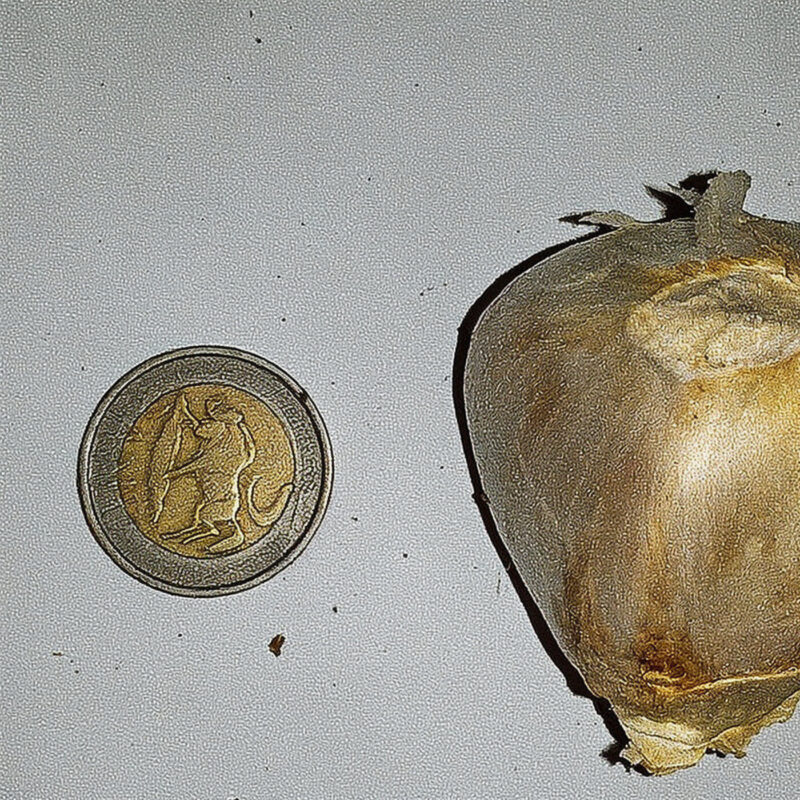
The Bulblet (Corm)
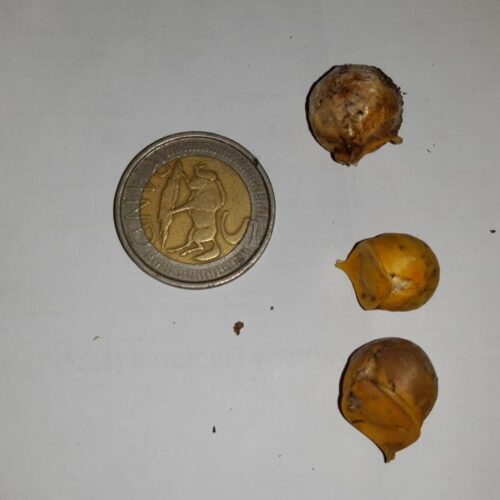
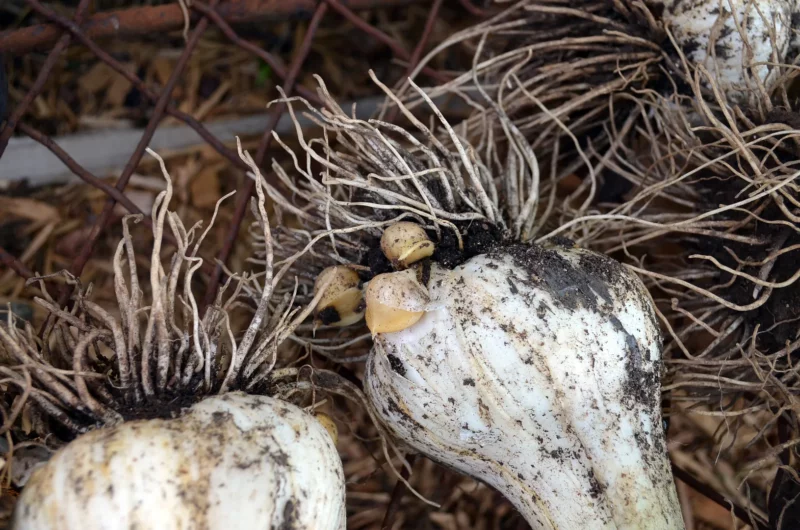
Small, rock-hard, triple-shelled offsets that develop around the basal plate of mature bulbs. The corm is Elephant Garlic’s primary propagation structure (or “seed”) and represents the survival stage of its lifecycle. During its first growing season, it produces a vigorous, non-flowering plant that stores energy in a single, large, undivided bulb known as a Solo Garlic or Round.
The Solo Bulb (Round)
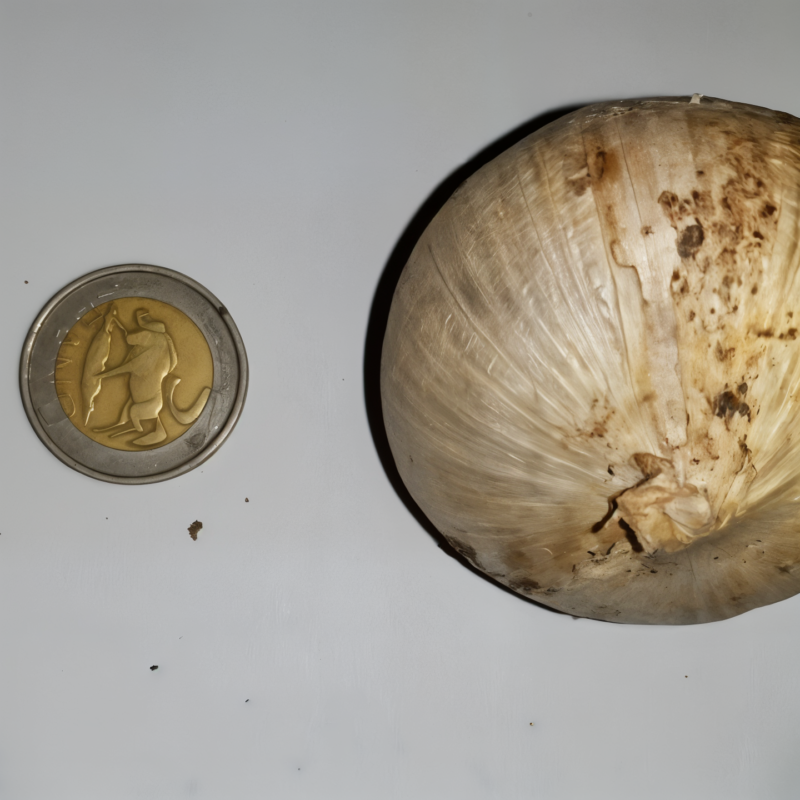
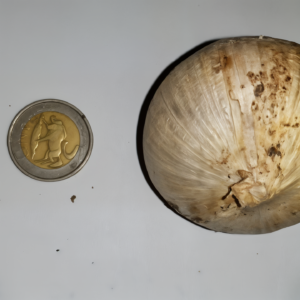
Also marketed internationally as Pearl Garlic or Ajo Macho, the Round is the unique intermediate stage between the corm and the mature cloved bulb. When planted, it undergoes a natural transition, dividing into a massive multi-cloved head while simultaneously producing a new generation of corms around the basal plate. Since Rounds are produced only from germinated corms, they are a distinctive feature of Elephant Garlic cultivation and cannot be obtained by planting cloves.
The Clove
Whether produced from a replanted Round or planted individually, each clove develops into a mature, multi-cloved bulb during a single growing season. This mature bulb also produces a new cluster of corms, completing the Elephant Garlic lifecycle.
The multi-cloved bulb represents the mature or “adult” stage of Elephant Garlic. If left undisturbed as a perennial, the plant naturally produces new corms around the basal plate while simultaneously developing fresh cloves each season. Over time, a mature clump may contain all three life stages simultaneously—corms, Rounds, and multi-cloved bulbs—forming a dense, self-sustaining perennial colony.
3. STS Engineering: Planting, Spacing & Substrate Specs
The Timing Matrix
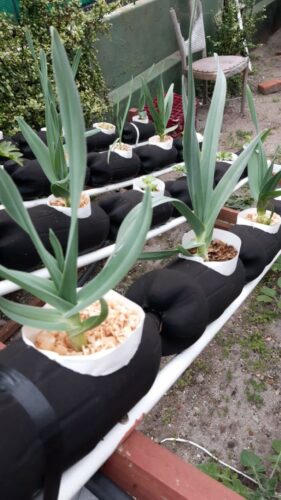
While spring planting is viable in mild climates, Autumn (April) remains our recommended window. Planting in autumn allows the root system to fully establish across the cooler winter months, driving maximum bulb formation in early spring, as the Garlic starts storing energy for the dry months.
Spacing and Depth Blueprint
To prevent crowded, misshapen bulbs and ensure easy extraction from vertical configurations, adhere strictly to this technical spacing array:
| Planting Material | Sowing Depth | Inter-Plant Spacing | Row-to-Row Spacing |
| Corms (Bulblets) | 2.5 cm – 4.0 cm | 10 cm – 15 cm | 20 cm – 30 cm |
| Rounds (Solos) | 4.0 cm – 5.0 cm | 15 cm – 20 cm | 30 cm |
| Individual Cloves | 5.0 cm | 15 cm – 20 cm | 30 cm |
STS Planting Tip: Always plant cloves and rounds with the flat basal plate facing down and the pointed growth tip facing directly up. Cover with a 2–5 cm layer of straw or pasteurized compost mulch to lock in moisture and suppress weed competition.
Container Adaptations
Elephant Garlic adapts beautifully to large container systems, interlocking building blocks, or Vermiponics [Organic Hydroponics], provided a minimum substrate depth of 30 cm is maintained to accommodate its extensive, deep-diving root mass.

4. Operational Growth Stages & Water Tuning
- Stage 1: Germination & Anchoring (Weeks 1–3): Shoots emerge; maintain steady, even capillary moisture.
- Stage 2: Vegetative Canopy Explosion (Months 1–3): The plant pushes out long, flat, strap-like blue-green leaves resembling massive leek foliage.
- STS Protocol: Run consistent daily watering cycles if outside the rainy season. Leaf surface area directly correlates to final bulb mass (Healthy Leaves = Giant Bulbs).
- Stage 3: Bulb Differentiation (Months 3–6): Energy shifts underground. Cut watering frequency back to prevent outer wrapper splitting, or rot, and signal garlic to store energy in bulb.
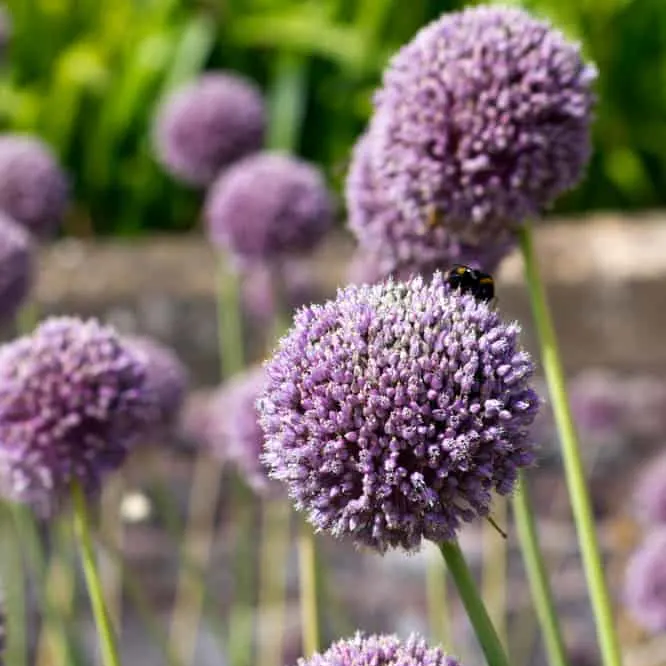
- Stage 4: The Scape Emergence (Months 6–8): A thick, central flower stalk (scape) emerges, crowned by a large purple ornamental flower head.
- STS Field Action: Snap or cut the scapes off as soon as they begin to curl. This redirects 100% of the plant’s remaining photosynthetic energy down into the expanding bulb.
- (Bonus: Scapes are a premium culinary delicacy—chop raw into salads for a mild garlic-chive crunch).
- Stage 5: Foliage Dieback (Pre-Harvest): The lower canopy begins to turn yellow.
- Completely stop all irrigation at this point.
5. Harvesting, Curing, and Long-Term Storage
The Yellow-Leaf Indicator
Never wait until the entire plant has turned brown—doing so may be detrimental to bulb quality, exposing cloves to fungal rots if wet. Harvest when the bottom 3 sets of leaves have yellowed and died back (roughly 50–70% of the total canopy).
Allow a week of no watering before harvesting and harvest during dry weather whenever possible.
The Extraction Process
Gently loosen the surrounding soil matrix using a fork or digging spade well away from the basal plate. Lift the bulb from underneath; never yank the plant out by its stem, as this can tear the neck wrapper and invite post-harvest moulds. Shake off loose aggregate, but do not wash the bulbs with water.
The Curing Protocol
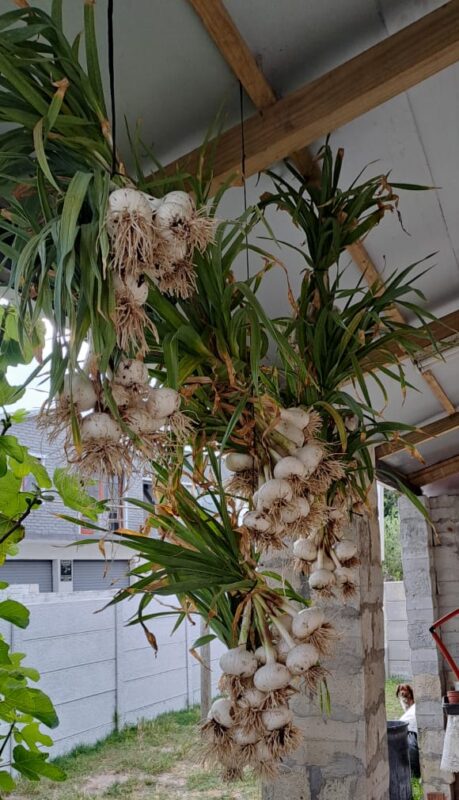
- Move the intact plants immediately to a dry, shaded, and highly ventilated space (such as an open shed or covered patio canopy).
- Never cure bulbs in direct sunlight.
- Lay flat in a single layer or hang in suspended bunches for 2 to 3 weeks until the outer skins become entirely papery and the central stem feels brittle and bone-dry.
- Trim roots clean and cut the main stem 2–3 cm above the bulb shoulder. Store in breathable mesh bags or open crates in a cool, dark, dry zone.
- Properly cured Elephant Garlic boasts an incredible shelf life of 6 to 10 months. Store between 0–5°C where refrigeration is available.
6. The Hard Shell Corm Barrier: Overcoming Dormancy
the propagation of corms. Because corms represent Elephant Garlic’s ultimate evolutionary survival mechanism, they are armored with an ultra-dense, triple-layered protective shell.
In nature, these corms are designed to sit completely dormant in the soil for 4 to 5 years, germinating only when the outer husk has completely weathered away.
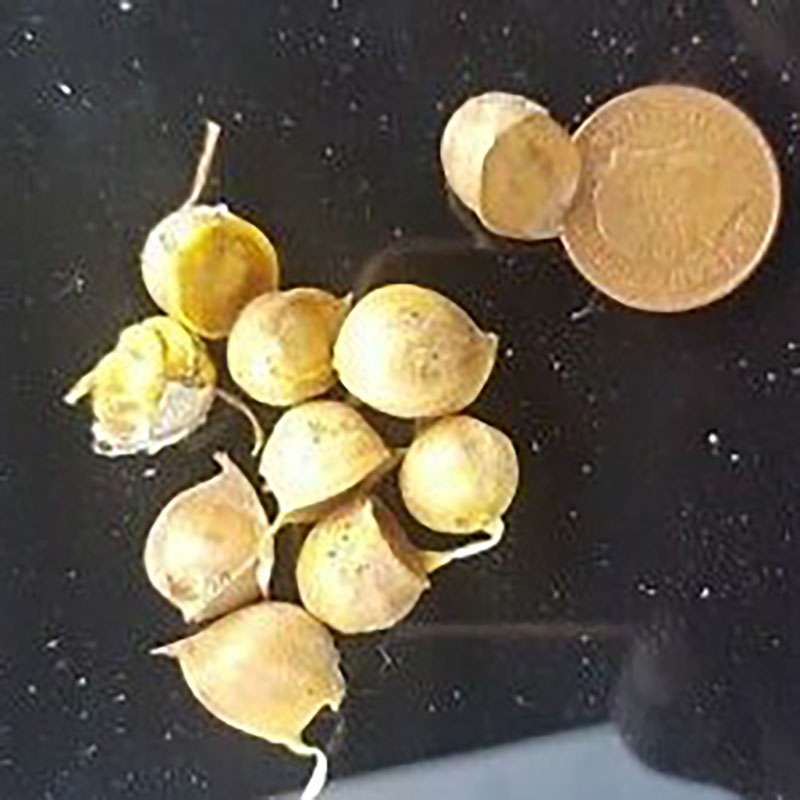
The most challenThe STS Solution (The Third Paradigm Shift): To achieve our legendary near-100% germination and immediate strike rates, do not plant raw, dry corms directly into soil. Instead, carefully scarify or nick the outer shell, or subject them to our specialized anaerobic Vermi-Syn3 SSF (Solid-State Fermentation) steep. This microbial inoculation mimics years of natural soil weathering in days, safely cracking the biological dormancy lock and forcing rapid, uniform vegetative activation.
Alternatively we have gone and made GroConeZ, a biological pod with the Ajo Macho seed, just plant pointy side up and water.
7. Culinary Uses
Elephant Garlic’s mild, slightly sweet flavor makes it a versatile ingredient in the kitchen. While it resembles regular garlic in appearance, its taste is closer to a cross between garlic and leek—less pungent, more delicate, and ideal for dishes where subtlety is key.
Flavor Profile
- Milder than true garlic, with a hint of onion or leek.
- Ideal for those who find regular garlic too strong.
- Bulbs can be used raw, roasted, sautéed, or fermented.
Refer to #119 STS Lab Note for Gourmet Recipe ideas for Elephant Garlic.
🧄 Bonus: Use the Whole Plant
- Leaves: Young leaves can be chopped and used like chives or spring onions.
- Scapes (Flower Stalks): If harvested early, they can be stir-fried or grilled like asparagus.
Health Benefits
- The corms are a power food, often marketed as Kashmiri Garlic.
- Elephant Garlic contains Sulphur-containing compounds including allicin and SAC (S-allyl-L-cysteine), together with valuable vitamins, minerals and antioxidants that contribute to its traditional reputation as a functional food.
- Elephant Garlic supports cardiovascular health, immune function, and liver health
- Its lower-calorie profile packs essential vitamins and minerals.
Elephant Garlic – Beyond the Plate
- Ornamental Beauty:
- Towering up to five feet, Elephant Garlic produces attractive flower heads.
- Picture pink blossoms crowning your garden beds.
- Natural Pest Repellent:
- Strategically plant Elephant Garlic at the back of your garden to deter aphids, snails and browsing animals!
- It’s a green solution for pest control.
Conclusion

Within the STS programme, Elephant Garlic has evolved far beyond a kitchen crop. It has become the foundation of research into hydroponics, Vermiponics, biological fermentation, botanical extraction, and natural plant protection. Whether grown for giant bulbs, Solo Garlic, or corm propagation, few perennial vegetables offer the same combination of productivity, resilience, and scientific potential.
Image to left is Solo Garlic grown in Stumbelblocs using Vermiponics.
Magic Elephant Garlic, unlike normal Garlic, is a Perennial plant, making it a permanent feature in your garden. But will spread if left unchecked, suggested to ‘harvest’ when the leaves die back and thin out the freshly growing cloves and/or corms – and use the excess in kitchen.
-
Organic Elephant Garlic Rounds (Ajo Macho / Solo Garlic)
R90 Read more🌱 Large, mild-flavoured single Ajo Macho bulbs
🌱Organic Elephant Garlic Rounds / Pearl / Solo
🌱 Vernalized for immediate planting or roasting
🌱 Seasonal – Limited Stock -
Potato Grow Bag – Heavy Duty (38L) with Harvest Flap
R149 Add to basket🌱 Grow Potatoes anywhere!
🌱 UV-resistant 38L bag with easy-harvest flap.
🌱 Reinforced handles, and aeration holes.
🌱 Ideal for small urban spaces. -
STS
Dried Fermented Elephant Garlic Slices – Sweet, Mild Flavour (40g)
Original price was: R115.R95Current price is: R95. Add to basket🧄Organic Elephant Garlic
🧄Low-temp dried gourmet slices
🧄Naturally sweet & mild
🧄Small-batch South African -
STS
G-Shield — Cutworm, Aphid & Seedling Root Armor (500 mL)
Original price was: R280.R195Current price is: R195. Add to basket🧄 LAB-fermented garlic with SAC enrichment
🌿 Garlic & peppermint botanical defense
🛡 Soil-zone and foliar pest deterrent
🌱 Root-zone support for young plants
Socratic Questions
how to plant elephant garlic corms bulbletsdifference between elephant garlic solo rounds and cloveswhen to cut scapes off elephant garliccuring elephant garlic for long term storagevermiponic elephant garlic container cultivation guide