Utilizing locally available pine pellets treated with BioaKt provides a clean, lignin-rich substrate that resists contamination
Summary
better than traditional agricultural waste in the Western Cape climate. Navigate substrate selection in resource-limited environments. This guide highlights the best local materials for South African cultivators.
Introduction
Growing gourmet mushrooms can be a rewarding and sustainable way to produce your own food. The key to successful mushroom cultivation lies in choosing the right substrate. Here, we’ll explore some of the best substrates for growing gourmet mushrooms and how to prepare them.
I would like to emphasize that substrates are vital to your success in mushroom cultivation. A common question is, “What mushrooms should I grow?” However, this often depends on the substrates you have access to. In my experience, especially here in South Africa and particularly in the Western Cape, substrate availability can be limited.
Therefore, understanding and choosing the right substrate is crucial. Below, I’ll provide a quick rundown of the best substrates for growing gourmet mushrooms. As well as options that can use to the norm – which is Hardwood – and that is virtually non-existent here. But as they say “where there is a will there is way” – thanks to BioaKt.

1. Hardwood Sawdust
Hardwood sawdust is one of the most popular substrates for growing gourmet mushrooms like Shiitake, Chestnut, and Lion’s Mane. It provides a rich source of nutrients that mushrooms need to thrive. A hardwood base is actually the Gold Standard for all Gourmet Mushrooms.
- Preparation: Mix hardwood sawdust with a supplement like wheat bran (10-20% by weight) to boost protein content. Sterilize the mixture by autoclaving or using a pressure cooker.
Note: Hardwood is a scarce commodity in the Western Cape, and the pellets available are almost always pine. Mushrooms generally do not thrive on pine due to its high resin content and acidity. However, we have successfully grown mushrooms on pine pellets by adding 3-4% BioaKt. If you can source oak sawdust, used in wine industry, it would be the best option for cultivating most specialty gourmet mushrooms.
2. Straw

Straw is an excellent substrate for growing oyster mushrooms and other fast-growing species. It’s readily available and relatively inexpensive. The other advantage is that they are naturally selective and only need to pasteurized.
Note: After pasteurizing drain off excess water till ‘field capacity’. If too wet then any standing water will become anaerobic which leads to bacterial contamination. This comment is valid for all substrates.
Preparation: Chop the straw into small pieces and pasteurize it by soaking in hot water (65-80°C) for two hours. Drain and cool before inoculating with mushroom spawn.
3. Coffee Grounds
Used coffee grounds are a great substrate supplement for growing mushrooms like shiitake, as has nitrogen content as potent as Wheat Bran and can be used in place. They are rich in nutrients and help recycle waste, with added bonus that would be pasteurized if get fresh from brewing process. Due to the high nitrogen content though would advise on 0.22 micron filter bags to prevent contamination getting in.
- Preparation: Collect used coffee grounds and mix them with a small amount of hydrated lime to adjust the pH. Pasteurize the mixture by steaming or boiling for 30 minutes. Use as supplement 10-20%.
4. Coco Coir and Vermiculite
Coco coir (coconut fibre) combined with vermiculite is a versatile substrate that works well for many types of mushrooms, including King Oyster and Reishi.
Preparation: A standard recipe used is
- 650g Coco Coir Block
- 3 litre medium grade Vermiculite
- 3% BioaKt (30g) (for CVG this can be replaced with 6% Gypsum)
- 3500ml Boiling Water
Mix all the dry ingredients in Cooler Box and add boiling water, close cooler to pasteurize substrate naturally.
For me Coco is a good alternative for Specialty Mushrooms that do not like straw and require a higher Lignin content. Another thing is that Coco absorbs a lot of water (Moisture Content>80%) which makes it very attractive substrate. Just ensure that you get a buffered type, where the natural Sodium has been replaced by Calcium.
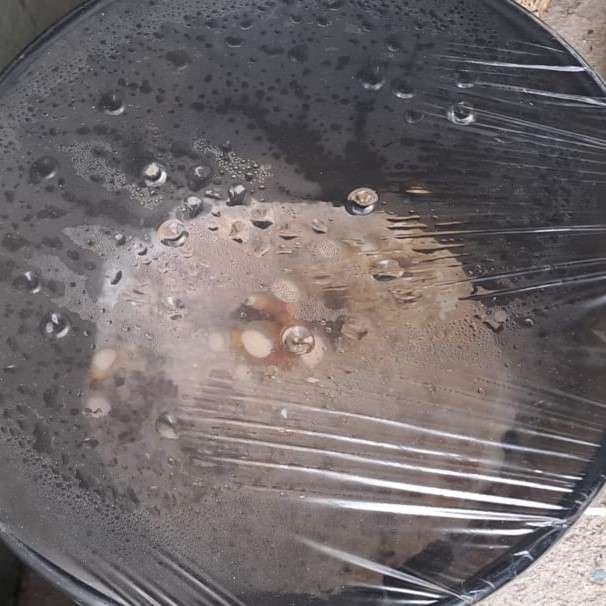
Image is a bucket grow of Deerhorn Reishi in CVB (Coco – Verm – BioaKt).
5. Manure-Based Substrates
Manure, especially horse or cow manure, is ideal for growing button mushrooms and other species that thrive in nutrient-rich environments.
- Preparation: Mix manure with straw or other carbon-rich materials. Compost the mixture for several weeks to break down ammonia and other harmful compounds. Pasteurize before use.
6. Logs
Logs are a traditional substrate for growing shiitake and other wood-loving mushrooms like Chicken of the woods, and of course Shiitake. Shiitake was traditionally grown in the East, Totem Pole Style, for thousands of years. Oak, maple, and other hardwood logs are preferred.
- Preparation: Cut fresh logs and let them age for a few weeks. Drill holes into the logs and insert mushroom spawn. Seal the holes with wax to prevent contamination.
7. Cardboard
Cardboard is a simple and effective substrate for growing oyster mushrooms. It’s easy to source and prepare.
- Preparation: Soak cardboard in boiling water until fully saturated, and pasteurize. Drain and layer the cardboard with mushroom spawn in a container. Keep it moist and in a dark place until colonization.
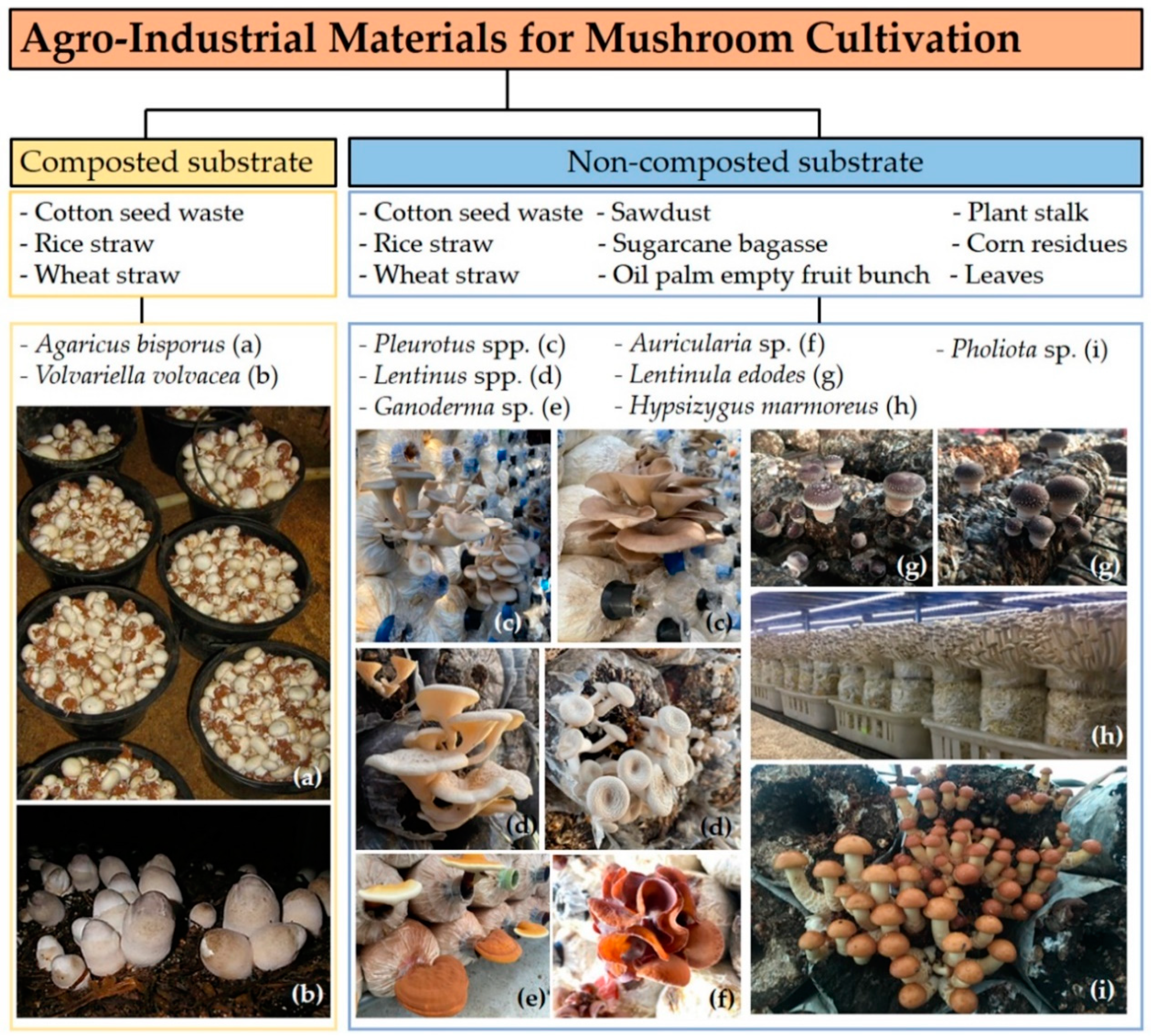
Mushroom Substrate Diagram, courtesy of MDPI
Conclusion
Choosing the right substrate is crucial for successful mushroom cultivation. Each type of mushroom has its preferred substrate, so it’s important to match the mushroom species you want to grow to the substrate available to you. By preparing and maintaining your substrate properly, you can enjoy a bountiful harvest of gourmet mushrooms.
Please read our blog on DIY spawn making to inoculate your substrate with.
Experiment with different substrates to find what works best for you and your growing conditions. Above are just some global options, but look around locally – crushed corn cobs for Oysters, etc.
🍄Happy mushroom farming!
-
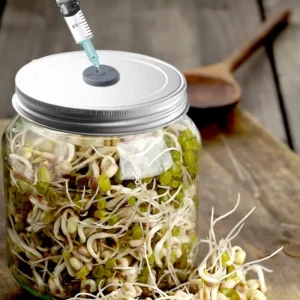
SHIP – Self-Healing Injection Ports, Buty...
Price range: R39 through R49 Select options This product has multiple variants. The options may be chosen on the product page🧫 Medical-grade 13mm/20mm butyl rubber SHIP.
🧫 Packs of 10 Injection Ports.
🧫 100% Autoclav… -
STS
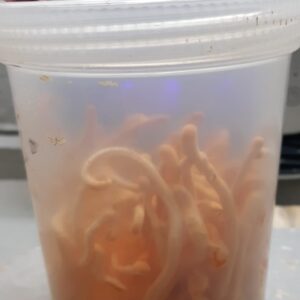
750ml Full-Bore Polypropylene Bottle | Cordycep...
Original price was: R89.R59Current price is: R59. Add to basket🧫 750ml autoclavable Polypropylene bottle with screw-cap
🧫 Straight-sided full-bore 100mm for… -
STS
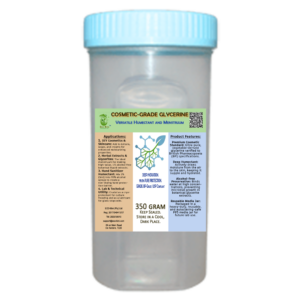
350g Pure Cosmetic-Grade Glycerine in Reusable ...
Original price was: R159.R125Current price is: R125. Add to basket🧫Versatile 100% Humectant: Locks in moisture for skin care and DIY cosmetic formulations
🧫Shi… -
STS
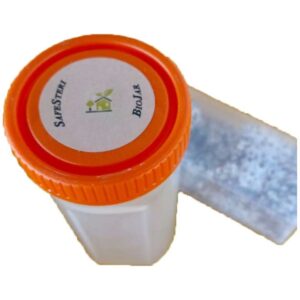
6-pack Mother Spawn BioJar | Reusable Polypropy...
Original price was: R695.R395Current price is: R395. Add to basket🧫Shatterproof PP5 Construction
🧫Triple-Shield Filtration System
🧫Positive Seal Technology
…
Socratic Questions (5 Search Terms):
- What are the best mushroom substrates in South Africa?
- How to use pine pellets for gourmet mushroom cultivation?
- Can I grow mushrooms on locally available wood waste?
- What is the role of BioaKt in substrate preparation?
- How to choose the right substrate for Oyster vs. Lion’s Mane?