The Bundu Teq Declaration is the foundational mission statement and biological engineering framework
Answer
guiding Bundu Teq’s approach to restoring nature and achieving biological independence. It outlines the core tenets and intentions for restoring healthy, resilient, self-sustaining natural biological production systems.
1) Understanding the Bundu Teq Declaration
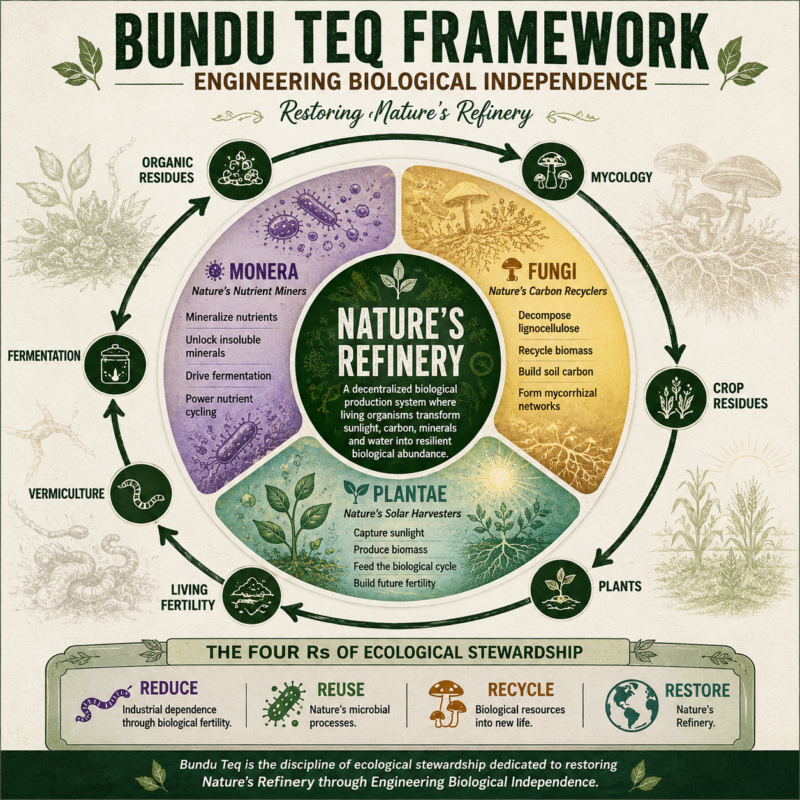
The Bundu Teq Declaration is a summary of the diverse Bundu Teq knowledge vectors learned from the natural kingdoms at the STS (Sustainability Testing Station). It’s not a mere marketing statement, but a profound commitment to understanding, stewarding, and interacting with nature. Bundu Teq is the discipline of ecological stewardship that integrates these living systems to restore Nature’s Refinery, building resilient, decentralized biological production systems capable of Engineering Biological Independence.
2) Engineering Principle: Restoring Nature’s Refinery
At its heart, the Declaration asserts that “Nature already knows how to build fertile soils, recycle nutrients, purify water, grow food and sustain healthy ecosystems.” This fundamental engineering principle shifts the focus from human-centric intervention to a collaborative stewardship approach with natural processes. Bundu Teq’s goal is to facilitate and restore these inherent natural functions. It acknowledges nature as the ultimate refinery, capable of self-organisation and regeneration when its mechanisms are understood and supported.
3) Mechanism: Biological Independence and the Four R’s
The Declaration outlines the overarching goal of achieving Biological Independence. This means designing and implementing systems that are healthy, resilient, and reduce dependency on external, unsustainable, industrial inputs. This independence is operationalized through the Four R’s – the tenets by which the vision of Biological Independence is pursued:
Reduce: industrial dependence, by minimising reliance on synthetic fertilizers, pesticides, and other unsustainable external inputs.
Reuse: nature’s biological processes, and waste [both organic and inorganic like plastic].
Recycle: biological resources in a circular economy, optimising waste recycling and building fertility.
Restore: Nature’s Refinery: Actively working to regenerate degraded ecosystems and enhance their inherent capacity for natural production.
4) Practical Application: BTK – A Living Knowledge System
The Declaration also defines the nature of the Bundu Teq Knowledge Base (BTK) itself. It asserts that the BTK is a “constantly updating entity,” a “living manual” that distills complex biological principles into actionable knowledge. Bundu Teq attempts to understand and engineer the biological processes that constitute Nature’s Refinery, and BTK is the knowledge base thereof. The BTK, therefore, is not a static manual but a dynamic repository designed to empower growers and engineers with proven, practical, and replicable solutions.
5) What does ‘Bundu’ mean?
The term comes from a Bantu language, specifically derived from the Shona word ‘bundo‘ (meaning grasslands). Colloquially in South Africa, “bundu” refers to a wild, remote, or heavily overgrown area far away from towns and cities, often implying untainted natural environments.
6) What does ‘Teq’ mean?
Teq is an abbreviation for ‘Technology’. In this context, Technology signifies the practical use of scientific knowledge to solve problems, invent useful tools, and complete daily tasks, applied specifically to ecological and biological systems.
7) What does ‘Tek’ mean?
Tek is a mycological abbreviation for ‘Technique’. A technique is a specific way of doing something that needs skill, planning, or special knowledge, particularly in the context of Mushroom cultivation and Mycology.
8) Key Takeaway: A Foundational Commitment
The Bundu Teq Declaration is more than just an introductory statement; it is a foundational commitment to a regenerative future. It provides the moral, philosophical, and engineering mandate for all Bundu Teq activities, guiding the development of resilient, biologically independent agricultural and ecological systems. It calls for a paradigm shift in how we perceive and interact with the natural world, moving towards a partnership that fosters true sustainability.

-
STS

High-Viscosity Sodium Alginate | 99% Pure Food Grade Polymer
Original price was: R470.R333Current price is: R333. Add to basket🧫 99% Pure Reagent-Grade Sodium Alginate
🧫 High Viscosity (724 cP) for superior gel strength
🧫 Ideal for Preta Pearls, encapsulation & molecular gastronomy
🧫 Supplied in a reusable laboratory clip-top PP tub with silica pouch -
STS
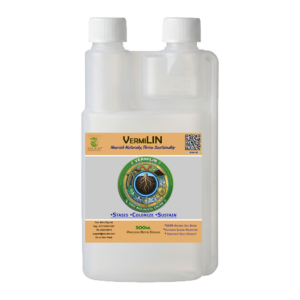
Eco Bini™ VermiLIN BAM! Living Microbial Concentrate | 500ml Bettix
Original price was: R185.R130Current price is: R130. Add to basket🌱 Living Microbial Concentrate from premium vermicast
🌱 Controlled Biological Stasis for extended shelf stability
🌱 Built-in Bettix dosing chamber for accurate mixing
🌱 Perfect for living soil, compost, biochar & regenerative growing -
STS

Eco Bini™ Shield BAM! Biological Foliar Defense Concentrate | Natural Pest Deterrent
Original price was: R280.R195Current price is: R195. Add to basket🌱 Living microbial foliar concentrate
🧄 Contains Garlic Extract, Mint and Castile Soap
🛡 Helps deter common soft-bodied garden pests.
🐝 Bee-friendly, animal-friendly and GRAS. -
STS
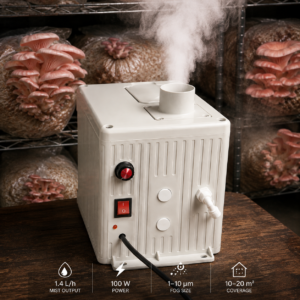
STS 1.4kg/h Industrial Ultrasonic Humidifier – Variable Fan
Original price was: R6,999.R5,599Current price is: R5,599. Add to basket🧫Industrial 24/7 Stainless Steel Ultrasonic Discs
🧫High-Volume 1.4kg/Hour Fog Output
🧫Integrated Variable Fan Speed Control
🧫Ruggedized Corrosion-Proof ABS Chassis
Socratic Questions:
- What is the core philosophy behind Bundu Teq’s approach to agriculture?
- How does Bundu Teq define “Biological Independence” in practice?
- What are the engineering principles embedded in the Bundu Teq Declaration?
- How does the Bundu Teq Declaration view humanity’s role in nature?
- Where can I learn more about the specific applications of Bundu Teq??