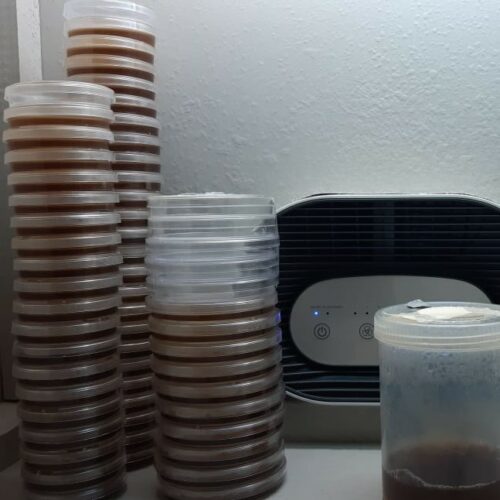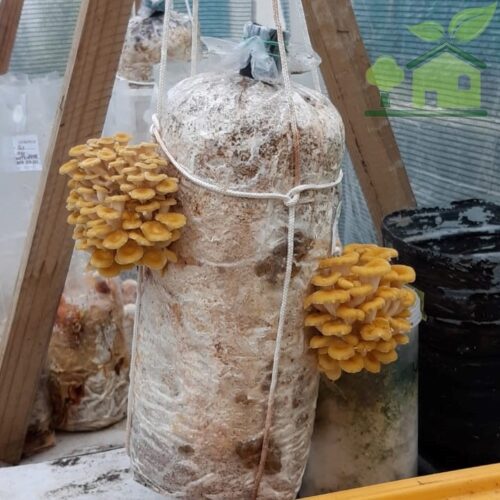
Pioneering a grain-less, acellular spawn – True-Syn3d: a third paradigm shift.
Summary
This note chronicles our quest for a synthetic, grain-less, acellular spawn that breaks free from the 90-year-old Sinden Grain Standard. By leveraging Terra Preta principles, inert carriers, and selective nutrition, True-Syn engineered a resilient inoculation engine, laying the groundwork for a new era of contamination-resistant and sustainable mycology. This journey led to critical insights into substrate supplementation, detailed in subsequent lab notes.
1. Engineering Around the “Sinden Standard”
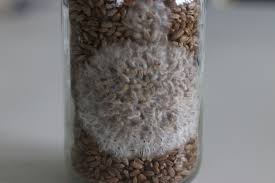
For over 90 years, since 1932, the mushroom cultivation industry has largely operated under the shadow of the Sinden Standard, relying heavily on cereal grains (rye, millet, sorghum) for spawn. While these grains offer a convenient “kernel” for mycelial expansion, they are biologically compromised. Every grain kernel is, in essence, a “time bomb” packed with heat-resistant bacterial endospores and labile (easily digestible) starches. The moment mushroom mycelium breaches a grain’s outer hydrated shell—typically around the 3-month mark—it inadvertently “awakens” these dormant competitors.
his leads to a total metabolic crash, where contaminants outcompete the desired fungi, resulting in spoiled spawn.
The Endospore Time Bomb: The dense unhydrated core of a cereal acts as a “Safe House” for tenacious heat-resistant bacteria like Bacillus subtilis. Standard sterilization often only “stuns” these spores, leaving them dormant but ready to reactivate.
The Metabolic Cliff: Once the running mycelium cracks the hydrated hull to access the inner starch, it inadvertently releases these dormant spores into a high-moisture, nutrient-rich environment. This is why grain spawn has a notorious 90-day shelf life before it “sours” and succumbs to contamination.
At the Sustainability Testing Station (STS), we didn’t just want to improve spawn; we aimed to fundamentally re-engineer it. Our objective was to break free from the Sinden Standard, leading to the development of the True-Syn3d Matrix. This wasn’t merely “seeds”; it was conceived as a Sovereign Microbial Refinery engineered into a 3D carbon lattice. This quest for a truly resilient, grain-less inoculant represents our third paradigm shift in Bundu Teq – Selective Nutrition.
2. The Graveyard of Synthetic Attempts: Lessons Learned
Before we arrived at the True-Syn³ᵈ Matrix, the industry had made several attempts at “SynSpawn” alternatives to grain. Most of these failed not for lack of trying, but because they fundamentally misunderstood the biological security required. They often focused on providing a quantity of food rather than ensuring selectivity of access and a robust, contamination-resistant physical matrix.
In hindsight there was a common thread, all used unfermented organic supplements, from wheat bran to feather meal.
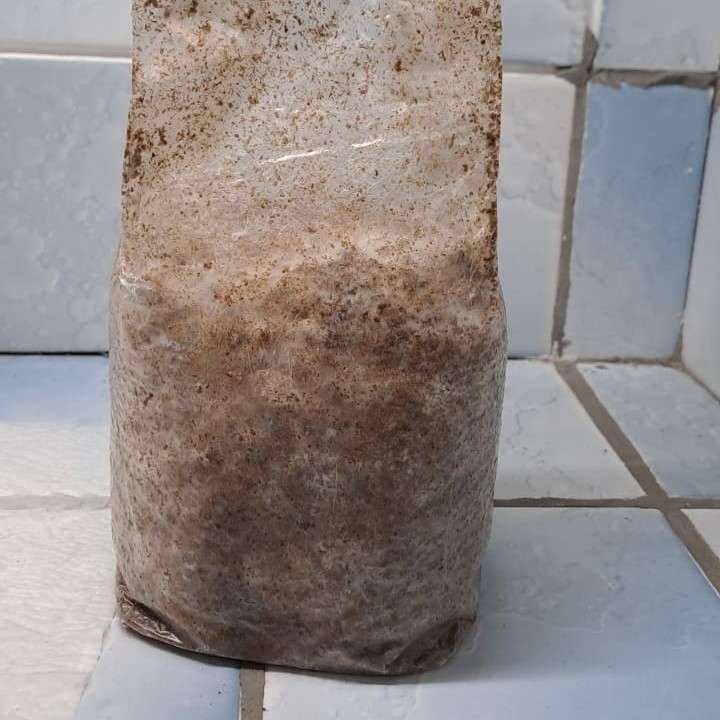
These attempts, though ultimately unsuccessful, provided invaluable lessons:
- The “Brick” Effect: Alternatives like paper and cardboard pellets, while grain-less, often “felt” together and solidified when autoclaved. This lost the crucial flowability required for commercial expansion and even distribution during inoculation.
- The “Wet Spot” Death: Early attempts using inert carriers like perlite and vermiculite (often associated with the Lemke methods) struggled with hydration. If moisture content was off by even a slight 2%, the substrate would become an anaerobic sludge, leading to rapid contamination and mycelial death.
- The “Feast-for-All” Gap: Many previous synthetic spawn attempts utilized raw, easily digestible proteins (like soy or corn meal). While providing nutrients for mushrooms, these also created an open “buffet” for common contaminants. Without a “Security Detail”—a mechanism to selectively feed the desired fungi—the mycelium was always in a race it couldn’t win.
These failures underscored the need for a truly engineered solution that addressed both the physical properties of the spawn and, critically, its nutritional selectivity and biological security.
3. The STS Breakthrough: Selective Nutrition & The BAM! Engine
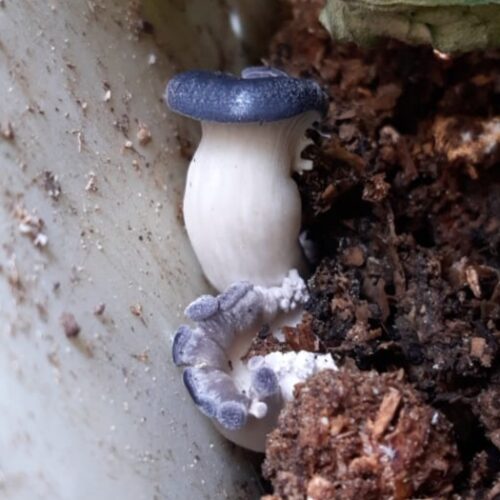
The “Aha!” moment at the STS came from observing the inherent stability of a healthy soil biome. In a mature vermicompost, for example, high levels of nitrogen exist without rampant mold growth. This led directly to the third paradigm shift of Selective Nutrition: Biological security is found in Mineralization, not just Sterility.
Instead of feeding the mushroom raw “fuel” (labile protein), we use an aerobic Solid-State Fermentation (SSF) process, better known as Vermicomposting. In a Vermicomposter the organic biomass is fermented by the worm-engineered BAM! (Biologically Active Microbes) consortium. The BAM! consortium strips away the simple sugars. What remains is Microbial Offal—complexed, mineralized nutrients that common molds cannot see, but higher fungi can “mine” using their specialized extracellular enzymes.
4. The 3D-Syn Matrix: Anatomy of the “Microbial Hotel”
We have replaced the 2D surface of the grain kernel with a 3D Biochar Lattice.
- Surface Area Math: One kilogram of traditional grain offers limited surface area (0.6m2). In contrast, one kilogram of Macadamia Granular activated (GAC) activated biochar provides over 700,000 m2 of internal “Hotel Suites.”
- Physical Armor: By moving the mycelium inside the carbon lattice, we shield the genetic material from UV, temperature spikes, and external competitors.
- The Ball-Bearing Effect: By utilizing the SSF vermicast and mineralized proteins as a biological lubricant, the matrix does not “brick.” It remains granular, allowing for effortless “Break and Shake” without damaging the delicate hyphae.
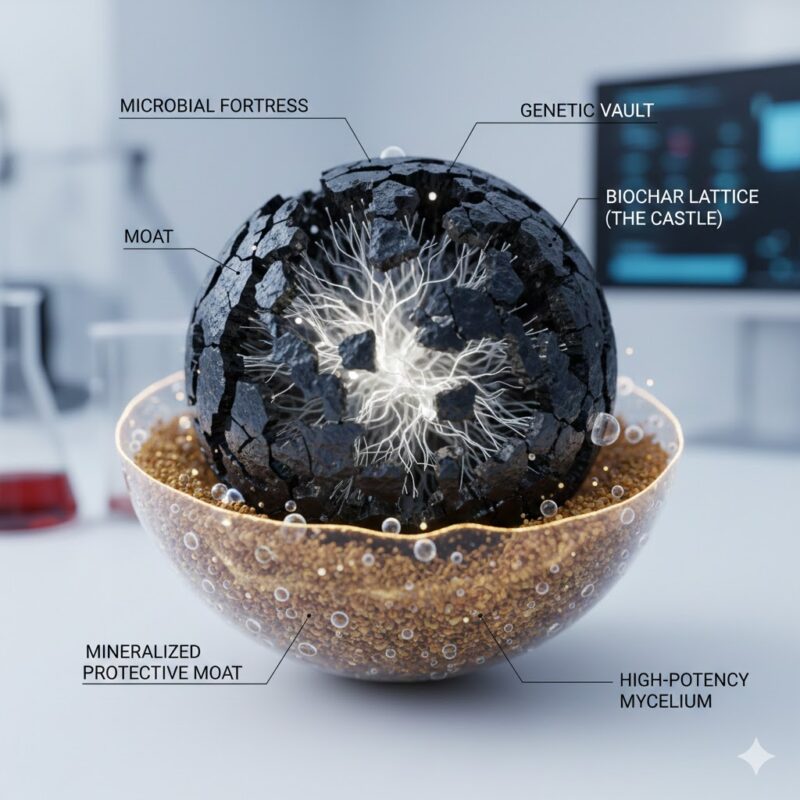
But the carbon also has a caveat – fresh out of the pyrolyser it is a “nutrient thief” – with a high Cation Exchange Capacity (CEC). Even with normal low-quality Biochar added at 50%, we found no growth, as the unsated charcoal would literally strip the nutrients out. When using Activated Carbon, the area is up to 300x more, and CEC is 10 times higher than conventional charcoal.
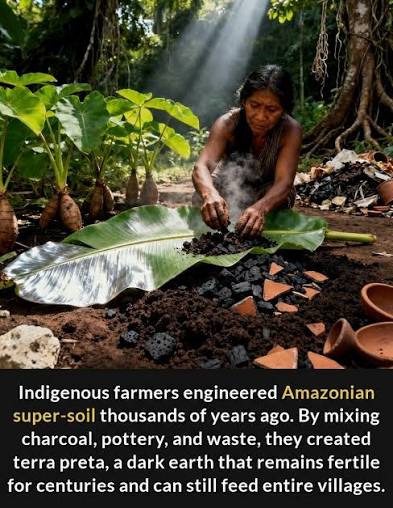
Then we discovered Terra Preta… well the rest is history.
5. A Proof of Concept for Resilience
The True-Syn3d Matrix is not “mixed”; it is “Charged.”
The worm-processed, biologically mature vermicompost embodies this shift. Its resident microbial communities have already consumed the readily available organic fraction, effectively “pre-digesting” the nutrition through Monera systems (bacteria and archaea). This leaves a substrate where the cultivated mushroom, with its specific enzymatic capabilities, can still efficiently access complex, mineralised, and transformed nutrients. Crucially, however, opportunistic moulds and bacteria find this environment ecologically less favourable for rapid colonisation. This means that while the substrate is nutritionally rich for the desired crop, it is ecologically difficult for contaminants to exploit.
By mixing the GAC in with Vermicompost, during the 60-90 day SSF, the activated carbon is fully sated with mineralised nutrients.
6. Benchtest of True-Syn3d
The theory of a resilient, grain-less spawn was put to the test at the STS. We conducted a benchmark trial using Biologically Active Carbon (BAC), which is charged Granular Activated Carbon (GAC) blended with vermicompost (10% GAC). This BAC was then mixed with perlite, calcium carbonate, and gypsum to achieve a protein content of 12.54%, equivalent to that found in typical grain spawn.
The process involved adding BAC to perlite to reach the final 12.54% protein content. This matrix was then hydrated to 60% moisture and sterilised.
The Stasis Proof: This trial was specifically designed to prove the third Paradigm Shift of Selective Nutrition. It yielded an unexpected and crucial result: before sterilisation, some of the True-Syn³ᵈ media was prepared with Bundu-Tek pasteurisation. The leftover, unsterilised media was simply left in a bucket and, remarkably, it never went off. This “Stasis Proof” is discussed in detail in Vermicompost and Selective Nutrition: Why it Doesn’t Go Bad | 328N.

Mechanism: A Proof of Concept for Resilience
The original True-Syn (Bundu Perlite Spawn, Protein @ 12.54%) demonstrated a groundbreaking mechanism for achieving spawn resilience:
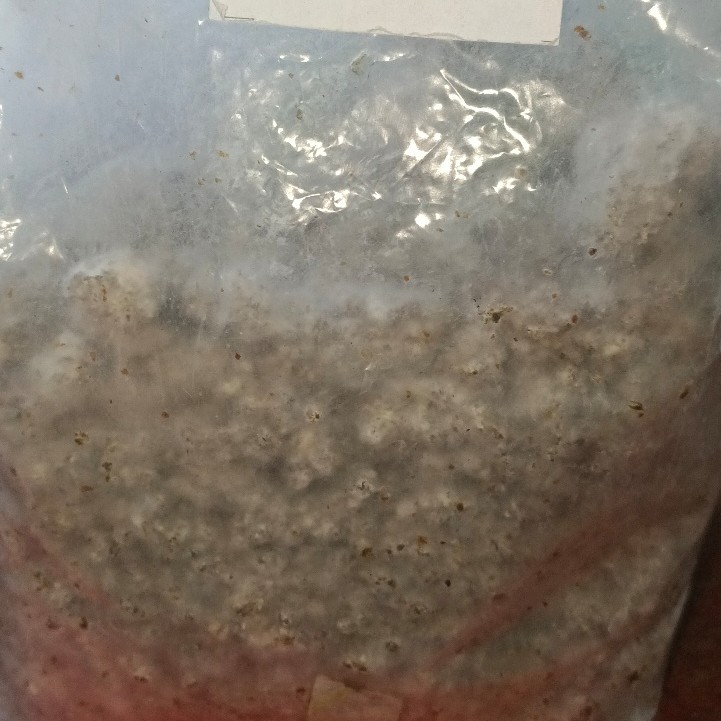
- Reduced Contamination Pressure: By removing the bulk, easily digestible organic matter from the spawn matrix itself, True-Syn significantly reduced the food source for competing bacteria and molds. This created an environment where the desired mycelium had a decisive advantage.
- Extended Viability: The inert nature of perlite, combined with the stable, mineralized nutrients from vermicompost, allowed for a much longer shelf-life compared to grain spawn, which rapidly degrades. This broke the “Metabolic Cliff” often encountered around the 90-day mark with grain.
- Robust Mycelial Growth: Mycelium grown on True-Syn was observed to be vigorous and resilient, colonizing its inert, selectively nutritious matrix effectively.
While True-Syn³ᵈ, as a fleeting benchtest, proved the methodology, it was subject to the same density flaw as Lemke’s Perlite spawn, making it less ideal for large-scale distribution. However, the unexpected “Stasis Proof” result prompted us to put the Third Paradigm Shift into operation, using the BAC as a substrate supplementation – without the sterilisation that is normally required. For our unsterilised, Bundu-Tek prepared substrate results, ranging from 20% supplemented Hardwood Fuel Pellets (HWFP) to Master’s Mix protein equivalent substrates, refer to Implementing the Third Paradigm Shift, from Master’s Mix to “Super-CVG” | 327N.
7. The Genesis of Our SynSpawn Journey
While the original True-Syn (Bundu Perlite Spawn) faced practical limitations due to its weight—making it less ideal for large-scale commercial distribution—it was an invaluable proof of concept. It confirmed the viability of an engineered, grain-less spawn based on selective nutrition and Terra Preta principles.
A New Foundation: This pioneering work was not an endpoint but the critical first step. It validated the “third paradigm” and established the core tenets of our “synthetic spawn” concept.
Driving Further Innovation: The insights gained from True-Syn’s success and its practical challenges directly fuelled our subsequent research and development. It propelled us to search for denser, flowable matrices and more refined selective nutrition strategies. This led to the evolution of our synthetic spawn journey through various iterations, including later versions of True-Syn (e.g., using Bokashi-fermented organics) and ultimately culminating in our Bundu Boom Mix (Super-CVG), and the overarching PretaBiome system.
Key Takeaway: The Birth of Engineered Mycology
The search for True-Syn, beginning with Bundu Perlite Spawn, was a landmark endeavour into Synthetic Grain-less Acellular Spawn. It established our “third paradigm shift” for fungi by successfully combining an inert perlite carrier with stable, mineralised selective nutrition from vermicompost, infused with Terra Preta principles. This early innovation fundamentally challenged conventional wisdom, demonstrating that highly effective and contamination-resistant spawn could be engineered without reliance on traditional grain or bulk organic waste. This journey continues to evolve, laying the robust scientific and practical groundwork for all our subsequent advancements in engineered biological systems, driving us towards ever more sustainable and resilient mycological solutions.
We don’t just grow mushrooms; we build the engines that power them.
This is another step toward truly independent, circular mushroom cultivation in South Africa.
-
STS
Passive Organic Hydroponics Start Kit & Course | Vermiponics
Original price was: R499.R359Current price is: R359. Add to basket🛠 5L Passive Vermiponic Starter System
🛠 Includes 2 dm³ VermiCore Living Growth Medium
🛠 Free STS Practical #11 Digital Manual Included
🛠 Learn to Build & Scale Your Own Vermiponic Systems -
STS
Eco Bini™ Shield BAM! Biological Foliar Defense Concentrate | Natural Pest Deterrent
Original price was: R280.R195Current price is: R195. Add to basket🌱 Living microbial foliar concentrate
🧄 Contains Garlic Extract, Mint and Castile Soap
🛡 Helps deter common soft-bodied garden pests.
🐝 Bee-friendly, animal-friendly and GRAS. -
STS
Organic Elephant Garlic Corms (Heirloom)
Original price was: R135.R95Current price is: R95. Add to basket🌱 Start your Elephant Garlic journey.
🌱 Grows into Ajo Macho Solo Round.
🌱 Perennial plant and natural pest deterrent.
🌱 Limited Stock – 20 off per pack -
Organic Elephant Garlic Rounds (Ajo Macho / Solo Garlic)
R90 Read more🌱 Large, mild-flavoured single Ajo Macho bulbs
🌱Organic Elephant Garlic Rounds / Pearl / Solo
🌱 Vernalized for immediate planting or roasting
🌱 Seasonal – Limited Stock
Socratic Questions:
- What is the “Metabolic Cliff” in mushroom cultivation?
- How to make grainless synthetic mushroom spawn?
- Benefits of perlite-based spawn vs. grain spawn?
- What is the Terra Preta principle in mycology?
- How to use Selective Nutrition for faster mycelium growth?