Unlock high yields! Grow Master’s Mix and Super-CVG substrates without an autoclave, thanks to the Third Paradigm.
Summary
Traditional mycology is stuck with costly autoclaves and contamination risks for high supplement substrates. The Bundu Teq Third Paradigm, built on Selective Nutrition, offers a revolutionary, autoclave-free solution. By applying biologically active carbon (BAC) and the Bundu-Tek method, growers can now achieve Master’s Mix equivalent yields on wood pellets and astronomical biological efficiencies on Super-CVG, completely bypassing sterilisation, sour rot, and the metabolic cliff.
1. The Tyro’s Trap: The High Cost of Conventional Substrates
For decades, mushroom cultivation, from small-scale enthusiasts to commercial operations, has been caught in a challenging design loop. On one side, gourmet wood-pellet growers often rely on high-energy commercial autoclaves to sterilize standard “Master’s Mix”—a popular blend of 50% hardwood sawdust and 50% soy hulls.
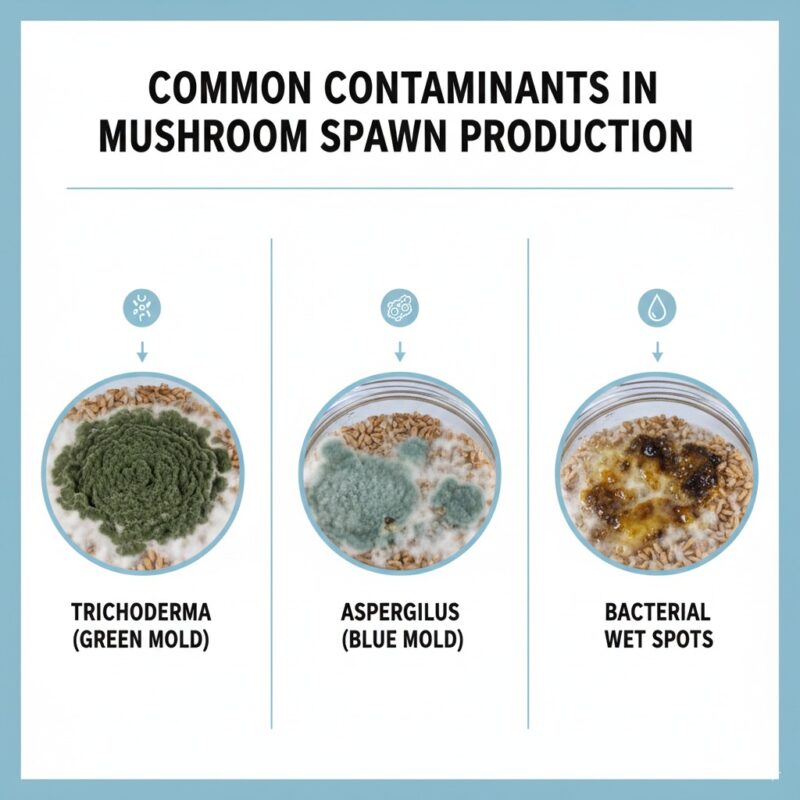
This approach comes with significant capital, overhead, and utility costs. The goal is to create a completely sterile substrate, a biological vacuum. However, this method carries a severe risk: the moment the substrate cools below 40-50°C, it becomes an open, undefended buffet. Loaded with raw, un-metabolised simple starches and volatile fatty acids, any stray Trichoderma harzianum spore—tiny at 3–5 µm and easily airborne—can germinate, colonise, and destroy an entire bulk run within 72 hours. This necessitates expensive commercial mushroom bags with HEPA quality filtration filters – and strict clean room protocols.
As Aristotle famously noted, “Horror Vacui“—Nature abhors a vacuum.
When all life is cleared out with high-pressure steam, nature aggressively fills it with the fastest scavenger available.
Then there’s the large active’s Coir-Vermiculite-Gypsum (CVG) market. Growers here often cultivate secondary decomposer, or lower nutrient tolerable species, constantly anxious about Trichoderma, the notorious “Green Monster.” To boost nutrition and achieve dense, heavy flushes, CVG growers routinely resort to animal waste, sourcing bags of nursery-grade horse manure or processed cow dung to force an organic nitrogen spike into their bins. While this can increase yields, it introduces unpleasant odours, weed seeds, and often still requires intense sterilisation cycles, adding layers of complexity and risk.
In the middle, Low-Tek cultivators, primarily growing Oyster mushrooms, use standard pasteurisation (hot water baths or cold lime soaks) to try and create “selective” substrates, with varying degrees of success. The fundamental trap for all these traditional approaches lies in a misunderstanding of biology.
For decades, the “Golden Standard” of mycology has been built on a fragile foundation: General Nutrition. To grow high-performance species like Lion’s Mane or aggressive Oysters, cultivators have relied on massive supplementation with generalist additives like wheat bran or soy hulls. While providing nitrogen, these additives offer a wide-access buffet of simple starches and sugars that any opportunistic mold or bacteria can exploit. This model created a mechanical bottleneck, forcing growers into the Autoclave Paradigm of high-pressure steam sterilisation to create a biological vacuum.
A tyro’s trap is a mistake or pitfall that a beginner (tyro) easily makes because they lack experience. The word tyro comes from Latin for a raw recruit or novice.
For the small-scale farmer or the decentralised “Bundu” grower, this meant high energy costs, expensive infrastructure, costly consumables, and a constant risk of total crop loss if a single rogue spore entered their cleanroom during cooling.
2. The Third Paradigm: Selective Nutrition
At the Sustainability Testing Station (STS), our five years of engineering efforts focused on finding a way out of the autoclave dependency for substrates. The result is the Third Paradigm: Selective Nutrition. Instead of providing “General Food”—a broad invitation for contaminants—we provide Mineralised Precision Fuel. This approach leverages the principles of biologically active carbon (BAC) and the full soil biome, as explored in the development of True-Syn³ᵈ spawn [True-Syn³ᵈ, The Search for a Synthetic Grain-less Acellular Spawn | 301N].
The core mechanism for this paradigm shift in substrates involves:
- Bioprotection: By integrating a living, specialised soil biome, often preserved in a moist, carbon-rich matrix, we create a “living shield.” This active biology occupies the nutritional niche, preventing pathogens from gaining a foothold during the critical cool-down phase, unlike a sterile, undefended substrate. In Low-tek cultivation this is often called ‘Substrate Selectivity.‘
- Enzymatic Locking: Through advanced biological processes (solid-state aerobic fermentation via vermicomposting), simple, contaminant-friendly organic compounds are converted into complex, mineralised proteins. This structural change renders the nutrients completely inaccessible to invading microbes. Crucially, the targeted mushroom mycelium retains the specific enzymatic toolkit required to unlock and utilise these complex, protected nutrients, giving it a dominant, selective advantage.
This innovative Selective Nutrition is what underpins the Bundu-Tek Methodology. Bundu-Tek is an atmospheric, chemical-thermal methodology that combines conventional hot pasteurisation, alkaline cold pasteurisation, and exact-hydration substrate preparation. By using a simple insulated cooler box, boiling water, and our specialised BioaKt catalyst, we achieve what old-school mycology deemed impossible: heavy supplementation yields with zero pressure sterilisation. Because our substrates are prepared with strictly “Selective nutrition” principles, the mushroom mycelium can easily process the matrix, while common contaminants find nothing but a locked door—an unusable food source.
3. Autoclave-Free Performance: Master’s Mix and Super-CVG Benchmarks
The efficacy of the Third Paradigm in substrate preparation is best demonstrated through its real-world performance, proving that high-yield cultivation is now possible without the need for expensive and energy-intensive autoclaves.
Case Study A: The Lignin “Pine Pellet” Test – Autoclave-Free Master’s Mix Performance (December 2025)
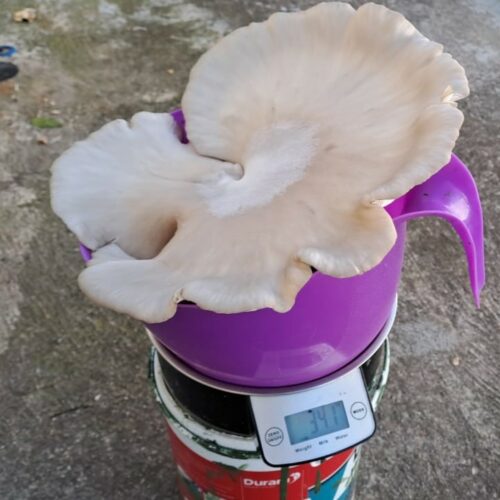
Our target was to achieve a Master’s Mix equivalent, aiming for a 6.5% protein baseline or roughly 1.0% Nitrogen. For the base, we used 100% pine pellets, known for their high lignin content and low native nitrogen—a challenging substrate for many species—as urban myth’s state cannot grow on pine. We supplemented this with a biologically active carbon (BAC) concentrate at 290g per 1.0kg dry base.
The method employed was Bundu-Tek, meaning no autoclave sterilisation was used.
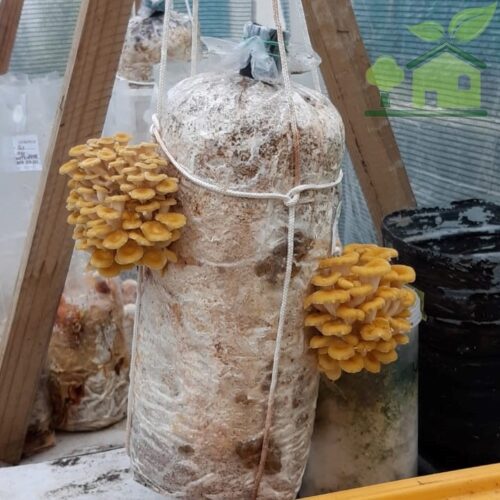
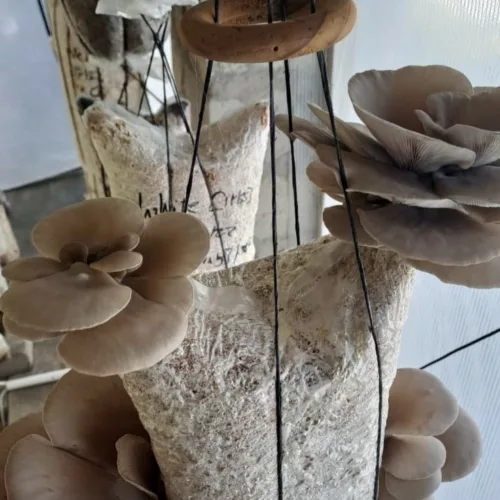
The result was a record-breaking 341g single-fruitbody White Oyster, representing a 31% increase over our previous straw baseline record of 260g.
The engineering takeaway was clear: the mycelium successfully dismantled the lignin-heavy wood matrix, using the precision-fuelled BAC as a primary ignition fuel, completely outpacing competitive contamination. This case study definitively proves that Master’s Mix equivalent performance can now be achieved without an autoclave, using readily available pine pellets.
Case Study B: The Super-CVG “Manure” Test – Quadrupling Yields (April 2026)
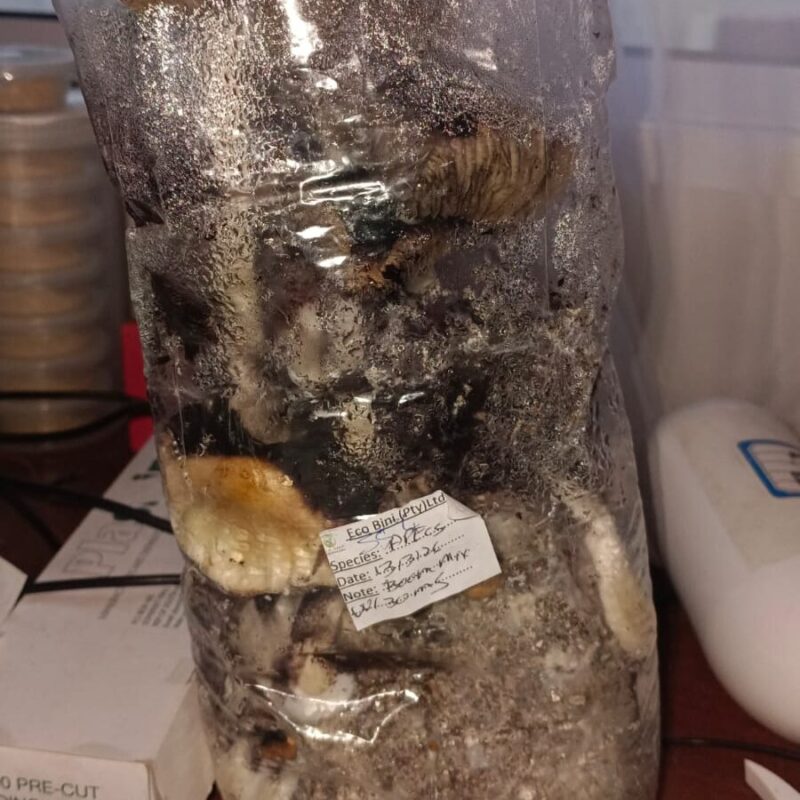
For this test, we targeted a prime horse manure equivalent, aiming for a 3.5% protein profile. The base was our Bundu Boom CVG (Coco/Vermiculite/Gypsum). We added a BAC concentrate at 155g per kilogram dry base, prepared in a 10x8x50cm “Grow-in-Bag” at 80% moisture content via the Bundu-Tek method. The outcome was nothing short of astronomical: a 392.3% Biological Efficiency (BE).
This means we returned nearly four times the dry weight of the substrate as fresh mushrooms, with a harvest of 510g total over two flushes from just 130g of dry substrate.
The engineering takeaway is profound: by hitting the exact protein profile of aged pasture manure with precision additives, we quadrupled the dry weight in fresh mushrooms using a purely synthetic, clean-handling mix. This completely bypasses the foul odours, weed seeds, and intense sterilisation cycles tied to traditional dung cultivation for secondary decomposing fungi.
Crucially, this demonstrates that Super-CVG can now achieve a protein content equivalent to 20% supplemented hardwood fuel pellets (HWFP) without the need for an autoclave.
Precision Fueling Table: Hitting Target Protein Levels
To allow cultivators to hit these precise “Paradigm Targets” smoothly, we have standardised application rates for our biologically active carbon (BAC) concentrate based on 1.0kg of Dry Substrate Base (pine Pellets or CVG) using our aired, moist concentrate (40%–45% MC):
| Performance Tier | Target Substrate Protein % | BAC Requirement (per 1kg dry base) | Practical Retail Scale & Comparative Benchmark |
| Standard Boost | 1.4% Protein | 80g | 1000ml Bottle treats a standard 10kg pellet bag (~10% Wheat Bran Equivalent). |
| Prime Manure (Super-CVG) | 2.5% Protein | 150g | 1000ml Bottle treats a bulk 5kg compressed Coir Block (~20% Wheat Bran / Aged Dung Bio-Mimic). |
| Master-Growth Engine | 6.5% Protein | 500g | High-yield 50/50 Oak-Soy “Master’s Mix” Equivalent for wood-loving strains. |
| Synthetic Spawn (True-Syn3d) | 12% Protein | 1300g | True Synthetic Spawn with protein equivalency to Sinden’s cereal grain |
4. Why Selective Nutrition Outperforms Traditional Supplementation
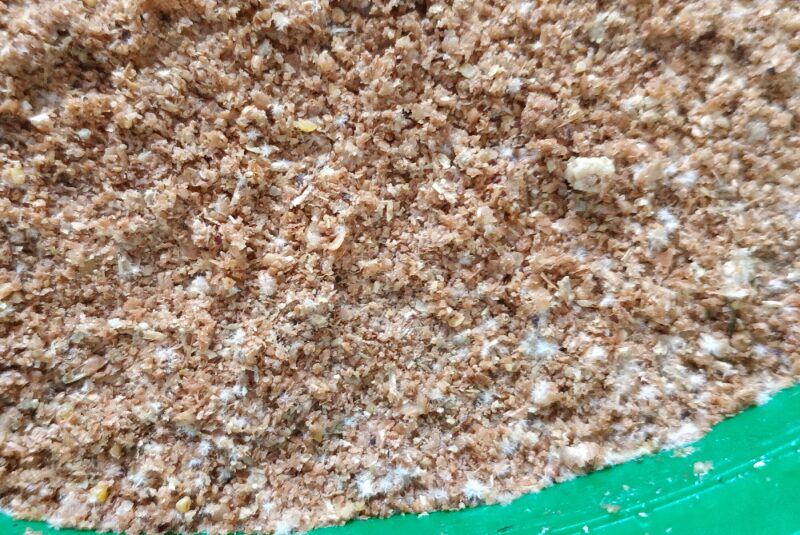
In the old paradigm, achieving a heavy 6.5% protein level often required adding roughly 500g of bulk soy hulls per kilogram of wood. Moving this massive volume of low-density, general-access fibre creates a highly volatile, contamination-prone bioreactor that mandates absolute sterile control. With our biologically active carbon concentrate, we achieve that exact same nitrogen wallop using only 290g of additive.
This preserves the structural integrity and water-retention balance of your bulk substrate base while handing the fungi a dominant, selective advantage.
5. Anaerobic Resilience: The Full Soil Biome Advantage
Unlike conventional products that might use limited, isolated strains of microorganisms, our biologically active carbon (BAC) concentrate is derived from processes that leverage a deeply diverse, multi-tiered biological matrix. This ensures natural parity is maintained by a complete, functional soil biome.
The “Stasis Proof” observed during True-Syn3d spawn development – where unsterilised media remained stable while expose to ambient conditions – directly informs this substrate resilience, or “Selecetivity”.

This inherent power of a complete, living biome means that the substrate is robust enough to succeed in open, low-tek garage and farm environments. The active biology provides a built-in fail-safe, offering a buffer against the contamination risks that plague traditional, sterile methods. This concept is further elaborated in Vermicompost and Selective Nutrition: Why it Doesn’t Go Bad | 328N.
The Microbial Bridge
Bio-Available Feeding
Mycelial Dominance
SPeS Hardware Hub
Equipping the Circular Revolution with STS-Tested engineering.
6. Conclusion: Democratizing High-Yield Mycology
The transition from General Nutrition to Selective Nutrition for substrates represents a profound shift—the true democratisation of mushroom cultivation. When small-scale, decentralised cultivators no longer need to burn through heavy electrical or gas utilities running autoclaves to achieve near-400% Biological Efficiency, the structural barriers to local food and medicine production completely vanish.
The STS Lab has proven the efficacy of this Third Paradigm. Whether you are running commercial Oyster blocks on cheap local fuel pellets to achieve Master’s Mix equivalent yields, or pushing high-speed flushes on clean Super-CVG with protein content rivalling supplemented hardwood, the secret to success is not adding more high-pressure heat. Instead, it lies in running a smarter, structurally resilient matrix that works with nature, not against it.
Socratic Questions
-
STS
Agar Agar Powder (150g)
Original price was: R299.R265Current price is: R265. Add to basket🧫 High-purity agar agar powder – no fillers.
🧫 Powdered form for easy nutrient media prep.
🧫 For Petri plates and slants.
🧫 In Reusable PP Media Jar -
STS

Eco Bini™ BioaKt Media/Substrate Conditioner | 2000 ml
Original price was: R195.R149Current price is: R149. Add to basket🏗 Bundu-Tek additive with kelp alginates – No autoclave needed.
🏗 Alkaline pH Pasteurizer
🏗 Self-sterilizing formula
🏗Boost yields and colonizing times -
STS
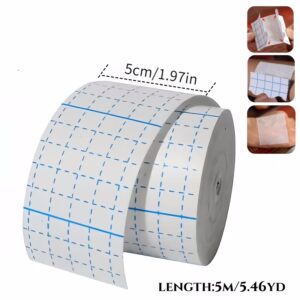
SMS Tape | High-Flow Autoclavable Filter Roll (5cm x 5m)
Original price was: R115.R95Current price is: R95. Add to basket🧫 Genuine SMS Filtration
🧫 High Airflow, Sterile Barrier
🧫 Autoclavable Adhesive
🧫 Hydrophobic & Non-Wicking -
STS
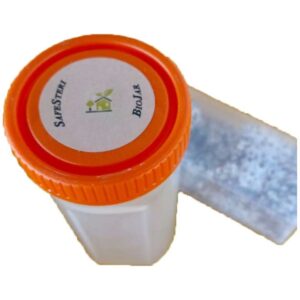
Mushroom Spawn Jar 320ml – Sterilized Sorghum Grain
Price range: R150 through R720 Select options This product has multiple variants. The options may be chosen on the product page📦 Sterilized Sorghum Grain Mother Spawn Jar
📦 320ml Reusable BioJar, Shatterproof PP5.
📦 Positive-Seal (No Gaskets).
📦 0.25μm ePTFE filter.
Socratic Questions:
1. How does Bundu-Tek pasteurisation enable autoclave-free substrate preparation?
2. What are the cost savings of replacing autoclaves with selective nutrition methods?
3. Can this substrate revolution be applied to other mushroom species beyond oysters?
4. How does biologically active carbon prevent contamination in nutrient-rich substrates?
5. Where can I learn more about the specific “BioaKt catalyst” used in Bundu-Tek?