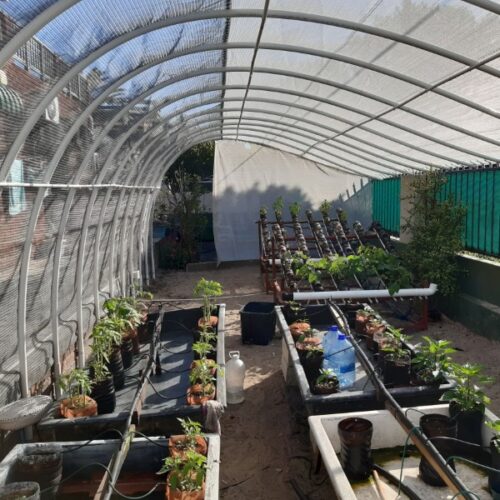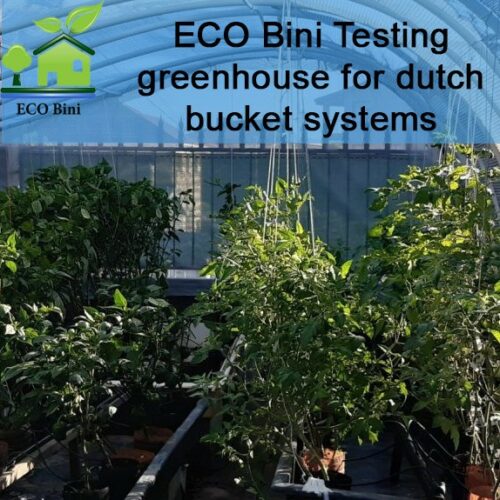
After more than a decade of hydroponic urban farming and hands-on testing at the Sustainability Testing Station (STS) in Gansbaai, we’ve learned that the biggest hidden obstacle for many growers isn’t nutrients, lights, or even pests — it’s the growing medium itself.
Today we tackle one of the most misunderstood topics in South African horticulture: “washed” coco coir and why simply washing it is not enough.
What is Coco Coir?
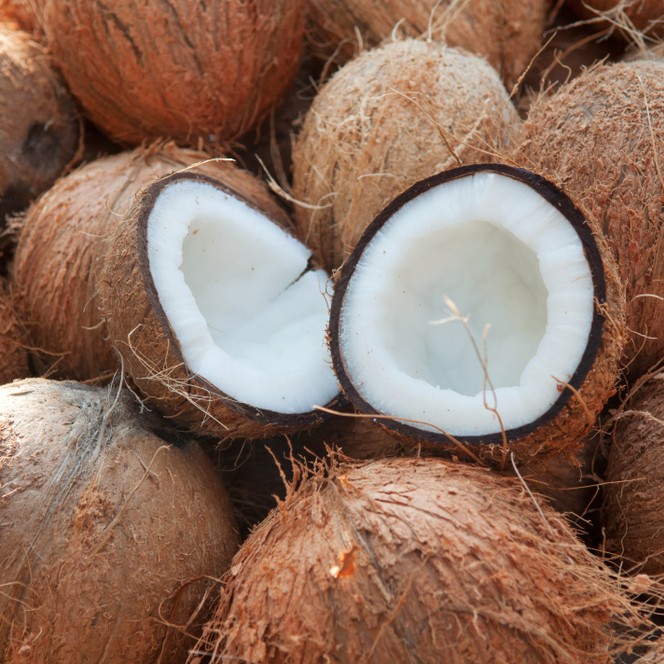
Coco coir is a sustainable, renewable growing medium made from the fibrous husks of coconuts — a byproduct of the coconut processing industry. It has become extremely popular as a peat moss alternative because it offers excellent water retention (up to 80%), good aeration, and strong drainage while remaining lightweight and slow to decompose.
It is widely used in hydroponics, seed starting, potting mixes, hanging basket liners, and as a base for mushroom substrates (often called CVG — Coco, Vermiculite, Gypsum).

Coco coir is naturally inert (contains almost no nutrients) and has a slightly acidic pH (typically 5.5–6.8). While these traits make it versatile, they also create a critical challenge that most commercial “washed” blocks fail to address.
The Three Requirements of Any Growing Medium
For healthy root systems — whether for plants or mushroom substrates — three things are essential:
- Air (oxygen for root respiration)
- Water (consistent moisture without waterlogging)
- Nutrients (available in the right form and balance)
Coco coir excels at the first two. Its fibrous structure provides superb aeration and water-holding capacity
The real problem lies with the third requirement — nutrients — and this is where the “washed vs buffered” myth causes so many failures.
The Science: Cation Exchange Capacity (CEC) Explained
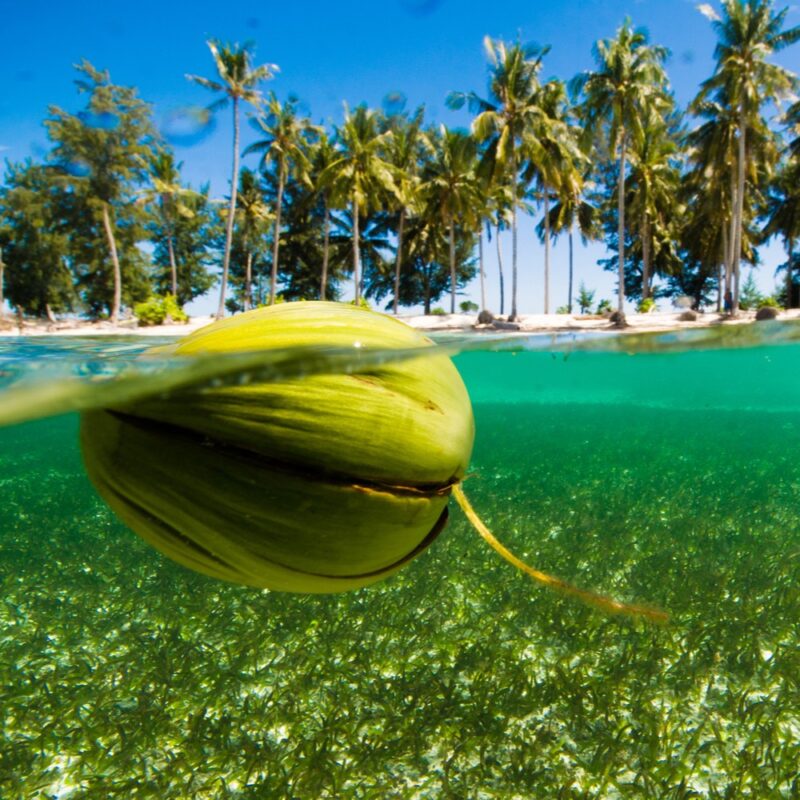
Coconut palms grow in coastal environments, so their husks naturally accumulate high levels of sodium (Na⁺) and potassium (K⁺) salts. These ions are bound to the coir fibres through a property called Cation Exchange Capacity (CEC).
Think of the coir as a giant magnet for positively charged ions. The exchange sites on the fibre have a much stronger attraction for divalent ions (double positive charge) like Calcium (Ca²⁺) and Magnesium (Mg²⁺) than for monovalent ions (single positive charge) like Sodium and Potassium.
This is nature’s clever protection for the coconut seed — the coir acts as a salt repository and shield. But when we use it as a growing medium, this same mechanism becomes a problem.
Washed vs Truly Buffered — The Critical Difference
Most 5kg coco coir blocks sold in South Africa are labelled “washed” or even “ready to use.” Washing removes loose dust and some soluble salts, which temporarily lowers EC. However, it does not perform true ion exchange on the CEC sites.
Then also many “Buffered” blocks are simply washed – The processing plants where sourced really do not have the acumen, or time constraints, to properly buffer waste – lets say it ‘lost in translation’ to be euphemistic.
True buffering requires:
- A wet environment (ions only move and swap when dissolved)
- Sufficient Calcium and Magnesium to displace the Na⁺ and K⁺
- Enough contact time (typically 36–48 hours)
- A final rinse to remove the displaced sodium and potassium
Many imported blocks are simply washed and then compressed again. Some manufacturers even add dry Calcium Nitrate before re-pressing the block — this does almost nothing because ion exchange cannot occur in a dry state.
The result? When you add your nutrient solution, the coir “steals” Ca and Mg from it, releases Na and K into the root zone, and you end up with calcium/magnesium deficiencies, tip burn, stalled growth, and wilting — even when feeding correctly.
We’ve seen this repeatedly at STS: seedlings that wilt within days, and even established spinach that suddenly collapses in supposedly “buffered” coir.
The STS “7:2” Buffer-Charge Solution
At the STS facility we developed a practical, reliable protocol to properly condition coco coir. We call it the 7:2 Buffer-Charge — a precise ratio of Calcium Nitrate to Magnesium Sulphate.
The ion exchange happens in the dissolved phase, effectively flushing out the sodium and potassium. As a bonus, the remaining chemistry creates a fine precipitate of Calcium Sulphate (gypsum) directly inside the coir, which acts as a secondary slow-release reservoir of calcium and sulphur throughout the crop cycle.
How to Properly Charge a 5kg Coco Coir Block (STS Dry-Charge Protocol)
- Place your dry 5kg coir block in a suitable container or tub.
- Evenly sprinkle one 50g STS Buffer-Charge sachet over the top of the block.
- Hydrate slowly with 50L of water (hot water speeds up expansion).
- After 2 hours, stir thoroughly to break up the block and maximise contact surface.
- Allow 36–48 hours for complete cation exchange.
- Drain the dark, salt-laden water completely.
- Give a final rinse with 20L of clean rainwater (or low-EC water) to achieve low EC media.
Your coir is now properly buffered, stable, and ready for planting. Nutrients will stay available to the plants instead of being locked up.
Final Tips
- Always use rainwater or RO water with very low EC for the final rinse if possible.
- Test your runoff EC and pH after charging — it should be stable and low.
- Never skip the full 36–48 hour soak — this is where the real chemistry happens.
- The 50g sachet is pre-measured specifically for standard South African 5kg blocks.
Conclusion
Coco coir has huge potential as a sustainable, renewable medium — but only when properly prepared. “Washed” is not the same as “buffered,” and treating the two as equal is one of the most common reasons for disappointing results in hydroponics and urban farming.
At STS we believe in turning waste into reliable resources. Proper buffering is non-negotiable if you want consistent, high-yield performance from coco coir.
That’s why we created the STS Buffer-Charge Professional 5kg Coco Coir Conditioner — a simple, zero-waste, laboratory-optimised solution that takes the guesswork out of the process.
Stop fighting hidden nutrient lockout. Charge your coir properly and watch the difference in your next grow.
Have you experienced issues with “washed” coir? Share your results in the comments or contact the STS — we’re always testing and improving.
The Microbial Bridge
Bio-Available Feeding
Mycelial Dominance
SPeS Hardware Hub
Equipping the Circular Revolution with STS-Tested engineering.