Hydroponic nutrients are not mysterious formulas—they are carefully balanced solutions of water-soluble mineral salts.
Summary
This Lab Note explains why commercial nutrients are sold as Part A and Part B, how to prevent precipitation (“knockout”), and how to formulate your own professional-grade concentrates from technical salts.
1. Introduction to Hydroponic Nutrients

Hydroponics appears complicated because it replaces soil with bottles of mysterious liquids carrying labels such as Part A, Part B, Grow, Bloom, Micro, or Flower Booster. Marketing departments have done an excellent job convincing growers that these formulations are proprietary recipes that only a handful of companies understand.
The reality is considerably simpler.
Plants have not changed in millions of years. Whether growing in a forest, a field, or a hydroponic reservoir, they require exactly the same mineral elements. The only difference is how those nutrients reach the roots.
In soil, bacteria, fungi and earthworms gradually break down organic matter into water-soluble mineral ions that plant roots can absorb. In hydroponics, we bypass this biological process by dissolving those same mineral ions directly into water.
This is an important distinction.
Plants do not absorb fertilizer granules, crystals, or chemical compounds. They absorb dissolved ions. Nitrogen is taken up primarily as nitrate (NO₃⁻), potassium as K⁺, calcium as Ca²⁺, magnesium as Mg²⁺, and so forth. If the nutrient is not dissolved in water, the plant cannot access it.
To safely store liquid concentrates at a high density, you must segment the incompatible Hydroponic nutrients are therefore nothing more than carefully balanced solutions of water-soluble mineral salts.
Almost every commercial hydroponic nutrient sold today—from hobby brands to professional greenhouse formulations—is built from the same relatively small collection of technical salts. The difference between manufacturers lies mostly in concentration, purity, elemental ratios and convenience rather than secret chemistry.
Understanding this removes much of the mystery surrounding hydroponics.
Once you understand which salts provide which nutrients, why certain compounds cannot be stored together, and how concentration affects chemical stability, you gain complete control over your nutrient formulation. Commercial nutrient bottles become a convenience rather than a necessity.
2. Why Hydroponic Nutrients Come in Two Parts
One of the first questions every grower asks is why hydroponic nutrients are almost always sold as Part A and Part B.
Surely it would be easier to put everything into one bottle?
The answer lies in chemistry rather than horticulture.
Commercial nutrients are supplied as highly concentrated stock solutions. A five-litre concentrate may eventually produce hundreds of litres of irrigation solution once diluted into the reservoir. At these high concentrations, certain mineral ions become chemically incompatible with one another.
The primary offender is calcium.
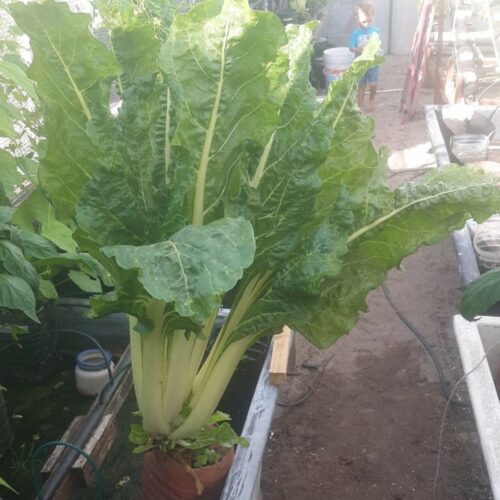
Calcium is an essential plant nutrient responsible for strong cell walls, healthy growing tips and proper fruit development. Most hydroponic systems obtain calcium from Calcium Nitrate, making it one of the most important ingredients in Part A.
Unfortunately, calcium has an unfortunate habit of reacting with phosphate and sulfate ions whenever they become too concentrated.
If Calcium Nitrate is mixed directly with Monopotassium Phosphate (MKP) or Magnesium Sulfate (Epsom Salt) in concentrated form, the dissolved ions rapidly combine to produce insoluble calcium compounds. Instead of remaining dissolved, they form a white sludge that settles to the bottom of the container, consisting of insoluble Calcium Phosphate and/or Calcium Sulphate. Those nutrients have effectively been knocked out from the solution.
For this reason, commercial manufacturers simply separate the incompatible ingredients.
Part A generally contains:
- Calcium Nitrate
- Iron chelates
- Compatible nitrate salts
Part B generally contains:
- Monopotassium Phosphate (MKP)
- Magnesium Sulfate
- Potassium salts
- Trace element package
The two concentrates remain chemically stable while stored separately. Only when both concentrates are added to a large volume of water do the individual ions become sufficiently diluted that they can coexist without forming precipitates.
Some manufacturers divide nutrients even further into three-part systems such as Grow, Micro, and Bloom.
This additional separation is not because plants suddenly require different chemistry. Instead, it allows growers to alter the ratio between nitrogen, phosphorus and potassium as crops move from vegetative growth into flowering and fruit production.
The underlying mineral salts remain exactly the same.
The bottles simply provide greater flexibility.
NOTE: You do get single component ‘hydroponic’ nutrients – but these are falsely advertised “Fertigation” fertilizers – and designed to be added to soil. As in soil you get high concentration of calcium salts, so they remove CaNO3 from the “Hydroponic” nutrient,
3. The Chemistry of “Knockout”
Throughout the STS Lab Notes we use the practical term Knockout.
Chemists refer to the process as precipitation, while growers often speak about nutrient lockout. Although related, these terms describe slightly different aspects of the same problem. When incompatible ions meet at high concentrations they chemically react to form compounds that are almost insoluble in water. A common rule of thumb we apply is above 10 000PPM [20ms/cm].
Instead of remaining available to the plant, they literally fall out of solution – The nutrients have been knocked out of the liquid.
One of the most common reactions occurs between calcium and phosphate, and/or sulphate:
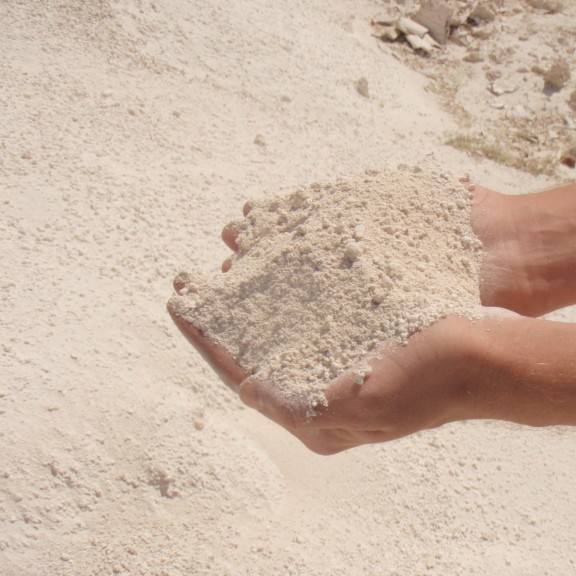
- Calcium ions combine with phosphate ions to form Calcium Phosphate—a hard, insoluble mineral found naturally in bones and teeth.
- Similarly, calcium readily reacts with sulfate ions to produce Calcium Sulfate (Gypsum).
- Both compounds have very low solubility.
- Once formed, they cannot simply be stirred back into solution.
The result is familiar to many growers.
A nutrient concentrate that was crystal clear yesterday suddenly develops a milky appearance or a layer of white sediment at the bottom of the bottle. Drippers begin clogging. Nutrient analysis no longer matches the intended formulation, and plants gradually begin showing deficiency symptoms despite nutrients technically being present.
The chemistry has already happened. Fortunately, the solution is simple:
Keep incompatible ions separated while concentrated.
Only allow them to meet after they have been diluted into the final reservoir.
This explains why hydroponic nutrient concentrates are almost always stored separately but can safely coexist once diluted into hundreds of litres of irrigation water. It also explains why mixing concentrated nutrients together before adding water is one of the quickest ways to ruin an expensive batch of fertilizer.
This same principle also applies when making your own concentrate from dry mixes:
- Water first.
- technical hydroponic salts second.
- Never the other way around.
4. The Building Blocks — Hydroponic Technical Salts
Every commercial hydroponic nutrient ultimately begins with a surprisingly small collection of raw materials known as technical salts. These are highly purified, completely water-soluble mineral compounds manufactured specifically for fertigation and hydroponic applications.
Unlike conventional agricultural fertilizers, technical salts contain very little insoluble filler or coating material. They dissolve rapidly, leave minimal residue and provide nutrients in precisely known concentrations.
Each technical salt contributes one or more essential plant nutrients. For example:
- Calcium Nitrate supplies both calcium and nitrate nitrogen.
- Potassium Nitrate contributes nitrogen together with potassium.
- Monopotassium Phosphate (MKP) provides phosphorus and potassium.
- Magnesium Sulfate (Epsom Salts) supplies magnesium together with sulfur.
Rather than purchasing a different fertilizer for every crop, commercial nutrient manufacturers simply combine these building blocks in different proportions. The plants themselves require only thirteen essential mineral nutrients. The formulations merely adjust how much of each element is present.
The primary macronutrients are nitrogen, phosphorus and potassium. Secondary macronutrients include calcium, magnesium and sulfur. Although required in slightly smaller quantities, deficiencies rapidly limit growth and fruit quality.
Finally, plants require a surprisingly small collection of micronutrients. Iron, manganese, zinc, copper, boron, molybdenum and chlorine are needed only in trace amounts, yet each performs essential biochemical functions.

Plants respond to elements, not products.
Refer to #113 STS Lab Note for a rundown of the various elements and functions of macro- and micro-nutrients.
| Element | Primary Role |
|---|---|
| Nitrogen | Leaf and stem growth |
| Phosphorus | Root development and energy transfer |
| Potassium | Water regulation and fruit quality |
| Calcium | Cell walls and new growth |
| Magnesium | Chlorophyll production |
| Sulfur | Proteins and enzymes |
| Iron | Chlorophyll synthesis |
| Manganese | Photosynthesis |
| Zinc | Growth hormones |
| Copper | Enzyme activation |
| Boron | Cell division |
| Molybdenum | Nitrogen metabolism |
| Chlorine | Osmotic balance |
A tomato plant has no concept of brand names. It simply absorbs nitrate ions, potassium ions, calcium ions and magnesium ions from whatever source makes them available. Whether those nutrients originated from an expensive imported concentrate, a locally mixed technical salt formulation, organic vermicompost or a professionally engineered commercial product makes no difference to the plant.
The objective of every hydroponic nutrient is therefore remarkably straightforward:
Deliver every essential mineral element in a water-soluble form, at the correct concentration, while preventing incompatible ions from reacting before they reach the root zone.
That simple principle has underpinned hydroponic nutrient formulation for nearly a century and remains the foundation upon which virtually every commercial nutrient on the market is built today.
5. Making Hydroponic Nutrient Concentrates
Once you understand why nutrients are separated into two parts, preparing your own concentrates becomes surprisingly straightforward.
The first rule is simple:
Never mix concentrated Part A and Part B together.

Always begin with clean water, preferably rainwater, reverse osmosis water, or low-EC municipal water. Measure each technical salt accurately and allow it to dissolve completely before adding the next compatible ingredient.
- Part A should contain only calcium-compatible salts.
- Part B contains the phosphates, sulfates and the micronutrients.
- Each concentrate can then be stored separately until required.
When preparing your working nutrient solution, fill the reservoir with water first. Add the required amount of Part A and mix thoroughly. Only once it has dispersed throughout the reservoir should Part B be added. This simple sequence prevents localized high concentrations where precipitation could occur.
Another important consideration is concentration.
More concentrated is not always better.
There is a practical limit to how much mineral salt water can hold before crystals begin forming or instability develops during storage. Commercial manufacturers spend considerable effort balancing concentration against long-term shelf stability. While it is tempting to produce extremely concentrated stock solutions to save storage space, moderate concentrations are generally easier to manage and considerably more forgiving.
Storage conditions also matter.
Keep concentrates sealed, protected from sunlight, and stored in a cool environment. High temperatures accelerate chemical degradation, while evaporation gradually changes concentration over time. Properly prepared concentrates remain remarkably stable provided incompatible salts have been separated correctly.
For most growers, accuracy matters more than complexity. A carefully measured nutrient mixed consistently every time will outperform an elaborate formulation mixed differently every week. Hydroponics rewards repeatability.
6. Commercial Formulations — Standing on the Shoulders of Giants
Modern hydroponic nutrient companies often market their products as proprietary formulations developed through decades of research.
While every manufacturer may make small adjustments for particular crops or growing conditions, nearly all commercial nutrient systems trace their ancestry back to two landmark formulations.
The first is the Hoagland Solution, developed during the 1930s at the University of California by Dr. Dennis Hoagland. His work established the elemental concentrations required for vigorous plant growth under controlled conditions and remains one of the most influential nutrient formulations ever published – fueling the Green Revolution. The Hoagland Solutions is oriented to high bearing produce such as tomatoes, peppers and cucumbers
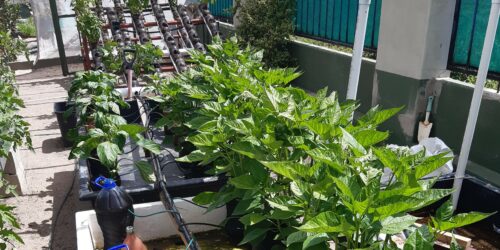
Nearly fifty years later, Dutch greenhouse researcher A. Sonneveld refined these ratios for intensive commercial vegetable production. His work adjusted the balance between several macro- and micronutrients to better suit greenhouse green leavy crops.
Hoagland Formula
- Nitrogen (N): 210 ppm
- Phosphorus (P): 31 ppm
- Potassium (K): 235 ppm
- Calcium (Ca): 200 ppm
- Magnesium (Mg): 48 ppm
- Sulfur (S): 64 ppm
- Iron (Fe): 1-5 ppm
- Manganese (Mn): 0.5 ppm
- Zinc (Zn): 0.05 ppm
- Copper (Cu): 0.02 ppm
- Molybdenum (Mo): 0.01 ppm
- Boron (B): 0.5 ppm
Sonnenveld Solution
- Nitrogen (N): 168 ppm
- Phosphorus (P): 50 ppm
- Potassium (K): 210 ppm
- Calcium (Ca): 180 ppm
- Magnesium (Mg): 48 ppm
- Sulfur (S): 64 ppm
- Iron (Fe): 2 ppm
- Manganese (Mn): 0.55 ppm
- Zinc (Zn): 0.33 ppm
- Copper (Cu): 0.05 ppm
- Molybdenum (Mo): 0.05 ppm
- Boron (B): 0.55 ppm
Although their elemental ratios differ slightly, the philosophy behind both formulations is identical.
- Provide every essential nutrient in sufficient quantity.
- Maintain appropriate elemental balance.
- Keep every nutrient dissolved and available to the plant.
Nearly every commercial hydroponic nutrient sold today—from hobby kits to industrial greenhouse formulations—can trace its chemical ancestry to these two formulations.
This is worth remembering – Commercial nutrients are not mysterious inventions.
They are carefully engineered variations of well-established scientific principles that have been publicly available for decades.
The value lies in convenience, quality control and ease of use—not secret chemistry.
7. Practical DIY Nutrient Recipes
With an understanding of technical salts, concentrate preparation and nutrient compatibility, preparing your own hydroponic nutrients becomes entirely achievable.
Most leafy vegetables such as lettuce, spinach and herbs perform exceptionally well on relatively mild nutrient solutions with electrical conductivities between approximately 1.5 and 2.0 mS/cm.
Heavy-feeding fruiting crops including tomatoes, peppers and cucumbers generally require stronger nutrient solutions, often operating between 2.2 and 3.0 mS/cm, depending on the growth stage and environmental conditions.
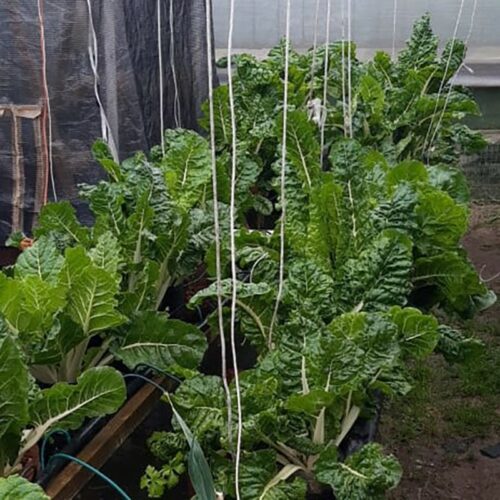
The exact formulation is less important than consistency. Healthy crops depend on maintaining stable nutrient concentrations rather than constantly chasing new recipes. For this reason many growers prepare a dedicated micronutrient stock solution that can be accurately dosed into every reservoir alongside Part A and Part B concentrates.
Once the chemistry is understood, producing your own nutrient solution becomes little more than measuring accurately, dissolving correctly and maintaining consistency.
The mystery disappears.
The science remains.
Working from Scratch here is a list of products you can use, with their relative nutrient components and strengths, and mass of each for 1000L nutrient @ 2 mS/cm. So to make you will dissolve Calcium Nitrate in 10 liters water [Part A = 1] and the rest all in separate 10L water concentrate [Part B = 2 to 11]:
- Calcium Nitrate (895.3 g)
- Nutrients: 15.5% Nitrogen (N), 19% Calcium (Ca)
- Concentration (g/kg): 155 g/kg Nitrogen (N), 190 g/kg Calcium (Ca)
- Ammonium Nitrate (86.7 g)
- Nutrients: 34% Nitrogen (N)
- Concentration (g/kg): 340 g/kg Nitrogen (N)
- Potassium Nitrate (885 g)
- Nutrients: 13% Nitrogen (N), 44% Potassium (K)
- Concentration (g/kg): 130 g/kg Nitrogen (N), 440 g/kg Potassium (K)
- Potassium Phosphate Monobasic (262 g)
- Nutrients: 0% Nitrogen (N), 52% Phosphorus (P), 34% Potassium (K)
- Concentration (g/kg): 0 g/kg Nitrogen (N), 520 g/kg Phosphorus (P), 340 g/kg Potassium (K)
- Magnesium Sulfate (Epsom Salt) (498.5 g)
- Nutrients: 9.1% Magnesium (Mg), 13% Sulfur (S)
- Concentration (g/kg): 91 g/kg Magnesium (Mg), 130 g/kg Sulfur (S)
- Sequestrene 330 (18.9 g)
- Nutrients: 10% Iron (Fe)
- Concentration (g/kg): 100 g/kg Iron (Fe)
- Manganese Sulfate (1.5 g)
- Nutrients: 31% Manganese (Mn), 18% Sulfur (S)
- Concentration (g/kg): 310 g/kg Manganese (Mn), 180 g/kg Sulfur (S)
- Zinc Sulfate (692 mg)
- Nutrients: 35.5% Zinc (Zn), 17% Sulfur (S)
- Concentration (g/kg): 355 g/kg Zinc (Zn), 170 g/kg Sulfur (S)
- Copper Sulfate (0.17 mg)
- Nutrients: 25% Copper (Cu), 12% Sulfur (S)
- Concentration (g/kg): 250 g/kg Copper (Cu), 120 g/kg Sulfur (S)
- Borax (Laundry Grade) (2.8mg)
- Nutrients: 11% Boron (B)
- Concentration (g/kg): 110 g/kg Boron (B)
- Sodium Molybdate (0.12mg)
- Nutrients: 39% Molybdenum (Mo)
- Concentration (g/kg): 390 g/kg Molybdenum (Mo)

Operational Warning: Never attempt to use standard granulated field fertilizers (like basic 7:1:3 lawn fertilizer). These agricultural variants are intentionally formulated with up to 90% non-soluble clay fillers, binding agents, and insoluble coatings designed for slow environmental release—all of which will instantly turn your hydroponic reservoir into a muddy, choked mess.
Advised to buy water soluble fertigation fertilizers (You must ask explicitly for “Fertigation-Grade” water-soluble technical salts.) And add the missing technical salts to other part, typically Calcium Nitrate.
8. Conclusion — Understanding the Chemistry Gives You Independence
Hydroponic nutrients are often presented as proprietary products wrapped in colourful labels and impressive marketing claims.
In reality, they are carefully balanced mixtures of water-soluble mineral salts following chemical principles that have been understood for generations.
Once you understand why nutrients are separated into Part A and Part B, how precipitation reactions occur, and which technical salts provide each essential element, commercial nutrient bottles lose much of their mystery.
That does not mean there is anything wrong with buying ready-made nutrients. Commercial formulations save time, are professionally manufactured and remain an excellent choice for many growers.
However, understanding the chemistry gives you something more valuable than a recipe.
It gives you independence.
You can troubleshoot deficiencies with confidence.
You understand why knockout occurs instead of simply being told to “never mix the bottles.”
You can compare commercial products objectively instead of relying on marketing claims.
And if circumstances require it, you have the knowledge to formulate your own nutrients from readily available technical salts.
That, ultimately, is the purpose of this Lab Note.
Not to convince you to stop buying nutrients.
But to understand exactly what is inside the bottle—and why it works.
-
STS
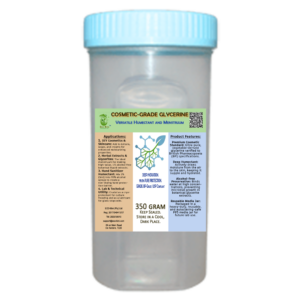
350g Pure Cosmetic-Grade Glycerine in Reusable 320ml PP Media Jar
Original price was: R159.R125Current price is: R125. Add to basket🧫Versatile 100% Humectant: Locks in moisture for skin care and DIY cosmetic formulations
🧫Shipped in a reusable, autocalvable, impact-resistant, gasketless double-seal laboratory Media Jar
🧫 Extraction Menstruum: The ideal alcohol-free carrier and preservative for 1:5 herbal glycerites
🧫Essential as a cell cryoprotectant, craft preservative, or glass lubricant -
5× Genetics Preservation Kit | Freestanding 50 ml PP Vials
R249 Add to basket🧫 5 × 50 ml Freestanding PP Screw-Cap Vials
🛡️ Protective Full-Bore Polypropylene Storage Tub
🧬 Professional Mycelium Preservation System -
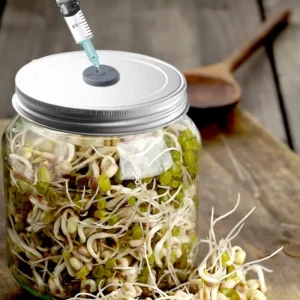
SHIP – Self-Healing Injection Ports, Butyl Rubber (10)
Price range: R39 through R49 Select options This product has multiple variants. The options may be chosen on the product page🧫 Medical-grade 13mm/20mm butyl rubber SHIP.
🧫 Packs of 10 Injection Ports.
🧫 100% Autoclave safe.
🧫 Liquid culture and no-lab inoculation. -
STS
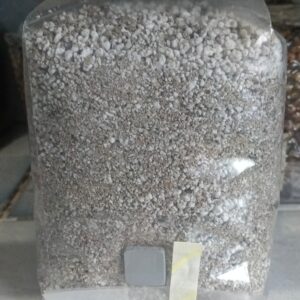
PretaBiome — Fermented Activated Carbon Biological Carrier
Original price was: R350.R179Current price is: R179. Add to basket📦 Sterile fermentation-conditioned biological carrier
📦 Double-Tap conditioned Sated Activated Carbon (SAC)
📦 Ready for fungi, bacteria & microbial inoculants
📦 10x8x50cm commercial spawn bag with 0.2µm filter & SHIP
Socratic Questions
how to mix raw fertigation salts for hydroponicsdifference between hoagland and sonneveld nutrient formulashow to prevent calcium sulfate chemical knockoutdiy technical grade hydroponic nutrient recipe weightscommercial tomato nutrient formulation ppm targets