Korean Natural Farming Meets Bundu Teq: Unlocking Nature’s Secrets
Summary
Discover how ancient wisdom and modern innovation converge to create truly resilient, self-sustaining agricultural systems. This note explores Korean Natural Farming (KNF) and its surprising parallels and divergences with Bundu Teq. We delve into the core principles of KNF, its unique methods, and how its philosophy aligns with, yet expands upon, the Bundu Teq approach to regenerative agriculture.
The Search for Sustainable Cultivation
For a long time, the pursuit of truly sustainable and regenerative agricultural practices has felt like navigating a constantly shifting landscape. My own journey, starting with the STS and hydroponics, moving through mushroom cultivation and vermiculture, revealed a need for a unifying system – Bundu Teq. However, as understanding deepened, the “Teq” – the technology – evolved. Discoveries in Terra Preta, carbon sequestration, bokashi, and Effective Microorganisms (EM) led down rabbit holes that illuminated the power of indigenous microbes and fermentation, eventually pointing towards Korean Natural Farming (KNF).
What started as an attempt to write a linear “how-to” book dissolved because living paradigms cannot be captured in a static manual. Systems built on biology are inherently open-source, dynamic, and ever-evolving. The moment I tried to lock the “Teq” down, nature shifts the goalposts.
This raised a crucial question: Is Bundu Teq truly unique, or is it a refinement of ancient, natural technologies?
Understanding Korean Natural Farming (KNF)
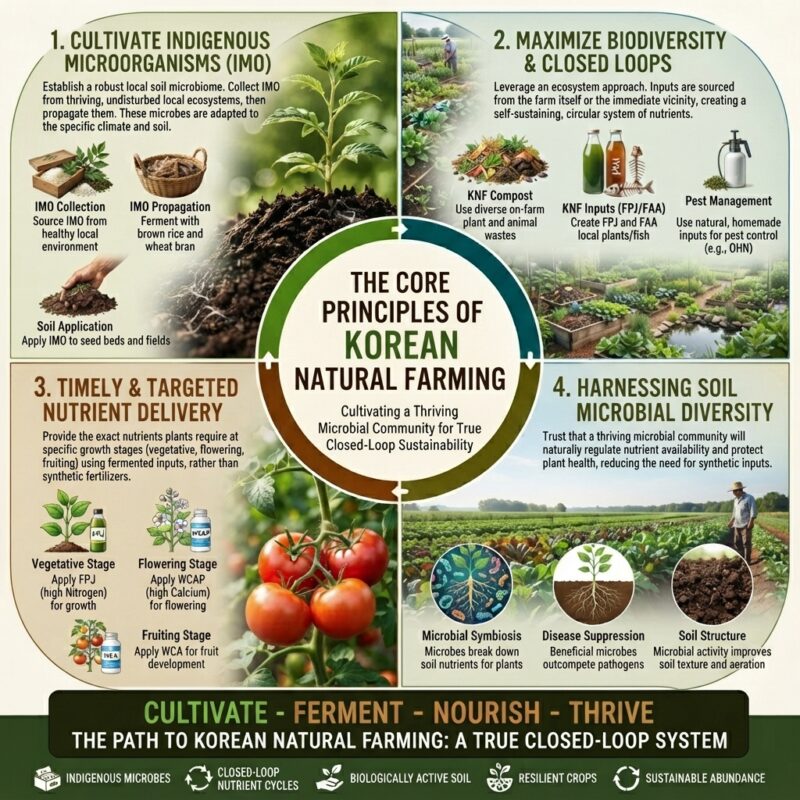
Korean Natural Farming (KNF) is an agricultural system developed in the 1960s by Master Cho Han-kyu. Its core philosophy is to replace purchased chemical fertilizers and pesticides with biology, specifically by harnessing natural microorganisms and creating inputs using readily available, local materials. Instead of force-feeding plants with synthetic nutrients, KNF focuses on building a hyper-active, living soil ecosystem. The principle is that a thriving microbial community will naturally provide plants with the exact nutrients they need, precisely when they need them. KNF emphasizes a “closed-loop system,” where inputs are sourced from the immediate environment, minimizing reliance on external purchases.
A significant portion of KNF, approximately 80%, is dedicated to understanding and utilizing microbes. This involves collecting Indigenous Microorganisms (IMOs) – bacteria, fungi, and yeasts naturally adapted to the local climate – from undisturbed natural areas. These captured microbes are then nurtured and multiplied using simplebohydrates like brown sugar or molasses, before being reintroduced to the farm’s soil to enhance biological activity.
Ed Eco is the BTK Curator, trained directly on STS research.
Ask him anything—from troubleshooting plant issues to engineering biological independence.
Beyond IMOs, KNF practitioners create their own biological inputs through fermentation. Some of the most prominent include:
LAB (Lactic Acid Bacteria): Cultured from sources like washed rice water and milk, LAB helps regulate soil microbes and combat harmful bacteria.
FPJ (Fermented Plant Juice): Made by fermenting fast-growing plant shoots (such as bamboo or weeds) with brown sugar, extracting growth hormones and nutrients.
FAA (Fish Amino Acids): Created by fermenting fish scraps with brown sugar, this input is rich in nitrogen, beneficial for plant vegetative growth.
WSC (Water-Soluble Calcium): Derived from dissolving eggshells or bones in vinegar, WSC aids in plant cell wall development and supports the transition to flowering and fruiting stages.
The current surge in KNF’s popularity stems from several key advantages:
LAB (Lactic Acid Bacteria): Cultured from sources like washed rice water and milk, LAB helps regulate soil microbes and combat harmful bacteria.
FPJ (Fermented Plant Juice): Made by fermenting fast-growing plant shoots (such as bamboo or weeds) with brown sugar, extracting growth hormones and nutrients.
FAA (Fish Amino Acids): Created by fermenting fish scraps with brown sugar, this input is rich in nitrogen, beneficial for plant vegetative growth.
WSC (Water-Soluble Calcium): Derived from dissolving eggshells or bones in vinegar, WSC aids in plant cell wall development and supports the transition to flowering and fruiting stages.
Cost-Effectiveness: Once the techniques are learned, potent fertilizers and pest controls can be produced at a fraction of the cost of commercial organic products.
Sustainability: KNF reduces plastic waste, chemical runoff, and dependence on global supply chains.
Resilience: Proponents report that KNF-grown plants develop deeper root systems, exhibit greater resilience to pests and drought, and yield higher-quality produce.
While KNF requires time, patience, and a hands-on approach to fermentation, its benefits have made it a significant trend in modern sustainable growing.
Bundu Teq and the Refinement of Nature’s Technology
The question that has long “niggled” is whether Bundu Teq is truly unique. Upon deeper examination, the answer lies in the names themselves. “Korean Natural Farming” emphasizes drawing from the wild – akin to venturing into the “bundu” of South Africa to find virgin forest soil as an inoculant.
In a way, Bundu Teq is KNF, but it is also over-reaching. Whereas in Bundu Teq, we acknowledge our own industrial displacement from the wild. We don’t always have a pristine virgin forest down the road – or in the South African ‘Veld’/Bundu, so we utilize the ultimate concentrated, bio-engineered inoculant already at our disposal: vermicast.
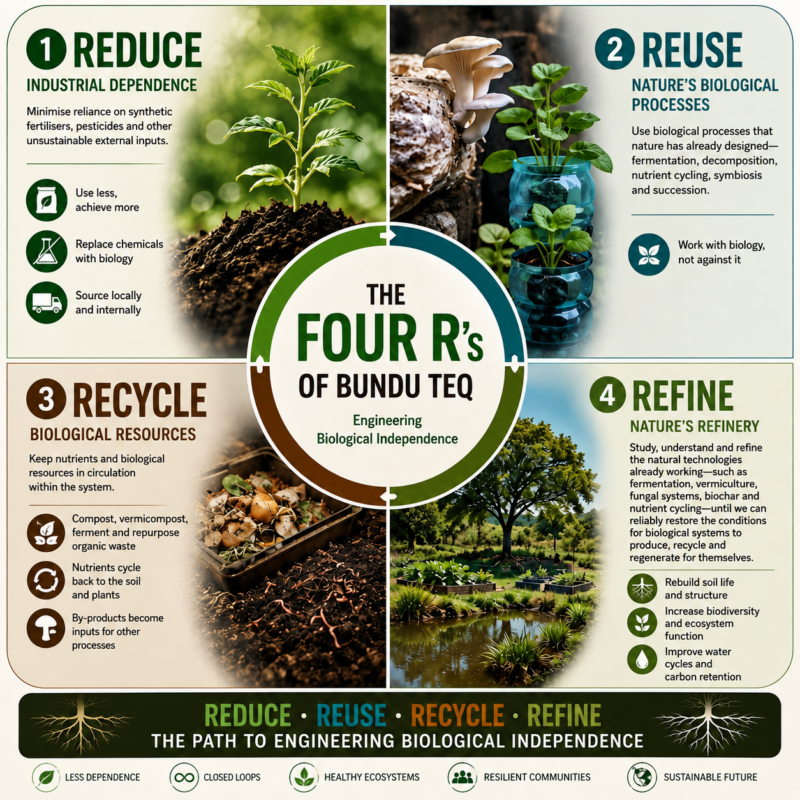
This is why writing a fixed book on it proved impossible. As the saying goes, you cannot patent nature. But Bundu Teq was never about a single method or a static Tek; it is about a technology—Nature’s Technology, discovered millennia ago by the ancient architects of Terra Preta (Amazonian Dark Earth), lost to Modern Man, and slowly being pieced back together. Bundu Teq is built on the pillars of:
Reuse: Maximizing the value of organic materials.
Reduce: Minimizing waste and external inputs.
Recycle: Creating closed-loop systems.
Refine: Enhancing natural processes through understanding and application.
Bundu Teq is not about reinventing the wheel, but about refining it to incorporate the best of what we learn. This includes integrating principles from KNF, the insights from Terra Preta (Nova), and any future discoveries that enhance regenerative agricultural practices.
A particularly insightful connection lies in the third paradigm shift discussed in the development of Bundu Teq. This principle has been utilized for centuries in button mushroom farming, a connection that often goes unnoticed. The controlled decomposition and microbial management inherent in mushroom cultivation mirror the fermentation and microbial inoculation central to KNF and Bundu Teq.

Bundu Teq and the Third Paradigm Shift
A classic example illustrating this refinement is the concept of Selective Nutrition, which defines the Third Paradigm Shift in Bundu Teq.
Old Thinking: Contamination is a sterility problem.
New Reality: Contamination is a nutrition problem – By pre-digesting nutrition through Monera systems (microbial processes), we create fungal substrates where gourmet mycelium thrives while contaminants remain nutritionally locked out.
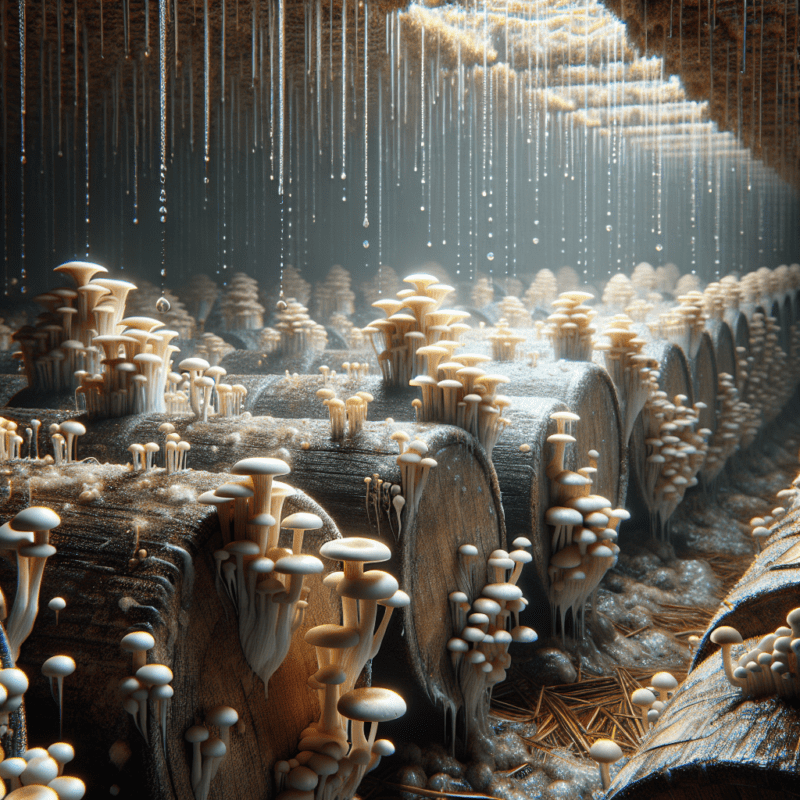
This principle has been implicitly practiced in button mushroom cultivation since its origins in the Paris Catacombs and Quarries…
Commercial Agaricus bisporus cultivation doesn’t simply sterilize straw/manure and feed the mushroom. Instead, it biologically transforms the substrate first. During Phase I, a succession of microorganisms consumes easily available compounds. Phase II then develops a specialized microbial community, including thermophilic fungi and bacteria. The finished compost becomes selective for Agaricus.
Here’s the truly beautiful part:
The finished compost has had much of its easily metabolised nutrition removed or transformed into microbial biomass.
The remaining nutritional environment explicitly favours basidiomycetes like Agaricus over competing fungi because the remaining carbon and microbial biomass require different enzymatic capabilities to exploit. This is Selective Nutrition. It’s not about “killing everything and hoping the mushroom wins,” but about “transforming the nutrition so that the desired organism has access to the remaining resource while competitors do not.”
There is experimental evidence supporting the concept of selectivity itself; fully prepared mushroom compost can lose its selectivity when its microbial community is destroyed by heat or antimicrobial chemicals, but subsequent Phase-II-like biological conditioning can restore that selectivity.
This inherent selectivity in mushroom cultivation mirrors the goals of KNF and Bundu Teq: to foster environments where beneficial organisms dominate by managing and transforming nutrients, rather than simply eradicating perceived threats.
A particularly insightful connection lies in the third paradigm shift discussed in the development of Bundu Teq. This principle has been utilized for centuries in button mushroom farming, a connection that often goes unnoticed. The controlled decomposition and microbial management inherent in mushroom cultivation mirror the fermentation and microbial inoculation central to KNF and Bundu Teq.
Conclusion: An Evolving Synthesis of Nature’s Technology
Ultimately, Bundu Teq can be seen as a modern interpretation and enhancement of the core principles found in KNF and ancient soil-building techniques like Terra Preta. While KNF champions the direct harnessing of local wild microbes, Bundu Teq provides a refined, bio-engineered inoculant (vermicast) and a framework for integrating diverse natural technologies. Both systems share the profound goal of creating self-sustaining, biologically rich agricultural environments.
And on a final note… the foundational mechanism of the third Paradigm Shift—the secret that allows us to steer biological systems rather than brute-force them—has been hiding in plain sight for centuries in Button Mushroom Farming. Through the controlled choreography of thermal composting and microbial succession (Phase I to Phase II conditioning), mushroom farmers learned how to craft a selective substrate.
They stopped fighting the microbes and started engineering the ecosystem.
That is the essence of Bundu Teq.
-
STS
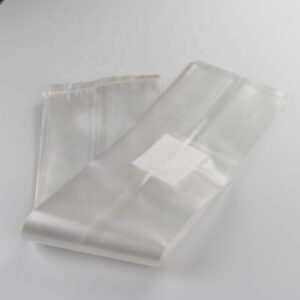
10x8x50cm Gusseted Spawn Bag | 0.2μm Filter Patch
Price range: R23 through R1,225 Select options This product has multiple variants. The options may be chosen on the product page🧫 Autoclavable Polypropylene mushroom spawn bag
🧫 High-flow 0.2μm filter patch.
🧫 Gusseted stand-up design – 10x8x50 cm
🧫 Suitable for grain spawn -
STS

Ready-to-Use 2% Sodium Alginate Master Solution
Original price was: R285.R179Current price is: R179. Add to basket🛠️ Sterile, premixed solution
🛠️ Convenient and ready to use
🛠️ High-quality sodium alginate
🛠️ Accurate 2% concentration -
STS
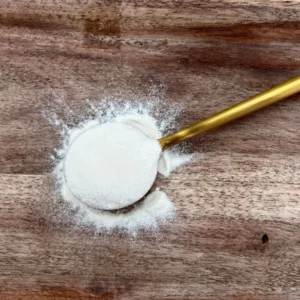
XA-Gel | Molecular Synergism & Organic Hydrogel | 60g
Original price was: R395.R195Current price is: R195. Add to basket🧫 Xanthan adds elasticity and moisture retention.
🧫 XA-Gel: Xanthan-Agar Premix for Molecular Mycology.
🧫 Optimize your agar with ” Rhizo-Glide ” synergy.
🧫 Prevents desiccation and creates shake-to-activate slants. -
STS

Nootropic Lion’s Mane Mushroom Spawn Kit
Original price was: R1,399.R995Current price is: R995. Add to basket✔ Lion’s Mane Mushroom Spawn Kit (Hericium erinaceus)
✔ Includes 100 ml Living Inoculant (LI) in a reusable Culture Bottle
✔ Includes 1 kg Sterilized Sorghum Grain Spawn with SHIP & 0.2 µm PTFE filter
✔ Renowned for its unique appearance and seafood-like flavour
Socratic Questions:
1. How can I collect Indigenous Microorganisms (IMOs) if I don’t live near a pristine forest?
2. What are the best local materials to use for making KNF inputs like FPJ and FAA?
3. Can KNF inputs be used alongside conventional organic fertilizers, or should it be a complete switch?
4. What specific microbial differences exist between vermicast and collected IMOs, and how do they impact soil health?
5. How does the “third paradigm shift” in Bundu Teq specifically relate to the processes used in commercial button mushroom farming?