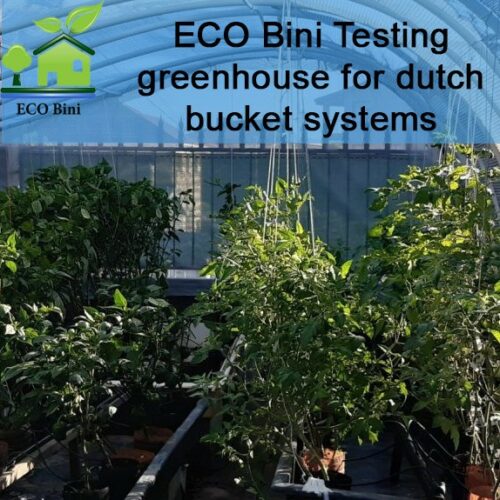
After more than a decade of hands-on urban farming and testing at the Sustainability Testing Station (STS) in Gansbaai, one lesson stands out: choosing the right growing medium can make or break your hydroponic system. Even though hydroponics is “soilless,” the medium still plays a vital role in supporting roots, balancing air and water, and influencing nutrient availability.
What is Hydroponics?
Hydroponics is the process of growing plants without soil, delivering essential nutrients directly to the roots in a water-soluble form. While traditional soil relies on microbes to break down organic matter and cycle nutrients, hydroponics gives you precise control by supplying nutrients straight through the irrigation water.
The growing medium in hydroponics is not “food” for the plant — it is an inert support structure that must provide:
- Physical stability for the plant
- A balance of oxygen (air) and moisture (water)
- Reliable conditions for nutrient delivery
The Three Key Features Every Hydroponic Medium Must Deliver
When evaluating any hydroponic medium, we focus on these three critical characteristics:
- Inertness The medium should not release unwanted nutrients, toxins, or significantly alter pH. It must remain chemically stable so your nutrient solution stays in control.
- Water-Holding Capacity + Aeration / Drainage Balance It needs to hold enough moisture for the roots without becoming waterlogged. Good aeration (oxygen to the roots) is essential to prevent root rot and promote healthy uptake.
- Cation Exchange Capacity (CEC) / Nutrient Buffering This is the medium’s ability to hold and slowly release positively charged nutrient ions (especially calcium, magnesium, potassium). High-CEC media can buffer against swings in nutrient strength, while low-CEC media require more precise and frequent feeding.
Different systems and crops demand different balances of these three features.
Common Hydroponic Media – Pros, Cons & Best Uses
Here are the most practical options for South African growers, based on STS testing and real-world performance:
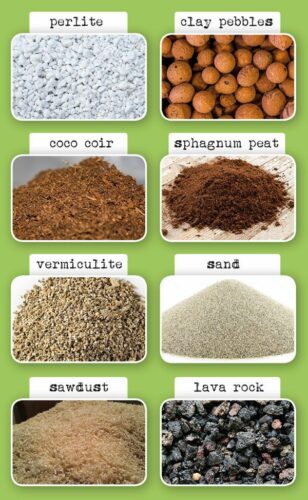
- Coco Coir Excellent water retention and aeration, sustainable (coconut byproduct), and naturally high CEC.
- Best for: Drip systems, Dutch buckets, and many fruiting crops.
- Watch out: Requires proper buffering (see STS Lab Note #12 for the full story on why “washed” is not enough).
- Expanded Clay Pellets (LECA / Hydroton) Highly reusable, excellent drainage and aeration, pH neutral, and provides strong structural support.
- Best for: Drip and ebb & flow systems, larger plants.
- Downside: Heavier and more expensive upfront; lower water-holding capacity.
- Perlite Very lightweight, outstanding aeration and drainage, inert and reusable.
- Best for: Mixing with coco or as a top layer to improve oxygen.
- Downside: Low water retention and can be dusty when dry.
- Vermiculite High water-holding capacity and good CEC.
- Best for: Seed starting or mixing in small amounts.
- Downside: Can hold too much water if used alone — risk of waterlogging.
- Rockwool Excellent uniform water retention and aeration, sterile, and provides good support.
- Best for: Seedlings, clones, and commercial-scale slabs.
- Downside: High initial pH (needs pre-soaking in pH-adjusted water) and not the most sustainable option.
- Gravel / Sand Cheap, reusable, and heavy (great for wind stability).
- Best for: Bottom layer in buckets or large systems.
- Downside: Very low water and nutrient retention — usually needs mixing with other media.
- Pine Sawdust (Our STS favourite for budget grows) Extremely cheap or often free, good initial water retention, and lightweight.
- Best for: Dutch buckets and wick systems when mixed with gravel for stability.
- Watch out: Decomposes over time (top up as needed) and avoid Western Red Cedar (contains natural anti-fungal compounds that will harm sensitive plants).
Matching Media to Hydroponic Systems
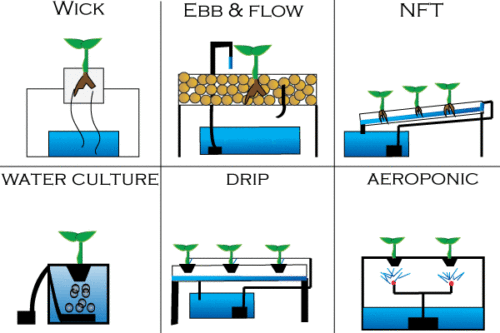
- No-medium systems (NFT, Aeroponics, pure DWC for lettuce): Roots sit directly in nutrient solution or a thin film.
- Wick / Bottom-feed systems (e.g. our Soda-Bottle hybrids): Need a medium with strong wicking ability. LECA or coco works well once roots reach the reservoir.
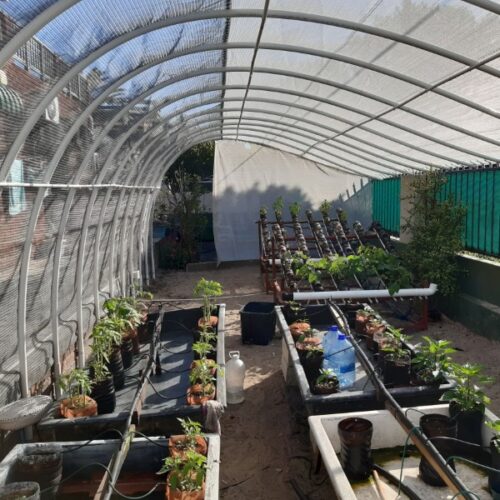
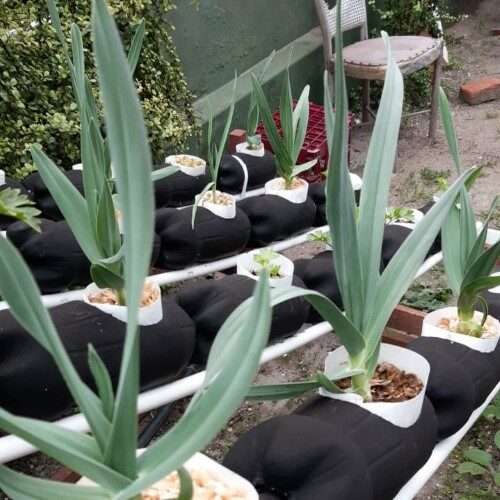
- Drip / Dutch Bucket systems (our main method): Focus on structural support and good drainage. We often use pine sawdust + gravel base in 5L modified water bottles or commercial buckets, running on the same timer.
At STS we frequently combine systems — Dutch buckets for larger plants and soda-bottle wick setups for smaller or experimental grows.
Practical Tips from STS Testing
- Cost vs Performance: Start cheap with pine sawdust + washed 19mm gravel at the bottom of buckets for wind stability and better water retention. It has produced excellent results for us on a budget.
- Preparation matters: Always rinse gravel/sand, pre-soak rockwool, and properly buffer coco coir.
- Reusability & Sustainability: Gravel and LECA can be cleaned, dried in the sun, and reused indefinitely — true IMBY (In My Back Yard) thinking.
- Stability hack: For tall or top-heavy plants (like chillies), add a layer of heavy gravel in the base of container to prevent tipping in Cape winds.
- Batch Standardization: Avoid mixing different media types within the same bucket unless you understand their specific hydraulic conductivities. If you mix a high-wicking medium (like coir) with a purely draining one (like gravel) unevenly, you create ‘dry zones’ and ‘anaerobic pockets’ where salts accumulate.
Conclusion & Quick Decision Guide
Before choosing a medium, ask yourself:
- What system am I using?
- What crops am I growing (leafy greens vs heavy fruiters)?
- How important is cost, reusability, and local availability?
- Do I want high CEC (buffering) or maximum control with frequent feeding?
There is no single “best” medium — only the best one for your specific setup, budget, produce and goals. At STS we favour practical, sustainable, low-cost solutions that turn local waste (like pine sawdust or coconut husks) into reliable growing media.
Properly prepared coco coir remains one of the most versatile options when you understand its quirks (see Lab Note #12 for the full buffering protocol).
What growing media have you had success with? Share your experiences in the comments or contact the STS — we’re always testing new combinations.
The Microbial Bridge
Bio-Available Feeding
Mycelial Dominance
SPeS Hardware Hub
Equipping the Circular Revolution with STS-Tested engineering.
-
STS
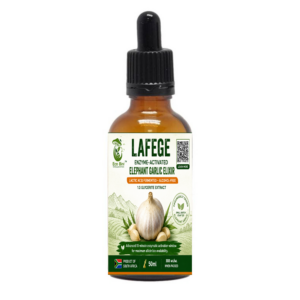
Enzyme-Activated Elephant Garlic Elixir | 50ml 1:3 LAFEGE
Original price was: R340.R215Current price is: R215. Add to basket🧄 Proprietary LAFEGE fermented Elephant Garlic botanical extract
🌿 Enzyme-activated and naturally transformed using LAB-X
💧 Alcohol-free vegetable glycerine elixir
🇿🇦 Small-batch crafted in South Africa | 50ml amber dropper bottle -
STS
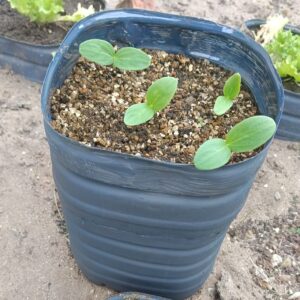
VermiCore Terra Preta Living Soil [2dm³] Professional Growth Media
Original price was: R169.R90Current price is: R90. Add to basket🛠 Bio-activated 2L Terra Preta living media mix
🛠 Coco coir, Vermiculite and VermiCHARged BAM! Microbes
🛠 Prevents damping-off & bio-defense for germinating seeds
🛠 Vermicompost, Biochar and Ground Kelp -
STS
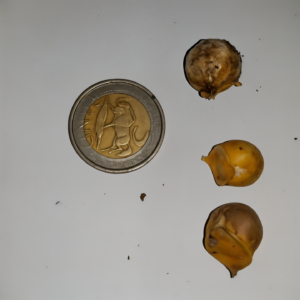
Organic Elephant Garlic Corms (Heirloom)
Original price was: R135.R95Current price is: R95. Add to basket🌱 Start your Elephant Garlic journey.
🌱 Grows into Ajo Macho Solo Round.
🌱 Perennial plant and natural pest deterrent.
🌱 Limited Stock – 20 off per pack -
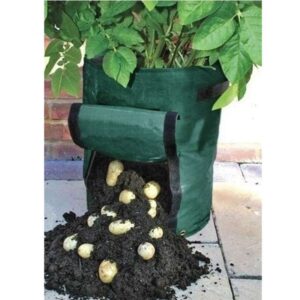
Potato Grow Bag – Heavy Duty (38L) with Harvest Flap
R149 Add to basket🌱 Grow Potatoes anywhere!
🌱 UV-resistant 38L bag with easy-harvest flap.
🌱 Reinforced handles, and aeration holes.
🌱 Ideal for small urban spaces.