Stop throwing away your worm tea bags after a single use.
Summary
Learn how blending 10–20% biochar into your compost mesh sock turns it into a reusable microbial engine. This practical lab note outlines the mechanics of brewing Aerated Compost Tea (ACT). It explains the dangerous “Red Tide” failure mode of un-aerated brews, provides simple sugar feeding ratios, and details the “Perennial Sock” method.
1. Introduction: The Liquid Biological Multiplier
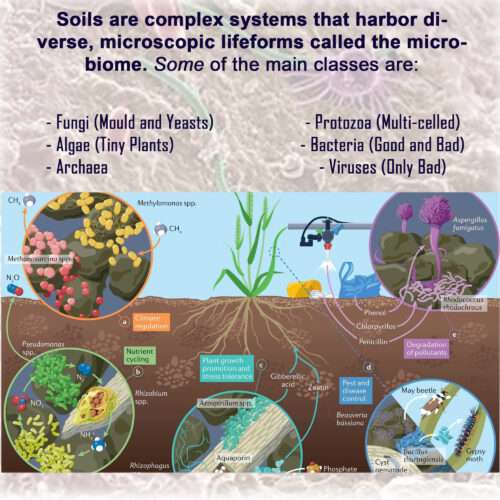
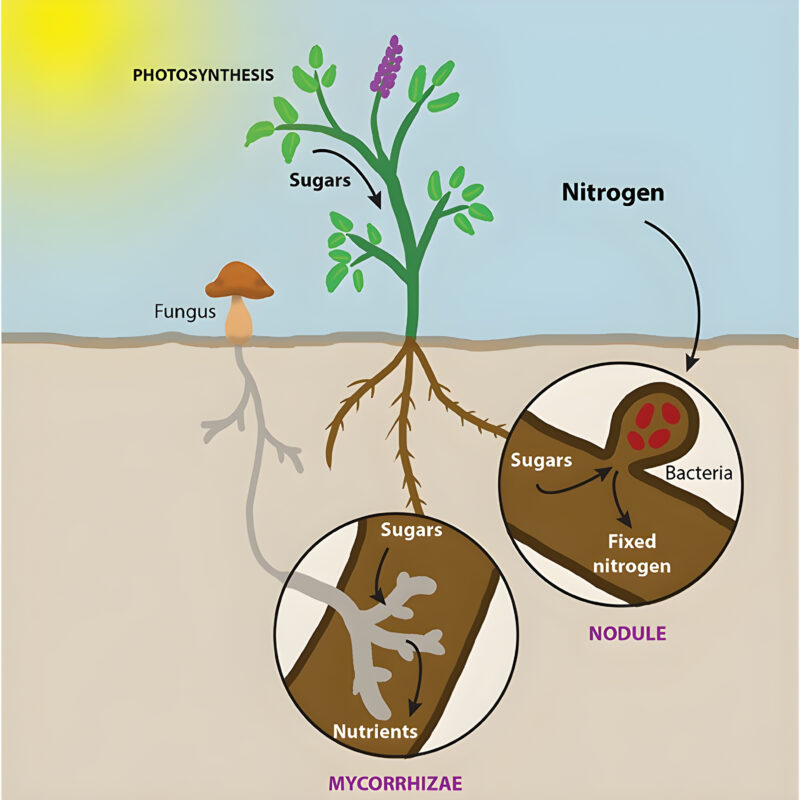
Applying solid worm castings directly to your garden beds provides excellent long-term fertility. However, if you want to rapidly inoculate a large cultivation footprint, liquid extraction is vastly superior. By brewing an Aerated Compost Tea (ACT), you pull the beneficial microbes off the solid vermicompost and multiply them exponentially in a liquid carrier.
[ 1 Liter of Solid Vermicast ]   ──> Treats roughly 1 Square Meter of Soil Surface
                                       VS.
[ 1 Liter extracted into ACT ]   ──> Multiplies Biology to Treat up to 100 Square Meters
The goal of brewing tea is not to dissolve nutrients, but to breed a living army of aerobic bacteria, fungi, and protozoa to protect root zones and boost plant Brix levels. To make this process highly efficient, we use a custom aggregate mix inside the brewing bag to create a reusable, multi-cycle Perennial Sock.
2. The Mechanics of the “Perennial Sock”
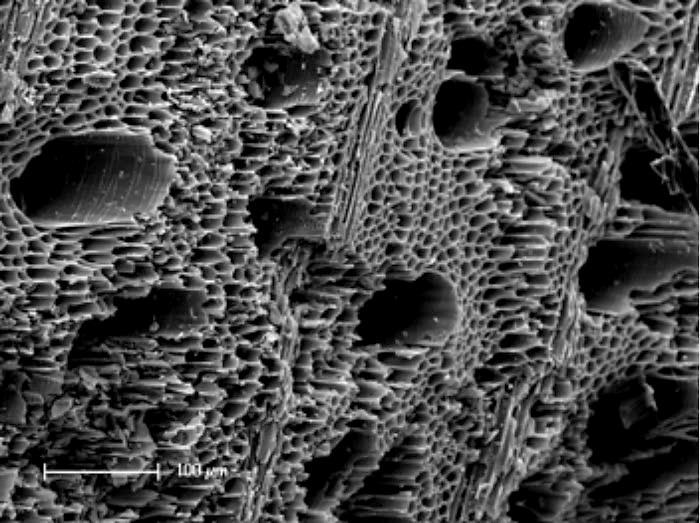
In a standard compost tea setup, you dump raw vermicompost into a mesh bag, brew once, and throw the muddy residue away. The problem is that beneficial, long-strand soil fungi do not like being violently shaken up in water; they prefer to stick to stable structural surfaces.
By adding 10% to 20% raw, crushed biochar directly into your mesh brewing sock alongside your fresh vermicompost, you completely change the system mechanics:
[ Raw Vermicompost Only ]  ──> Single Use ──> Fungi washed out completely; residue discarded.
                                       VS.
[ 20% Biochar Blend ]      ──> Perennial Sock ──> Biochar acts as a structural bunker, retaining a "Mother Culture" for 5+ brews.
The hyper-porous internal micro-structure of the biochar acts as a permanent, protective shield for the full Soil Biome. While billions of active bacteria replicate and flush out into the water column, the core fungal strains anchor themselves inside the char pores.
The Multi-Brew Cycle:
- The Reuse Loop: After a 24-to-48-hour brew cycle, pull the mesh sock out of the water, let it drain for 15 minutes, and store it damp inside a loose, breathable tub.
- The Next Batch: For your next brew, simply drop that same damp sock into fresh, dechlorinated water with a fresh sugar source. The anchored “Mother Culture” wakes up and multiplies immediately. You can run this loop for 5 to 6 consecutive cycles before the vermicast components are fully spent.
- The Retirement (Terra Preta): Once the sock is spent, do not throw it away. The remaining biochar is now perfectly charged, biologically active, and ready to be buried directly in your soil beds or added to your worm bins as a premium Terra Preta catalyst.
3. The Rules of a Successful Brew
To keep your microbes alive and ensure your perennial sock survives for multiple cycles, you must manage three core brewing factors:
A. Non-Stop Aeration vs. The “Red Tide”
You must use a high-output air pump and a wide air stone positioned directly underneath your mesh sock. The water must remain completely saturated with dissolved oxygen throughout the entire 72-hour cycle.
If your pump fails or power drops (a constant threat during South African loadshedding), the brew will suffer an anaerobic shift within just two hours. Without oxygen, your beneficial aerobic microbes die off instantly, and destructive anaerobic pathogens take over.
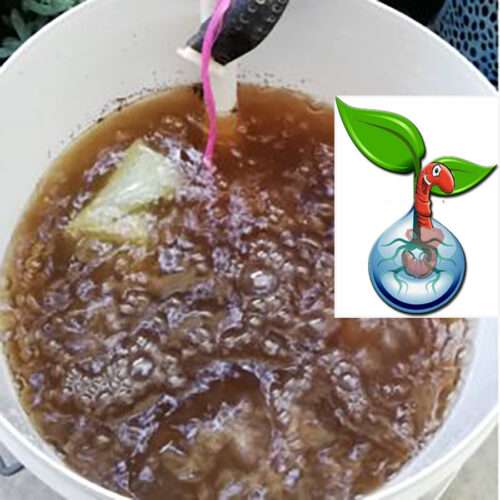
You will know this has happened by the smell: a healthy brew smells like sweet, rich, damp forest soil. An anaerobic failure smells like rotten eggs, sewage, or vinegar. Never put a foul-smelling brew on your plants; the anaerobic alcohols and phytotoxins will severely stress or kill your root networks.
STS Pro Tip: If you are brewing on a vulnerable power grid, utilize a small 2.5W backup aerator running on a standard 18650 Lithium-ion battery loop. This acts as genetic insurance for your biology during sudden blackouts.
B. Targeting the Microbial Food Source
To trigger a rapid microbial bloom, you need a simple carbohydrate source to feed the population:
- For a Balanced Fungal/Bacterial Tea: Add 1 tablespoon of unsulphured blackstrap molasses per 20 liters of water. The complex sugars and trace minerals feed both fungi and bacteria.
- For a High-Bacteria Dominant Tea: Add 3 tablespoons of standard brown sugar per 20 liters of water. This drives an immediate, high-velocity bacterial replication loop.
C. Defeating Municipal Chlorine
Never drop your perennial sock into raw, fresh tap water. Municipalities add chlorine and chloramines specifically to kill bacteria. If you drop your sock in fresh tap water, you will wipe out your mother culture.
Always fill your brewing bucket with tap water and run the air pump for 4 to 6 hours (or overnight) first. This completely off-gasses the chlorine, leaving the water safe for your biological assets.
4. Operational Mixing & Application Rates

A fully developed, 72-hour brown-sugar brew will hit a highly concentrated Electrical Conductivity (EC) reading of roughly 3000 μS/cm due to the dense concentration of dissolved organics and organic acids.
This is concentrated nutrients, to use it safely without causing nutrient root burn, follow these simple field dilution guidelines:
| Target Growth Stage | Mixing Dilution Ratio | Operational Rationale |
| Seedlings & Sprouts | 1:10 to 1:15 | Provides a gentle dusting of beneficial microbes and natural growth hormones to drive early root branching without stress. |
| Vegging Plants / General Care | 1:5 | A robust drench that floods the root zone with active biology to shield against opportunistic root pathogens. |
| Adult Leafy Greens | 1:2 | Drives heavy vegetative performance and noticeably expands leaf surface areas. |
| Fruiting Crops (Tomatoes/Peppers) | Use As Is (1:1) | Max Flush strength. Delivers massive biological support to handle heavy crop demands. (Bonus: This heavy biological flush helps strip away the synthetic “chemical” taste found in standard hydroponic fruit). |
5. Step-by-Step Brewing Sequence
[Dechlorinate Water: 4-6 Hours] ──> [Add Sugar/Molasses] ──> [Submerge Mesh Sock with 20% Biochar] ──> [Aerate 24-72 Hours]
                                                                                                             │
[Repeat Loop 5-6x] <── [Store Sock Damp in Breathable Tub] <── [Remove & Drain Sock 15 Mins] <───────────────┘
- Fill & Clear: Fill a 20-liter bucket with water. Run your air pump for 4 to 6 hours to clear out the municipal chlorine.
- Feed: Stir in your chosen carbon source (1 tbsp molasses or 3 tbsp brown sugar).
- Pack & Load: Fill your nylon mesh sock with 80% fresh vermicompost and 20% raw, crushed biochar. Submerge the sock directly over the air stone.
- Run: Leave the system bubbling continuously for 24 to 72 hours. Watch for a rich, thick foam layer building on the surface.
- Harvest: Pull the sock out, let it drain into the bucket for 15 minutes, and place it damp into a ventilated tub for your next run.
- Apply: Dilute your fresh “liquid gold” according to your crop targets and apply immediately as a root drench or a morning foliar spray.
Conclusion
You don’t need to rely on expensive, single-use commercial biological inputs to build a living soil network. By understanding how to stabilize your water columns with oxygen and use biochar as a physical structural bunker, you can run a highly predictable, reusable microbial factory right on your back porch.
This system is rooted in ancient Terra Preta methodology—the 7,000-year-old bioactive soil technology that was only fully analysed by modern science at the turn of the 21st century (Glaser and Lehmann, 2001-2003).
-
STS
Eco Bini™ VermiLIN BAM! Living Microbial Concentrate | 500ml Bettix
Original price was: R185.R130Current price is: R130. Add to basket🌱 Living Microbial Concentrate from premium vermicast
🌱 Controlled Biological Stasis for extended shelf stability
🌱 Built-in Bettix dosing chamber for accurate mixing
🌱 Perfect for living soil, compost, biochar & regenerative growing -
STS
Vermicomposting Starter Kit – Easy!
Original price was: R300.R250Current price is: R250. Add to basket🪱 Includes 300-600 healthy Red Wigglers
🪱 In a breathable 1L Polypropylene screw-tub,.
🪱 320ml VermiBoost bio-enriched stabilizer.
🪱 Easy and eco-friendly. -
STS

Vermi-Syn³ – The Fermentation Regulator [1000ml]
Original price was: R300.R195Current price is: R195. Add to basket🛠 3-in-1 Worm Food, Bokashi & Septic Odour.
🛠 Double-Tap Tek: Activated Biochar matrix with 3000 m2/g functional surface area.
🛠 pH- Optimized – 6.5 – maximum microbial health and rapid composting
🛠 Full Soil biome – Anaerobic and Aerobic -
STS
 📜Reference
MicroFlow CFT | Continuous Flow-Through Vermicompost Starter Kit & Course
Original price was: R1,299.R749Current price is: R749. Read more🛠Handmade, Plug-and-Play Urban CFT Worm Bin.
🛠 Assembled Micro-Flow CFT with Bedding and retaining disc.
🛠 Red Wigglers & Vermi-Syn3 – to start and maintain a worm bin.
🛠 Includes full Continuous Flow-Through (CFT) Reactor Manual
Socratic Questions
how to make reusable compost tea bags with biocharhow long to aerate tap water to remove chlorine for compost teamolasses vs brown sugar ratios for worm teahow to fix an anaerobic smelly compost tea batchdilution rates for aerated worm tea on seedlings