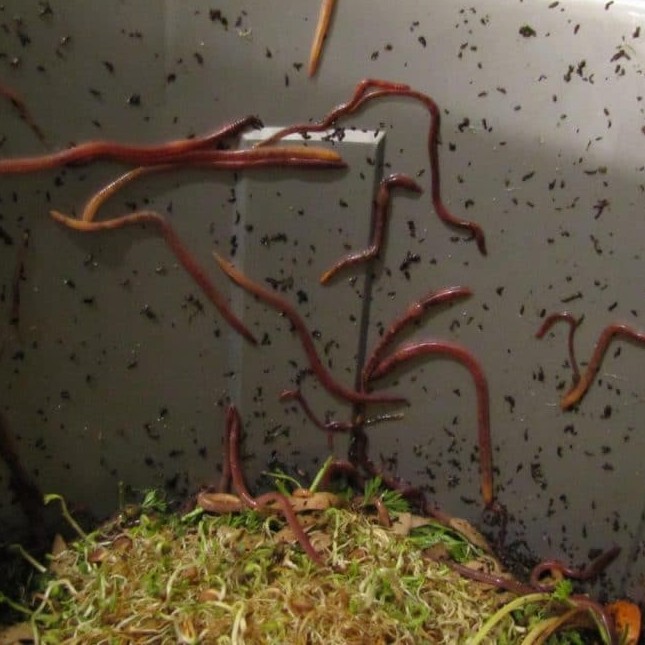
When composting worms (like Red Wigglers) climb the walls and stage a mass breakout, they aren’t exploring—they are fleeing for their lives. Worms breathe through their skin, which means their environment must maintain a delicate balance of moisture, pH, and gas exchange. A sudden mass escape is an emergency signal that conditions inside the bedding have turned toxic. This is almost always caused by an anaerobic crash (sour, low-oxygen conditions), severe overfeeding that triggers a blistering heat spike, or stagnant moisture pooling at the bottom of sealed plastic containers, forcing them to run or drown.
Why It Happens
Worms are incredibly tough bio-engineers, but because they breathe entirely through their skin, they are highly sensitive to rapid chemical and physical shifts in their bedding. If you turn on your garage light and see hundreds of them scaling the plastic walls like a scene from a horror movie, your system architecture has crossed a dangerous threshold.
Overfeeding / Excess Water]
➔ Oxygen Blocked
➔ Anaerobic Sour Crash
➔ Worm Escape Panic
There are three primary environmental triggers that cause the great escape:
- Anaerobic Suffocation: Most standard backyard setups use stacked plastic storage tubs. Plastic cannot breathe. If the air holes are too small or get blocked, condensation pools on the walls, oxygen drops, and anaerobic bacteria take over. The bedding turns sour and acidic, which literally burns the worms’ skin.
- Thermal Heating (The Accidental Compost Pile): If you dump too many dense, nitrogen-rich kitchen scraps (like a giant load of blended fruit waste) into a small bin at once, it triggers rapid microbial fermentation. The center of your bin can easily spike past 45°C within 24 hours. Because worms start dying at anything above 30°C, they will scramble up the sides to escape being cooked alive.
- The Solar Water Heater Effect: Most commercial worm bins are molded from black plastic. There is a reason flat-plate solar water heaters are painted black—it absorbs maximum radiant heat. South Africa has some of the highest solar irradiation in the world, hitting up to 6.5 kWh/m² per day. With a black plastic bin converting that solar energy at up to 95% efficiency, your worms are essentially trapped inside a microwave. If it’s not kept in deep shade, you are cooking them.
How to Fix It (The Emergency Room Protocol)
If you are currently facing a midnight breakout crisis, stop chasing them across the floor and fix the environment immediately:
- The Light Hack: Worms are highly photophobic (they hate light). Leave the lid completely off the bin and position a bright desk lamp or work light directly over the top of the open bedding. This physically forces the escapees back down into the material while you sort out the underlying bedding issue.
- Create a Safe Room with Carbon: In a proper Continuous Flow-Through (CFT) worm bin, the bedding layer is a minimum of 30 cm deep to give worms an escape zone from decomposition heat. If your bin smells sour or fermented from overfeeding, scrape the hot food entirely to one side. Dump a massive layer of dry, shredded cardboard, brown paper, coarse egg cartons, or coco coir into that newly opened space. This gives your Houdini worms a cool, safe room to wait out the adjacent fermenting inferno.
- Drain the Bottom and Stop the Acid: If your bin doesn’t have an open drainage floor, check the very bottom layer. If it is a muddy, swampy, stinking mess of standing water, your worms are drowning. This stagnant pool collects fermenting acids (like lactic acid) from anaerobic Lactic Acid Bacteria (LAB). Drill more drainage holes immediately or manually tilt the bin to drain every single drop of liquid out.
- Buffer the pH with Calcium Carbonate (CaCO3): For a bin going sour and acidic, add calcium carbonate with your feed. It reacts with the organic acids to maintain a pH-neutral environment. As a bonus, the CaCO3 functions as crucial grit, helping the worms grind up organic matter inside their gizzards.
Best Practices for Happy Bio-Engineers
To stop breakouts before they start, shift how you manage the daily feeding routine:
- Spot-Feed Exclusively: Do not dump kitchen waste all over the top surface. Move the clean worm bedding to one side, deposit the organic waste in that specific spot, and cover it back up with bedding.
- Paradigm Shift #2: Worms do not eat raw organic waste; they eat the microbes that is fermenting the food. Blend or finely chop your scraps – making it easier for the microbes means faster processing and fewer foul odours.
- Feed for Surface Area, Not Volume: A worm bin’s organic throughput capacity depends entirely on its available surface area, NOT the total volume of the container. If you have excess waste, either feed less until you know the bin’s capacity or split your population into a second bin to increase area.
How to Prevent It Permanently: Move to a CFT System
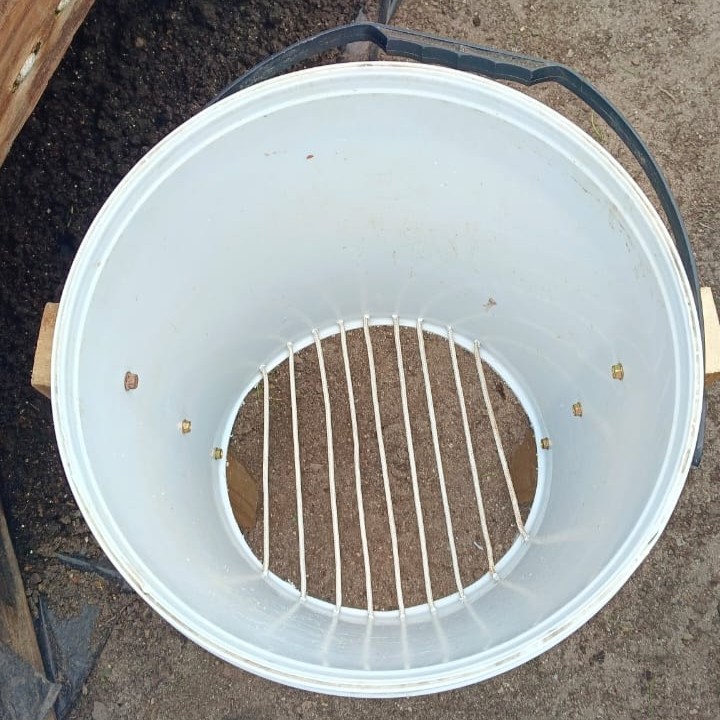
Chasing worms out of plastic tubs gets old very quickly—and playing in foul muck is only fun for so long. The ultimate way to eliminate the breakout cycle is to convert your sealed black plastic boxes into Bokashi fermenters, and build an open-top, highly breathable Continuous Flow-Through (CFT) Vermicomposter.
Chasing worms out of plastic tubs gets old very quickly—and playing in foul muck is only fun for so long. The ultimate way to eliminate the breakout cycle is to convert your sealed black plastic boxes into Bokashi fermenters, and build an open-top, highly breathable Continuous Flow-Through (CFT) Vermicomposter.
Instead of layering boxes on top of each other, a CFT is a single vertical column or frame. You feed raw scraps exclusively at the top, and you harvest pure, rich castings from the bottom cutting floor. No mucking around, and because vermicomposting worms naturally live and feed in the upper 10 to 15 cm of material, your finished vermicast can be cut cleanly from the bottom without sorting through worms.
Because the bottom of a CFT uses a suspended mesh or string grid exposed directly to the ambient air, gravity drains excess moisture naturally. This creates a continuous stack effect, drawing fresh oxygen all the way up through the bedding. Since there is zero stagnant water and maximum airflow, the system never goes anaerobic, the bedding stays sweet, and the worms never have a reason to leave.
STS Insight
At the Sustainable Transition Station (STS), we look at worm management through a structural lens. If your worms are running away, don’t blame the worms and don’t try to lock them in with airtight lids—that just speeds up the suffocation. The escape is a valuable biological data point telling you that your system architecture has failed.
If you are tired of losing your livestock, scale up your design. You can construct a highly breathable, compact 20L Micro-flow CFT for a simple indoor setup using repurposed components, or step up to a rugged 300L “Big Blue” panel beast (measuring roughly 80cm wide x 60cm deep x 1m high). By building a frame with a 40cm open scraper clearance underneath the cutting floor, you allow massive airflow to self-regulate the moisture layers.
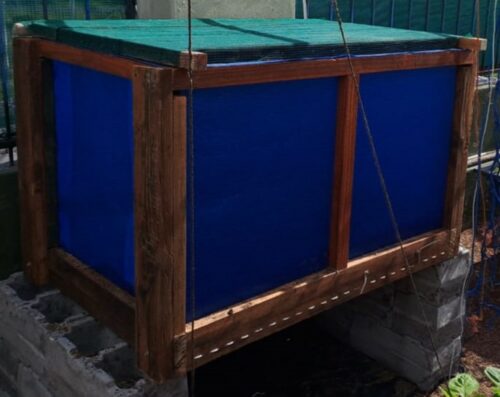
Combine that breathable architecture with a splash of microbial inoculation and pH-stabilizing CaCO3 like Vermi-Syn3, and you build a self-balancing ecosystem where the worms stay put because the environment is perfect.
>>> Build a Better Habitat, Keep Your Bio-Engineers <<<
Pasteurizing Bio-Engineers
Plant-Available Nutrients
Selective Nutrition
Bundu Teq Hub
-
STS
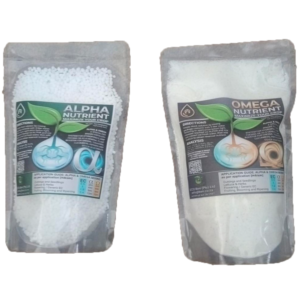
Binary Hydroponic Nutrient Kit – 2 x 5L Concentrates
Original price was: R275.R149Current price is: R149. Add to basket🌱 Makes 2 x 5L professional nutrient concentrate
🌱 Binary Alpha & Omega formula prevents nutrient lockout
🌱 Complete macro & chelated micronutrients
🌱 Professional hydroponics made simple -
STS
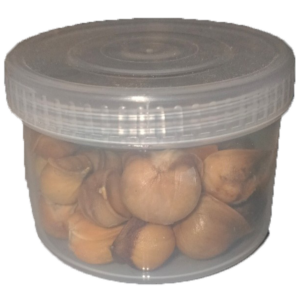
Kashmiri Pearl Poppers & Fermented SAC Extract (270g)
Original price was: R349.R245Current price is: R245. Made to Order🍽️ Lacto-fermented Kashmiri corms in active brine
🍽️ High-potency bio-available S-allyl-cysteine
🍽️ Crunchy whole corms with SAC postbiotic tonic
🍽️Pure shelf-stable dual-action garlic elixir -
STS
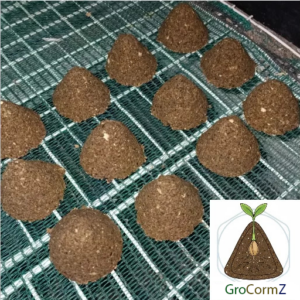
Elephant Garlic Start Kit | GroCormZ
Original price was: R75.R49Current price is: R49. Add to basket🌱 Produces Authentic Ajo Macho (Solo Garlic)
🌱 Encapsulated Elephant Garlic Corm Included
🦠 Terra Preta Nova Biological Grow Ball
💧 Just Plant, Water & Grow — Pointy Side Up! -
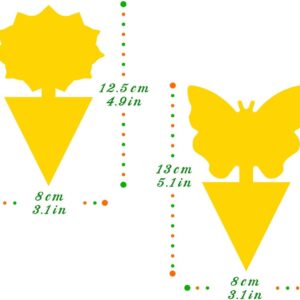
Yellow Sticky Fruit Fly & Fungus Gnat Traps
R11 Select options This product has multiple variants. The options may be chosen on the product page🏗️Bright yellow colour attract flying insects
🏗️Odourless, Safe and Non-toxic
🏗️Durable – UV resistant and Waterproof
🏗️Easy to Use, Plant and Peel