Seeing bright green spots develop on your stored garlic is incredibly common, and it happens to both Normal Garlic and Elephant Garlic. These green spots are caused by two completely different things depending on where the green is showing up: either a highly destructive moisture-mold attacking the root base, or the garlic simply waking up and trying to grow.
Answer
The Two Types of “Green Spots”
Powdery Green Spots on Root Base
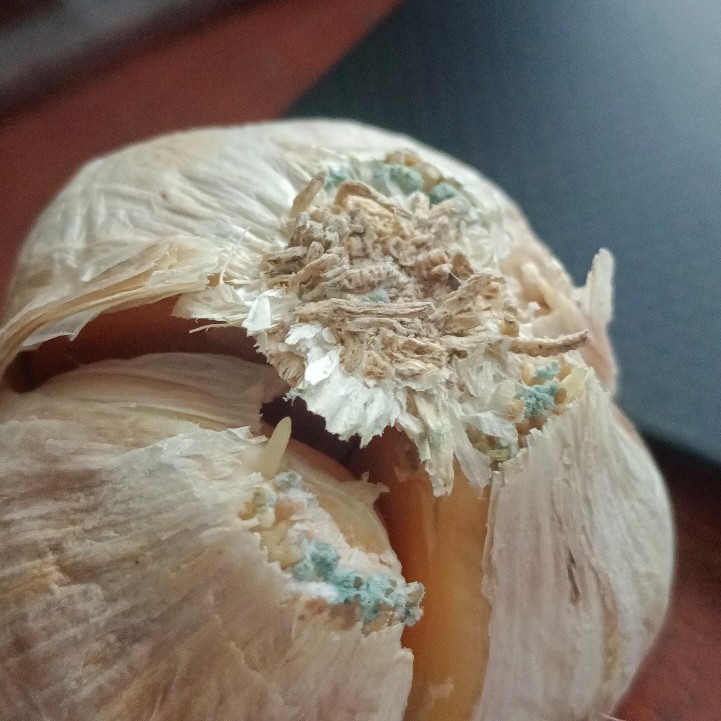
What it is: Penicillium Blue-Green Mold. A destructive moisture-loving fungus triggered by stagnant, humid air (like inside a closed refrigerator drawer).
Is it safe to eat? NO. It produces toxic compounds over time. If the mold penetrates past the outer skin layers and makes the internal clove flesh soft, watery, or spongy, discard it immediately.
Solid Green Pigment on Clove Flesh
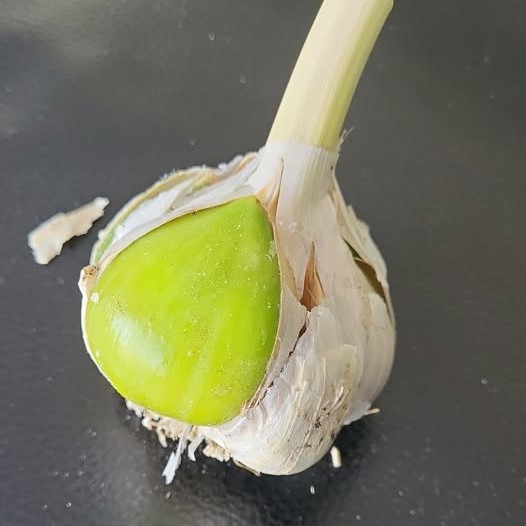
What it is: Chlorophyll Reaction. The clove has been exposed to too much light. Garlic cloves naturally photosynthesize and produce green chlorophyll when exposed to light waves.
Is it safe to eat? YES. It is completely non-toxic and safe. However, the chemical reaction uses up internal sugars, which robs the garlic of its sweet flavor profile and can make it taste bitter when cooked.
Track 1: Storing Garlic to EAT (Keep it Dormant & Flavorful)
If your goal is kitchen use, you want to keep the garlic asleep, dry, and dark to preserve its natural sugars and intense aromatic oils.
- Never Store Whole Bulbs in the Fridge: Refrigerators are humid, cold, and stagnant. The cold activates an internal biological clock (called vernalization), tricking the bulb into thinking it is winter. The moment it detects a slight temperature shift, it will aggressively burst out with green leaf sprouts and roots, draining all its culinary flavor.
- Keep it in the Dark: To prevent the cloves from turning green from chlorophyll, keep your garlic out of direct sunlight or heavy kitchen lighting.
- The Perfect Pantry Rules: Store your eating garlic at cool, steady room temperature in highly breathable containers—like brown Kraft paper bags left open at the top, or hanging mesh onion sacks. Moving, dry air prevents mold spores from waking up.
Track 2: Prepping Garlic to PLANT (Vernalize)
If you are a grower intentionally trying to wake up your Elephant Garlic or normal garlic for an early autumn planting, the rules change completely.
- The Intentional Chill: Placing your seed stock in a temperature-controlled fridge () for 3 to 4 weeks is a brilliant hacking method to break dormancy. It forces the embryo to wake up so it hits the soil with massive root energy and immediate vigor.
- Avoid the Humidity Trap: Because fridges are damp, you must protect your seed stock from Penicillium mold while it chills. Never store them in plastic bags. Wrap your seed cloves loosely in dry paper bags or netting to keep moisture from pooling on the basal root plates.
- Plant Immediately After: Once your garlic completes its cold vernalization cycle, its internal clock is running. It cannot go back into long-term storage. If you see green tips emerging from the top or tiny root nubs swelling on the bottom, get them directly into the ground or your propagation planters immediately.
STS Pro-Tip: If your planting stock gets trapped in a humid environment and develops early surface mould, don’t panic. If the cloves are still rock-solid, scrape the green powder away and submerge them in a food-safe WIP (Wash in Place) sanitizing bath (like a quick water with SteriPmax Peracetic Acid wash) for 5 minutes to oxidize the spores. Dry them completely under a fan before storing/planting!
-
STS
Passive Organic Hydroponics Start Kit & Course | Vermiponics
Original price was: R499.R359Current price is: R359. Add to basket🛠 5L Passive Vermiponic Starter System
🛠 Includes 2 dm³ VermiCore Living Growth Medium
🛠 Free STS Practical #11 Digital Manual Included
🛠 Learn to Build & Scale Your Own Vermiponic Systems -
STS
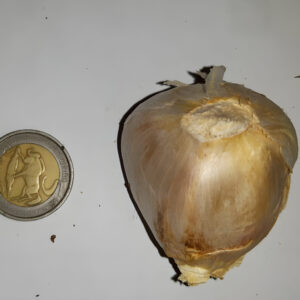
Organic Elephant Garlic Cloves – Vernalized
Original price was: R695.R495Current price is: R495. Add to basket🌱 Large, mild-flavoured cloves
🌱 10 Elephant Garlic Organic seeds
🌱 Vernalized for immediate planting
🌱 Seasonal – limited Stock -
STS
Alpha & Omega [Kratky & Passive Hydro] Nutrient Kit – 2x 500ml
Original price was: R195.R95Current price is: R95. Add to basket🛠 Dual-part liquid Kratky hydroponic nutrient concentrates
🛠 Refined Hoagland solution pre-dissolved in 2x 500ml UV-opaque white bottles
🛠 perfect for passive indoor herb gardens — Just Dose and Grow -
STS
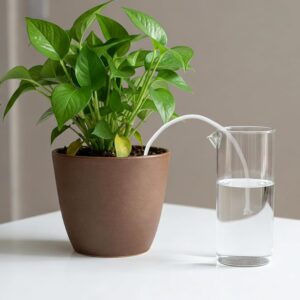
Self-Irrigating Capillary Wicking Cord – 10 meter
Original price was: R140.R115Current price is: R115. Add to basket🌱 High-performance 4mm capillary cord.
🌱 Consistent, self-watering moisture delivery.
🌱 Wicking water in self-watering planters, hydroponic seedlings
🌱 Automation-free vacation watering.
Socratic Questions:
1. Is sprouted garlic safe to eat or toxic?
2. How to prevent garlic from sprouting in storage?
3. What causes green sprouts inside garlic cloves?
4. Can I plant a garlic clove that has sprouted?
5. Does a green garlic sprout make garlic taste bitter?