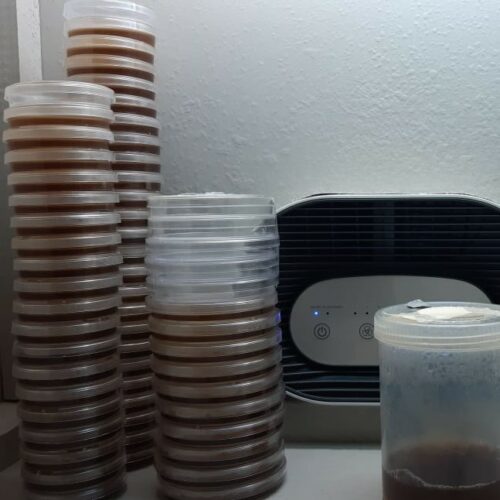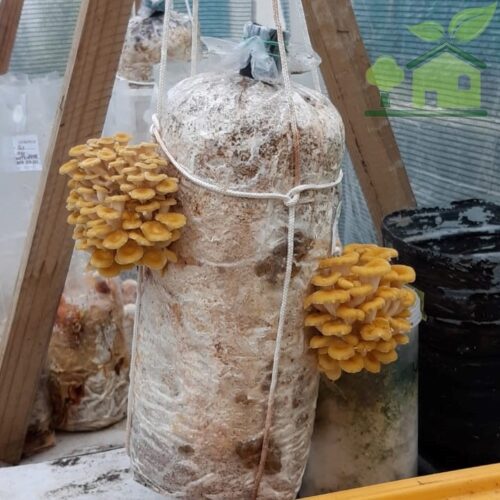
Adding xanthan gum to agar creates a pseudo-plastic biopolymer that improves water retention
Summary
and provides a unique 3D lattice for faster, more resilient mycelial anchorage. Upgrade your agar game with XA-Gel. This tutorial explains how xanthan gum transcends simple thickening to provide a complex physical profile that boosts mycelium vitality and nutrient transport in molecular agriculture.
Introduction
When it comes to successful mushroom cultivation, the choice of culture media can make all the difference. While standard agar has long been a staple in mycology labs, a new assistant is quietly revolutionizing petri dish work: Soft Xanthan Agar (XA-Gel). By blending agar with xanthan gum, mycologists are unlocking easier inoculation, better preservation, and faster germination—all with a simple tweak to the Media Nutrient recipe.
But first what is Xanthan?

Section 1: The Bio-Polymer History—From Root Beer to the Battlefield
The story of Xanthan isn’t found in a cookbook; it’s found in the records of the USDA (U.S. Department of Agriculture).
1.1 The Dr. Allene Jeanes Legacy
In the late 1940s, a local soft drink company in Peoria, Illinois, sent a batch of “gooey, syrupy” root beer to the USDA’s Northern Regional Research Lab. They wanted to know why it had spoiled. A brilliant chemist named Dr. Allene Jeanes (the first woman to receive the USDA Distinguished Service Award) isolated the culprit: a bacterium called Xanthomonas campestris.
While the soda company saw a ruined product, Dr. Jeanes saw a Super-Polymer.
1.2 The Korean War & The Blood Plasma Search
During the Korean War (1950), the U.S. military faced a critical shortage of blood plasma. Jeanes had already pioneered Dextran (a similar bacterial polysaccharide) as a “Blood Volume Expander.” Unlike blood, it could be stored at room temperature, was sterile, and was one-third the cost of plasma. It kept wounded soldiers alive on the front lines long enough to reach a hospital for a transfusion.
This research paved the way for the discovery of Xanthan Gum in the late 1950s. The USDA wasn’t looking for a food thickener; they were looking for a domestically produced “Industrial Gum” to reduce American reliance on imported plant gums (like Arabic or Guar).
1.3 Commercialization & The “Kelzan” Revolution
By 1961, the Kelco Company (now CP Kelco) began mass-producing Xanthan under the trade name Kelzan. It was finally approved by the FDA for food use in 1969.
Why does this history matter to a mycologist? Because Xanthan was designed for Extreme Performance.
- Stability: It survives where other gums fail—staying stable from pH 4 to pH 10.
- Resilience: It is highly resistant to enzymatic degradation. While fungi can easily “digest” simple starches or plant gums, the complex molecular backbone of Xanthan is like “molecular armour,” allowing it to hold moisture in your petri dishes for up to a year without being broken down by the mycelium.
Section 2: The Physical Properties—Understanding the “Shake”
To truly master XA-Gel, one must recognise that Xanthan gum transcends its role as a basic thickener. It is, in fact, a versatile biopolymer characterised by a unique and complex physical profile.
The properties of Xanthan gum are as fascinating as they are complex—attributes that science is only just beginning to get to grips with. This newfound interest is reflected in the literature, with a greater number of studies produced in the last few years than in the seven decades prior.
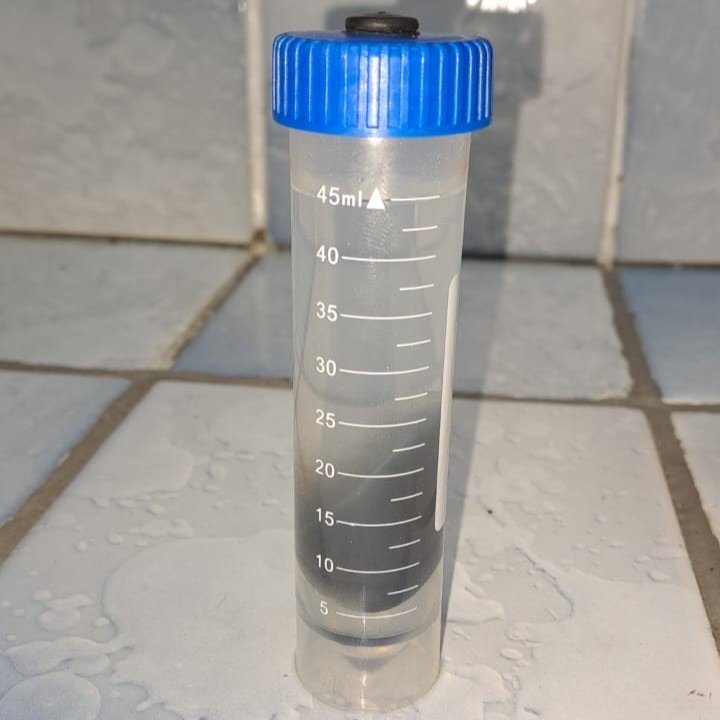
XA-gel | STS Xanthan Agar Premix [60g]
STS’s XA-Gel is particularly powerful because Xanthan and Agar have a synergistic effect. While Agar creates a brittle, firm gel, Xanthan adds elasticity and moisture retention. With XA-Gel you can pour invertible petri dishes, or slants, and the media will retain shape. Add water though and a quick shake will dissolve the media – stressfully releasing the mycelium for storage or Liquid Inoculant.
“Solid to Liquid: Instant Inoculant with long shelf life.”
2.1 The Magic of Pseudoplasticity (Thixotropy)
The most critical property for the modern mycologist is pseudoplasticity. This means the gel is “shear-thinning”:
- At Rest: The long polymer chains form a complex 3D network that holds water and solid particles in a firm grip.
- Under Stress: When you shake a vial or push the gel through a syringe, the chains align, the viscosity drops instantly, and it behaves like a thin liquid.
- The Benefit: This is the physics behind “Shake-and-Go” Liquid Inoculants. A solid XA-slant can “shatter” into thousands of micro-fragments when shaken with sterile water, allowing for effortless syringe loading without the “needle block” common in standard agar.
2.2 The Hydrogel Factor & Moisture Locking
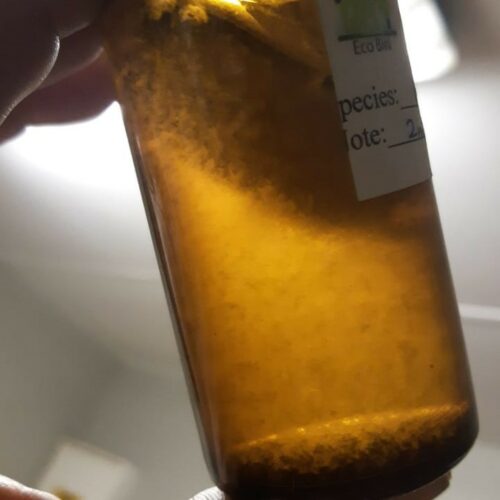
Xanthan gum is one of the most efficient, cost-effective organic hydrogels available.
- Desiccation Resistance: In the lab, this translates to petri dishes that resist drying out. While standard plates may crack in 4 months, an XA-enhanced “vault” can maintain viability for 6–12 months.
- Hydration Stacking: It uncoils its polymer chains to bind water molecules into a gel-like network.
- Absorption: It can absorb over 200 times its own weight in water.
2.3 The “Dough Ball” Limit
While Xanthan is powerful, it follows a strict “more is not better” rule.
- The Safe Zone: Typical usage for suspension and rheology control is between 0.05% and 0.5% (0.5g – 5g/L).
- The Failure Point: Exceeding these levels leads to a “Dough Ball” effect—a rubbery, inert mass. At high concentrations, the gel becomes so viscous that it inhibits nutrient diffusion and gas exchange, effectively suffocating your mycelium or roots.
Section 3: Cross-Disciplinary Functions—Beyond the Petri Dish
Xanthan’s unique properties make it a “Mechanical Glue” for all aspects of Controlled Environment Agriculture (CEA).
3.1 Vermiculture: The Microbial Glue
In worm boxes and vermicompost systems, Xanthan acts as a critical stability agent:
- Soil Aggregation: It helps stabilize soil aggregates, creating a superior structure for worm travel and aeration.
- Heat Protection: In dry climates, it acts as a moisture buffer, protecting worms from fatal desiccation during heatwaves.
3.2 Hydroponics & CEA: The Suspension Agent
For vertical “drip” or “gel-ponics” systems, Xanthan provides a non-toxic way to regulate environment variables:
- Nutrient Suspension: It is an excellent suspending agent that prevents the sedimentation of insoluble solids in liquid vermi-teas or nutrient reservoirs.
- Root Zone Protection: It acts as a mild surfactant and film-former, protecting delicate root hairs from drying out during system maintenance or pump failures.
JDH-05Z Commercial Ultrasonic Humidifier – Dual Supply
High-volume ultrasonic humidifier with smart control. Dual Supply (Bottle/Tap), ideal for maintaining optimal humidity in large-scale cultivation. We engineer solutions for you.

3.3 The “Xanthanagar” Synergy
By blending a mere 0.1% Xanthan into agar, a once-brittle medium is reimagined as a “glass-phase” matrix. This addition grants the rigid agar a unique liquid mobility; in the context of mycology, the surface loses its stiffness and becomes as lubricated as grass covered in morning dew. This creates the ideal conditions for what we call “Rhizo-glide”:
XA-gel Application Rates
| Use Case | Weight Dosage | Volumetric Dosage (approx.) | Target Outcome |
| Liquid Inoculant (LI) | 0.5 g / L [0.05%] | a pinch | Adds “body” to the broth to suspend mycelium, making syringe loading easier and preventing clumping. |
| Bundu Castallani Agar | 6g/l[0.6%] | 1&1/2 tsp [7.5 ml] | Add to any Agar Media recipe. Reduce agar to 1.2% [12g/l] and prepare as normal. |
| Rhizo-Glide & Longevity Additive | 1g / L [0.1%] | 1/4 tsp [1.25 ml] | Add to any Agar recipe. Extends plate life to 12+ months and induces aggressive rhizomorphic “searching.” |
| Reverse Spherification | 5g / L [0.5%] | 1&1/4 tsp [6.25 ml] | High-density internal slurry for round Alginate beads. |
| Substrate Hydrogel | 2g per kg dry sub. | 1/2 tsp [2.5ml] | Adding XA-Gel to your bulk substrate locks moisture into the fibres and releasing it only as the mycelium demands it. |
| Soil Hydrogel | 4g / L [0.4%] | 1 tsp [5 ml] | An organic, biodegradable water-locking jacket for potting soil and improved seed germination. |
Section 4: 🔬The STS “Shockers”
After five years of laboratory iterations at the Sustainability Testing Station (STS), we have identified the critical failure points in traditional Xanthan-Agar (XA) formulations. While literature often suggests basic ratios, the “Bundu Tek” reality of variable ambient temperatures and acidic environments requires a more sophisticated approach.
4.1 Why do my plates turn to “porridge” (The Acid Trap)?
The Problem: You mix your agar, autoclave it, and it comes out as a liquid that never sets, even after cooling.
The Science: While Xanthan gum is highly acid-resistant, the structural Agar-Agar scaffold is not. Many common mycology additives drop the pH of the medium. Agar simply will not polymerize in an acidic environment.
The STS Solution: Add a “pinch” (approx. 0.5g/L) of Calcium Carbonate (CaCO3) to every batch. This buffers the solution, converting acids in their salts and raising pH, protecting the agar’s structural integrity regardless of your nutritional additives.
4.2 Why do my plates “flop” in the heat (The Cold-Snap Mandatum)?
The Problem: In warm climates like a South African summer, plates may appear set but liquefy or slide out of the dish when inverted.
The Science: Unlike standard 2% agar, the synergistic Xanthan-Agar lattice requires a specific thermal stabilization period to permanently lock its structural bonds, to basically set the firm structure in place.
The STS Solution: Post-pouring, plates must be transferred to a refrigerated environment (4°C – 8°C) for a minimum of 2–3 hours. This “Cold-Set” phase ensures the hydrocolloid bond is permanent. Once stabilized, these plates can return to room temperature and will remain firm even when inverted—and are stable up to 80°C!
4.4 Why is my needle blocking during transfers?
The Problem: Standard 2% agar is surprisingly firm and brittle. During Liquid Culture (LC) or Liquid Inoculant (LI) extraction, bits of hard agar frequently block the needle.
The Science: Standard agar stresses delicate mycelium and requires mechanical blending to disperse into a liquid.
The STS Solution: Soft Xanthan Agar produces a pliable, jelly-like texture. Because it is thixotropic, it dissolves readily in sterile water. Simply drop an XA wedge into 5cc of sterile water and shake; the media shatters into micro-fragments, dispersing healthy mycelium instantly without the need for a blender or risky agitation.
Ready to Simplify Your Culture Work?
Soft Xanthan Agar is a simple upgrade with outsized benefits: easier inoculation, longer storage, and faster spore germination, all while making culture work more efficient for home and professional growers alike. If you’re keen to futureproof your mycelium bank and streamline your workflow, give soft XA a try in your next round of plates.
-
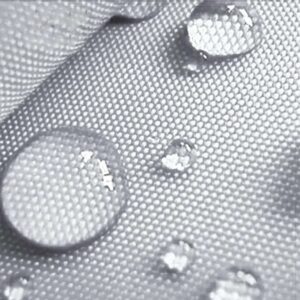
N95 Filter Cloth – Non-Woven SMS
Price range: R100 through R150 Select options This product has multiple variants. The options may be chosen on the product page🧫 High-quality non-woven polypropylene filtration
🧫 nanofiber meltbloen SMS filter cloth
🧫 Provides N95 filtration
🧫 Ideal for lids and Monotubs -
STS
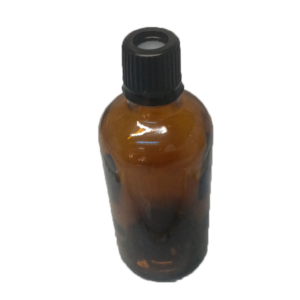
The 100ml SHIP Culture Bottle (3mm Silicone Septum)
Price range: R90 through R195 Select options This product has multiple variants. The options may be chosen on the product page🧫 Medical 100ml Amber glass bottle.
🧫 3mm self-healing silicone SHIP.
🧫 UV-protected for sensitive cultures.
🧫 Reusable, autoclavable, and durable -
STS
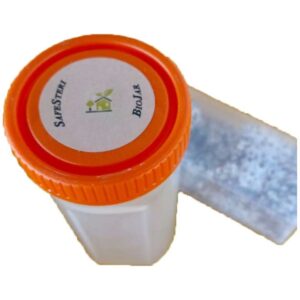
6-pack Mother Spawn BioJar | Reusable Polypropylene | Triple Filter
Original price was: R695.R395Current price is: R395. Add to basket🧫Shatterproof PP5 Construction
🧫Triple-Shield Filtration System
🧫Positive Seal Technology
🧫100% Reusable & Eco-Friendly -
STS

Infrared Scalpel Sterilizer – Flame-Free Inoculation Tool
Original price was: R4,200.R3,395Current price is: R3,395. Add to basket🧫 Precision: 35mm diameter Localized heat sterilization Zone.
🧫 Flame-Free: Safe for use with Flammables.
🧫 Durable: Robust metal and ceramic build.
🧫 Compact: Weighted base for stable use.
Socratic Questions:
- Why use xanthan gum in mushroom agar recipes?
- How does XA-Gel improve mycelium growth rates?
- What is the benefit of pseudo-plastic biopolymers in mycology?
- How to prevent agar desiccation in long-term plates?
- DIY molecular agriculture agar formulations?