







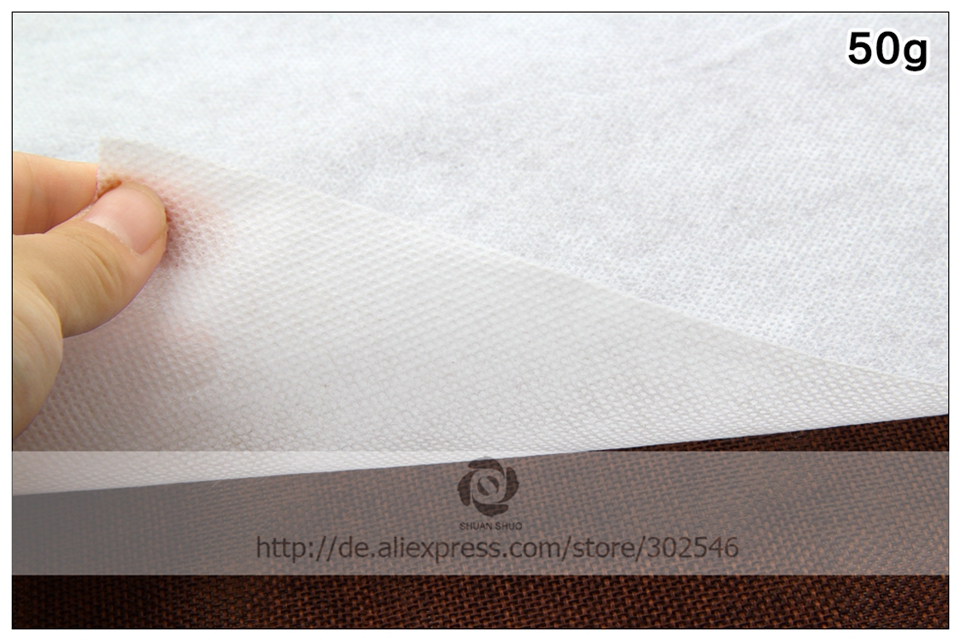

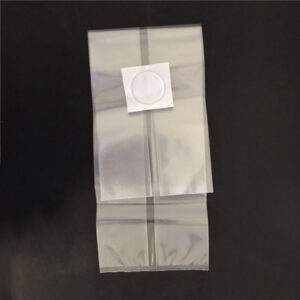
SMS Nanofiber filter cloth – white
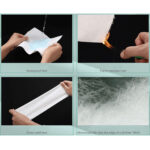
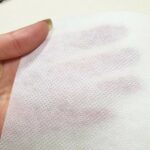
Non-woven polypropylene nanofiber SMS (spunbond-meltblown-spunbond) filters are a type of filtration material commonly used in various applications such as air and water filtration, personal protective equipment, and medical masks.
Spunbond polypropylene (SBPP) characteristics
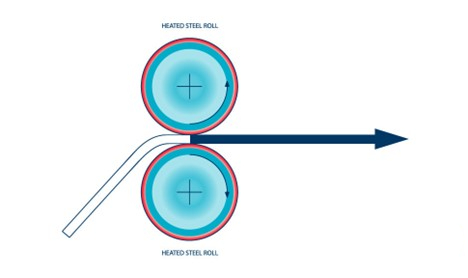
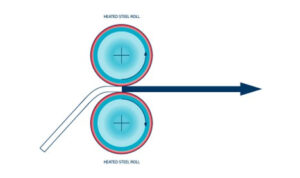 SBPP is one of the most basic polypropylene-based nonwoven fabrics in production. It is created by taking sheets of extruded polypropylene and bonding them using a process called calendaring.
In this process, the sheets are passed between rollers at a high temperature and pressure until achieving the desired weight and thickness. The result is a material with long, loosely bonded fibres and large pores. This can be found in the material shops marketed as ‘Buckram’ or ‘Spunbond’:
- Basic moisture resistance
- Excellent Durability
- Versatility
- Breathable
Melt-Blown non-woven fabric
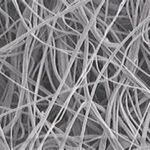
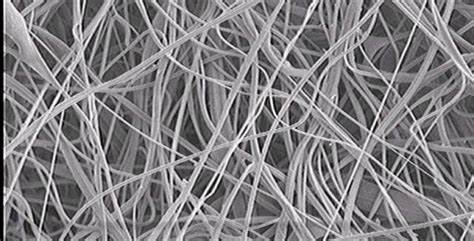
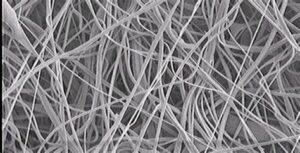 Melt-blown sheets are made by taking the polypropylene and extruding them into nanofibers using a high-speed blowing gas. The high-speed hot air flow is used to draw the thin polymer melt stream extruded from the die orifice [spinnerets], thereby forming ultra-fine fibres [1-4 nanometre] and collecting them on the condensate screen or roller, and at the same time bonding themselves to become the Melt-blown Non-woven.
Spunbond + Meltblown + Spunbond (SMS) characteristics
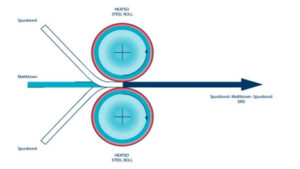
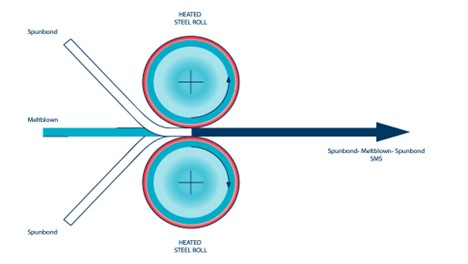
SMS starts with two layers of the Spunbond polypropylene (SBPP) described earlier. However, it takes things further by layering them with a central layer of Melt-blown nonwoven fabric.
The result is a nonwoven textile with exceptional filtration and moisture repellent properties.
By placing a layer of melt-blown between the two layers of spunbond polypropylene, the new textile (SMS) offers many fluid resistance and flexibility benefits in addition to a greatly increased ability and durability to deal with the hazardous environments.
These SMS filters are made up of three layers: a spunbond polypropylene layer on the outside, a meltblown polypropylene layer in the middle, and another spunbond polypropylene layer on the other side. The meltblown layer is the key component responsible for providing high filtration efficiency by trapping and blocking tiny particles, bacteria, and viruses.
The nanofiber technology used in these filters allows for a higher surface area and smaller pore size, resulting in improved filtration performance compared to traditional microfiber filters. The nanofiber layer helps to capture even smaller particles, including ultrafine dust, smoke, and allergens.
The non-woven polypropylene nanofiber SMS filters offer several advantages, such as:
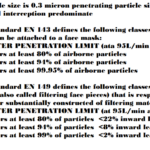
- High Filtration Efficiency: The combination of spunbond and meltblown layers, along with the nanofiber technology, provides a high filtration efficiency, typically above 95% or higher.
- Breathability: Despite their high filtration efficiency, these filters still allow for good breathability, ensuring comfort for the user and reducing the strain on respiratory systems.
- Lightweight and Flexible: The non-woven polypropylene nanofiber SMS filters are lightweight and flexible, making them suitable for various applications, including masks and other personal protective equipment.
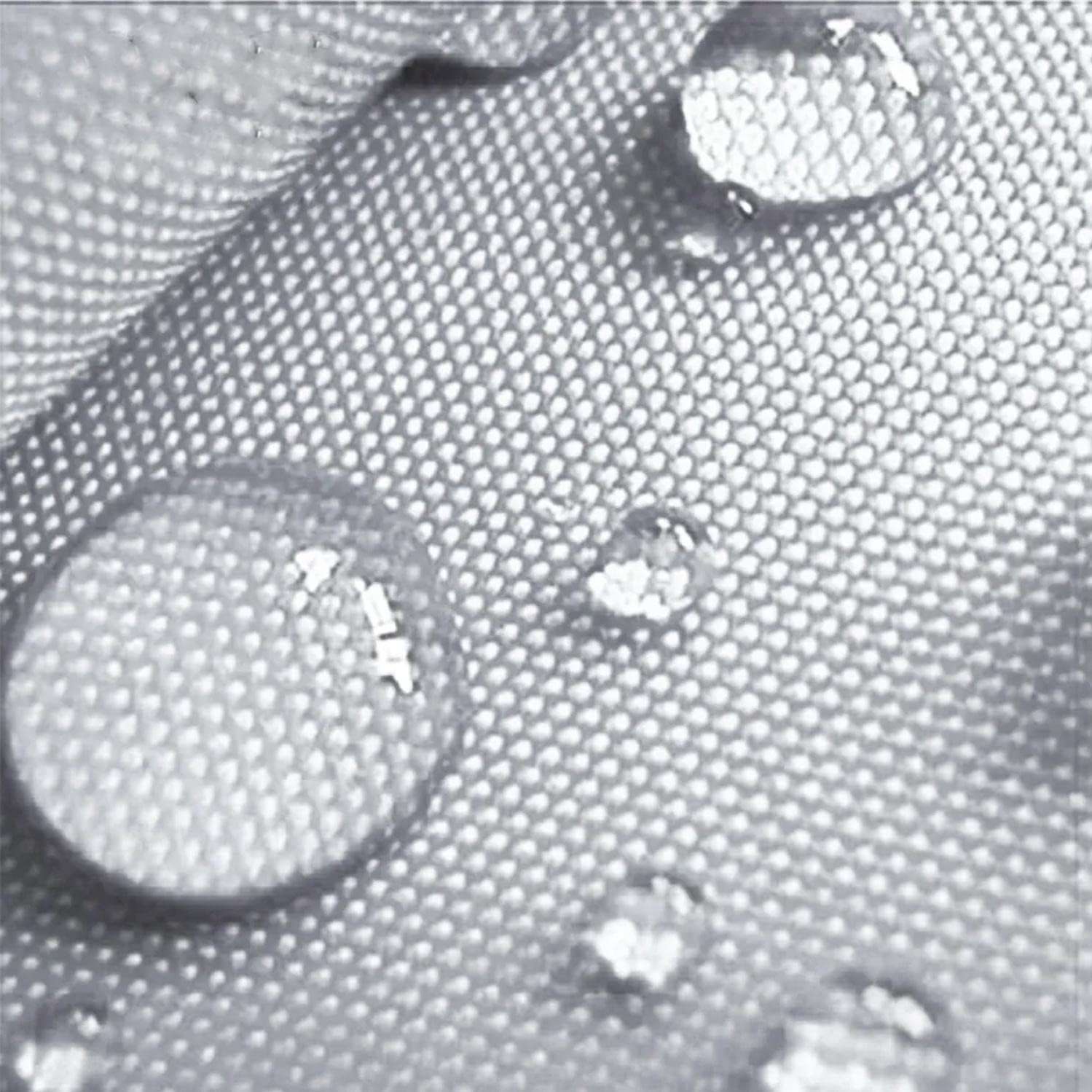
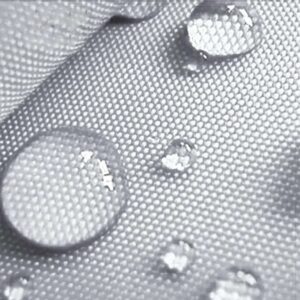
- Hydrophobic Properties: Polypropylene fibres are inherently hydrophobic, meaning they repel water and moisture. This hydrophobic property prevents the filter from absorbing liquids, maintaining its filtration performance even in humid environments.
- Cost-Effective: Non-woven polypropylene nanofiber SMS filters are generally cost-effective compared to other filtration materials, making them more accessible and widely used in various industries.
- Durable: The addition of Spunbond to the Meltblown increase the durability of sole nonwoven Meltblown.
Using SMS Nanofiber filter cloth
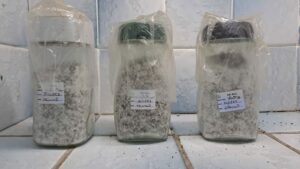
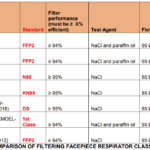
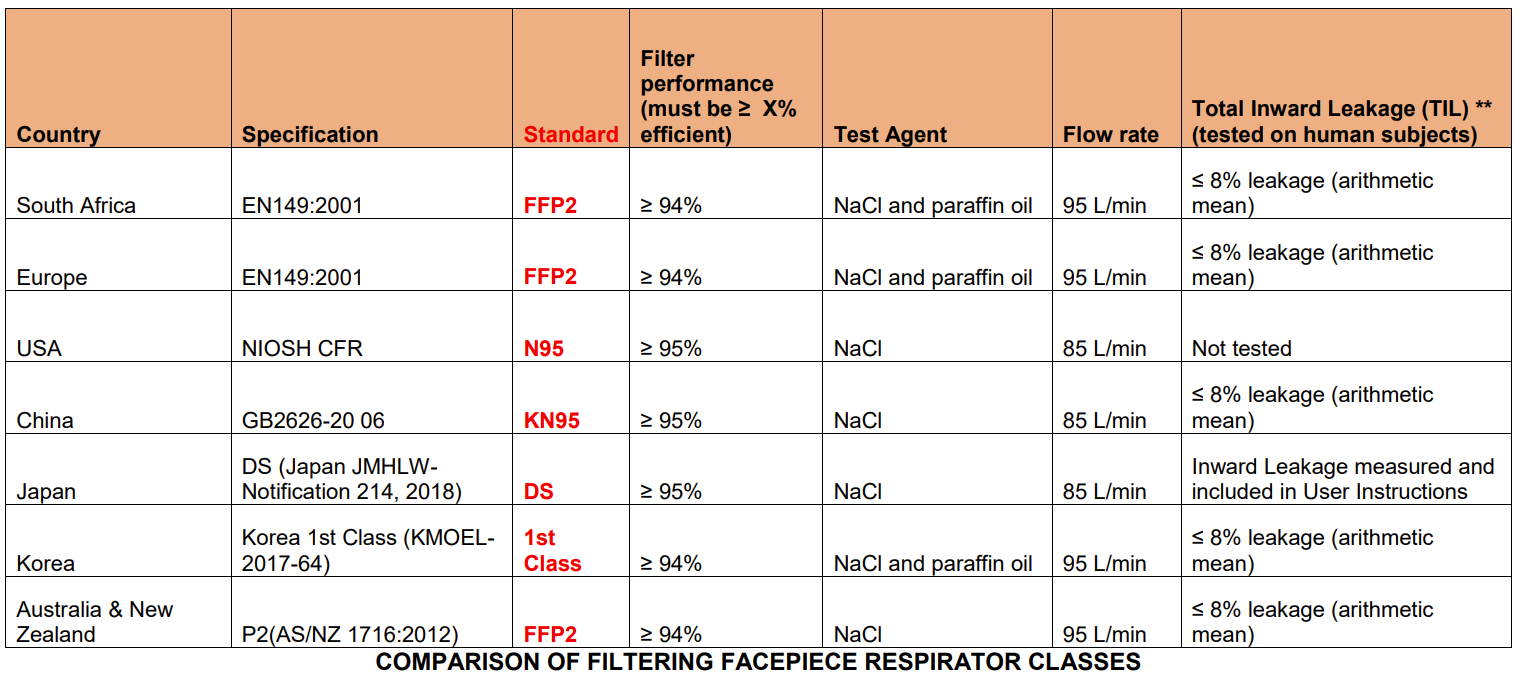
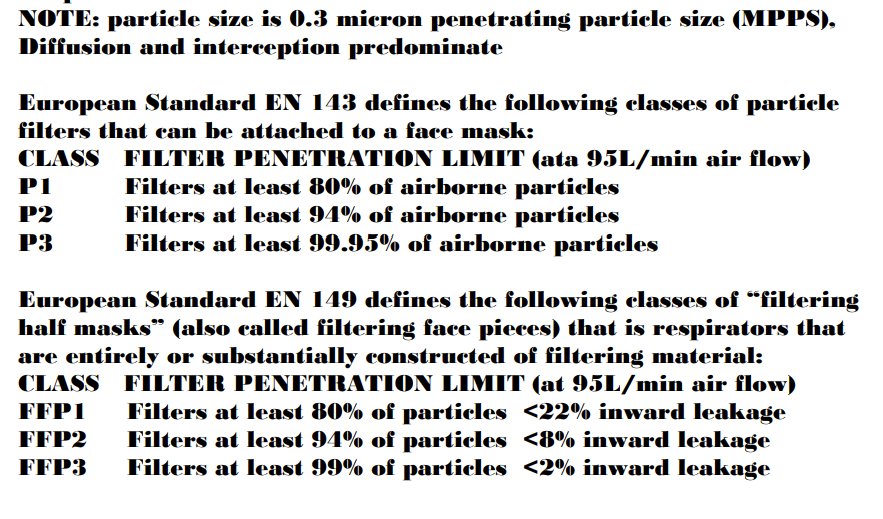
N95 respirators, named for their ability to filter 95% or more of tiny 0.3-μm particles, are the mainstay of protection against airborne pathogens. N99 masks are simply more layers of the meltblown; like SMMS, SMSMS, etc.
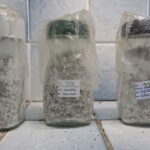
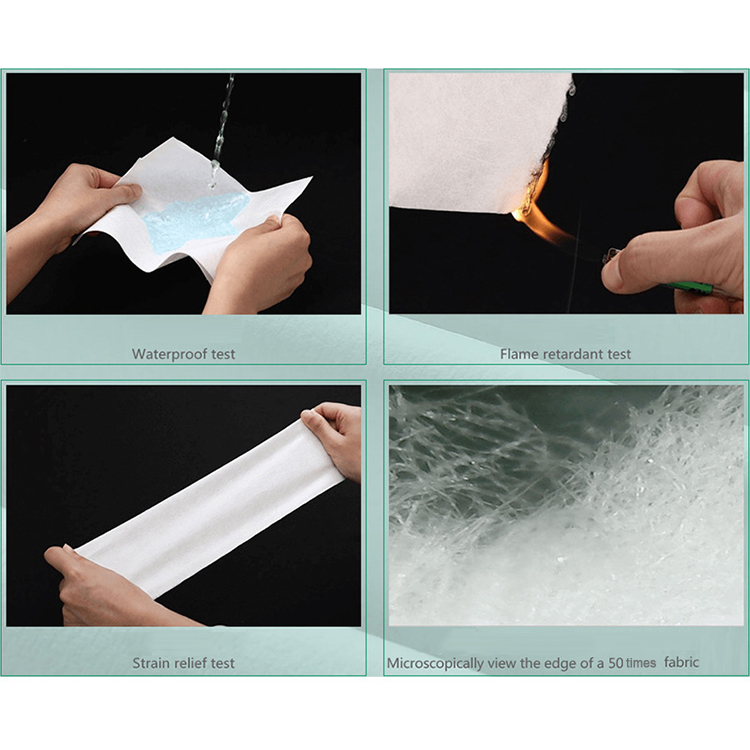
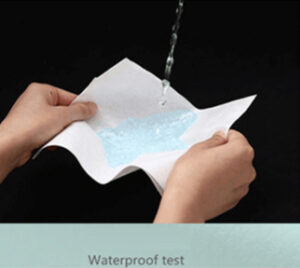 Over the years many products were tried from traditional ‘Buckram’, spunlace, Polyfill, spunbond, etc. A simple test to see if you have the correct product is the ‘waterproof’ test. Simply put the filter over a bottle and make a dimple with finger. Pour in a capful of water, if got the Nanofiber insert it will hold the water, all other products the water will run right through – or absorb it. In fact Spunlace or microfiber cloth is made of similar materials, but different use a different process, and designed to absorb water. This is not a trait you want with filters as need a hydrophobic filter that will repel water.
Note:
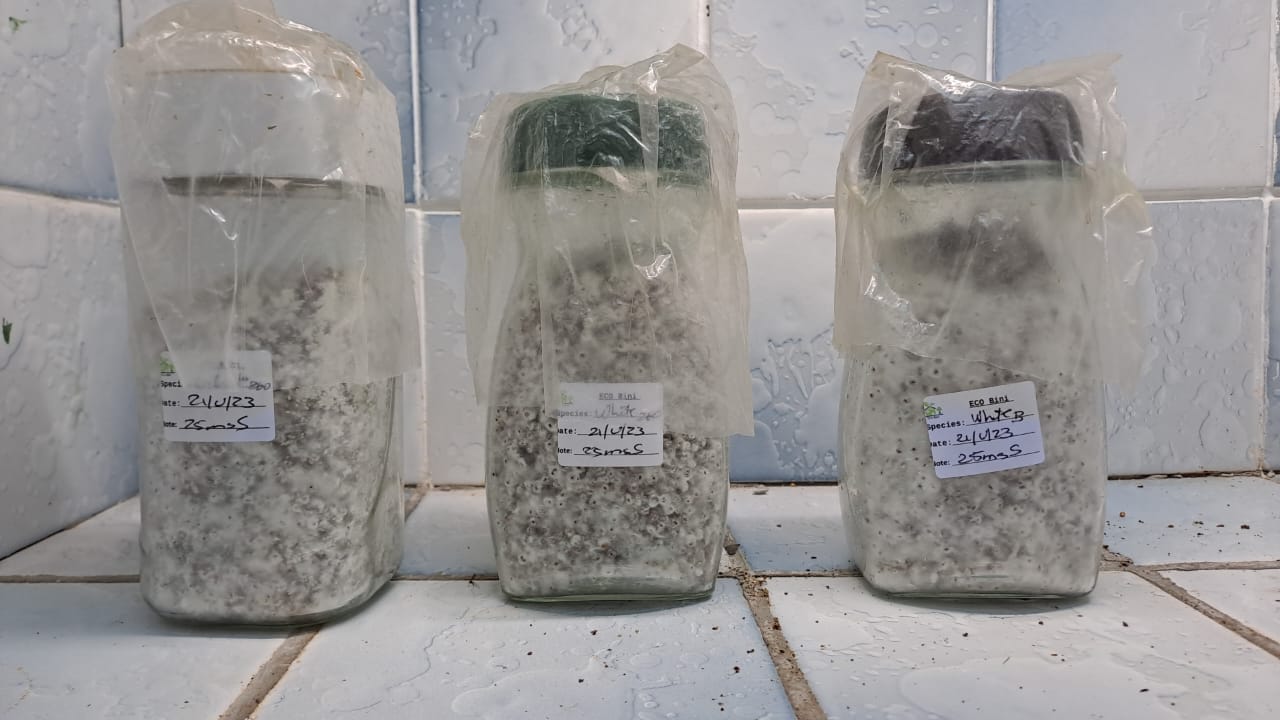
- This is not to confused with ePTFE filters, such as on Mushroom Bags or Filter stickers, which are much more durable with higher filtration value – but lower flowrate.
- This is end-of-line product.
Reviews
There are no reviews yet.