
Unlock the potential of wind energy in urban environments, transforming cityscapes into sustainable power hubs.
Summary
This guide explores the engineering realities and practicalities of urban wind installations, debunking myths and offering insights into efficient, localized renewable energy generation. Discover how small-scale wind turbines can integrate into city life, contributing to a greener future.
Introduction: Cutting Through the Renewable Hype
Wind energy is a powerful, often misunderstood, component of the renewable energy landscape. Routinely downplayed or dismissed by residential installers, especially in urban contexts, the issue isn’t that wind doesn’t work; it’s that most lack the fundamental engineering experience required to design for it effectively. Installers often brand wind as “unreliable” or “high maintenance” because they try to deploy generic gear without first evaluating local fluid dynamics and the unique challenges of the urban environment.
This lab note cuts through the “Fake Watts” and industry myths, providing honest answers to the most common questions about small-scale wind assets. It is not a generic sales pitch but a direct summary of what we have learned running a high-output coastal testing station in the Western Cape, adapted for the specific considerations of urban deployment.
The Urban Wind Resource: Turbulent and Unpredictable
Turbulent Airflows: Tall buildings generate complex vortices, unpredictable gusts, and significant turbulence. This chaotic airflow limits the efficiency of conventional turbine designs and reduces the effective wind speed available for power generation.
Lower Average Wind Speeds: Generally, urban areas experience lower average wind speeds compared to open rural or offshore locations. This factor directly impacts the economic viability and power output of turbines.
Building-Induced Acceleration: Paradoxically, buildings can also create localized zones of higher wind speed due due to acceleration along facades and roof edges. Identifying and leveraging these “sweet spots” is key to optimizing urban installations.
FAQ 1: What geographic and aerodynamic factors determine a viable wind installation?
Unlike solar panels, which receive a relatively predictable path of irradiance, wind resource assessment requires careful calculation. You cannot simply read the nameplate on a turbine and expect it to deliver that wattage in a light breeze, especially in a city.ies.
A. The Cubic Law of Velocity (The Math)
The single most critical variable in wind engineering is that available power is directly proportional to the wind velocity cubed (v3).
This cubic relationship means that even minor fluctuations in wind speed result in massive changes in power output. For example, if you compare a light 2 m/s breeze to a moderate 4 m/s wind:
A 4 m/s wind contains eight times the kinetic energy of a 2 m/s breeze. If your location does not hit steady, consistent velocity baselines, your turbine will sit idle.
B. Turbine Geometry: HAWT vs. VAWT
Horizontal Axis Wind Turbines (HAWT): These are the standard propeller-driven units, offering the highest kinetic efficiency and maximum power factor extraction in clean, strong, and undisturbed wind flows. For high-output urban or residential applications where wind resource is consistent and less turbulent, we primarily look at HAWTs. Their need to constantly face into the wind (yawing) and typical operation at higher elevations can be a disadvantage in highly turbulent urban canyons.
Vertical Axis Wind Turbines (VAWT): While vertical designs look visually appealing and can handle highly turbulent or omnidirectional winds closer to the ground, their actual kinetic efficiency is often incredibly low. The market is unfortunately flooded with low-grade VAWT systems that deliver what we call “Fake Watts”—do not install them if you expect a real return on investment in typical residential scenarios.
Counternote on VAWT Viability: Vertical Axis Wind Turbines (VAWTs) do become a viable option when scaled up to larger industrial profiles (over 4 meters in height). At this size, they are uniquely suited for low-velocity wind zones and highly turbulent urban gusts that disrupt traditional horizontal blades. Their omni-directional nature and lower noise profile also make them appealing for specific building-integrated applications.
C. Matching Blade Count to Regional Resources
In high-end commercial wind infrastructure, the angle of attack on the blades is dynamically adjusted by computer systems to match changing wind speeds. On small residential turbines, dynamic pitch control is economically unfeasible. Therefore, the blade design must be permanently matched to the generator’s optimal RPM curve. To compensate for this, you must choose the correct blade count based on your regional wind average:
To compensate for this, you must choose the correct blade count based on your regional wind average:
- 3-Bladed Aerofoil Configuration: Best for high-velocity regions where the annual average wind speed sits above 5 m/s (e.g., coastal zones along the Western Cape and Eastern Cape). Fewer blades allow for higher top-end rotational speeds.
- 5-Bladed or 6-Bladed Configuration: Essential for lower-velocity regions where the annual average wind speed sits below 5 m/s (e.g., Inland Highveld or parts of KwaZulu-Natal). More blades increase the starting torque, allowing the turbine to begin spinning and charging batteries in much lighter winds.
[ Average Wind < 5 m/s ] ──> Use 5 or 6 Blades (High Starting Torque)
[ Average Wind > 5 m/s ] ──> Use 3 Blades (High Top-End RPM Efficiency)
Data Sourcing
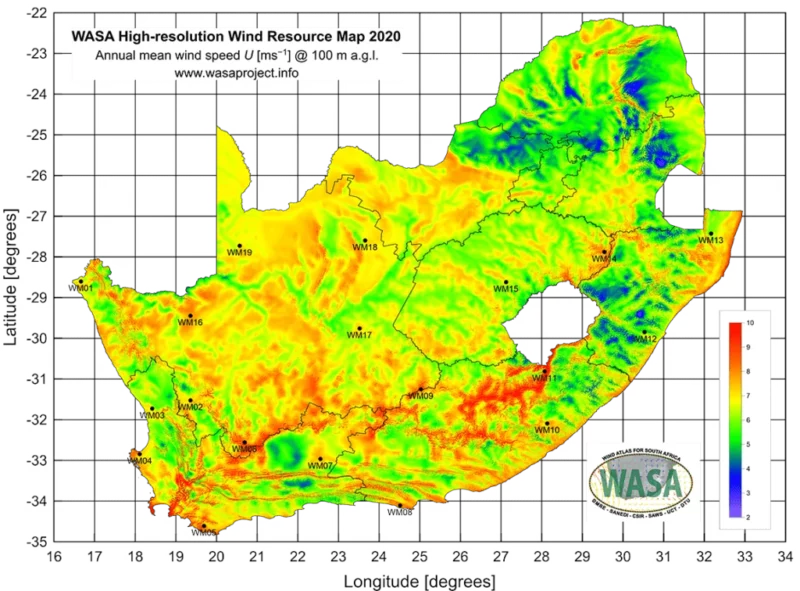
To evaluate your specific urban location, use macro-geographic data from resources like the Wind Atlas for South Africa (WASA) resource maps. For precise, hyper-local historic records, check localized airport weather stations via platforms like Underground Weather to pull hourly wind logs spanning several years. To be economically viable, a site typically requires an annual average wind speed of more than 3 m/s, with effective working winds (3 to 20 m/s) blowing for a minimum of 3,000 hours per year. In an urban setting, careful site assessment to identify building-accelerated wind corridors is paramount.
FAQ 2: How do I size a turbine based on my home’s actual electrical consumption?
When designing an independent energy system, you do not look at how much power a turbine can generate; you look at how much power your household actually consumes.
The Load Factor Reality Check
Wind power is stored directly in a battery bank before being converted by an inverter to run your appliances. To size the system safely, you must account for your site’s Load Factor—the actual power generated over a year compared to the theoretical maximum nameplate power of the turbine.
At our coastal testing site near Gansbaai, we operate in an aggressive wind zone that yields a high 60% load factor. If you install a small 100W turbine in this environment, it will run near peak capacity for roughly 14 hours a day, generating 1400 Wh (1.4 kWh) of energy daily.
However, if the wind drops to a quiet 4-hour run on a calm day, that same 100W turbine will only generate 400 Wh of energy.
Sizing Math Example
Let’s look at a basic low-draw off-grid load profile:
- 2x 15W LED Bulbs (Running 4 hours/day) = 120 Wh
- 1x 35W LED Television (Running 3 hours/day) = 105 Wh
- 1x 15W Radio (Running 4 hours/day) = 60 Wh
- Total Daily Base Load Requirement = 285 Wh
If you install a 100W turbine in a low-wind area that only gives you a 2-hour or 3-hour run per day, it will produce less than 285 Wh. Over time, this deficit will systematically drain and destroy your battery bank. Because wind relies on the variable velocity cubed, you cannot rely on it as a single-source input. Hybrid systems are almost always necessary.
The Three Structural Approaches
- Off-Grid: Total isolation from the utility grid. Requires a thorough energy audit to calculate your exact storage requirements, backed by a hybrid input system (Wind + Solar + Automated Generator backup) to handle extended calm periods.
- On-Grid / Grid-Tied: The turbine acts as a direct supplemental feed to reduce your utility bill. Battery storage can be kept minimal because the grid handles the baseline load when the wind drops.
- Loadshedding Backup: A targeted backup strategy. Size your battery and inverter capacity exclusively to cover your essential loads during typical 2-to-4-hour blackout windows, using the turbine as a secondary method to keep the bank topped up during outages.
FAQ 3: How do I select the correct battery capacity for an on-grid wind conversion system?
For an on-grid setup where the battery bank is used primarily for active energy conversion and power stabilization rather than multi-day autonomy, your storage capacity should be safely matched to the output potential of the turbine generator.
A standard reference baseline tailored to a high-output environment includes:
- 100W Wind Turbine: Minimum 60 Wh battery storage capacity.
- 200W Wind Turbine: Minimum 120 Wh battery storage capacity.
- 600W Wind Turbine: Minimum 360 Wh battery storage capacity.
As a general rule of thumb to keep hardware costs balanced while ensuring system stability, size your active storage capacity to match 60% to 80% of the turbine’s rated output power.
Note: The absolute maximum storage capacity will always be governed by your specific hybrid inverter’s DC input requirements and your home’s total peak power demand. Just ensure you never drop below these minimum limits, or the turbine could overwhelm an undersized battery bank during a sudden wind spike.
It is for this reason that Hybrid power is preferred, combination of wind and PV.
FAQ 4: What wind speeds are required to start active battery charging?
To begin pushing usable current into a battery bank, the voltage generated by the turbine’s rotating magnets must climb higher than the standing voltage of the battery. For easy reference we compare to the Beaufort Scale.
On the standard Beaufort Wind Scale, this charging threshold typically activates at Level 3:
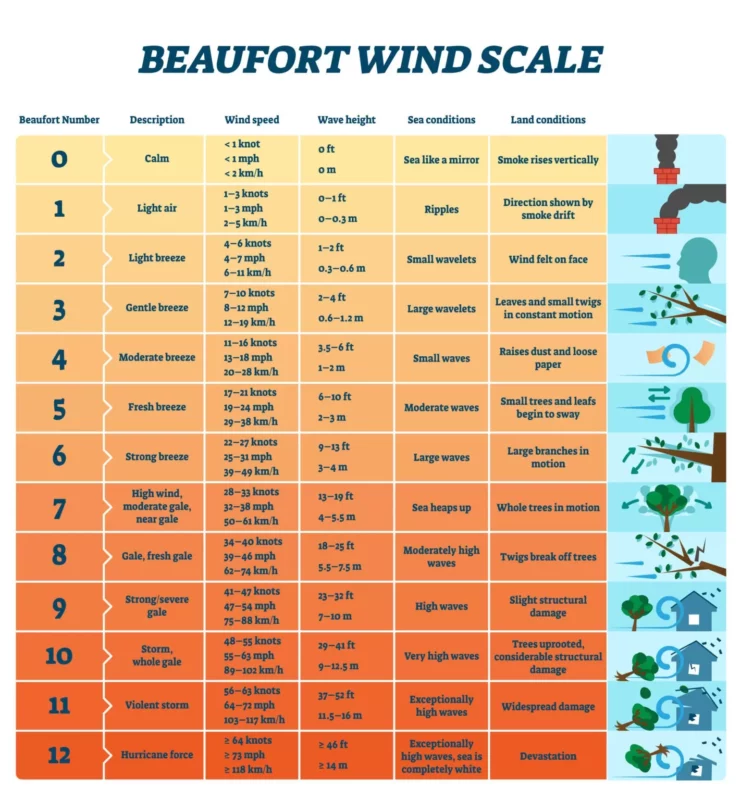
| Beaufort Level | Environmental Indicators | System Status |
| Level 1 & 2 (1–5 knots) | Smoke trails drift; light wind felt on face. | Rotor may spin slowly; zero charge output. |
| Level 3 (7–10 knots) | Leaves and small twigs in constant motion. | Cut-in Speed Achieved. Generator voltage exceeds battery voltage; active charging begins. |
| Level 4 & 5 (11–21 knots) | Dust/paper raises; bushes and small trees sway. | Optimal Operation. Continuous steady power generation. Recommended zone for 400W–600W turbines. |
| Level 6 & 7 (22–33 knots) | Large branches and whole trees in motion. | High-output production. System monitors for over-current protection. |
| Level 8+ (34+ knots) | Twigs break off trees; structural damage risks. | High-wind braking protocols engage to protect assets. |
FAQ 5: Why does my wind turbine suddenly stop turning during high winds?
It can be alarming to look out during a severe gale and see your turbine blades locked completely motionless or spinning at a crawl. This is a normal, engineered response from the intelligent fan controller. It happens due to two protective factors:
- Overcharge Mitigation (Battery Full): When your battery bank hits 100% capacity, it can no longer accept incoming current. To prevent catastrophic overcharging and thermal runaway, the charge controller automatically applies an electronic brake to the turbine.
- Turbulence & Over-Velocity Protection: Extreme wind speeds can tear apart small-scale blades or burn out the internal alternator coils. Our sweet spot for continuous residential generation is anywhere under 40 km/h.
The Manual Three-Phase Brake Hack
To protect your hardware from sudden, violent storm fronts or highly turbulent inland gusts, always install a dedicated heavy-duty AC circuit breaker between the turbine and the controller. When a severe storm approaches, flipping this switch directly shorts the three AC phase lines coming from the turbine together. This creates an immediate, massive electromagnetic resistance that locks the rotor head in place, safely braking the turbine until the storm passes.
[ Turbine 3-Phase AC Output ] ──> [ Manual Shorting Switch ] ──> Creates Internal Magnetic Lock ──> Mechanical Rotor Stops
FAQ 6: What are the structural mounting specifications for a residential mast?
A wind turbine cannot simply be bolted onto a thin piece of scrap pipe. Because of the rotational forces and leverage exerted on a mast during high winds, the tower assembly must conform to strict engineering parameters to prevent mechanical failure.
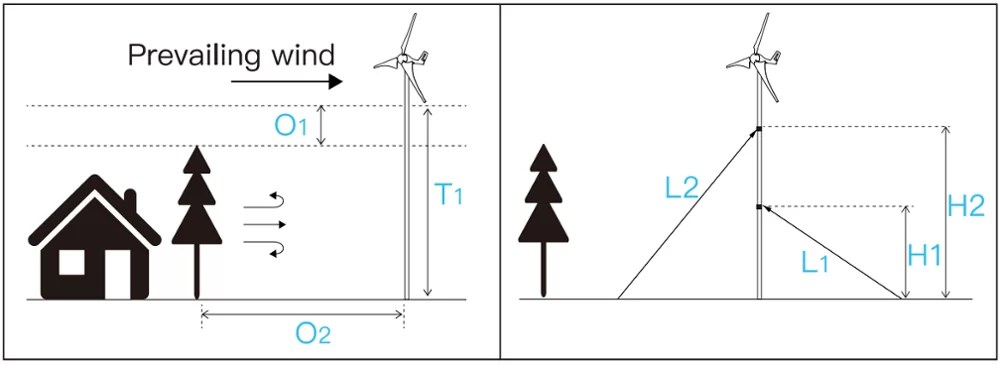
Standard Mast Engineering Tolerances
| Turbine Class | Power Rating | Mast Height (H) | Pipe Diameter | Wall Thickness | Minimum Clearance to Obstacles (O1) | Minimum Open Run Distance (O2) |
| S-Series | 100W – 600W | 6 Meters | 48 mm | 2.5 mm | 4 Meters | 30 Meters |
| M-Series | 500W – 1 kW | 6 Meters | 48 mm | 2.5 mm | 4 Meters | 30 Meters |
| L-Series | 1 kW – 2.5 kW | 9 Meters | 76 mm | 3.5 mm | 6.5 Meters | 35 Meters |
| G-Series | 3 kW – 10 kW | 12 Meters | 89 mm – 219 mm | 4.0 mm – 6.0 mm | 6.5 Meters | 35 Meters |
Residential Mounting Strategy
For high-density residential areas, we recommend sticking exclusively to the 400W and 600W S-Series models mounted on a standard 6-meter guyed mast.
A 6-meter tower length usually bypasses local municipal height restrictions, eliminating the need for expensive structural permitting, while still positioning the turbine high enough to clear the immediate ground-level boundary layer of turbulent air. Every turbine kit includes precise civil engineering blueprints detailing the exact concrete foundation pad dimensions and guy-rope anchor points required to withstand local wind loads safely.
Conclusion
Small-scale wind energy is a highly effective, high-output asset when you ignore the marketing fluff and design around basic fluid mechanics. By accurately tracking your household’s daily watt-hour consumption, selecting the right blade geometry for your region, and incorporating robust electrical and structural braking systems, you can integrate a wind asset that keeps your system charged long after the sun goes down.
-
STS

Eco Bini™ BioaKt Media/Substrate Conditioner | 2000 ml
Original price was: R195.R149Current price is: R149. Add to basket🏗 Bundu-Tek additive with kelp alginates – No autoclave needed.
🏗 Alkaline pH Pasteurizer
🏗 Self-sterilizing formula
🏗Boost yields and colonizing times -
STS

Braai White Oyster Mushroom Spawn Kit
Original price was: R1,399.R995Current price is: R995. Add to basket✔ Braai White Oyster Mushroom Spawn Kit (Pleurotus ostreatus)
✔ Includes 100 ml Living Inoculant (LI) in a reusable Culture Bottle
✔ Includes 1 kg Sterilized Sorghum Grain Spawn with SHIP & 0.2 µm PTFE filter
✔ STS-selected commercial strain producing large, meaty mushrooms ideal for the braai -
STS
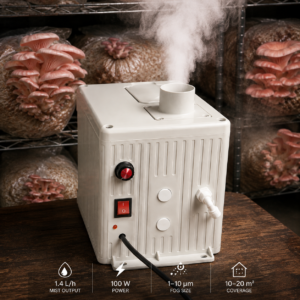
STS 1.4kg/h Industrial Ultrasonic Humidifier – Variable Fan
Original price was: R6,999.R5,599Current price is: R5,599. Add to basket🧫Industrial 24/7 Stainless Steel Ultrasonic Discs
🧫High-Volume 1.4kg/Hour Fog Output
🧫Integrated Variable Fan Speed Control
🧫Ruggedized Corrosion-Proof ABS Chassis -
STS
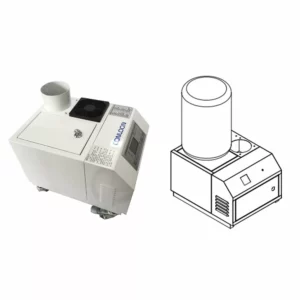
STS 7kg/h Commercial Ultrasonic Humidifier
Original price was: R28,500.R24,999Current price is: R24,999. Add to basket🏗 Commercial 7 kg/h ultrasonic humidifier.
🏗 Dual water supply (autofill or 20L bottle interface).
🏗 Gen³ heads, stainless steel, auto shut-off.
🏗 Smart Humidity control – CE Accredited.
-
STS
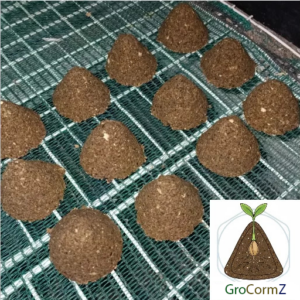
Elephant Garlic Start Kit | GroCormZ
Original price was: R75.R49Current price is: R49. Add to basket🌱 Produces Authentic Ajo Macho (Solo Garlic)
🌱 Encapsulated Elephant Garlic Corm Included
🦠 Terra Preta Nova Biological Grow Ball
💧 Just Plant, Water & Grow — Pointy Side Up! -
STS

Eco Bini™ VermiLIN BAM! Living Microbial Concentrate | 500ml Bettix
Original price was: R185.R130Current price is: R130. Add to basket🌱 Living Microbial Concentrate from premium vermicast
🌱 Controlled Biological Stasis for extended shelf stability
🌱 Built-in Bettix dosing chamber for accurate mixing
🌱 Perfect for living soil, compost, biochar & regenerative growing -
STS
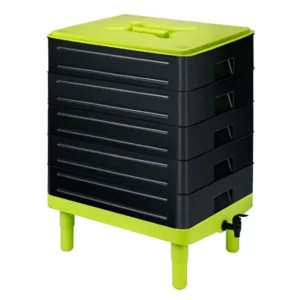
105L 5-Tray Vertical Worm Farm
Original price was: R6,299.R4,995Current price is: R4,995. Made to Order🪱 Large 105L volume vermicomposter!
🪱 5-tray stackable bin for recycling kitchen waste.
🪱 Includes auxiliary tools.
🪱 Suitable for both indoor and outdoor use. -
STS
 📜Reference
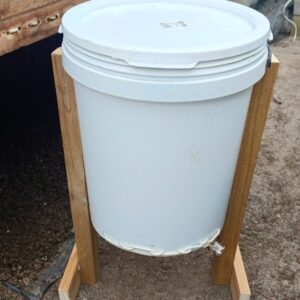
MicroFlow CFT | Continuous Flow-Through Vermicompost Starter Kit & Course
Original price was: R1,299.R749Current price is: R749. Read more🛠Handmade, Plug-and-Play Urban CFT Worm Bin.
🛠 Assembled Micro-Flow CFT with Bedding and retaining disc.
🛠 Red Wigglers & VermiBoost3 – to start and maintain a worm bin.
🛠 Includes full Continuous Flow-Through (CFT) Reactor Manual
-
STS
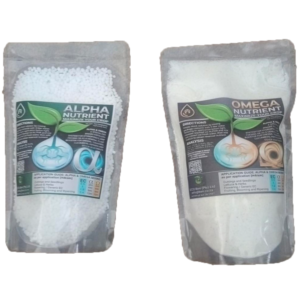
Binary Hydroponic Nutrient Kit – 2 x 5L Concentrates
Original price was: R275.R149Current price is: R149. Add to basket🌱 Makes 2 x 5L professional nutrient concentrate
🌱 Binary Alpha & Omega formula prevents nutrient lockout
🌱 Complete macro & chelated micronutrients
🌱 Professional hydroponics made simple -
STS
Elephant Garlic Start Kit | GroCormZ
Original price was: R75.R49Current price is: R49. Add to basket🌱 Produces Authentic Ajo Macho (Solo Garlic)
🌱 Encapsulated Elephant Garlic Corm Included
🦠 Terra Preta Nova Biological Grow Ball
💧 Just Plant, Water & Grow — Pointy Side Up! -
STS

Dried Elephant Garlic Slices – Sweet, Mild Flavour (40g)
Original price was: R115.R95Current price is: R95. Add to basket🧄Organic Elephant Garlic
🧄Low-temp dried gourmet slices
🧄Naturally sweet & mild
🧄Small-batch South African -
STS
Eco Bini™ BioaKt Media/Substrate Conditioner | 2000 ml
Original price was: R195.R149Current price is: R149. Add to basket🏗 Bundu-Tek additive with kelp alginates – No autoclave needed.
🏗 Alkaline pH Pasteurizer
🏗 Self-sterilizing formula
🏗Boost yields and colonizing times
-
STS
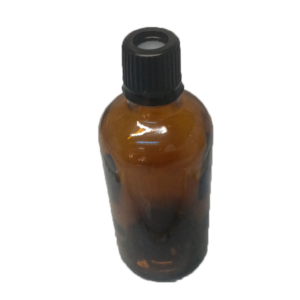
The 100ml SHIP Culture Bottle (3mm Silicone Septum)
Price range: R90 through R195 Select options This product has multiple variants. The options may be chosen on the product page🧫 Medical 100ml Amber glass bottle.
🧫 3mm self-healing silicone SHIP.
🧫 UV-protected for sensitive cultures.
🧫 Reusable, autoclavable, and durable -
STS

Oyster Mushroom DIY Kit | Bundu Tek Practical Grower’s Starter
Original price was: R1,400.R750Current price is: R750. Add to basket🏗 Stop buying mushrooms and learn how to grow them
🏗 Mother Spawn in Biojar with BioaKt Straw Pellets
🏗 STS Grow Bags, no lab equipment needed.
🏗 Simple Instructions and WhatsApp support. -
STS
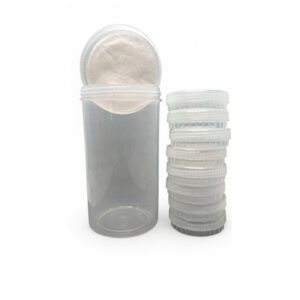
Reusable Autoclavable Petri Dish Kit System
Original price was: R340.R239Current price is: R239. Add to basket🧫 8 × 70 mm Autoclavable Screw-Top PP Petri Dishes
🧫Durable, reusable lab essential
🧫Autoclavable for sterile use
🧫Deep dish for more media
🧫Integrated storage & transport -
STS
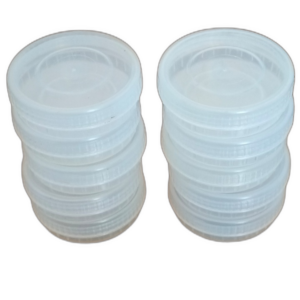
73mm Durable Autoclavable Petri Dishes for Lab Use
Price range: R24 through R180 Select options This product has multiple variants. The options may be chosen on the product page🧫 73mm screw-top Polypropylene Petri Dish.
🧫 Autoclavable and resists breakage.
🧫 Deep 20mm profile holds 3x more agar.
🧫 Screw Lid for easy access.
Socratic Questions:
1. How does wind speed directly impact the power output of a small urban wind turbine?
2. What are the key differences between HAWTs and VAWTs for city rooftop installations?
3. How can I accurately determine if my specific urban location has enough viable wind?
4. What safety features are essential for a residential wind turbine during extreme weather?
5. How do I calculate the right battery bank size for my home’s wind energy system?