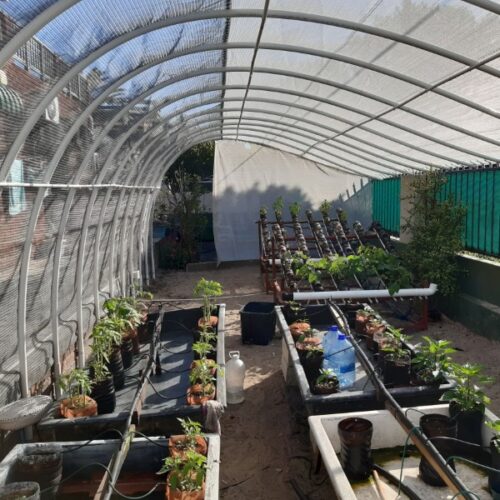
Tired of subterranean mole-rats destroying your turf, infrastructure, and crops overnight?
Summary
Subterranean burrowers present a relentless challenge for land managers, growers, and property owners across southern Africa. Managing these animals requires understanding the distinct physiological differences between insectivorous moles and herbivorous mole-rats. By targeting rodent sensory biology with neat bio-active injections, long-term boundary protection is achieved without toxic baits.
Understanding Subterranean Burrowers and Regional Variants
Subterranean mammals have evolved across distinct evolutionary pathways to adapt to life underground. Effective control depends on accurately identifying the specific variant infesting a property, as their dietary drivers, burrowing mechanics, and sensory behaviors differ fundamentally.
Insectivorous True Moles vs. Herbivorous Mole-Rats
In garden and agricultural ecology, subterranean mammals broadly fall into two biological categories:
- Insectivorous Moles and Golden Moles: True Moles (Talpidae) and native Cape Golden Moles (Chrysochloridae) are small insectivores. Golden moles lack external eyes and ears, “swimming” through loose sandy soil near the surface to feed on earthworms, grubs, and soil invertebrates. They do not consume roots, bulbs, or plant material.
- Mole-Rats and Blesmoles (Bathyergidae): Native to Africa, these creatures are strictly herbivorous rodents. Rather than using their feet as primary spades, they use massive, protruding incisors positioned outside their lips to excavate tough soil without swallowing dirt. Mole-rats target plant roots, tubers, bulbs, corms, and turf root-mats. They build extensive, deep subterranean tunnel networks and eject massive quantities of soil onto the surface, creating high, uneven mounds that undermine paving, drainage, and cultivated beds.
Key Regional Variants in Southern Africa
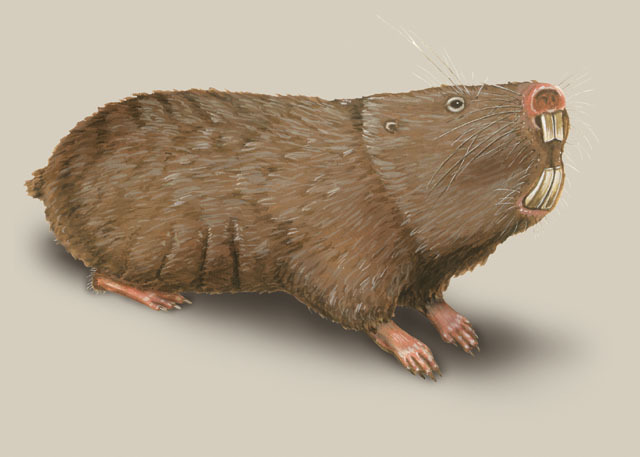
The Common Mole-Rat (Cryptomys hottentotus): A social, colony-forming species widely distributed across southern Africa. They construct intricate, interconnected tunnel systems with shared nesting and food-storage chambers.
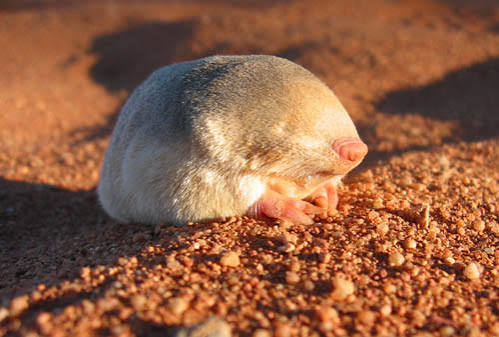
The Cape Golden Mole (Chrysochloris asiatica): An insectivore that leaves distinct raised surface ridges as it hunts near the surface for soil invertebrates. In Afrikaans known as “Kruipmolle” [‘crawling moles’]
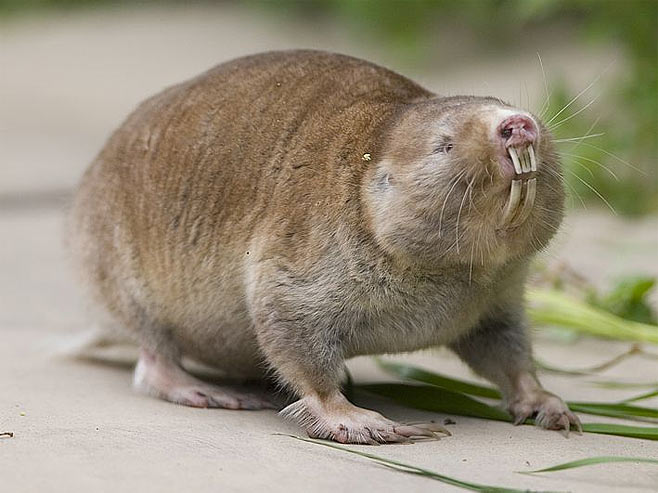
The Cape Dune Mole-Rat (Bathyergus suillus): Known locally as the Strandmol, this is the undisputed giant of subterranean burrowers.
Deep Dive: The Cape Dune Mole-Rat (Bathyergus suillus)
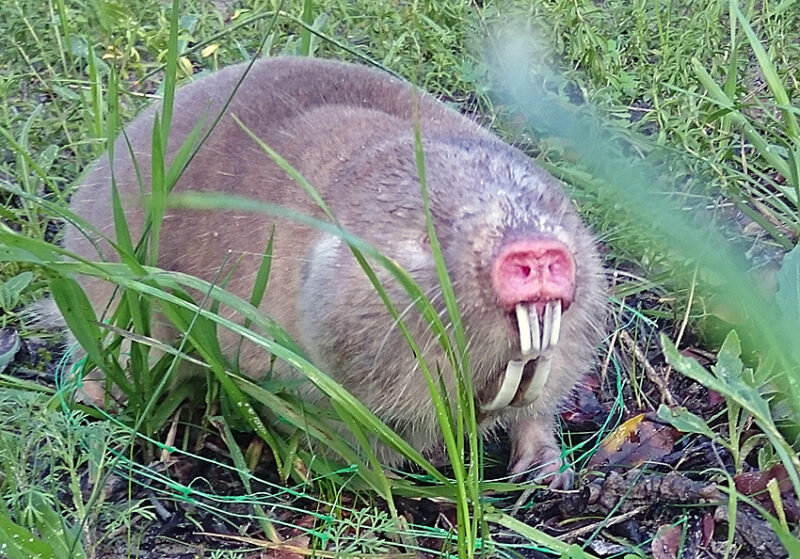
The Strandmol (Bathyergus suillus) is endemic to the coastal sand veld and dune regions of South Africa’s Western and Eastern Cape provinces. It is the largest living subterranean rodent in the world, with solitary adults reaching lengths over 300 mm and weighing upwards of 1.5 to 2.5 kilograms.
Physiology and Digging Mechanics
The Strandmol is built like a subterranean bulldozer. It features a heavy, cylindrical body, short muscular limbs equipped with powerful digging claws, and large, continuously growing upper and lower incisors. Because it inhabits loose, sandy coastal soils, its excavation rate is exceptionally high with those spaded feet.
A single adult Strandmol can throw up mounds exceeding 30 to 50 kg of sand in a single night, undermining building foundations, collapsing brick paving, and burying coastal fynbos or sports turf.
Social Structure and Territorial Behavior
Unlike the social C. hottentotus mole-rat, the Strandmol is fiercely solitary and aggressive. Adults occupy exclusive subterranean home ranges that can extend across hundreds of meters. Except during brief mating windows or when mothers rear young, any intruder entering an active tunnel system is met with lethal aggression.
Because Strandmolle are strictly territorial, lethal trapping or poisoning creates a vacant, low-resistance tunnel network. Neighboring individuals rapidly expand their territories into these open runs, resulting in continuous reinvasion cycles unless the soil environment itself is rendered unpalatable.
Foraging Dynamics and Economic Damage

Mole-rats are obligate herbivores that feed from below. Their diet centers on the roots, corms, and bulbs of coastal vegetation, as well as lawn grasses, vegetable crops, and ornamental landscaping.
As they tunnel beneath agricultural plots, market gardens, and turf facilities, they clip roots directly at the soil line, causing large patches of vegetation to die from desiccation. Their deep runs destabilize the sub-base beneath greenhouses, paving stones, and retaining walls, leading to costly structural repairs.
Foraging Dynamics and Economic Damage
Key Differences: Strandmol vs. Common Mole-Rat
| Characteristic | Cape Dune Mole-Rat (Bathyergus suillus) | Common Mole-Rat (Cryptomys hottentotus) |
| Social Structure | Strictly Solitary (1 mole per run) | Eusocial Colonies (5 to 14+ individuals per family) |
| Size & Weight | Massive (, up to ) | Small (, around ) |
| Mound Profile | Huge, towering mounds ( sand dumps) | Numerous smaller, tightly clustered soil heaps |
| Tunnel System | Deep, massive shafts (deep) | Complex, branching networks with shared nest/food chambers |
| Diet | Bulbs, thick roots, coastal tubers | Grass roots, small bulbs, weed roots, turf mat |
Why Sensory Disruption Works Exceptionally Well on Cryptomys hottentotus
Because Cryptomys hottentotus relies on colony-specific pheromone scents to navigate their shared tunnels and identify family members, introducing volatile eugenol (clove), capsaicin (chilli) and organosulfurs (LAFEGE) into their network completely collapses their social orientation. A single direct application poured down a central active mound will travel through interconnected family runs, driving the entire colony outward toward the property boundary simultaneously.
Sensory Biology and Principles of Bio-Deterrence
Because subterranean life takes place in total darkness within enclosed, high-humidity, low-airflow soil chambers, the Strandmol relies heavily on a specialized sensory apparatus:

- Hyper-Developed Olfaction: Their olfactory system is tuned to detect subterranean root volatiles, moisture gradients, and territorial scent markers.
- Trigeminal Nerve Sensitivity: The snout, mouth, and eyes are densely populated with trigeminal nerve endings sensitive to chemical irritants (TRPA1 and TRPV1 receptors).
- Tactile and Vibrational Detection: Highly sensitive facial vibrissae and body hair detect air currents and micro-vibrations traveling through the soil column.
- Conditioned Taste Aversion: As rodents, they possess a rapid learning feedback mechanism connecting taste and ingestion with gastrointestinal distress.
Why Standard Lethal Baits Fail
Commercial mole baits designed for insectivorous garden moles rely on protein bases or synthetic worm configurations that Strandmolle ignore. Conversely, rodenticide grain pellets placed in damp, humid tunnel systems break down, mold, or get buried in sand during routine tunnel maintenance. Furthermore, lethal removal fails to address the underlying physical habitat appeal, inviting immediate recolonization from surrounding populations.
Applied Bio-Deterrent Protocols and Soil Drench Systems
To achieve long-term deterrence without environmental toxicity, a targeted multi-modal bio-repellent strategy (Mole Away!) is employed. This approach combines lipid gastrointestinal irritants, chemical burning agents, and volatile organosulfur compounds delivered via a non-ionic surfactant and acidic Lactic Acid Bacteria (LAB-X) bio-carrier.
Core Active Ingredients
- Castor Oil (Ricinoleic Acid Carrier): Serves as the primary gustatory and gastrointestinal active. Upon contact or ingestion during tunnel maintenance, ricinoleic acid binds to intestinal EP3 prostanoid receptors, triggering acute smooth-muscle hyper-motility and severe stomach cramping to establish conditioned location aversion.
- Thermal Clove & Extra Hot Chilli Extracts (Dual Trigeminal Receptor Actives):
- Extra Hot Chilli Powder (Capsaicinoids): Selectively targets TRPV1 nerve channels (heat/pain receptors) across the snout, eyes, and nasal mucosa. When volatilized inside an enclosed, humid tunnel shaft, capsaicin triggers an intense burning sensation that forces immediate avoidance behaviour.
- Ground Clove Powder (Eugenol Matrix): Binds aggressively to TRPA1 nerve channels (chemical/irritant receptors). Eugenol’s high vapor pressure floods the tunnel air, creating an overpowering aromatic profile that disrupts spatial navigation while irritating mucous membranes upon contact.
- Trigeminal Synergism: Together, the simultaneous activation of both TRPV1 and TRPA1 pathways creates a complete trigeminal sensory overload, making the tunnel microclimate unbreathable for subterranean mammals.
- Lactic Acid Fermented Elephant Garlic (LAFEGE): Concentrated garlic (allicin) and onion (propanethial S-oxide) organosulfur precursors saturate the air space of the burrow, signaling a toxic micro-environment and masking navigation pheromones.
- Polysorbate 80 (Tween-80 Surfactant Integration): Incorporating a non-ionic surfactant at a precise 1:5 ratio to the lipid phase keeps heavy castor oil and active botanical solids suspended homogeneously within an acidic, CalMag-stabilized LAB-X bio-preservation stock.
Practical Application Protocols
Field testing confirms that bulk water flooding dilutes volatile vapors, cools the shaft microclimate, and washes active lipids away into the water table.
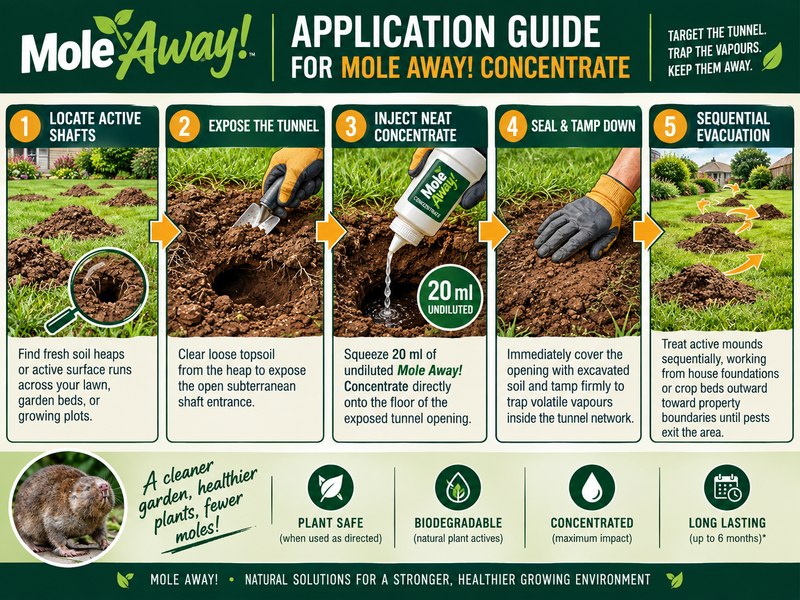
Applying Mole Away! as an undiluted concentrate yields maximum volatile saturation within enclosed runs. Once in contact with soil particles, the emulsion breaks, depositing a persistent, water-resistant film of capsaicin/eugenol-infused castor oil directly onto grass roots, tubers, and burrow surfaces.
The “Neat Direct-Inject” Protocol
- Locate Active Shafts: Find fresh mole heaps or active surface runs across your property. Clear away loose topsoil to expose the main open tunnel shaft.
- Apply Undiluted Concentrate: Dispense 20 ml of neat Mole Away! Concentrate directly onto the floor of the exposed tunnel entrance.
- Seal & Tamp Firmly: Immediately cover the tunnel opening with excavated mound soil and tamp it down tightly. This traps volatile organosulfur, eugenol, and capsaicin vapors inside the tunnel network, creating an intense localized hotspot.
- Sequential Boundary Evacuation: Treat active mounds sequentially, working from the center of cultivated zones or lawns outward toward property boundaries or wild natural corridors until the colony evacuates the plot.
Practical Integration and STS Field Insights
Managing mole-rat activity across domestic properties, market gardens, and urban farms requires a sustained, systematic boundary strategy rather than random, isolated applications.
Zone-Based Boundary Evacuation
Always treat active mounds closest to house foundations, crop beds, or manicured turf first, systematically pushing subsequent applications outward toward property boundaries or wild dune margins. Applying deterrents randomly in the center of an infestation can inadvertently drive animals deeper toward structural footings or untreated growing zones.
STS Testing & Regional Context
Mole Away! was developed at the Sustainability Testing Station (STS) and empirically tested in its surrounding coastal environment. Nestled between two expansive sea dune reserves—Die Plaat and Die Gruis—the testing site faces high baseline population pressure from both the giant Cape Dune Mole-Rat (Bathyergus suillus) and the Common Mole-Rat (Cryptomys hottentotus).
Mechanical & Vibrational Synergy
- Wind-Driven Flap Devices (Effective): Homemade wind spinners—such as repurposed plastic bottles fitted with cut flaps mounted on steel ground stakes—generate erratic, low-frequency vibrations as they spin randomly in the coastal wind. This unpredictable subterranean noise creates ongoing stress within active tunnel runs and serves as an effective physical supplement to bio-repellents.
- Solar Buzzers (Ineffective): Field observation at the STS reveals that commercial solar-powered sonic stakes have virtually no long-term deterrent effect on local mole-rat populations. Because solar buzzers emit predictable sound pulses at fixed intervals and static frequencies, mole-rats quickly habituate to the noise and continue excavating nearby.
- Integrated Multi-Modal Barrier: Combining the acute, multi-sensory shock of neat Mole Away! direct injections with unpredictable mechanical vibration creates a permanent, non-lethal subterranean barrier that keeps burrowing rodents moving back toward their natural wilderness corridors.
-
STS
 📜Reference
VermiLIN – Living Vermicast Soil Biome Microbial Concentrate 500ml
Original price was: R250.R169Current price is: R169. Read more🌱 Stabilized Living Vermicast Biology
🌱 Ionic Osmosis Extended Shelf Stability
🌱 Built-In Bettix Chamber For Dosing
🌱 Powers Living Soil & Biochar Charge -
STS

Fermentation Aerator (2.5W) | 40H Backup & NRV
Original price was: R450.R395Current price is: R395. Add to basket🪱 Powerful 2.5W motor with 2.3 L/min output for deep aeration.
🪱 Integrated 18650 Lithium battery: 40H runtime for off-grid use.
🪱 Includes 3m Silicone tubing, Air Stone, and NRV backflow valve.
🪱 Dual Mode: Continuous brew or Pulse-Preserve. -
STS
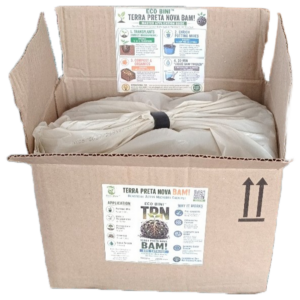
Eco Bini™ Terra Preta Nova BAM! Soil Catalyst | 5 Litre
Original price was: R340.R239Current price is: R239. Add to basket🛠️ Biologically pre-charged Terra Preta Nova Soil Catalyst
🛠️ Premium macadamia shell Granular Activated Carbon (GAC)
🛠️ Beneficial Active Microbes (BAM!)
🛠️ Zero nutrient lockout • Permanent microbial habitat • Ready to use -
STS
LAB-X: Concentrated Lactic Acid Bacteria Starter (500ml Bettix)
Original price was: R240.R169Current price is: R169. Add to basket🧫 Food-grade fermentation starter culture
🧫 Whey-purified from GRAS Efficient Microbes
🧫 Broad LAB consortium for diverse fermentation
🧫 CalMag ionic-lock stabilized
5 Socratic Questions
- How do you distinguish between golden mole ridges and dune mole mounds?
- Why do commercial rodenticide baits fail to control Cape dune mole-rats?
- How does castor oil create conditioned location aversion in burrowing mammals?
- What role does Polysorbate 80 play in subterranean lipid soil drenches?
- What is the best sequence for applying perimeter mole bio-deterrents?