This lab note documents the journey from low-tech mushroom methods (“Tek”) to full systems engineering (“Teq”), culminating in the third paradigm shift: Selective Nutrition. Through the integration of biochar, BAM! microbes, and advanced fermentation, we’ve engineered substrates that defeat contamination and deliver record yields—all without an autoclave.
Summary
Introduction
The integration of biochar and our successful Bokashi Bran experiments with BAM! (Biologically Active Microbes) at the end of 2025/26 has truly thrown a spanner in the works—a third paradigm shift has arrived. What follows is a pen-to-paper attempt to align my thoughts with the recent results from the Sustainability Testing Station (STS).
As with all STS work, this is cutting-edge, empirical, and often bucks conventional scientific precedent.
The Evolution: From Tek to Teq
In the Bundu—where resources are scarce, contamination runs high, and the margin for error is razor-thin—our journey began with “Bundu Tek”: clever, low-cost ways to grow food and fungi. But “just sustainable” wasn’t enough. We needed performance from the waste stream, with the lowest possible overhead.
This led us from “Bundu Tek” (methods) to “Bundu Teq” (systems engineering). The heart of this transition is the Third Paradigm Shift: Selective Nutrition.
The Autoclave Dream—and Its Death
When I started mushroom cultivation, my holy grail was to make mushroom spawn without an autoclave. And we had to Pressure cook everything, from grain to wood, that grail got a name: Bundu Tek.
The Death of the Autoclave Dream
But the quest for a sterile vacuum (the “autoclave dream”) is a battle against nature itself. As Aristotle put it:
Nature abhors a vacuum (horror vacui).
Sterilization means any stray spore can claim the entire substrate. The more energy and money we poured into creating sterile conditions—pressure cookers, HEPA filters—the more we realized we were fighting, not collaborating with nature.
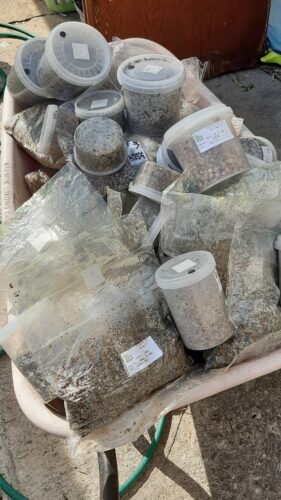
In the interim, I’ve mastered the use of super-pasteurization (using both hot and cold principles) with BioaKT. Thus, Bundu Tek was born: a way to double oyster yields using combined hot and cold pasteurization, with 0% contamination—even managing to grow Lion’s Mane on pine pellets – all without an autoclave.
The “Open Buffet” Problem
Traditional supplementation (raw bran, grain) is like leaving your front door open with a feast on the table. You want to feed your fungi, but you’re also inviting in every contaminant: moulds, bacteria, and more. The usual response?
Spend even more resources on sterilization, or lower supplementation to “play it safe”—both at the cost of yield and resilience.
The Teq Solution: Engineer the Gate
Rather than trying to kill everything, we started engineering “the gate.” Don’t just feed your crop—decide who you feed. That’s where the paradigm shifts come in.
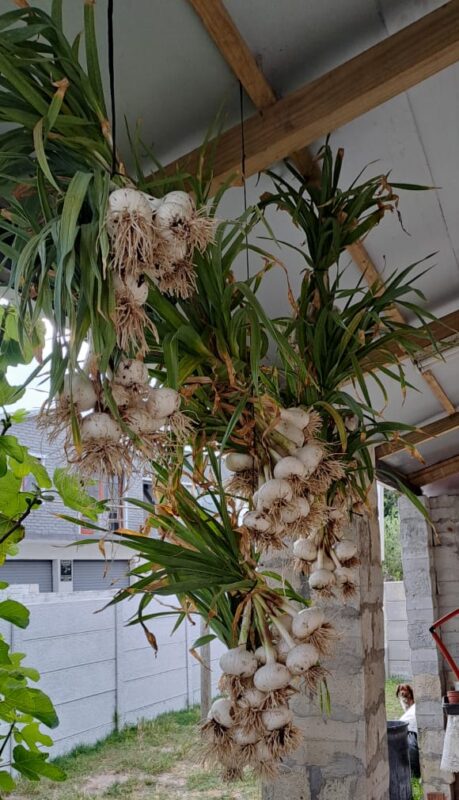
The First Two Paradigm Shifts
My sabbatical into organic hydroponics (vermicompost-based “vermi-ponics”) revealed the first two paradigm shifts:
- Mineralization: Plants can’t access organic nutrients until they’re mineralized by microbes into soluble forms.
- The Monera Bridge: Worms don’t eat waste—they eat the microbes breaking down that waste. In doing so, they pasteurize the microbial soup, packaging nutrients in a slow-release, humus-bound format.
These insights let us crack organic hydroponics and paved the way for the next leap.
BAM! – Biologically Active Microbes: The Invisible Engine
BAM! is the “missing link” in the organic cycle: a living, full-spectrum network of beneficial bacteria and fungi, produced by red wiggler worms and refined through our Continuous Flow-through (CFT) systems. Where commercial EM (Effective Microorganisms) are limited to a few strains, BAM! (Biologically Active Microbes) is a high-torque, balanced cast that can’t be replicated in a lab. It includes:
Bacillus subtilis (endospore-forming shield)
Nitrobacter & Nitrosomonas (nitrification specialists)
Pseudomonas fluorescens (root rot suppression, growth stimulation)
Mycorrhizal fungi (the “internet of the soil”)
Actinomycetes (breaking down tough cellulose and lignin)
BAM! is both anaerobic and aerobic, with the worm gut acting as a biological selector and natural pasteurizer.
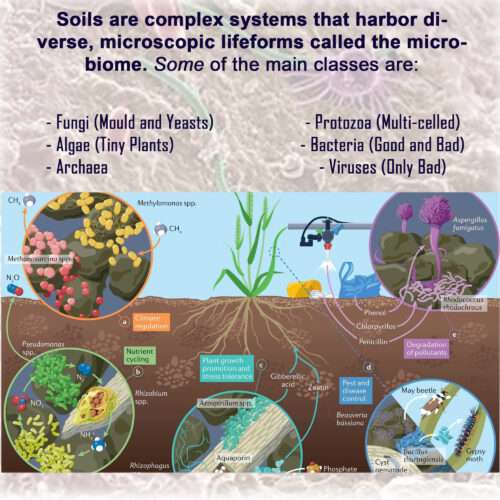
On a microscopic scale, however, the system is mind-bogglingly complex. It transcends simple bartering; the soil biome also secretes Plant Growth Hormones (PGHs) and specialized enzymes that fortify the plant against disease.
This is the “Snake Oil” that makes the transition from Tek to Teq possible.
Terra Preta and Biochar: The Biological Battery
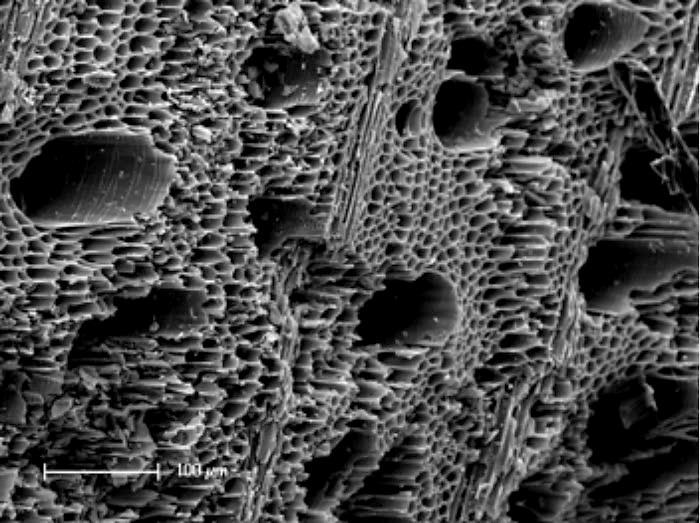
If BAM! is the engine, Biochar (inspired by ancient Terra Preta) is the chassis. Biochar’s vast honeycombed structure is a microbial hotel—it shelters BAM! microbes, shields them from drought, and acts as a permanent carbon sink. By “charging” our biochar with vermicompost and BAM!, we create VermiCHARged BAM!: a living, resilient ecosystem within every handful of substrate.
The Third Paradigm Shift: Selective Nutrition
Contamination is fundamentally a nutrition problem.
Raw supplements are an “open buffet” for competitors. Instead, we use SSF, BAM!, and vermicompost fermentation to “lock” nutrients—turning them into a form only gourmet fungi, with their specialized enzymes, can access.
In our CFT (Continuous Flow-Through) systems, organic sugars and proteins are converted from SMS (Spent Mushroom Substrate) and other organic waste into stable, mineralized proteins with a nitrogen content of up to 4%—triple the commercial average. Despite this, the compost remains stable and won’t rot, even wet. That’s the power of selective nutrition: contaminants can’t access the nutrient “vault,” but mushroom mycelium holds the key.
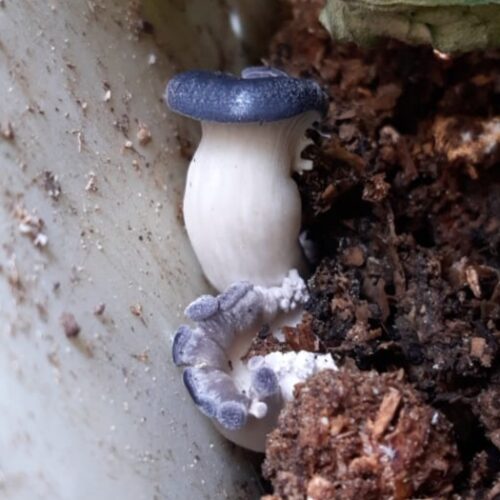
Proof: The 340g Oyster
When we stopped using raw supplementation and started fermenting chicken manure pellets (CMP) with vermicompost, blending with pine pellets, and prepping using Bundu Tek, the results spoke for themselves:
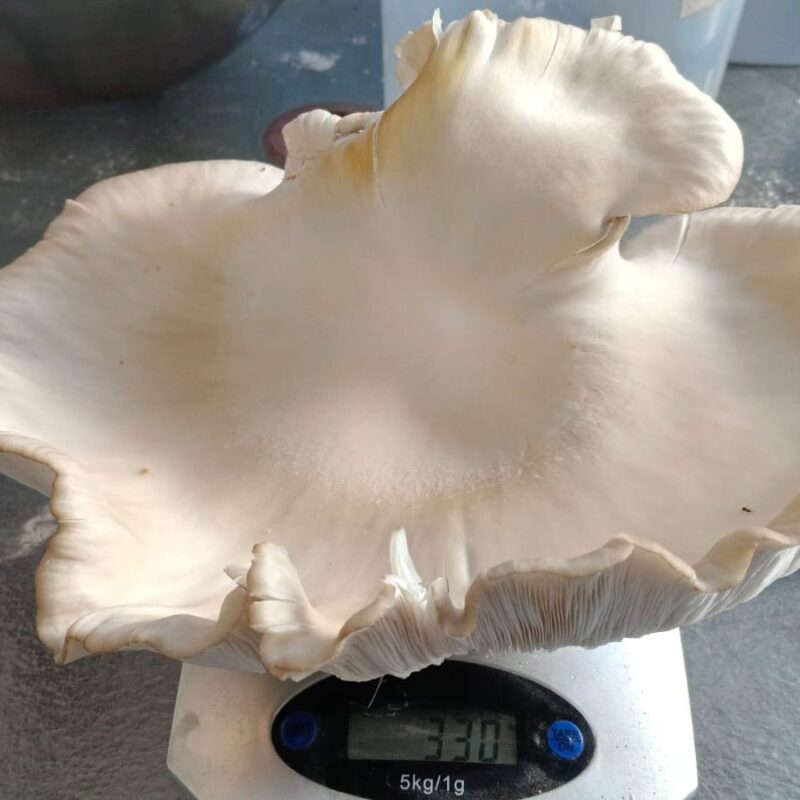
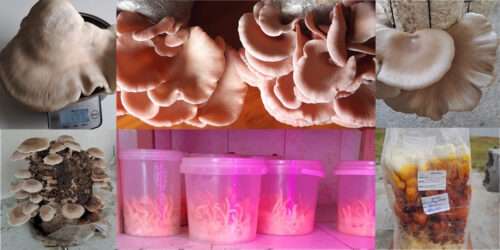
- A single White Oyster mushroom weighing 340g (a 30% increase over our previous record of 260g on straw with SSF).
- Despite a nitrogen content of 1.04% (on par with Master’s Mix), there was zero contamination, even with low-tek prep.
- The Monera-refined substrate was a “locked gate”—nutrients available only to fungi with the right enzymes.
By fermenting the CMP manure anaerobically using our own Vermicompost as an inoculant, we transformed a “dirty” nitrogen source into a stabilized, fungal-ready fuel. This led to the 3rd Paradigm Shift!
What makes this work is the enzymatic superiority of the mushroom mycelium. While most contaminant molds and bacteria are geared toward rapidly devouring simple sugars and raw proteins, mushroom mycelium comes equipped with a powerful toolkit of proteases, lignocellulases, and chitinases. These allow them to unlock and metabolise the complex, Monera-refined nitrogen compounds that the microbes have already broken down and mineralised in SSF (Solid-State Fermentation). In essence, the bacteria and fungi of the BAM! do the heavy pre-digestion, but only the mycelium holds the master key to the final vault. Contaminants are left staring at a locked gate with an empty plate.
Super Bokashi: Next Evolution
Replacing imported man-made EMTM (Efficient Microbes) with our own STS vermicompost as inoculant, we developed “Super Bokashi”:
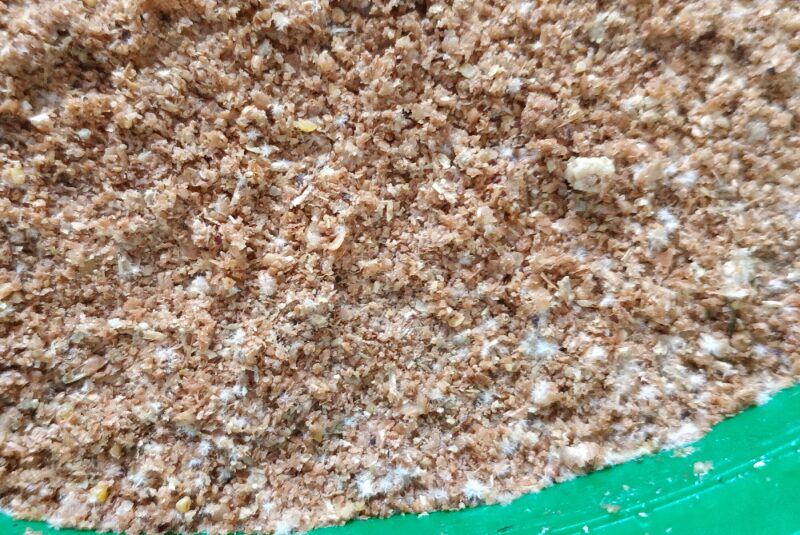
- High-protein feedstock (like canola meal) hydrated with vermicompost and biochar, bucket-fermented for 14 days.
- The anaerobic environment selects the toughest microbes, shields nutrients, and creates a propellant—fuel for explosive fungal growth, not contamination.
- As mushroom supplement, we now have a 40% protein fuel that we can add to substrates at rates of up to 20% (achieving 1.56% Nitrogen, or 9.56% Protein)
- As a soil inoculant, we’ve reduced biochar charging time from two months to two weeks.
Bundu Teq: The High-Torque Revolution
Bundu Teq is more than just mushroom cultivation; it’s the synergy of rugged Bundu ingenuity and the integrated wisdom of the three biological kingdoms—Monera, Plantae, and Fungi—empowered by three paradigm shifts. Within this closed-loop, regenerative system, we manage both biological occupancy (who thrives) and nutritional access (who feeds), eliminating contamination risk, chemical dependency, and the need for sterilization. Our bioengineers—the red wigglers—drive this system, ensuring that every niche is filled and every resource is selectively allocated.
In such a well-orchestrated environment, there is simply no space—and no incentive—for invaders to take hold.
Conclusion: Engineering for Independence
Bundu Teq is Total Resource Recovery in action. By using our own closed-loop biology, we’ve eliminated reliance on store-bought starters and low-nutrient “safe” supplements. The autoclave-free lab is now reality.
By integrating the stability of biochar, the speed of bokashi fermentation, and the biological torque of the Monera kingdom, we’ve moved from fighting contamination to engineering occupancy.
The hill is climbed—
but the journey is just beginning.
Bundu Teq: Where resilience isn’t a theory. It’s engineered.
-
STS
Luer Syringe Caps | Autoclave-Safe | Lock or Sl...
Price range: R10 through R219 Select options This product has multiple variants. The options may be chosen on the product page🧫 Luer Lock Syringe Caps, Autoclave-Safe.
🧫 100% Leak-Proof Seal | ISO Standard Fit.
🧫 Heat… -
STS
Reusable Laboratory Petri Dish System – A...
Original price was: R399.R195Current price is: R195. Add to basket🧫 8 × 70 mm Autoclavable Screw-Top PP Petri Dishes
📦 1000 ml Protective Polypropylene Storage… -
STS
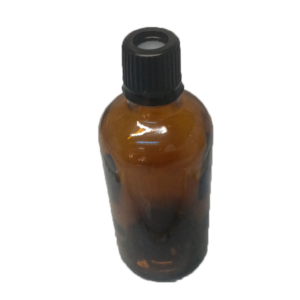
The 100ml SHIP Culture Bottle (3mm Silicone Sep...
Price range: R90 through R195 Select options This product has multiple variants. The options may be chosen on the product page🧫 Medical 100ml Amber glass bottle.
🧫 3mm self-healing silicone SHIP.
🧫 UV-protected for se… -
STS
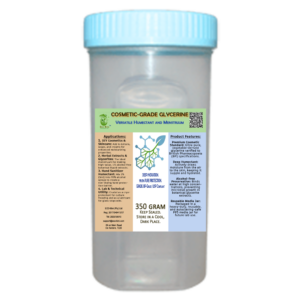
350g Pure Cosmetic-Grade Glycerine in Reusable ...
Original price was: R159.R125Current price is: R125. Add to basket🧫Versatile 100% Humectant: Locks in moisture for skin care and DIY cosmetic formulations
🧫Shi…