Master your mushroom yield: Achieve perfect humidity for optimal fruiting.
Summary
This guide details essential humidity control strategies for mushroom cultivation environments. We address the critical role of humidity in fungal development, from mycelial growth to fruiting. Learn practical methods for monitoring, maintaining, and adjusting humidity levels to prevent common cultivation issues and maximise your harvest.
I. The Fungal Imperative: Why Humidity Matters
Mushrooms, being fungi, have unique biological requirements that differ significantly from plants. Unlike plants that draw water from soil and transpire through leaves, mushrooms develop from a substrate and require a consistently humid environment to initiate and sustain fruiting. Humidity is not merely about moisture; it’s about creating the precise atmospheric conditions that trigger and support the complex life cycle of a mushroom.
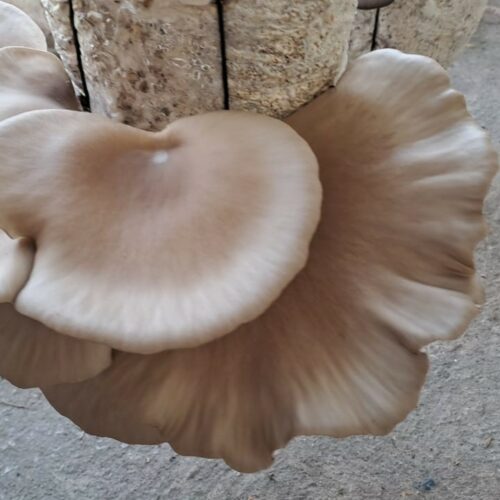
Mycelial Expansion: While the substrate provides the bulk of the mushroom’s nutritional needs, the surrounding air’s humidity plays a role in the expansion and health of the mycelial network.
Pinning Initiation: The transition from vegetative mycelial growth to reproductive fruiting (pinning) is often triggered by environmental cues. A sudden drop in CO2 from enclosed bag, with a increase in airflow, causes evaporation. Never have 100% RH as need about 80%, this causes evaporation – which is your major pinning initiator.
Fruiting Body Development: Once pins form, they are essentially tiny mushrooms composed of a high percentage of water. They rapidly absorb moisture from the air to grow. Without adequate humidity, these delicate structures will dry out, crack, abort, or fail to develop fully.
Preventing Drying and Cracking: Mushroom caps are susceptible to dehydration. Low humidity causes them to dry out, leading to cracking, reduced size, and poor texture, rendering them unmarketable or unusable.
Substrate Moisture Balance: While the substrate needs to be hydrated, the external environment’s humidity helps prevent the substrate itself from drying out too quickly, which would starve the developing mushrooms.
In essence, humidity is the lifeblood of the mushroom fruiting chamber. Inadequate humidity is one of the most common reasons for poor yields, low-quality mushrooms, and cultivation failure.
II. Understanding the Enemy: Factors Causing Low Humidity
Several factors can lead to insufficient humidity levels in a mushroom grow room:
Environmental Conditions: The ambient humidity of the surrounding environment is the primary external factor. In arid or dry climates, or during dry seasons, it can be extremely challenging to maintain high humidity levels indoors without active intervention.
Air Exchange (Fresh Air Intake): Mushrooms require fresh air exchange (FAE) to remove CO2 produced by the mycelium and fruiting bodies and to bring in oxygen. While essential, this exchange of air inevitably introduces drier outside air and allows moist air to escape, lowering overall humidity. The more FAE, the greater the potential for humidity loss.
Heating Systems: If a heating system is used to maintain temperature, it often dries out the air significantly, exacerbating humidity problems.
Substrate Drying: As the substrate releases moisture through evaporation and provides water for the mushrooms, its own moisture content can decrease. If not replenished or balanced by ambient humidity, the substrate can contribute to drying the air.
Improper Sealing: Gaps in the grow room walls, doors, or ventilation systems allow humid air to escape and dry air to enter unchecked.
Over-reliance on Passive Systems: Relying solely on passive evaporation without active humidification systems is often insufficient, especially in larger grow spaces or challenging climates.
III. The Science of Control: Monitoring Humidity
Accurate measurement is the first step to effective control. You cannot manage what you do not measure.
| Controller Options | Compatible Probes | Best Use Case |
| Inkbird IHC-200-Wi-Fi | Pre-wired resistive sensor | Plug-and-play small tents, multi-stage alarms |
| STC-3028 | AHT 30 | Panel-mount DIY control boxes, affordable scaling |
| Sonoff TH Elite (THR320D) | DHT 11 | Smart automation, remote data logging via app. Replace probe. |
Take note that the Sonoff and many affordable RH controllers come with a DHT-11 probe. This probe is unsuitable for MC>80% and will crash, but a simple replacement with the DHT 22.
Hygrometers: These are essential tools for measuring relative humidity (RH).
Digital Hygrometers: Offer precise readings and are often combined with thermometers. Look for models with a good accuracy rating (±3-5% RH is acceptable for most home grows). Some advanced models offer data logging capabilities.
Analog Hygrometers: Typically use a hair or a mechanical sensor. They are less accurate and can be affected by temperature fluctuations, but can serve as a rough indicator.
Placement is Key:
Multiple Sensors: For larger rooms or commercial setups, use multiple hygrometers placed at different locations (e.g., near the substrate, at fan level, near the ceiling) to get an average reading and identify microclimates.
Avoid Direct Mist/Vapour: Do not place hygrometers directly in the path of humidifiers or misting systems, as this will give artificially high readings. Place them at plant/substrate level, away from direct water sources.
Calibration: Periodically calibrate your hygrometers, especially digital ones, to ensure accuracy. A common method involves placing the hygrometer in a sealed bag with a salt-water solution or a damp paper towel for several hours and checking if it reads close to 95-100% RH (depending on the salt used and method).
IV. Practical Humidification Techniques
Achieving and maintaining optimal humidity levels (often 85-95% RH for fruiting, depending on the species) requires active intervention.
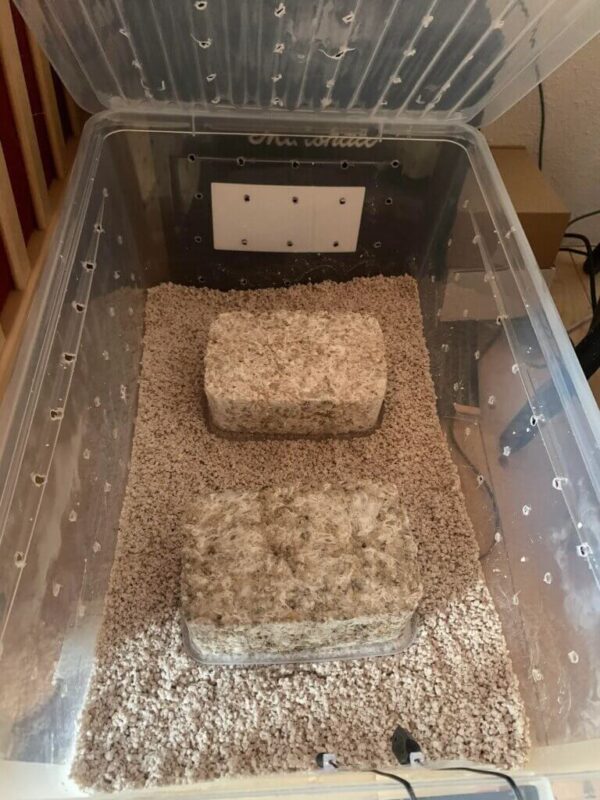
1. Misting/Manual Humidification:
Method: Using a fine-mist spray bottle to manually mist the walls, ceiling, and sometimes the substrate surface.
Pros: Simple, low-cost, requires no electricity.
Cons: Labour-intensive, difficult to maintain consistent humidity, can lead to water pooling or direct waterlogging of mushrooms if overdone, less effective for larger spaces. Best suited for small-scale or hobby grows.
Application: Mist several times a day, especially after FAE, when humidity drops.
A successful variation of this is to make Shotgun Fruiting Chambers (SGFC) – reminiscent of a tub in shotgun target practice?
2. Evaporative Humidifiers:
Method: These devices use a fan to blow air over a wet medium (like a wick or pad), causing water to evaporate and increase ambient humidity.
Pros: Relatively simple, can cover moderate areas, often combined with temperature control.
Cons: Less efficient in moist climates as evaporation slows down. Can decrease temperature slightly due to evaporation. Wicks/pads need regular cleaning or replacement to prevent mould/bacteria growth.
Application: Place in the grow room and set to maintain desired RH. Ensure adequate FAE to prevent stagnant, overly humid air.
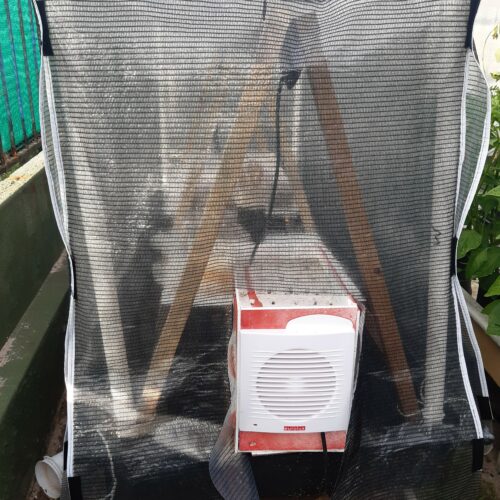
3. Ultrasonic Humidifiers (Foggers):
Method: These use high-frequency vibrations to create a very fine, cool mist or “fog” that disperses easily into the air.
Pros: Highly efficient at creating fine mist, can rapidly increase humidity, relatively quiet, produces cool mist (less impact on temperature).
Cons: Can be energy-intensive, requires distilled or filtered water to prevent mineral buildup on the unit and dispersal into the grow room. The fine mist can settle on surfaces, potentially promoting mould if not managed with FAE. Requires regular cleaning.
Application: Ideal for quickly raising humidity after FAE. Often used with a humidistat for automatic control.
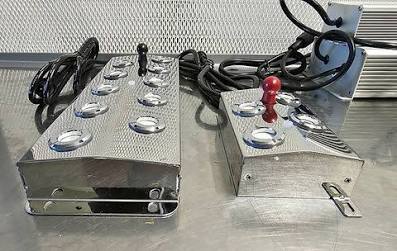
4. Steam Humidifiers:
Method: Heats water to produce steam, which then mixes with room air.
Pros: Very effective at humidifying, the steam is sterile (killing potential pathogens), can also add a small amount of heat.
Cons: Can significantly increase room temperature, requires more energy, potential safety hazard if not properly installed and maintained.
Application: Best for situations where slight temperature increase is acceptable or beneficial, and rapid humidification is needed.
5. Automated Misting Systems:
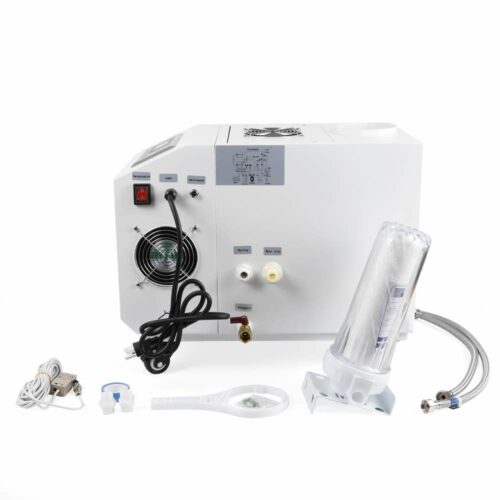
Method: Stainless Steel encase Ultrasonic Humidifers connected to a water source (encased with automatic level control – with circulating fan) that automatically mists the room with manifold and set holes or when humidity drops below a threshold, controlled by a humidistat.
Pros: Provides the most consistent and hands-off humidity control, can be scaled for larger operations.
Cons: Higher initial cost, requires plumbing, risk of UH scaling, needs careful calibration of mist output manifold avoid ‘dry spots’.
Application: The gold standard for commercial or large-scale operations demanding precise humidity management.
V. Integrating Humidity Control with Other Environmental Factors
Humidity control is not an isolated task; it must be integrated with other crucial environmental parameters:
Fresh Air Exchange (FAE): As mentioned, FAE is vital for mushroom health. The challenge is balancing the need for fresh air with the desire to retain humidity.
Strategy: Increase FAE primarily during the pinning and early fruiting stages when CO2 buildup is high and mushrooms require oxygen. During these periods, your humidification system needs to work harder. Use timers for FAE to provide bursts of fresh air rather than constant, high-volume exchange if humidity is a major concern.
Placement: Ensure intake vents are not drawing in excessively dry air if possible.
Tip: Use the fact that Carbon Dioxide is heavier than air and will pool on ground to lower the FAE extraction requirements.
Temperature: Temperature and humidity are closely linked.
High Temperature + High Humidity: Can create a breeding ground for bacteria and mould.
Low Temperature + High Humidity: Can lead to condensation, water pooling, and potential issues.
Strategy: Maintain the optimal temperature range for your specific mushroom species. If using a humidifier that adds heat (steam), you may need to compensate with ventilation or cooling. Ultrasonic humidifiers produce cool mist, which has less impact on temperature.
Tip: Relationship between Temperature and RH is parabolic, use shaded locations with stable temperature regimes.
Substrate Moisture: The moisture content of your substrate directly influences how much moisture it can contribute to the microclimate. Ensure your substrate is properly hydrated but not waterlogged.
Air Circulation (Fans): Gentle, continuous air circulation within the grow room (using small oscillating fans) is crucial. It helps to:
- Prevent stagnant pockets of air.
- Distribute humidity evenly.
- Reduce condensation buildup on surfaces.
- Assist in removing CO2.
VI. Common Pitfalls and How to Avoid Them
Over-Humidification: While high humidity is necessary, excessive condensation on mushrooms or substrate can lead to bacterial blotch, mould growth, and stalled development. Ensure adequate air circulation and FAE to manage condensation.
Under-Humidification: Leads to drying, cracking, and aborting of pins. This is the most frequent cause of crop failure. Monitor RH constantly and ensure your humidification system is adequate for the space and environmental conditions.
Inconsistent Humidity: Fluctuations between very high and very low humidity can stress the mushrooms, hindering their development. Aim for stability within the target range.
Ignoring FAE: Over-prioritising humidity at the expense of fresh air will lead to CO2 buildup, resulting in leggy stems, small caps, and poor overall development.
Using Untreated Water: Tap water can contain chlorine or minerals that may affect fungal growth or clog humidifiers. Using filtered, distilled, or reverse osmosis (RO) water is often recommended, especially for ultrasonic humidifiers and automated systems.
Stable Temperature: Temperature and RH have a parabolic relationship. A saturated RH will increase over dew point suddenly with only a small drop in ambient temperature.
VII. Conclusion: The Foundation of a Bountiful Harvest
Controlling humidity is arguably the most critical environmental factor for successful mushroom cultivation, particularly during the fruiting stage. It directly impacts the initiation of pins, the development of the mushroom body, and the final quality and yield of your harvest.
By understanding the biological necessity of high humidity for fungi, accurately monitoring conditions with reliable hygrometers, and implementing appropriate humidification techniques – whether manual misting for small grows or automated systems for larger operations – growers can create the ideal microclimate. Integrating humidity management with temperature control, fresh air exchange, and substrate moisture ensures a stable and supportive environment.
Mastering humidity control is not just about managing moisture; it’s about understanding and working with the fundamental biological needs of the mushroom. It’s the key to unlocking consistent, high-quality yields and transforming a challenging cultivation environment into a fertile ground for fungal success.
-
STS

Oyster Mushroom DIY Kit | Bundu Tek Practical Grower’s Starter
Original price was: R1,400.R750Current price is: R750. Add to basket🏗 Stop buying mushrooms and learn how to grow them
🏗 Mother Spawn in Biojar with BioaKt Straw Pellets
🏗 STS Grow Bags, no lab equipment needed.
🏗 Simple Instructions and WhatsApp support. -
STS
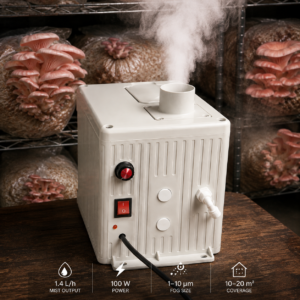
STS 1.4kg/h Industrial Ultrasonic Humidifier – Variable Fan
Original price was: R6,999.R5,599Current price is: R5,599. Add to basket🧫Industrial 24/7 Stainless Steel Ultrasonic Discs
🧫High-Volume 1.4kg/Hour Fog Output
🧫Integrated Variable Fan Speed Control
🧫Ruggedized Corrosion-Proof ABS Chassis -
STS

STS 5kg/h Industrial Humidifier (Dual Outlet, Var Fan)
Original price was: R13,999.R11,995Current price is: R11,995. Add to basket🧫Industrial Stainless Steel Ultrasonic Discs
🧫High-Volume 5kg/Hour Fog Output
🧫Integrated Variable Fan Speed Control
🧫Ruggedized Corrosion-Proof ABS Chassis -
STS

Heavy-Duty 300mm PE Layflat Tubing (75 Micron, Per Meter)
Original price was: R12.R10Current price is: R10. Add to basket🧫Premium 75-Micron Heavy-Duty Gauge
🧫300mm wide, Continuous Seamless Design
🧫Sold per meter.
🧫High-Clarity Low-Density Polyethylene (LDPE)
Socratic Questions:
1. Why is humidity critical for mushroom fruiting?
2. How does fresh air exchange affect grow room humidity?
3. What is the ideal RH range for mushroom fruiting?
4. How can condensation be managed in a humid grow room?
5. What are the pros and cons of ultrasonic humidifiers?
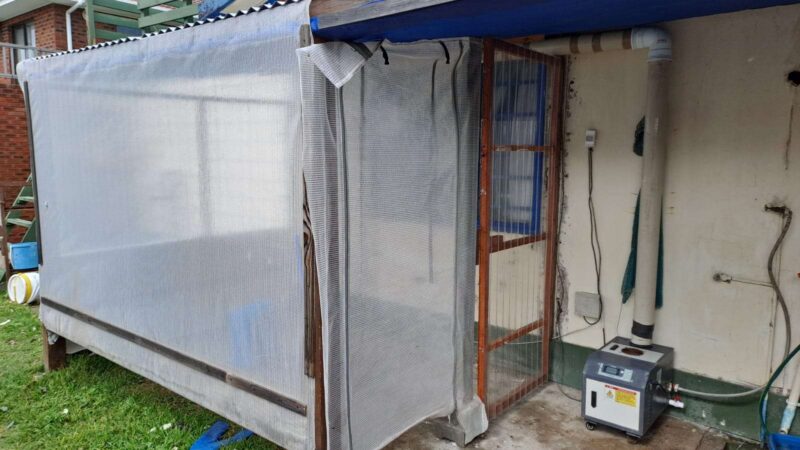
Static Pressure Warning: When selecting an inline fan, do not rely on the “free-air” rating listed on the box. Pushing fresh air through ductwork, intake louvers, and particulate filters creates static pressure resistance. Always select a fan rated roughly 20% higher than your raw calculation. For this 172.8 m3/h setup, a standard 100mm (4-inch) inline centrifugal fan rated at 200 m3/h ensures adequate airflow under load.