Harness nature’s fermentation specialists: Lactic Acid Bacteria (LAB) rapidly shift environments towards acidic conditions.
Summary
Discover the major LAB groups like Lactobacillus and Streptococcus, and understand homofermentative vs. heterofermentative metabolism. Learn why LAB are crucial for food fermentation, Bokashi, plant extracts, silage, and organic waste treatment. Understand the core principle: LAB convert carbohydrates to acids, favouring controlled fermentation over putrefaction.
The Challenge of Putrefaction and Spoilage
In nature, decomposition is a constant process. Organic matter, whether it’s leftover food scraps, plant material, or animal waste, is broken down by a vast array of microorganisms. While this breakdown is essential for nutrient cycling, it can often lead to undesirable outcomes. Putrefaction, a type of decomposition driven by aerobic and anaerobic bacteria, often results in the production of foul odours, the loss of valuable nutrients, and the proliferation of potentially harmful pathogens. This is particularly problematic in applications like composting, waste management, and even in the preservation of food and agricultural materials.
In nature, decomposition is a constant process. Organic matter, whether it’s leftover food scraps, plant material, or animal waste, is broken down by a vast array of microorganisms. While this breakdown is essential for nutrient cycling, it can often lead to undesirable outcomes. Putrefaction, a type of decomposition driven by aerobic and anaerobic bacteria, often results in the production of foul odours, the loss of valuable nutrients, and the proliferation of potentially harmful pathogens. This is particularly problematic in applications like composting, waste management, and even in the preservation of food and agricultural materials.
Think about your kitchen bin on a warm day, or a compost heap that’s gone a bit “off.” You’ll notice unpleasant smells and a slimy, unappealing texture. This is the sign of putrefactive decomposition taking hold. The very microbes that are supposed to break down organic matter are instead creating an environment that is not only unpleasant but also inefficient in terms of nutrient recovery and beneficial microbial activity.
The challenge, therefore, is to find a way to steer this natural decomposition process away from putrefaction and towards a more controlled, beneficial outcome. We need a way to encourage the ‘good guys’ – the microbes that break down organic matter cleanly and efficiently – to outcompete the ‘bad guys’ that cause odour and spoilage. This is where the power of Lactic Acid Bacteria (LAB) comes into play. They offer a natural, biological solution to manage and transform organic matter effectively.
The Power of Lactic Acid Fermentation
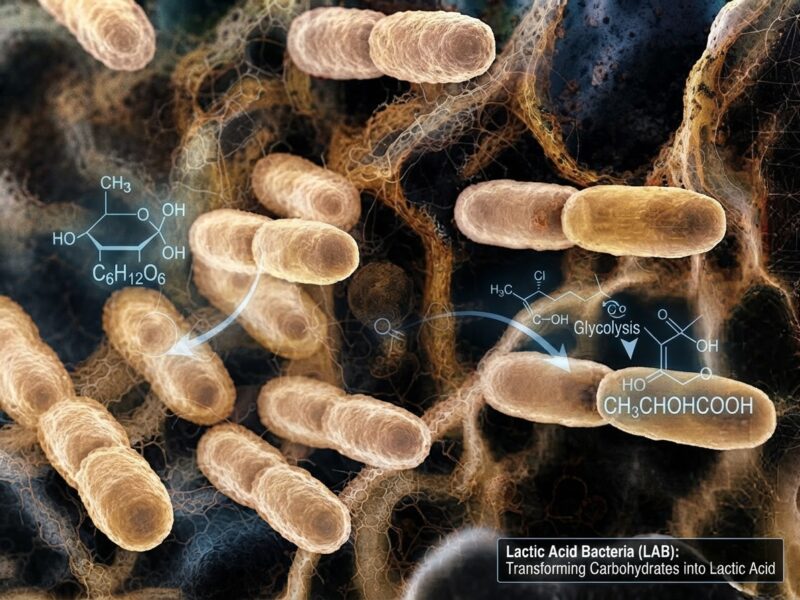
At the heart of understanding Lactic Acid Bacteria (LAB) lies the principle of fermentation, specifically lactic acid fermentation. This is not just a chemical reaction; it’s a biological process driven by a diverse group of bacteria that share a common, powerful ability: to convert carbohydrates (sugar) into lactic acid. This simple yet profound action is the key to transforming otherwise putrefying organic matter into something beneficial and stable.
What Exactly Are Lactic Acid Bacteria (LAB)?
It’s important to understand that “Lactic Acid Bacteria” isn’t a single species. Instead, it’s a functional grouping of various bacteria that all share the characteristic of producing lactic acid as their primary metabolic end-product from carbohydrate fermentation. These bacteria are found naturally in many environments, including soil, plant surfaces, animal digestive tracts, and dairy products.
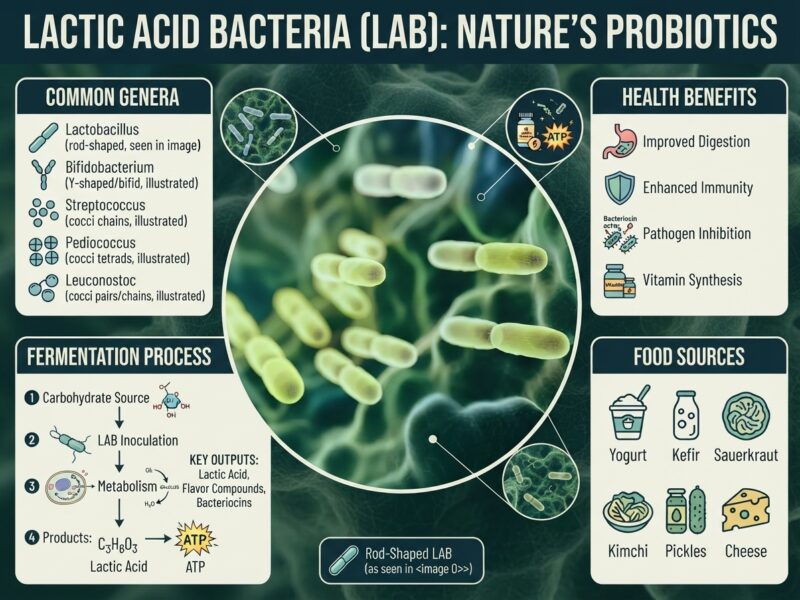
The major players in the LAB world include genera such as:
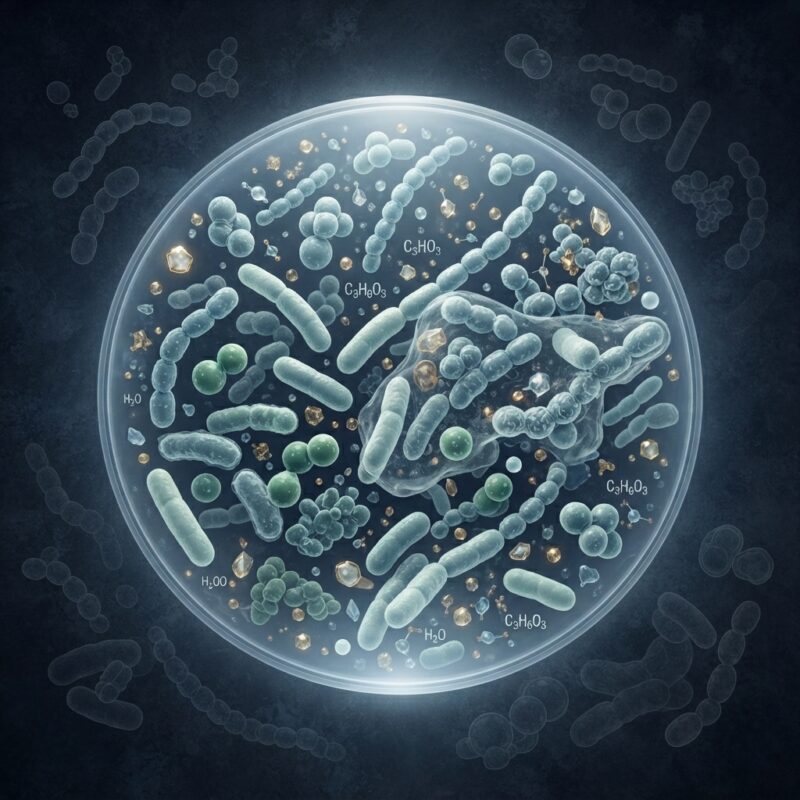
Lactobacillus: Perhaps the most well-known genus, these are often associated with dairy products, fermented vegetables, and sourdough.
Lactococcus: Commonly found in milk and dairy fermentations, crucial for cheese and buttermilk.
Leuconostoc: Often involved in the fermentation of vegetables and dairy, contributing to flavour development.
Pediococcus: Found in fermented vegetables, beer, and some animal products.
Streptococcus: Specifically Streptococcus thermophilus, a key species in traditional yoghurt production.
Homofermentative vs. Heterofermentative Metabolism:
Within these groups, LAB can be broadly categorized by their fermentation pathways:
1. Homofermentative LAB: These bacteria primarily produce lactic acid from sugars (like glucose). For every molecule of glucose consumed, they yield approximately two molecules of lactic acid. This pathway is highly efficient for acid production. Examples include Lactobacillus delbrueckii and Lactococcus lactis.
2. Heterofermentative LAB: These bacteria produce not only lactic acid but also other by-products like carbon dioxide, ethanol, and acetic acid. While they still lower pH, their acid production per molecule of glucose is less efficient than homofermentative types. Examples include Leuconostoc species and some Lactobacillus species like Lactobacillus fermentum.
The presence of both types contributes to the complexity and effectiveness of LAB cultures, as they can influence different aspects of the fermentation process and the final characteristics of the fermented product.
The Core Mechanism: Shifting the pH
The fundamental principle behind LAB’s utility is their ability to rapidly convert accessible carbohydrates into organic acids, predominantly lactic acid. This has several critical consequences:
- Lowering pH: Lactic acid is, well, acidic. As LAB multiply and ferment, they significantly lower the pH of their environment. Most spoilage and putrefactive bacteria thrive in a neutral or slightly alkaline (higher pH) environment. As the pH drops below 4.5–5.0, these undesirable microbes struggle to survive and reproduce.
- Creating a Favourable Environment: The acidic conditions created by LAB favour the growth and activity of other beneficial microorganisms, including other LAB strains and certain fungi. This creates a synergistic ecosystem where beneficial microbes dominate.
- Inhibiting Spoilage Organisms: The low pH directly inhibits the growth of many putrefactive bacteria and some pathogens that cause rot and decay. This is a form of natural biological control.
- Preservation: The acidic environment acts as a natural preservative, extending the shelf life of materials by preventing the growth of spoilage agents.
In essence, LAB act as biological engineers, rapidly altering the conditions of their environment. They consume readily available sugars and, in doing so, transform a potentially putrefying mass into a stable, acidic, and biologically active medium. This controlled acidic fermentation is the cornerstone of their usefulness across a wide range of applications, from preserving food to transforming waste and enhancing soil health.
Application: Harnessing LAB Across Diverse Fields
The fundamental principle of Lactic Acid Bacteria (LAB) rapidly converting carbohydrates into lactic acid, thereby lowering pH and inhibiting putrefaction, makes them incredibly versatile. This biological power is harnessed across a wide spectrum of applications, transforming waste, preserving food, enhancing soil, and more.
1. Food Fermentation: Tradition and Preservation
Humans have utilized LAB for millennia to preserve and enhance food. The characteristic tangy flavour of yoghurt, cheese, sauerkraut, kimchi, and sourdough bread is a direct result of lactic acid fermentation.
Dairy Products: LAB like Lactococcus lactis and Lactobacillus bulgaricus are essential for converting lactose (milk sugar) into lactic acid. This acidification causes milk proteins to coagulate, forming the basis of yoghurt, cheese, and cultured butter. The low pH also inhibits the growth of spoilage organisms, extending shelf life.
Vegetable Fermentation: Techniques like sauerkraut (fermented cabbage) and kimchi (fermented vegetables, often with chilli) rely on naturally present LAB on the vegetable surfaces. As LAB ferment sugars in the vegetables, they produce lactic acid, preserving the vegetables and developing complex flavours.
Bread Making: Sourdough starters are complex ecosystems where LAB, alongside wild yeasts, ferment sugars in the flour. They produce lactic and acetic acids, contributing to the characteristic sour flavour and chewy texture of sourdough bread, while also improving its keeping qualities.
2. Bokashi: Accelerating Organic Waste Decomposition
Bokashi is an anaerobic fermentation process originating from Japan that uses a specific blend of effective microorganisms (EM), prominently featuring LAB, to ferment kitchen scraps and other organic waste.
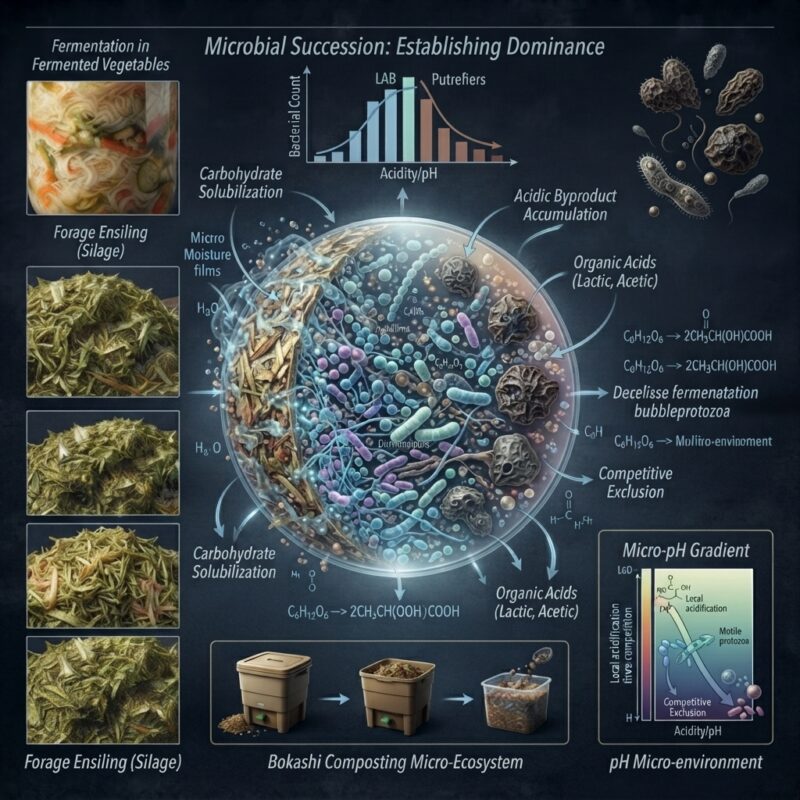
How it Works: Bokashi bran or inoculant, rich in LAB and other beneficial microbes, is sprinkled over layers of organic waste in an airtight Bokashi bin. The LAB rapidly ferment the sugars present in the waste, producing lactic acid and other organic acids.
Benefits: This process significantly lowers the pH, inhibiting putrefaction and odour. Instead of rotting, the waste is pickled. The resulting fermented material is highly beneficial for soil and can be further composted or buried directly, breaking down quickly and enriching the soil. Bokashi is effective for a wide range of organic waste, including meat and dairy, which are often problematic in traditional composting.
3. Plant Extracts and Tonics: Nutrient Mobilization and Bio-Stimulation
LAB are increasingly used to create fermented plant extracts (FPEs) and botanical tonics. These are not just nutrient supplements but also biological activators for plants and soil.
Process: Fresh plant materials (like comfrey, nettle, garlic, or herbs) are chopped and mixed with a source of carbohydrates (like molasses or dextrose) and a LAB inoculant. The LAB ferment the sugars and the plant compounds.
Benefits: The fermentation process can break down complex organic compounds in the plants, making nutrients more available. The resulting fermented extract contains organic acids, beneficial microbes, and enzymes that can stimulate plant growth, improve nutrient uptake, enhance disease resistance, and enrich soil microbial communities. These tonics can be applied as soil drenches or foliar sprays.
4. Silage Production: Animal Feed Preservation
In agriculture, silage is a method of preserving fodder (like grass, maize, or legumes) through anaerobic fermentation. LAB are crucial for successful silage making.
The Goal: When forage is harvested, it contains sugars. If left exposed to air, it will rot. By ensiling (packing it tightly in an airtight environment like a silo or wrapped bales), we create anaerobic conditions.
LAB’s Role: Naturally present LAB on the forage rapidly ferment the sugars into lactic acid. This quickly lowers the pH, preventing the growth of undesirable bacteria that would cause spoilage and nutrient loss. High-quality silage is characterised by a clean, acidic smell, indicating successful lactic acid fermentation.
5. Organic Waste Treatment and Odour Control
Beyond Bokashi, LAB are used in broader organic waste management and for controlling unpleasant odours.
Composting: While composting is often aerobic, introducing LAB can be beneficial, especially in the initial stages or in managing odours. LAB can help kickstart the decomposition process, lower the pH, and suppress the growth of odour-producing bacteria.
Worm Farms: Adding LAB to worm farms can help maintain a healthy pH balance, especially if acidic materials are introduced, and can reduce odours.
Septic Tanks and Drains: LAB cultures can be introduced into septic systems and drains to promote the breakdown of organic waste and suppress the growth of odour-causing bacteria, leading to more efficient biological digestion and reduced smells.
The core principle remains consistent across all these applications: LAB create an acidic environment that favours beneficial microbial activity and suppresses undesirable putrefaction and spoilage. This natural biological control mechanism offers a sustainable and effective way to manage organic matter and enhance biological processes.
Conclusion: The Enduring Power of Lactic Acid Bacteria
Lactic Acid Bacteria (LAB) are far more than just a component of fermented foods; they are fundamental biological agents that have shaped our ability to preserve organic matter and manage biological processes for millennia. From the ancient methods of making cheese and sauerkraut to modern applications in Bokashi composting, soil enrichment, and odour control, the principle remains the same: LAB harness the power of fermentation to create an acidic environment.
This simple yet profound action effectively shifts the balance of microbial activity. By rapidly consuming available carbohydrates and producing lactic acid, LAB outcompete putrefactive bacteria and spoilage organisms. This controlled, acidic fermentation leads to a cascade of benefits: preservation of valuable organic materials, suppression of foul odours, enhancement of nutrient availability, and the establishment of beneficial microbial ecosystems.
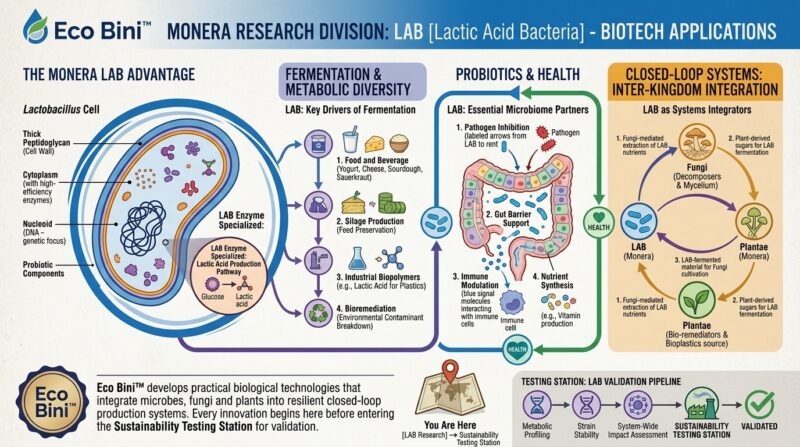
The versatility of LAB, stemming from their diverse genera and metabolic pathways (homofermentative and heterofermentative), allows them to be applied across a vast range of scenarios. Whether it’s transforming kitchen waste into a valuable soil amendment, preserving animal feed for livestock, creating nutrient-rich botanical extracts, or simply controlling unpleasant smells, LAB offer a natural, efficient, and sustainable biological solution.
Understanding LAB is not just about appreciating a biological process; it’s about recognising a powerful tool for managing organic matter, improving resource efficiency, and fostering healthier biological systems in agriculture, waste management, and beyond. As we continue to seek more sustainable and biologically-driven solutions, the enduring power of Lactic Acid Bacteria as nature’s fermentation engine will undoubtedly remain central.
5 Socratic Questions:
1. How can I use lactic acid bacteria to stop compost smells?
2. What is the best way to make Bokashi with lactic acid bacteria?
3. Can LAB help improve my soil health and plant growth?
4. What types of bacteria are in a LAB starter culture?
5. Why do my fermented vegetables smell bad instead of tangy?