
Hydroponic media: The unsung hero holding your soilless dreams together.
Summary
Choosing the right growing medium is critical for success in hydroponics. It’s not just filler; it’s a vital support system that balances air, water, and nutrients for your plant’s roots. This note breaks down the key features to look for and practical options for South African growers.
The Problem: What’s Holding Up My Plants?
When we first started fiddling with hydroponics, you quickly learn that the ‘medium’ isn’t just some inert stuff you fill a pot with. It’s actively working with your roots.
Get it wrong, and you’ll have root rot, nutrient imbalances, or plants that just can’t stand up straight, especially if you’ve got the Cape Doctor blowing through your grow room. We saw too many growers get bogged down by media that held too much water, or not enough, or worse, leached out weird stuff that messed with the pH. The goal is to give the roots a stable home that lets them breathe and drink properly.
The Principle: Three Pillars of a Good Grow Medium
After years of getting our hands dirty at the Sustainability Testing Station (STS), we boiled it down to three non-negotiables for any hydroponic medium:
1. Inertness: This is basic. The medium shouldn’t be adding or removing anything from your nutrient solution. No weird pH shifts, no toxic leachates. It needs to be a stable, neutral platform. Think of it like building a house – you don’t want the bricks dissolving.
2. Water & Air Balance: This is the tricky bit. The medium needs to hold enough water to keep the roots hydrated between watering cycles, but it also needs to let air in. Roots need oxygen to survive, just like we do. Too much water, and they drown (anaerobic conditions, hello root rot). Too little, and they dry out. This is where drainage and aeration come in.
3. Nutrient Buffering (CEC): Some media can hold onto positively charged nutrient ions, like calcium and magnesium, and release them slowly. This is called Cation Exchange Capacity (CEC). A medium with good CEC acts like a small buffer, smoothing out the nutrient levels in your solution. Low-CEC media give you less wiggle room; you need to be more precise with your feeding.
The Application: Choosing Your Weapons
Now, let’s look at what’s actually available and what works best for different setups, especially here in South Africa. We’ve tested a bunch, and here’s the rundown:
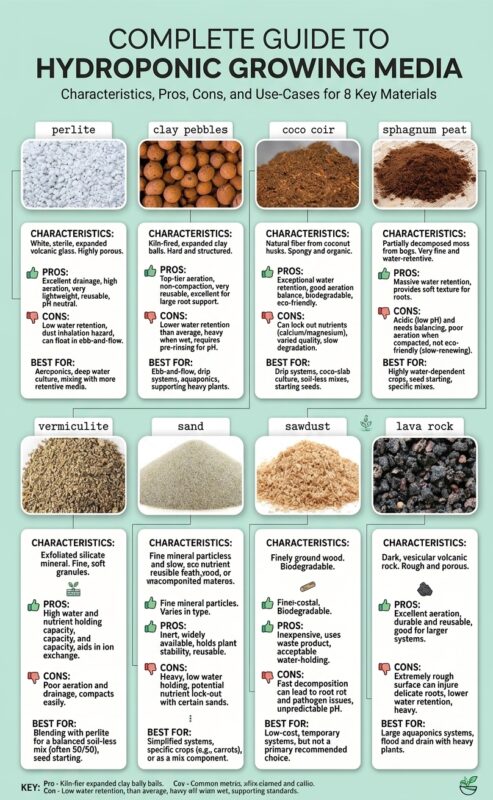
Coco Coir: This stuff, made from coconut husks, is brilliant. It holds water like a sponge but also drains well, giving you a good mix of both. It’s also got a decent CEC. Our main proviso here is that you must buffer it properly. Just rinsing isn’t enough; it can hold onto sodium and potassium that can harm your plants. Check out STS Lab Note #12: The Art of Buffering Coco Coir for the full lowdown. It’s fantastic for drip systems and Dutch buckets.
Expanded Clay Pellets (LECA / Hydroton): These are like little baked clay balls. They’re great because they offer excellent drainage and aeration. They’re also pH neutral and you can reuse them forever if you clean them properly. They’re a bit heavier and cost more upfront, and they don’t hold much water, so you need to make sure your watering system is reliable. Good for drip and ebb & flow, and for bigger plants that need solid support.
Perlite: Think volcanic glass, puffed up. It’s super light and gives fantastic aeration and drainage. It’s inert and reusable. We often mix it with coco coir to lighten it up and improve airflow, or use it as a top dressing. The downside is it doesn’t hold much water on its own, and it can be a bit dusty when dry.
Vermiculite: This stuff is like a spongy mineral. It holds a lot of water and has a good CEC, so it helps buffer nutrients. We use it sparingly, usually for seed starting or mixed into other media to boost water retention. Be careful not to use too much, or it can get waterlogged and starve the roots of oxygen.
Rockwool: This is a common one, especially in commercial setups. It’s made from molten rock spun into fibres. It gives consistent water retention and aeration, and it’s sterile. Great for seedlings, clones, and growing on slabs. The big gotcha is its high initial pH. You must soak it in pH-adjusted water before use, or it’ll shock your young plants. Not the most eco-friendly option either.
Gravel / Sand: Cheap and cheerful. Gravel, especially washed 19mm stuff, is good for the bottom of containers to provide stability and improve drainage. Sand is less common in pure hydroponics because it can compact and hold too much water. Both are reusable. They have almost no water or nutrient holding capacity on their own, so you’ll always need to mix them or have a very robust watering system.
Pine Sawdust (Our Budget Champion): This is what we often use for our low-cost builds at STS. It’s often free or very cheap, holds water well initially, and is lightweight. The catch is that it breaks down over time, so you might need to top it up. Crucially, avoid Western Red Cedar sawdust; it has natural compounds that will kill sensitive plants.
Matching Media to Your System
The system you’re running dictates what medium will work best:
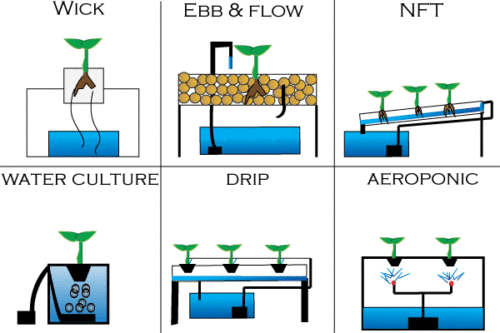
- No-medium systems (NFT, Aeroponics, DWC for lettuce): Roots hang directly in water or a mist. No medium needed here, though a small net pot might hold a seedling.
- Wick / Bottom-feed systems: These rely on the medium to draw water up from a reservoir. Coco coir or LECA can work once roots establish, but you need something that wicks well.
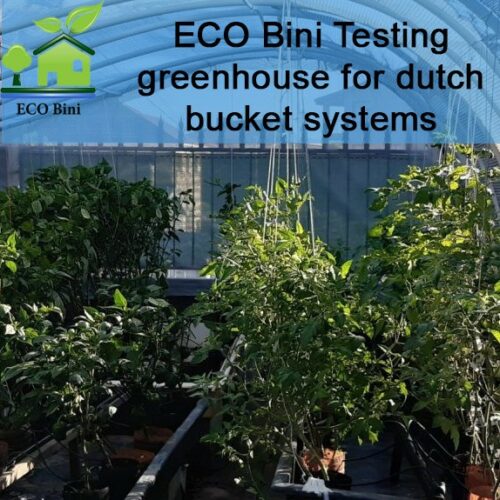
- Drip / Dutch Bucket systems: These need a medium that provides good support and drains well. Our go-to is a mix of pine sawdust with gravel base, or coco coir. The key is that the water drains away efficiently.
Practical Tips from the STS Trenches
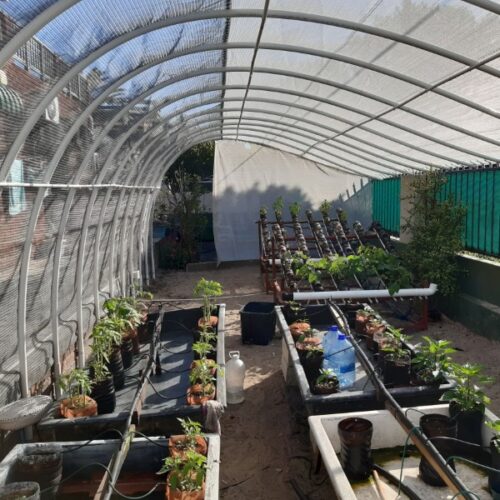
Cost vs. Performance: Don’t be afraid to start cheap. A base of washed gravel with pine sawdust on top has given us excellent results without breaking the bank.
Preparation is Key: Always rinse your gravel and sand. Pre-soak rockwool, to drop initial high pH. And for goodness sake, buffer your coco coir. It makes a massive difference. See STS Lab Note 102.
Reusability & Sustainability: Gravel and LECA can be cleaned, sun-dried, and reused endlessly. That’s the kind of IMBY (In My Back Yard) thinking we love.
Wind Stability: If you’re growing tall plants in a windy spot (like here in the Cape), put a layer of heavy gravel at the bottom of your pots or buckets for stability.
Avoid Uneven Mixes: Trying to mix high-retention media (like coir) with high-drainage media (like gravel) unevenly within the same container can create ‘dry zones’ and ‘anaerobic pockets’ where salts build up. Stick to uniform layers or consistent mixes.
Conclusion: The Right Fit for Your Farm
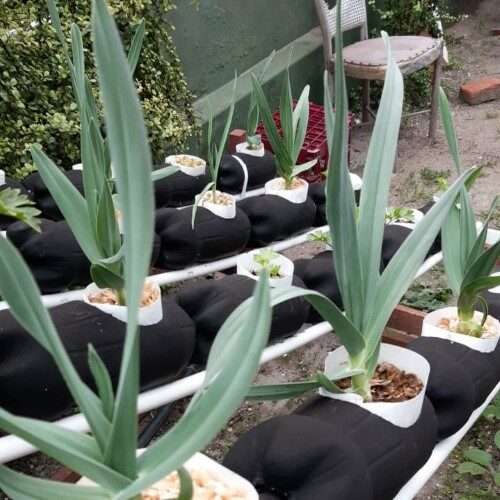
There’s no single ‘best’ medium. The ideal choice depends on your system, what you’re growing, your budget, and how much control you want over your nutrient solution.
At STS, we’re all about practical, low-cost solutions that make use of local waste materials.
Properly prepared coco coir is a top contender for versatility, but understanding its quirks is essential (buffering).
-
STS

Eco Bini™ BioaKt Media/Substrate Conditioner | 2000 ml
Original price was: R195.R149Current price is: R149. Add to basket🏗 Bundu-Tek additive with kelp alginates – No autoclave needed.
🏗 Alkaline pH Pasteurizer
🏗 Self-sterilizing formula
🏗Boost yields and colonizing times -
STS
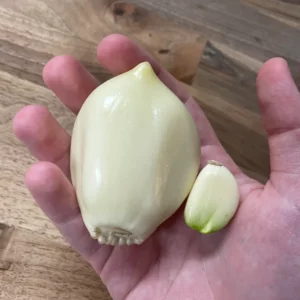
Elephant Garlic Tincture (1:5 AGE Extract ) | 20.4% ABV
Original price was: R450.R295Current price is: R295. Add to basket🛠️Concentrated, Biologically Active Phytochemical Extract
🛠️ Optimized 1o-Min Air-activated Allicin window (AGE)
🛠️1:5 Fresh Organic Garlic Ratio
🛠️Stable 20% ABV Matrix – Long shelf life -
STS
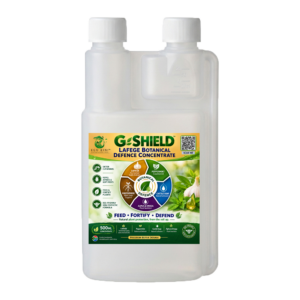
G-Shield — LAFEGE Cutworm, Aphid & Seedling Root Armor
Original price was: R280.R195Current price is: R195. Add to basket🧄 LAB-fermented garlic with SAC enrichment
🌿 Garlic & peppermint botanical defense
🛡 Soil-zone and foliar pest deterrent
🌱 Root-zone support for young plants -
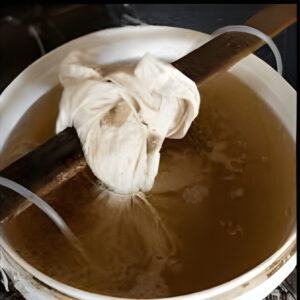
STS Reusable Poly-Mesh Microbial Extraction Filter
R40 Add to basket🪱Durable Polypropylene Micro-Weave
🪱50cm Paracord-style 7-Core Lashing Cord
🪱Reusable 300µm Bio-Filter Bags
🪱Hydrophobic, Inert – will not rot
The Microbial Bridge
Bio-Available Feeding
Mycelial Dominance
SPeS Hardware Hub
Equipping the Circular Revolution with STS-Tested engineering.
Socratic Questions
- How does the water-holding capacity of coco coir compare to perlite for a drip system?
- What are the risks of using unbuffered coco coir in a hydroponic setup?
- Why is good aeration crucial for plant roots in a soilless system?
- Can I reuse rockwool after a crop, and if so, how should I prepare it?
- What’s the cheapest and most effective growing medium for a beginner running a simple Dutch bucket system?