
Lesson 1: The Role of Spawn in Mushroom Cultivation
Introduction
Mushroom cultivation can seem intimidating at first, but it’s all about understanding the fundamentals. The single most important concept to grasp is mushroom spawn. Simply put, spawn is a carrier for the living mushroom culture, or mycelium. Think of it as the “seed” for your mushrooms. Just as a farmer plants seeds to grow crops, a mushroom cultivator uses spawn to colonize a suitable substrate, which eventually leads to the growth of mushrooms.
Have you ever wondered what makes mushrooms grow so reliably in cultivation? Why can’t you just toss some spores into soil and expect a bountiful harvest? The answer lies in mushroom spawn, the foundation of successful mushroom cultivation. In this lesson, we’ll explore what spawn is, why it’s often called the “seed” of mushrooms, and how it ties into the fascinating fungal life cycle. By the end, you’ll understand why spawn is the critical starting point for your mycology journey. Let’s dive in with a question: What do you think spawn does in the process of growing mushrooms?
What Is Mushroom Spawn?

Mushroom spawn is a substrate—typically grain, sawdust, or wooden plugs—that has been colonized by mushroom mycelium, the vegetative part of the fungus. Think of it as the “starter culture” that you introduce to a larger growing medium (like straw or wood chips) to produce mushrooms. Unlike plant seeds, which contain an embryo, spawn is a living network of mycelium ready to expand into a suitable substrate. Why is this important? Because spawn provides a controlled, vigorous starting point for cultivation, ensuring consistent and predictable mushroom growth.
Consider this: If you were to start with spores, you’d face a long, unpredictable germination process with a high risk of contamination. Spawn, on the other hand, is already colonized by healthy mycelium, giving you a head start. It’s like planting a seedling instead of a seed.
The Fungal Life Cycle
To truly appreciate the role of spawn, you need to understand the fungal life cycle. Fungi have four main stages: spores, germination, mycelium, and fruiting bodies (mushrooms). Unlike plants that have seeds, mushrooms have spores. These microscopic spores are released in the millions by a mature mushroom. When two compatible spores land in a suitable environment, they germinate and fuse to create a network of thread-like cells called hyphae. If conditions are right then the hyphae will expand into an intricate network is what we call mycelium.
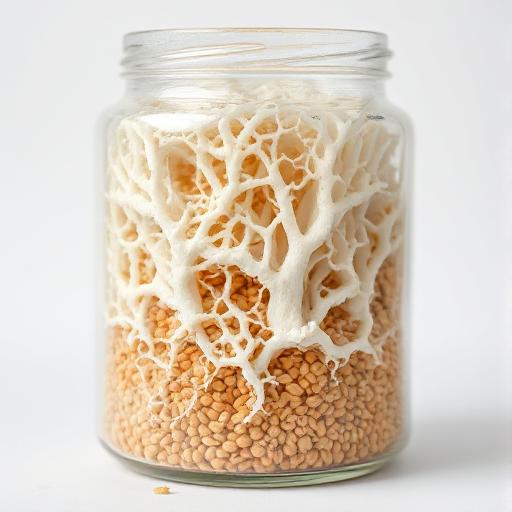
Mycelium is the vegetative stage of the fungus, and its primary purpose is to absorb nutrients and grow. This is what you see as the white, fluffy growth colonizing a jar of grain.
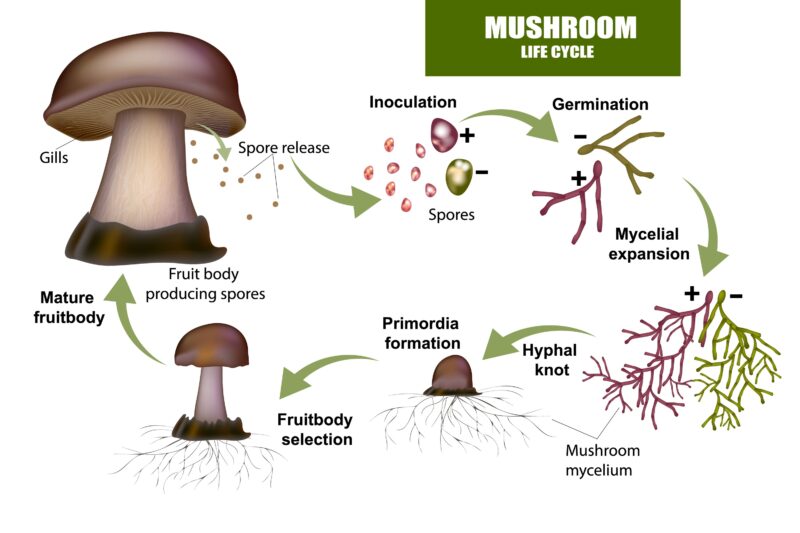
Spawn is essentially a shortcut. Instead of waiting for spores to meet and germinate, and avoid contamination, we use a controlled environment to grow mycelium onto a grain or other substrate. By doing so, we create a vigorous and reliable “seed” that is ready to colonize a larger substrate, saving us time and effort and significantly reducing the risk of contamination. When working like this, ie cut out a bit of mycelium form a mushroom fruiting body and put it on agar to grow, it is called ‘cloning’. In cloning a specimen we are making copied of that mushroom and so have control on the final product.
Types of Spawn and Their Uses
Spawn comes in various forms, each suited to different cultivation methods. The most common types are:
- Grain Spawn: Cereal grains (e.g., rye, millet, sorghum, wheat) colonized by mycelium. Ideal for inoculating bulk substrates like straw or sawdust for species like oyster or shiitake mushrooms. Grain spawn have a high nutrient profile that can boost quick mycelium growth when added to low nutrient substrates, the disadvantage is inherent natural endospores leading to short shelf life.
- Sawdust Spawn: Used for wood-loving mushrooms (e.g., shiitake, lion’s mane), often in logs or sawdust blocks.
- Plug Spawn: Wooden dowels colonized with mycelium, perfect for inoculating logs for outdoor cultivation.
Each type has its strengths. Grain spawn, for example, is versatile and nutrient-rich, making it a favorite for beginners and commercial growers. Sawdust spawn is better fast colonizers like Oyster mushrooms, while plug spawn suits wood log outdoor projects. Typically grain spawn is preferred as with high nutrient profile it supports a much more virile mycelium, the other spawn types typically uses where grain cannot be used. For example inoculating logs or outdoor cultivation – where the seeds will become food for mice, etc.
Why Spawn Quality Matters
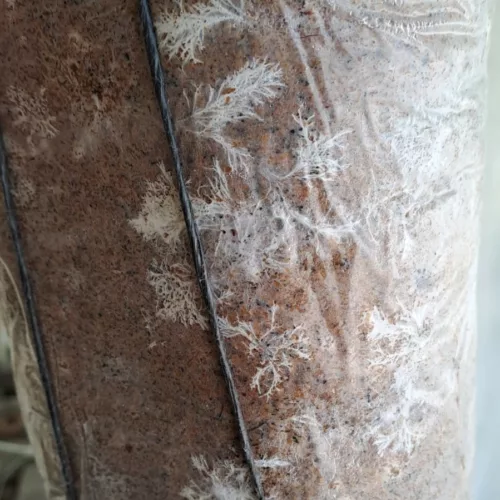
The quality of your spawn directly impacts your mushroom yield. High-quality spawn is free of contaminants (like molds or bacteria) and contains vigorous, genetically robust mycelium. Poor-quality spawn, contaminated with unwanted microbes, can lead to crop failure—a frustrating and costly outcome. Contamination is the “green monster” we’ll discuss in later lessons, but for now, know that clean spawn is non-negotiable.
Practical Implications for Cultivation
Spawn acts as the bridge between your initial culture (often grown on agar) and the final fruiting substrate. For example, in oyster mushroom cultivation, you might use grain spawn at a rate of 2–5% of the dry substrate weight. This small amount of spawn can colonize 35–40 liters of substrate, producing a significant yield. The key is ensuring the spawn is evenly distributed and contaminant-free.
Socratic Wrap-Up
Let’s reflect:
Why is spawn often referred to as Mushroom Seed?
Although mushrooms grow from spores, spawn is made from mycelium—the third stage of the fungal life cycle—after spores have already germinated and mated (or been cloned). Since mycelium spreads from the inoculation point much like a seed sprouts roots, spawn behaves similarly to a seed in cultivation. The use of cereal grains as a carrier may also have reinforced this analogy, making “mushroom seed” a convenient, though technically inaccurate, term.
In cultivation, spawn is used to transfer this mycelium to a bulk substrate, where it continues to colonize and eventually produces mushrooms under specific conditions (like humidity and temperature).
What might happen if mushroom spawn isn’t evenly distributed throughout the substrate?
When spawn is spread evenly across the substrate, the mycelium has multiple equidistant starting points to grow from. This balanced distribution allows for faster and more uniform colonization, reducing the time it takes for the entire substrate to be fully colonized.
However, if spawn is concentrated in just one area, the mycelium must travel a much longer distance to reach the far ends of the substrate. This extended “mycelium run” increases the risk of contamination and delays full colonization, which can negatively impact yield and crop health.
Imagine you’re starting a garden: would you plant diseased seedlings?
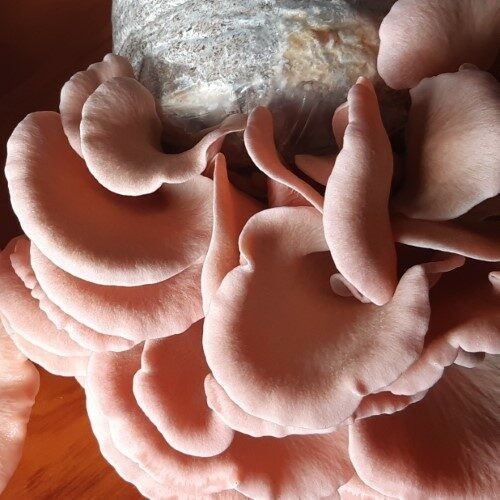
The same logic applies to mushroom cultivation. Clean, healthy spawn is non-negotiable because it ensures your mycelium can colonize the substrate without competition. In my experience, nothing has as great an effect on a mushroom crop as the principle of “Junk in, Junk out.”
This is especially true since you use spawn in such a low ratio compared to your final substrate. The introduction of even a tiny amount of contamination with your spawn can quickly overrun the entire batch and ruin your entire crop. A healthy start is the most crucial step you can take to guarantee a successful harvest.
As you move forward, keep in mind that mastering spawn preparation is about precision and cleanliness—skills we’ll build in the coming lessons. Ready to explore the tools you’ll need to make your own spawn?