
Electrical Conductivity (EC) is the key to measuring hydroponic nutrient strength, while the plant’s health is the ultimate confirmation.
Answer
Understanding nutrient strength in hydroponics isn’t just about adding the right stuff; it’s about measuring it accurately and knowing what the plant is telling you. While meters give us numbers, the plant’s leaves, stems, and roots are the real indicators of whether it’s getting what it needs. We need to learn to read both.
1. The Plant Always Speaks First
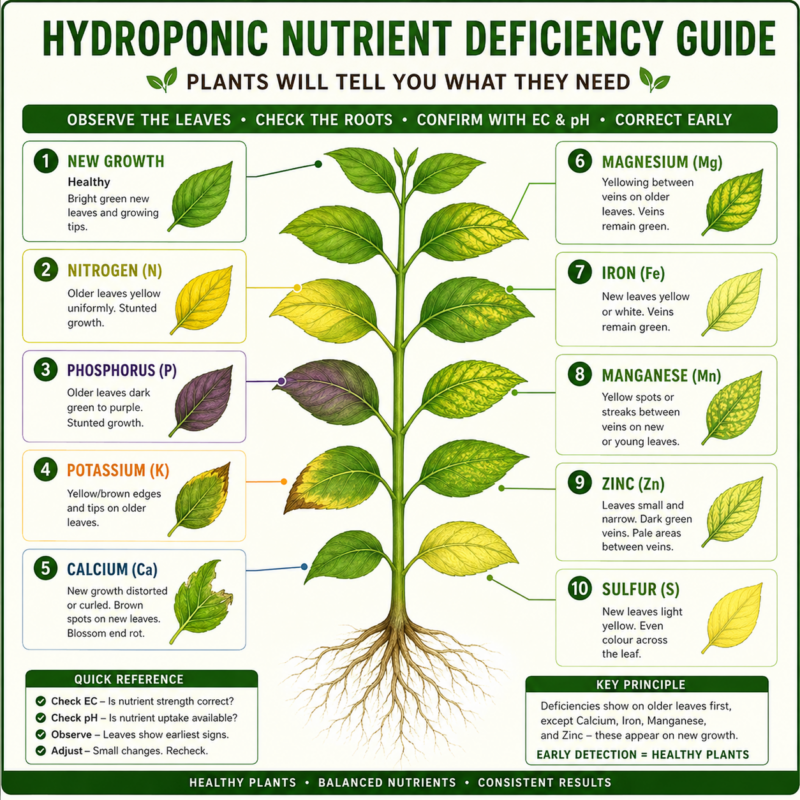
Before you even grab a meter, look at your plants. They’re your first and best nutrient meter. Slow growth, yellowing leaves, burnt leaf tips, aborted flowers, or stunted fruit development are all signs that something’s not right with the nutrient solution. These symptoms appear long before your EC meter shows a drift. Learning to interpret these visual cues is a vital skill for any grower. Remember, instruments tell you what’s in the reservoir, but the plant tells you what it can actually absorb. The core principle here is that plants only take up nutrients that are dissolved and water-soluble. Even if the right nutrients are present, issues like incorrect pH, poor oxygen in the roots, cold root temperatures, or chemical reactions can stop the plant from absorbing them. So, always check the plant’s condition before messing with the nutrient solution.
2. Every Nutrient Has a Job
Plants need 13 essential mineral elements, supplied through the water absorbed by their roots. These are split into macronutrients (needed in larger amounts for growth) and micronutrients (needed in tiny amounts).
Macronutrients:
- Nitrogen (N) for leafy growth,
- Phosphorus (P) for energy and roots,
- Potassium (K) for vigour and disease resistance,
- Calcium (Ca) for cell walls,
- Magnesium (Mg) for chlorophyll,
- and Sulphur (S) for amino acids.
Micronutrients:
- Iron (Fe) for chlorophyll,
- Manganese (Mn) for photosynthesis,
- Zinc (Zn) for enzymes,
- Copper (Cu) for respiration,
- Boron (B) for cell walls,
- and Molybdenum (Mo) for nitrogen use.
These elements work as a team. If one is missing or unavailable, the whole plant suffers. Understanding their roles is step one; getting the proportions right is the next challenge.
Understanding the role of each nutrient is just the first step. The next challenge is to provide these nutrients in the correct proportions – refer to #116 STS Q&A.
| Symptom | Likely Cause | First Action |
|---|---|---|
| Older leaves yellow | Nitrogen deficiency | Increase nutrient strength slightly |
| Purple foliage | Phosphorus deficiency or cold roots | Check EC and root temperature |
| Brown leaf edges | Potassium deficiency or excess EC | Check EC before adding nutrients |
| New leaves distorted | Calcium deficiency | Check Calcium source and pH |
| Yellow between veins | Magnesium deficiency | Add Magnesium sulfate |
| Young leaves yellow | Iron deficiency | Check pH first |
| Burnt leaf tips | Nutrient concentration too high | Dilute reservoir |
3. Measuring Nutrient Strength
To get the nutrient levels spot on, you need to measure the concentration in your water. This is where EC and PPM come in.
PPM (Parts Per Million): This isn’t a direct measurement. EC meters actually measure electrical conductivity first and then convert it to a PPM reading using an internal factor. The problem is, different manufacturers use different conversion factors, so the same nutrient solution can show up with wildly different PPM values on different meters.
EC (Electrical Conductivity): This is the true, physical measurement. An EC meter uses two electrodes to measure how well the water conducts electricity, which is directly related to the total amount of dissolved ions (nutrients) present. It’s measured in Siemens per centimeter (μS/cm or mS/cm). EC is universal and reliable; PPM is not. Always use EC for measuring nutrient strength.

EC is universal. PPM is manufacturer dependent.
4. Correcting Nutrient Problems
| If… | Then… |
|---|---|
| EC too low | Add nutrient concentrate. |
| EC too high | Dilute with water. |
| pH outside range | Correct before adding nutrients. |
| Deficiency symptoms | Check pH first before changing nutrients. |
| Root problems | Check oxygen and temperature before fertiliser. |
Conclusion
Healthy hydroponic plants are the result of careful observation and measurement, not guesswork. Learn to read your plants first, then use EC to measure nutrient strength. Once you understand what your plants are telling you, managing nutrients becomes much simpler and more predictable.
The Microbial Bridge
Bio-Available Feeding
Mycelial Dominance
SPeS Hardware Hub
Equipping the Circular Revolution with STS-Tested engineering.
-
STS
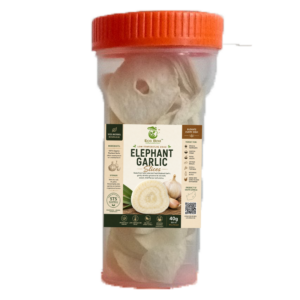
Dried Fermented Elephant Garlic Slices – Sweet, Mild Flavour (40g)
Original price was: R115.R95Current price is: R95. Add to basket🧄Organic Elephant Garlic
🧄Low-temp dried gourmet slices
🧄Naturally sweet & mild
🧄Small-batch South African -
STS

Eco Bini™ BioaKt Media/Substrate Conditioner | 2000 ml
Original price was: R195.R149Current price is: R149. Add to basket🏗 Bundu-Tek additive with kelp alginates – No autoclave needed.
🏗 Alkaline pH Pasteurizer
🏗 Self-sterilizing formula
🏗Boost yields and colonizing times -
STS
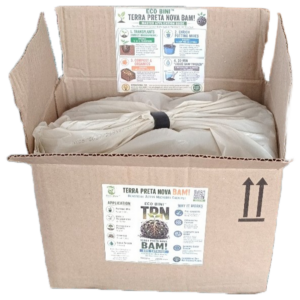
Eco Bini™ Terra Preta Nova BAM! Soil Catalyst | 5 Litre
Original price was: R340.R239Current price is: R239. Add to basket🛠️ Biologically pre-charged Terra Preta Nova Soil Catalyst
🛠️ Premium macadamia shell Granular Activated Carbon (GAC)
🛠️ Beneficial Active Microbes (BAM!)
🛠️ Zero nutrient lockout • Permanent microbial habitat • Ready to use -
Organic Elephant Garlic Rounds (Ajo Macho / Solo Garlic)
R90 Read more🌱 Large, mild-flavoured single Ajo Macho bulbs
🌱Organic Elephant Garlic Rounds / Pearl / Solo
🌱 Vernalized for immediate planting or roasting
🌱 Seasonal – Limited Stock
Socratic Questions
difference between macro and micro nutrients in hydroponicshow to convert EC to PPM hanna scalediy hoagland solution recipe stock preparationwhy calcium nitrate causes nutrient lockoutbest organic mineral fertilizers for hydroponic crops