Elephant garlic stands out with its massive size, mild flavor, and unique growth.
Answer
More closely related to a leek than true garlic, it boasts a distinct three-stage lifecycle from corm to round to a colossal cloved bulb. This botanical marvel offers a versatile culinary experience and robust propagation, setting it apart in the Allium family.
1. What Makes Elephant Garlic Unique?
Elephant garlic (Allium ampeloprasum) is a familiar sight in many gardens and kitchens, known for its impressively large bulbs. However, its uniqueness goes far beyond just size. While it shares a superficial resemblance and culinary uses with true garlic (Allium sativum), elephant garlic possesses distinct botanical characteristics, a fascinating growth cycle, and a milder flavor profile that set it apart as a truly unique member of the Allium family. Understanding these differences unlocks its full potential for gardeners and chefs alike.
2. A Leek in Garlic’s Clothing

The fundamental principle behind elephant garlic’s uniqueness is its true botanical identity. Despite its name and garlic-like appearance, elephant garlic is not a true garlic species. Instead, it is a variant of the leek (Allium ampeloprasum). This genetic lineage explains many of its distinguishing features:
- Botanical Relationship: Being a leek variant means it shares more genetic traits with leeks than with Allium sativum (true garlic). This influences its growth habits, flavor, and chemical composition.
- Adaptability: This leek ancestry contributes to its adaptability to a wider range of climates, including milder winters, compared to many true garlic varieties that demand a harsh cold period for optimal bulbing.
This underlying genetic blueprint fundamentally “engineers” how elephant garlic grows and tastes, making it distinct from its common namesake.
3. The Distinctive Growth Cycle and Mild Flavor
Elephant garlic’s uniqueness is most evident in its multi-stage growth cycle and its characteristic flavor:
The Three-Stage Lifecycle: As detailed in Discover the Wonders of Elephant Garlic, elephant garlic undergoes a fascinating three-stage growth process:
- Corm: Planting a small, hard corm (like our Kashmiri Pearl Poppers) results in a single, un-cloved round in the first year. These corms are unique survival structures, as explored in What Makes Elephant Garlic Corms Unique? | 106FAQ.
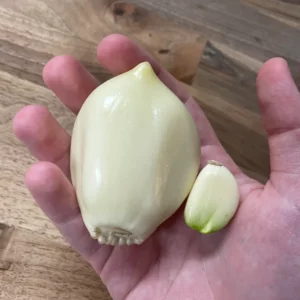
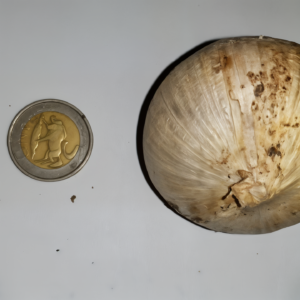
- Round (Ajo Macho): This single, large, un-cloved bulb is a gourmet delight and excellent planting material.
- Cloved Bulb: Planting a round or a large clove yields the familiar, massive, multi-cloved bulb in the second year. This bulb, in turn, produces new corms, completing the cycle.
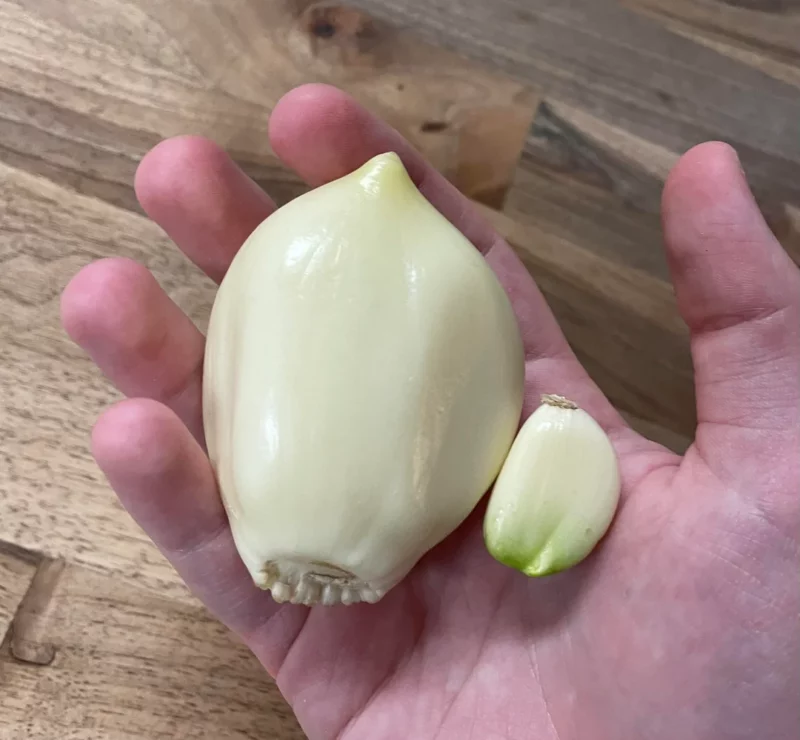
Massive Size: The sheer scale of elephant garlic bulbs and individual cloves is striking, often reaching the size of a fist.
Milder Flavor: Due to its leek lineage, elephant garlic possesses a significantly milder, sweeter, and more delicate flavor profile compared to true garlic. It lacks the intense pungency and “garlic breath” often associated with Allium sativum, making it more versatile for raw consumption or in dishes where a subtle garlic note is desired.

Sterile Flowers: Unlike many other plants, elephant garlic produces a tall flower scape and a large, globe-like flower head, but these flowers are typically sterile and do not produce viable seeds. This means propagation relies entirely on planting cloves or corms.
4. Practical Application: Versatility in Garden and Kitchen
These unique characteristics translate into practical advantages for both cultivation and culinary use:
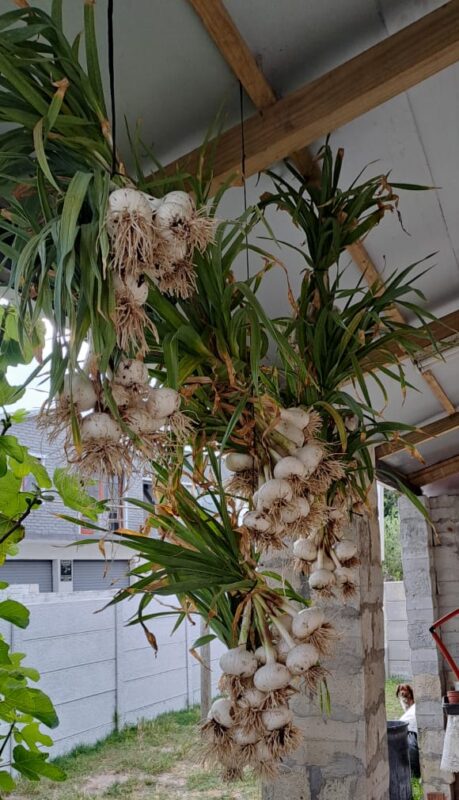
Gardening Adaptability: Its robust nature and tolerance for milder winters (as discussed in Can I Grow Garlic in Warm Climates? (Especially in SA) | 103FAQ) make it a popular choice for home gardeners, including those on urban farms. Its ability to propagate via both cloves and corms offers flexible planting options.
Culinary Versatility: The mild flavor of elephant garlic allows it to be used in larger quantities without overpowering other ingredients. It can be roasted whole, sliced thinly into salads, added to stir-fries, or even eaten raw for a gentle garlic essence. Its tender scapes are also a delicious seasonal treat.
Unique Components: The distinct corms are not only for propagation but are also being explored for their unique chemical profile, including stable S-allyl-L-cysteine (SAC), for specialized preservation methods like our Kashmiri Pearl Poppers (Lactic Acid Preservation of Elephant Garlic Corms | 121N).
5. Key Takeaway: More Than Just a Big Garlic
Elephant garlic is far more than just a large version of regular garlic. Its true identity as a leek variant, its distinctive three-stage growth cycle, and its mild, sweet flavor collectively make it a truly unique and valuable plant. From its resilient corms to its colossal cloved bulbs, elephant garlic offers a fascinating journey for both the dedicated grower and the adventurous chef, proving that sometimes, being different is precisely what makes something special.
-
STS
Elephant Garlic Tincture (1:5 AGE Extract ) | 20.4% ABV
Original price was: R450.R295Current price is: R295. Add to basket🛠️Concentrated, Biologically Active Phytochemical Extract
🛠️ Optimized 1o-Min Air-activated Allicin window (AGE)
🛠️1:5 Fresh Organic Garlic Ratio
🛠️Stable 20% ABV Matrix – Long shelf life -
Organic Elephant Garlic Rounds (Ajo Macho / Solo Garlic)
R90 Read more🌱 Large, mild-flavoured single Ajo Macho bulbs
🌱Organic Elephant Garlic Rounds / Pearl / Solo
🌱 Vernalized for immediate planting or roasting
🌱 Seasonal – Limited Stock -
STS
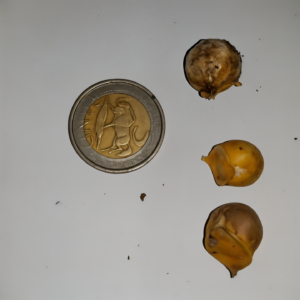
Organic Elephant Garlic Corms (Heirloom)
Original price was: R135.R95Current price is: R95. Add to basket🌱 Start your Elephant Garlic journey.
🌱 Grows into Ajo Macho Solo Round.
🌱 Perennial plant and natural pest deterrent.
🌱 Limited Stock – 20 off per pack -
STS
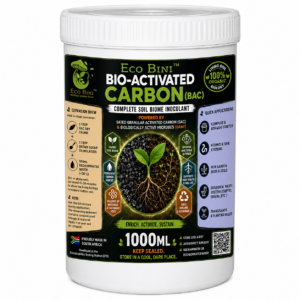
Eco Bini™ BAC: Complete Soil Biome Inoculant
Original price was: R229.R164Current price is: R164. Add to basket🛠Activated BAM! Dry Inoculant
🛠Add Sugar & Water to Activate
🛠High-Density Microbial Matrix
🛠Makes 600L+ Living Probiotic
Socratic Questions
1. Is elephant garlic a true garlic or a leek?
2. What are the three growth stages of elephant garlic?
3. How does elephant garlic taste compared to regular garlic?
4. Can elephant garlic be grown in warm climates?
5. What are the uses of elephant garlic corms?