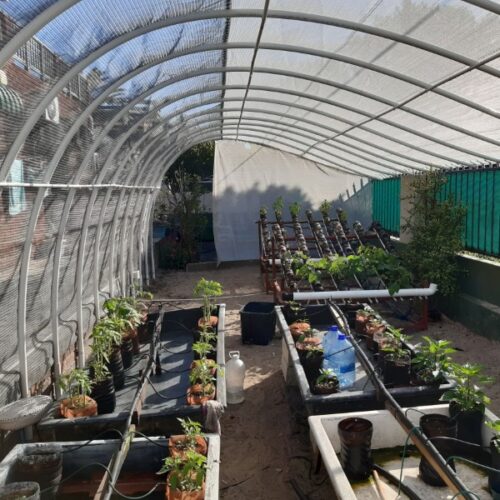
This isn’t an overnight fluke; it’s a systemic biological crash driven by a lack of oxygen. When water temperatures rise above 22°C or dissolved oxygen (DO) levels drop, plant roots suffocate and become highly stressed. In their panic, they exude microscopic sugars (root exudates) directly into the reservoir. This creates the absolute perfect germination conditions for Pythium species, which aggressively consume the weakened root tissue and leave behind a suffocating, anaerobic slime biofilm.
Why It Happens
Root rot is a direct indication that your hydroponic nutrient water has gone anaerobic (starved of oxygen), and the primary culprit is water temperature.
Water has a unique physical characteristic called “Reverse Solubility.” Unlike solids (like sugar or salt) which dissolve better as water gets hotter, gases dissolve worse. As water temperature increases, the molecular vibrations of the water molecules ramp up, literally knocking the dissolved air molecules right out of the liquid.
[Rise in Water Temp] ➔ [Increased Molecular Vibration] ➔ [Dissolved Oxygen Knocked Out] ➔ [Anaerobic Crash]
This lack of air literally chokes the plant roots, causing them to die. It starts at the fine root hairs at the very extremities and escalates fast.
In nature, plants and the soil biome share a tight symbiotic relationship: the roots supply sugar exudates to feed the microbes, and the microbes feed the plant in return. In a sterile hydroponic tank, there is no soil biome to balance things out. The dying, suffocating roots leak massive amounts of sugar, and ambient Pythium spores detect it like sharks smelling blood. They attack, multiply exponentially, and coat the roots in a thick brown biofilm. This slime behaves like oil, physically blocking the plant from absorbing water and nutrients. That is why a plant with root rot wilts severely during the hot midday sun even though its roots are drowning in water.
The Three Stages of Root Death
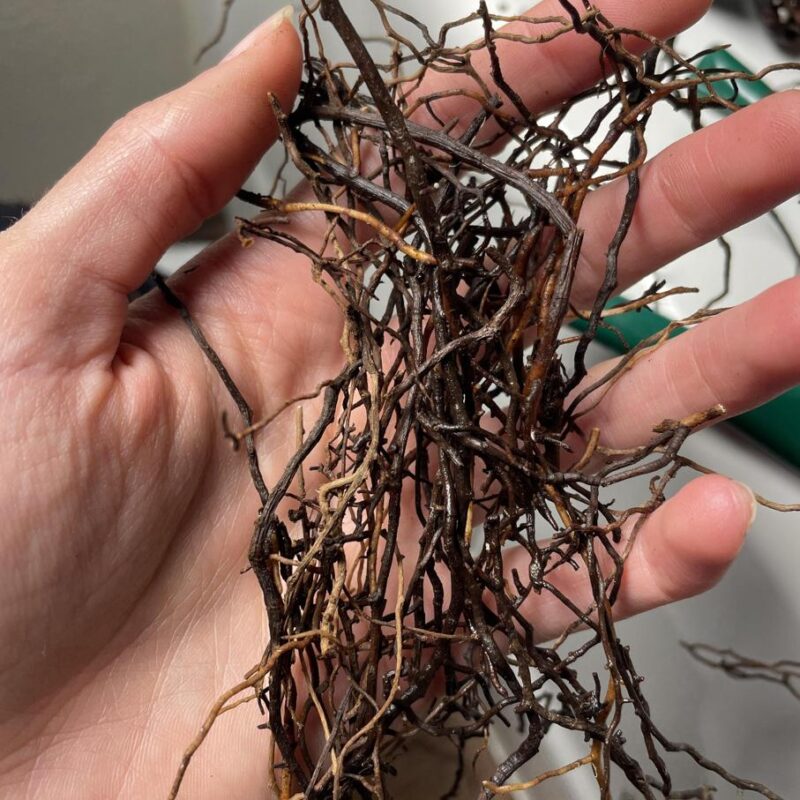
- The Tan Phase: Roots turn a light brown/tan color. This is the physical plant tissue dying from lack of oxygen.
- The Slimy Phase: The roots become slimy. This is the Pythium population exploding and creating a waxy biofilm—a protective “house” for the bacteria that localizes the anaerobic conditions.
- The Black Phase: The roots turn completely black. This is the biofilm thickening to maximum density as the dead root system turns entirely into a pathogen food source.
How to Fix It
If your roots are already turning into a swampy black mess, hitting them with standard chemical flushes often just creates a blank slate for the rot to return twice as fast. Instead, follow this biological reset strategy:
- The Physical Clean-Up: Gently rinse the root masses under cool, clean tap water to manually slough off as much of the loose, dead brown slime as you can. Sterilize your reservoir bucket, pumps, and air stones thoroughly before resetting.
- Drop the Thermal Load: Keep your water below 22°C. Use the passive engineering hacks we mapped out before—bury your tanks, paint lids reflective white, mount a 40% black/white shade net, use wet sand heat sinks to pull thermal energy out natively, or relocate the system entirely to a cooler place.
- Deploy Biological Warfare: Instead of trying to keep the water completely sterile (which is almost impossible in a backyard setup), fill the biological vacuum. Inoculate your fresh reservoir with robust, beneficially active microbes (BAM!) and fungi like Bacillus or Trichoderma. These good guys wrap themselves around the root zone, forming a physical shield that locks Pythium away from the plant’s root exudates.
- Remove the Root Cause: Eliminate the anaerobic trigger. Double-check your temperature, nutrient concentration levels, reservoir cleanliness, and look for broken pumps, blocked lines, or even something as simple as light leaking into the tank.
Common Mistakes
- Nuking the System with Hydrogen Peroxide (): This is the ultimate generic internet favourite. Pouring peroxide into a slimy reservoir feels satisfying because it fizzes and temporarily bleaches things – you can see the zap! But peroxide is non-selective; it kills the bad guys and any surviving beneficial life, leaving a total biological void. From mushroom cultivation, we know that nature absolutely hates a void (Horror Vacui). The moment the peroxide breaks down into water within a few hours, any remaining Pythium spores will re-colonize the now defenseless root zone aggressively. You end up worse off because you’ve just created more dead organic food for the pathogens.
- Adding More Nutrients to “Fix” Wilting: When growers see plants drooping, they assume it’s a food deficiency and dump more fertilizer into the tank. This raises the Electrical Conductivity (EC) too high, chemically burning the already damaged root hairs. Saltier water also reduces leaf transpiration (the plant’s ability to breathe and pull up water).
- Ignoring Biofilm Spread: Anaerobic microbes exude a thick, waxy oil to protect their environment. This slime doesn’t just stay on the roots; it will quickly travel up to block your dripper lines and clog your submersible pumps, strangling your system’s water flow.
- Keeping a Dirty Reservoir: This is a major trap for in-ground tanks because they are difficult to clean. Use a common fish net to scrape and scoop the muck off the bottom monthly. You will be surprised by how much organic waste collects down there, creating the perfect breeding ground for anaerobic pathogens.
- Using High-Risk Hardware: If you are tired of battling summer crashes, move away from systems that require constant, uninterrupted electrical power to keep water moving (like NFT and DWC). Instead, invest in bottom-fed organic vermiponic systems or our do-it-yourself CBB-Tek (Cascading Bottle-Bato Containers).
STS Insight
From an engineering perspective, trying to maintain a completely sterile hydroponic system in a backyard environment is a fool’s errand. Every time you lift the lid, you are introducing spores.
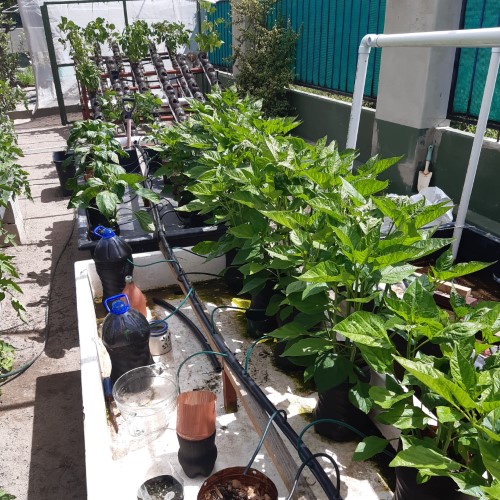
At the Sustainable Transition Station (STS), we don’t fight for sterility—we enforce natural, symbiotic relationships. By introducing high concentrations of active, beneficial microbes directly into the root zone, we ensure that every available square millimeter of root surface area is already fully occupied. When Pythium arrives, there is no real estate left for it to grab and no free sugars left to eat. Don’t try to keep your water dead; keep it aggressively alive with the right biology.
>>> Add some BAM! to your Soil Life <<<
Pasteurizing Bio-Engineers
Plant-Available Nutrients
Selective Nutrition
Bundu Teq Hub
-
STS
Pink Oyster Mushroom for Vibrant Harvests
Original price was: R1,999.R995Current price is: R995. Select options This product has multiple variants. The options may be chosen on the product page🧪 Pleurotus incarnatus – Pink Oyster strain.
🧪 Rapid colonization – salmon-pink clusters.
🧪… -
STS
Luer Syringe Caps | Autoclave-Safe | Lock or Sl...
Price range: R10 through R219 Select options This product has multiple variants. The options may be chosen on the product page🧫 Luer Lock Syringe Caps, Autoclave-Safe.
🧫 100% Leak-Proof Seal | ISO Standard Fit.
🧫 Heat… -
STS

10x8x35cm Mother Spawn Bag [0.2μm Filter]
Price range: R12 through R745 Select options This product has multiple variants. The options may be chosen on the product page📦 Commercial-grade 60 Micron Polypropylene.
📦 Non-woven 0.2µm ePTFE filter patch.
📦 Maximum… -
SHIP – Self-Healing Injection Ports, Buty...
Price range: R39 through R49 Select options This product has multiple variants. The options may be chosen on the product page🧫 Medical-grade 13mm/20mm butyl rubber SHIP.
🧫 Packs of 10 Injection Ports.
🧫 100% Autoclav…