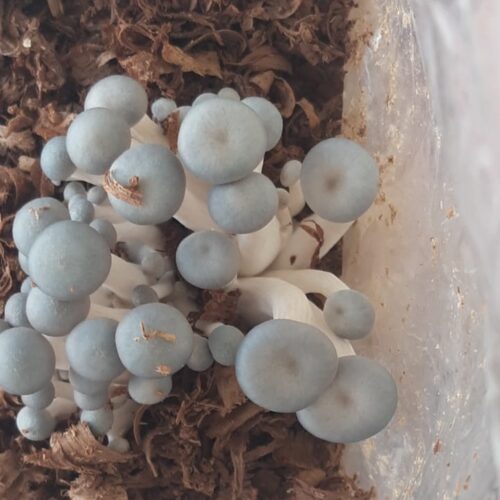
High CO2 levels inhibit the development of mushroom caps and promote leggy “stems-only” growth;
Summary
proper FAE triggers the metabolic shift required for full-size, commercial-grade fruiting bodies. Master the unsung hero of cultivation. This guide explains how Fresh Air Exchange (FAE) prevents stagnant air pockets that harbor contamination and provides the oxygen levels necessary to trigger bountiful, healthy harvests.
Introduction
When designing a commercial or craft-scale Controlled Environment Agriculture (CEA) cultivation facility, growers routinely over-index on substrate nutrition and raw humidity capacity while ignoring the most critical fluid dynamic in the room: Fresh Air Exchange (FAE).
Fungi are obligations-aerobic organisms; they breathe exactly like mammals, consuming oxygen (O2) and exhausting carbon dioxide (CO2) as a primary byproduct of their metabolic breakdown of lignocellulose. In a sealed fruiting environment, a lack of structured air exchange causes toxic gas stratification that permanently deforms or aborts your crop. This lab note details the biochemical signals, fluid dynamics, and ventilation math required to engineer a high-yield FAE infrastructure.
The Biochemical Feedback Loop: CO2 as a Morphological Governor
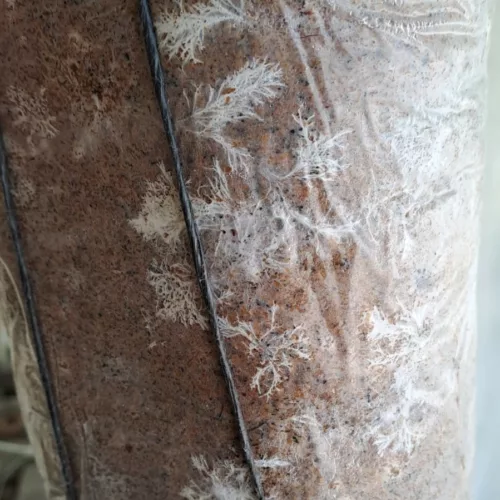
During the vegetative colonization phase (spawn running), mushroom mycelium thrives in hyper-capnic environments where CO2 concentrations routinely climb between 10,000 PPM and 20,000 PPM. This suffocating atmosphere is a vital environmental indicator: it signals to the organism that it is safely sealed deep inside a subterranean wood matrix or compost pile where it should focus 100% of its energy on expanding vegetative biomass rather than wasting resources on reproduction.
The moment that mycelium encounters a drastic, sudden drop in CO2 (falling below 800 to 1000 PPM), a profound genetic switch is flipped. This drop mimics breaking through the forest floor into open ambient air. It signals the immediate initiation of the reproductive phase: the formation of primordia (pinning).
Evaporation: Reducing the Risk of Disease
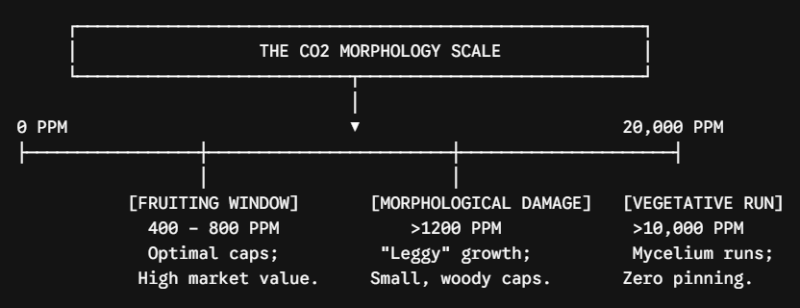
If your ventilation system fails to maintain this low threshold during fruiting, the mushrooms undergo severe morphological distortions:
- Stems-Only “Leggy” Growth: The mushroom stretches aggressively upward, growing long, thick, fibrous stalks. This is an evolutionary survival mechanism called negative geotropism. The fungus is desperately attempting to extend its spore-bearing surfaces out of the heavy, floor-level CO2 cloud into higher atmospheric currents.
- Cap Suppression: Because the organism believes it is still technically “underground,” it suppresses the development of the cap and gills. In species like Grey Oyster (Pleurotus ostreatus) this results in wide, woody stalks with tiny, pinhead-sized caps that are completely unmarketable.
- Total Aborts: If concentrations remain locked above 1500 PPM, newly formed primordia will blacken and die, causing complete crop loss across the flush.
Micro-Evaporation & The Boundary Layer Dynamics
Fresh Air Exchange does not exist solely to swap gases; it is the primary mechanical driver of surface evaporation.

For a mushroom pin to grow smoothly, moisture must continuously transpire through the fungal tissue and escape into the surrounding air. This process acts like a microscopic hydraulic pump, pulling nutrient-rich water up from the deep substrate block straight into the growing fruit body.
When air movement is completely stagnant, a microscopic, hyper-saturated boundary layer of 100% relative humidity wraps tightly around the wet substrate and developing caps. This boundary layer slams the brakes on evaporation. The water pump stalls, metabolic transport locks up, and the pins rot in place.
By utilizing structured FAE, you introduce subtle, non-turbulent air currents that strip away this stagnant boundary layer. This allows controlled, steady evaporation to occur, which cools the surface slightly and triggers heavy, uniform pinning across the beds.
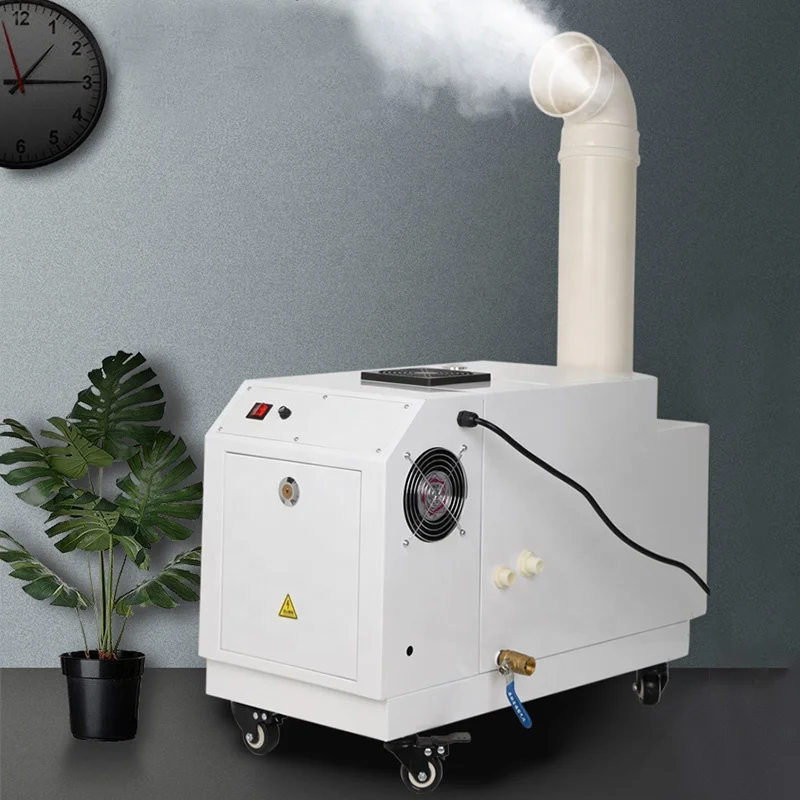
JDH-05Z Commercial Ultrasonic Humidifier – Dual Supply
High-volume 3rd generation ultrasonic humidifier with smart control. Dual Supply (Bottle/Tap), ideal for maintaining optimal humidity in large-scale cultivation – with large circulation fan.
The Contamination Barrier: Eliminating Stagnant Vectors
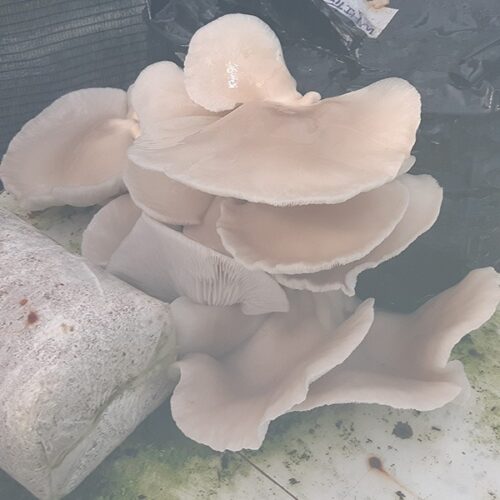
In high-humidity growing setups, stagnant air is the single greatest ally of airborne pathogens. Green mold (Trichoderma harzianum) spores and competitive bacteria (like Pseudomonas tolaasii, which triggers devastating bacterial blotch) require standing, stagnant droplets of liquid water to germinate on your mushroom caps.
A properly configured FAE cycle keeps air molecules in constant motion. It ensures that while the atmosphere remains highly saturated (e.g., 85% RH), liquid water cannot settle into un-evaporated pools on the mushroom tissue for more than a few minutes at a time. This simple kinetic action denies bacterial and fungal spores the stable moisture window they need to crack open and infect your sterilized or pasteurized substrate blocks.
Sizing and Siting Your FAE Infrastructure
To design an energy-efficient, high-yield grow room, you must calculate your exact volumetric airflow requirements rather than guessing fan sizes.
The Master FAE Sizing Equation
To determine the required volume capacity of your extraction fan, run this formula:
Required Fan Capacity (m3/h) = Room Volume (m3) x Target Air Changes Per Hour x Safety Factor (1.2)
Example Problem:
You are setting up an insulated Bundu Tek fruiting room measuring 4 meters long, 3 meters wide, and 2.4 meters high. You want to run a baseline of 3 complete air changes per hour.
- Calculate Room Volume: 4m x 3m x 2.4m = 28.8 m3
- Calculate Raw Hourly Air Volume: 28.8 m3 x 3 air changes = 86.4 m3/h
- Apply Static Pressure Safety Factor (1.2): 86.4 m3/h x 1.2 = 103.68 m3/h
To execute this safely, a standard 100mm inline fan rated around 100 to 110 m3/h is your ideal hardware fit.
The Pulse-Timing Strategy (Duty Cycling)
Running an extraction fan 24/7 is highly inefficient; it strips out your expensive, artificially generated ultrasonic humidity faster than your machine can replace it, wasting massive volumes of water and electrical power. Instead, run your ventilation loop on a precise intermittent duty cycle via a programmable digital repeat-cycle timer.
To achieve your target 3 air changes per hour using a standard higher-output commercial fan (e.g., a 120mm fan rated at 165 m3/h in our example 28.8 m3 room), you must pulse the runtime:
- The Fan’s True Capacity: At 165 m3/h, the fan moves 2.75 cubic meters of air every single minute (165 / 60).
- Time to Swap Room Volume: To move exactly 28.8 m3 of air, the fan needs to run for roughly 10.5 minutes total over the course of an hour (28.8 / 2.75).
- The Optimized Cycle Split: Divide that hourly run time into three evenly spaced pulses. Configure your digital cycle timer to run for 3.5 minutes ON, followed by 16.5 minutes OFF.
This pulsing methodology aggressively purges accumulated CO2 in short, sharp bursts, giving your ultrasonic humidifier ample time during the “OFF” cycles to rebuild and lock in your target 85% relative humidity baseline.
The STS Innovation: Leveraging Low-Level Floor Vent Pooling
During our rigorous research trials at the Sustainability Testing Station (STS), we identified a major physical exploit that can dramatically lower your operational energy and water bills: exploiting the molecular weight of gas.
Carbon dioxide (CO2) has a molecular weight of 44 g/mol, making it significantly heavier than ambient oxygen (O2 at 32 g/mol) and nitrogen (N2 at 28 g/mol). In a non-turbulent room, CO2 behaves almost like an invisible liquid—it slowly sinks and pools in a dense, concentrated layer along the floor boards, leaving the upper air column cleaner and richer in oxygen.
The Structural Layout Rules:

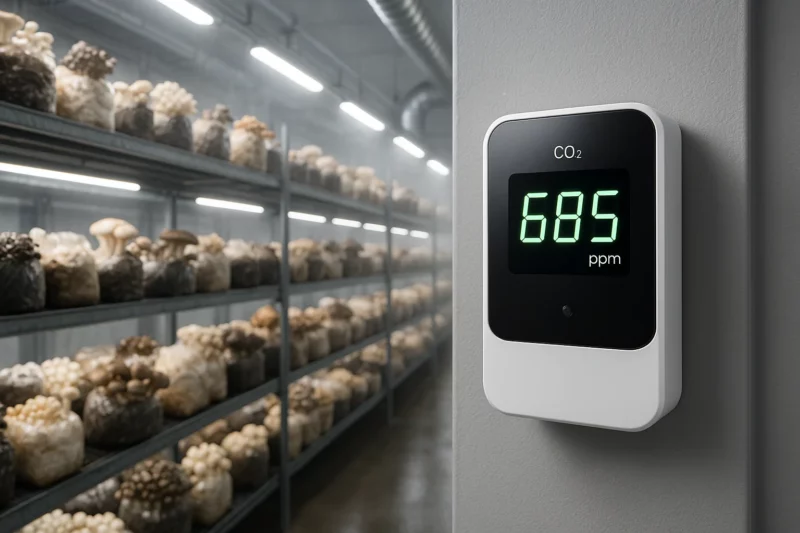
- Elevate Your Grow Blocks: Never place your fruiting bags, blocks, or monotubs directly on the floor. Keep your active production arrays elevated on shelving racks at least 30cm to 40cm off the ground, placing them completely above the heavy gas pooling zone.
- Low-Sited Extraction Vents: Mount your extraction fans or passive exit louvers directly at floor level (no higher than 15cm off the ground) on the opposite wall from your fresh air intake.
- The Efficiency Payoff: Because the CO2 naturally concentrates right in front of your low-mounted extraction vents, your fan cycles do not need to forcefully scrub the entire room’s air volume to drop carbon thresholds. The fan simply opens its louvers and drains the concentrated “puddle” of CO2 off the floor like a drain plug in a bathtub.
By utilizing this low-level floor vent layout, STS trials proved you can drop your active FAE frequency by up to 40% while maintaining flawless, cap-heavy mushroom morphology—saving massive amounts of fan power and drastically reducing the workload on your ultrasonic humidification arrays.
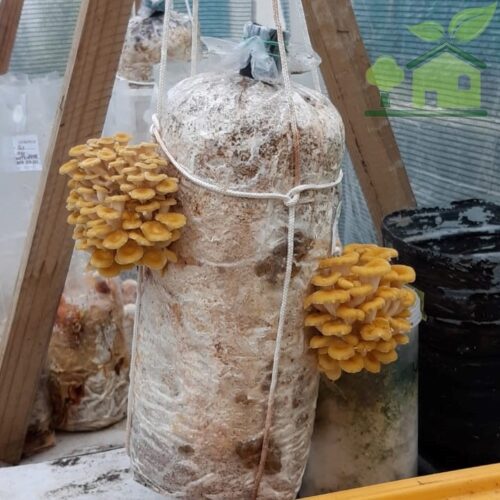
In actual fact, we are at windy Cape of Storms and by utilizing ambient wind, we do not even have an extraction fan. Just a 10cm slit on bottom of grow area that naturally vents CO2 into passing Breeze. and never had Oyster mushroom leggy syndrome – even at lowest level.
-
STS
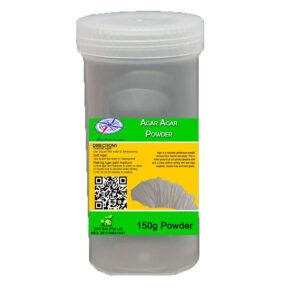
Agar Agar Powder (150g)
Original price was: R299.R265Current price is: R265. Add to basket🧫 High-purity agar agar powder – no fillers.
🧫 Powdered form for easy nutrient media prep.
🧫 For Petri plates and slants.
🧫 In Reusable PP Media Jar -
STS

Food Grade Calcium Lactate | Alginate Spherification Calcium Source
Original price was: R285.R195Current price is: R195. Add to basket🧫 Ideal for Reverse Spherification
🧫 Neutral Taste – No Bitter Chloride Aftertaste
🧫 Food Grade Calcium Lactate
🧫 60 g Tub -
STS
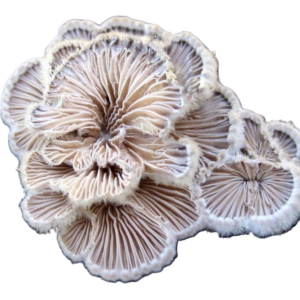
Distinctive Split Gill Mushroom Spawn Kit
Original price was: R1,399.R995Current price is: R995. Add to basket✔ Split Gill Mushroom Spawn Kit (Schizophyllum commune)
✔ Includes 100 ml Living Inoculant (LI) in a reusable Culture Bottle
✔ Includes 1 kg Sterilized Sorghum Grain Spawn with SHIP & 0.2 µm PTFE filter
✔ Unique hardwood species famous for its remarkable split gills and scientific importance -
STS
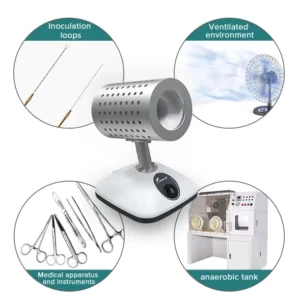
Infrared Scalpel Sterilizer – Flame-Free Inoculation Tool
Original price was: R4,200.R3,395Current price is: R3,395. Add to basket🧫 Precision: 35mm diameter Localized heat sterilization Zone.
🧫 Flame-Free: Safe for use with Flammables.
🧫 Durable: Robust metal and ceramic build.
🧫 Compact: Weighted base for stable use.
Socratic Questions:
- Why are my mushroom stems long and caps small?
- How many fresh air exchanges per hour for mushrooms?
- How to prevent CO2 buildup in a mushroom grow tent?
- Does high CO2 cause mushroom contamination?
- How to balance humidity and FAE for Oyster mushrooms?