Unlock effortless “black gold” production! Build a Continuous Flow-Through (CFT) worm box for superior vermicompost.
Summary
Discover how to easily set up and maintain a Continuous Flow-Through (CFT) worm box, transforming organic waste into nutrient-rich vermicompost with minimal effort. This guide focuses on efficient design, worm care, and harvesting techniques that maximise output and reduce maintenance, making premium vermicompost accessible for urban gardens and sustainable living. Learn to leverage microbial-worm synergy for thriving plants and process massive amounts of farm waste.
Inefficient Vermicomposting, Labour-Intensive Harvesting, and Limited Scalability
Traditional vermicomposting methods, such as stacked tray systems or simple bins, often present several challenges that can deter aspiring worm farmers. These include labour-intensive harvesting, which typically requires manually separating worms from their castings, disturbing the delicate microbial ecosystem.
This disturbance can slow down the composting process and reduce overall efficiency. For a small homestead or tight garage space, low-volume multi-bucket towers can be built, but these are incredibly prone to overfeeding. If you dump too many green scraps or high-protein waste in a small space, it triggers an acidic bacterial bloom that will kill your worms.
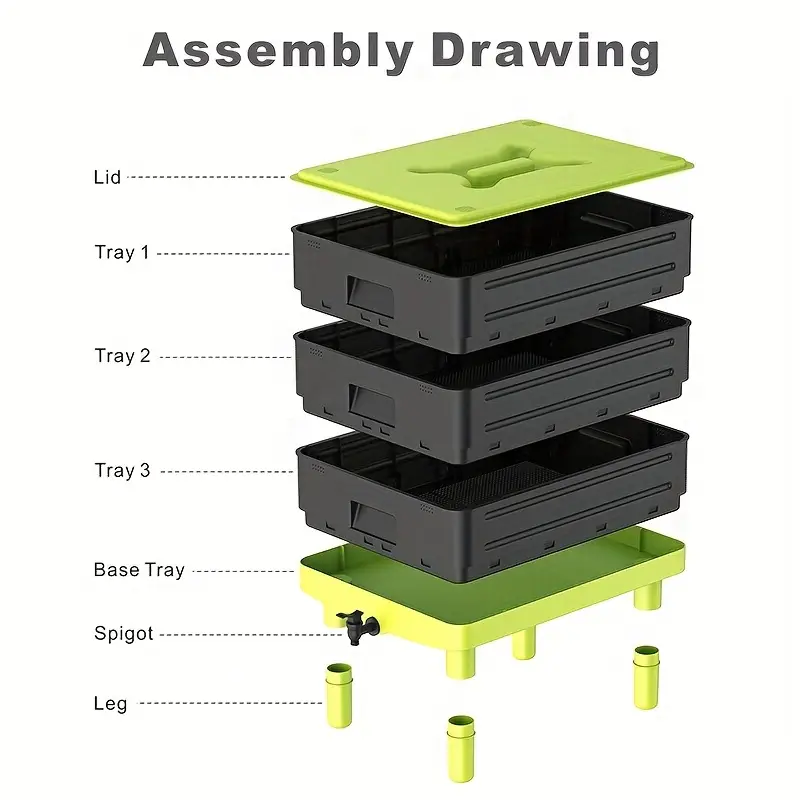
Furthermore, smaller, tiered systems often lack the thermal mass to buffer against temperature fluctuations, making them prone to overheating in summer or becoming too cold in winter, which can stress worms and disrupt their activity. Overfeeding in these confined spaces can also lead to anaerobic conditions or acidity, requiring constant vigilance and intervention. For urban farmers, hobbyists, or anyone looking to process larger volumes of organic waste, the limited capacity and increased maintenance of traditional bins become significant bottlenecks. They are not easily scalable and can produce wet, muddy vermicompost due to inefficient aeration.
The need for a more efficient, less labour-intensive, and scalable vermicomposting solution is clear—one that maximises “black gold” production while minimising effort and providing a stable environment for the worms, especially when processing massive amounts of farm waste, kitchen scraps, and spent mushroom substrate into high-octane fertiliser.
Harnessing Epigeic Worm Behaviour in a Continuous System
Continuous Flow-Through (CFT) vermicomposting represents an advanced approach designed to overcome the limitations of traditional worm bins by leveraging the natural instincts of specific composting worms. To understand why this system works so effectively, you have to understand the three types of earthworms:
- Deep Burrowers (Anecic): These are your standard Nightcrawlers. They dig deep vertical tunnels and only come up at night to drag food down. They hate being confined.
- Soil Dwellers (Endogeic): These live permanently under the surface, eating pre-digested soil organic matter. They rarely come to the top – this is your common earthworm.
- Litter Dwellers (Epigeic): These are Red Wigglers (Eisenia fetida). They don’t dig tunnels; they live and breed entirely in the top 5 to 10 cm of decomposing surface litter. They are hardwired to stay at the very top where the fresh food is.
The fundamental principle behind a CFT system is to mimic how these epigeic worms operate in nature: they live and feed within the first few inches of decomposing organic matter at the surface, leaving their rich castings below. Because Red Wigglers are hardwired to stay at the very top where the fresh food is, we can build a deep vertical box that exploits this habit. The worms stay at the top eating, while their finished castings slowly pack down underneath them, completely free of worms and ready to harvest.
Here’s how CFT systems achieve this:
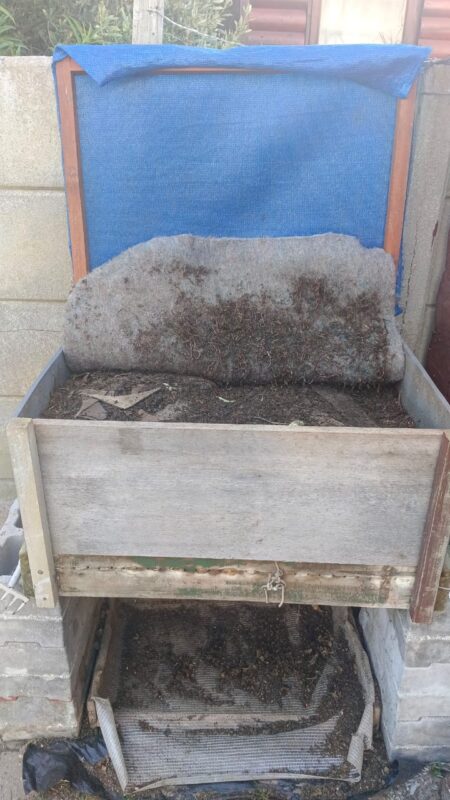
- Top-Down Feeding, Bottom-Up Migration: Organic waste is continuously added to the top of the bin, where the worms reside and feed. As worms consume the decomposing material and produce castings, they naturally migrate upwards towards the fresh food source. This means the finished vermicompost accumulates at the bottom of the bin.
- Mesh Base for Easy Harvesting: Unlike traditional bins with solid bottoms, CFT systems feature a mesh, grate, or bar base (like a polypropylene string ladder) that allows finished vermicompost to fall through for easy collection. This eliminates the need for manual separation of worms from castings, significantly reducing labour and disturbance to the worm population and the vital microbial ecosystem.
- Thermal Stability and Aeration: A properly designed CFT bin is typically deeper than 30 cm (12 inches), providing a large volume of bedding and organic material. This “thermal mass” creates a stable and forgiving environment for the worms, buffering against extreme temperature changes. The elevated design with an open bottom also provides additional air input, boosting aerobic microbial activity and preventing the wet, muddy conditions often found in less efficient systems.
- Microbial-Worm Synergy: Composting worms don’t directly consume raw organic waste. Instead, they feed on the microorganisms that are already decomposing the material. This microbial-worm synergy pasteurises the material, producing pathogen-free castings. In a CFT, fresh waste added to the top can undergo a brief thermophilic phase (if high in protein), during which worms retreat deeper into the bin, returning once the material cools and microbial biomass is abundant.
This continuous, undisturbed process allows CFT systems to maintain 2-3 times the worm population of standard bins and handle a much larger load of organic waste. The result is a highly efficient, low-maintenance system that produces consistent, high-quality vermicompost with minimal effort.
Because of the CFT layout and minimal operation you not forcing the worms up, this allows a more completely bio-engineered vermicast. Vermicompost CFT systems have over double the NPK (Nitrogen-Phosphorus-Potassium) values than standard stackable bins with the same organic input.
Application: Designing and Operating a High-Capacity CFT Box
Setting up and operating a Continuous Flow-Through (CFT) worm box involves specific design considerations and a routine that leverages worm behaviour for maximum efficiency. This guide focuses on designing a high-capacity, floor-standing bin suitable for serious farm waste processing, distinct from smaller multi-bucket towers.
Core Materials Matrix for a High-Capacity CFT Box:
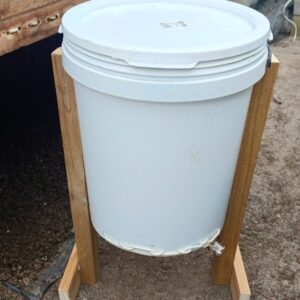
Bin Container: A large, sturdy, floor-standing bin with an open bottom. This could be a repurposed plastic 20L bucket (cut for access), a custom-built wooden box, or a purpose-built commercial CFT unit. The depth is critical: at least 30 cm (12 inches) for bedding and worm activity. (40-60cm advised for units with larger footprints)
Mesh Base/String Ladder: A robust polypropylene string ladder or a strong, durable mesh/grate that forms the open bottom of your bin. This allows for easy harvesting of castings.
Support Structure: A sturdy frame or legs to elevate the bin at least 30 cm (12 inches) off the ground, allowing ample space for vermicompost collection.
Bedding Material: Premium, carbon-rich bedding such as buffered coco coir, shredded corrugated cardboard, or mature compost.
Worms: Red Wigglers (Eisenia fetida) are essential.
Food Scraps: A steady supply of diverse organic waste, including kitchen scraps, garden waste, and critically, spent mushroom substrate (SMS).
Grit & Lime: Sand or finely crushed eggshells (Calcium Carbonate) to aid worm digestion and buffer pH. This can be applied as worm bin conditioner with every feeding (Vermiboost).

Assembly and Initial Commissioning Instructions for a New Box:
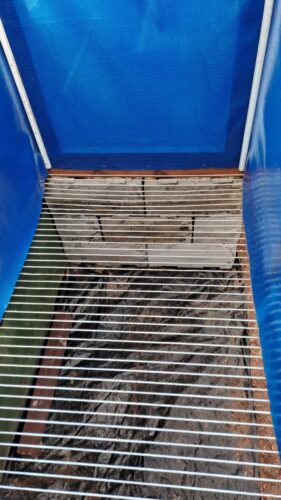
1. Prepare the Bin: Ensure your chosen container is clean and structurally sound. Elevate it on its support structure, providing sufficient space underneath for harvesting. Bear in mind that Vermicompost is heavy so calculate Volume Bin in liter will be equal to the mass that has to be supported in kilogram.
2. Install Mesh Base: Drill 5mm holes at 25-30mm spacing and install your polypropylene string ladder bottom rungs across the open bottom of the bin.
3. Create Initial False Bottom: Lay a sheet of raw cardboard directly across your polypropylene string ladder. This prevents bedding from falling through prematurely when starting up.
4. Add Bedding Material: Add 30 cm (12 inches) of premium bedding (like buffered coco coir or mature compost) on top of the cardboard. Moisten until damp but not dripping.
5. Introduce Worms: Gently introduce your Red Wigglers into the bedding.
6. Commissioning Period (3 Months): This is a critical initial phase. Leave the bottom of the bin undisturbed for 3 months. Feed the worms at the top, but do not touch the bottom. Over these 90 days, the cardboard will rot away, the worms will establish their population, and the lower layers will pack tightly over the strings, forming a stable base for continuous flow.
Operational Secrets: Density, Feeding, and Moisture:
Managing Worm Densities: Worms need to physically encounter each other to mate.
- Underpopulated Bins: If your worm density is below 2.5 kg per square meter, they won’t find each other and breeding will stall. If you are starting with a small batch of worms, don’t spread them out. Spot-feed them by burying a cup of blended food in one single hole – or a line. This forces them to gather into a tight “worm ball,” which skyrockets their mating rate.
- Optimal Density: You want your active box sitting between 5 kg and 10 kg of worms per square meter. If it gets thicker than 20 kg per square meter, competition takes over and they stop breeding. When your box gets too crowded, split half the population out to start a new bin.
STS Moisture Rules: To increase bin population then keep well hydrated, to increase output then maintain a lower moisture content.
- Worm Breeding: To get maximum egg-laying, worms prefer a very wet environment (over 80% moisture). However, wet compost is sticky and will cling to the inside of your box.
- Castings Production: For easy harvesting, you want the compost to sit between 50% and 70% moisture. By utilising an open-bottom CFT box, you get the best of both worlds. You can keep the top feeding layer wet and damp to drive massive breeding, while the bottom layer naturally dries out as air hits the string ladder. This creates loose, granular castings that fall out effortlessly when raked.
The Layer-Feeding Routine: Once your box is fully populated, feed in thin, even layers of 4 to 5 cm across the entire top surface. Do not be afraid of nitrogen-rich scraps! As long as you have that solid base of bedding below them, the worms have a safe zone to retreat to if the top layer temporarily heats up.
- Chop the Feed: Worms have no teeth; they can only eat material after microbes soften it up. Finely chopping or blending feed speeds up the process.
- Add Grit & Lime: Always toss in a few teaspoons of sand or finely crushed eggshells. The sand acts as grit in the worm’s gizzard to grind down food. The eggshells are pure Calcium Carbonate, which acts as a built-in pH buffer to neutralise organic acids before the bin goes sour.
The Spent Mushroom Substrate (SMS) Trick: During our farm trials, we discovered that worms have an absolute addiction to Spent Mushroom Substrate (SMS). If you are growing Oyster mushrooms, never throw the spent blocks away. Mushroom mycelium acts as a natural pre-digester, breaking down tough wood fibres and massively boosting the nitrogen content of the substrate. When you break up spent mushroom blocks and add them to the top layer of your worm box, the worms will aggressively target the fungal biofilm, forming massive worm balls that process waste at double the speed.
Conclusion: The Ultimate Fertility Engine for Zero-Waste Living
A Continuous Flow-Through (CFT) worm box takes the back-breaking labour out of vermicomposting, transforming organic waste into high-octane fertiliser with unparalleled efficiency. By understanding that Red Wigglers are epigeic worms, hardwired to stay at the surface, we can design a deep vertical box that exploits this natural behaviour. This results in a self-sorting, high-capacity worm casting factory where pure vermicompost is effortlessly harvested from the bottom, while feeding continues from the top.
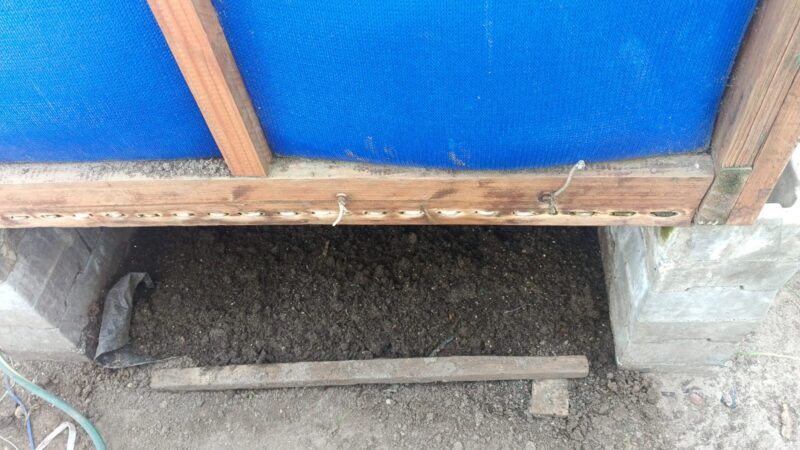
The CFT system’s inherent advantages — from its superior thermal stability and enhanced aeration to its capacity to handle significantly larger volumes of organic waste — make it an ideal choice for urban farmers, homesteaders, and anyone committed to sustainable living. It aligns perfectly with the principles of a circular economy, transforming kitchen scraps, garden waste, and even challenging materials like spent mushroom substrate into a valuable resource that boosts plant growth and soil health.
By following the practical design and operational secrets outlined in this Lab Note, you can:
- Maximise Vermicompost Production: Achieve superior yields of “black gold” with continuous, undisturbed processing.
- Reduce Labour: Eliminate the messy, time-consuming task of manually separating worms from castings.
- Enhance System Resilience: The large thermal mass and specific moisture management techniques protect worms from environmental extremes.
- Optimise Worm Health & Breeding: Strategic feeding, density management, and the addition of grit/lime ensure a thriving, rapidly reproducing worm population.
- Process Diverse Waste Streams: Efficiently convert everything from kitchen scraps to high-nitrogen farm waste and spent mushroom substrate into valuable soil amendments.
- Support Sustainable Practices: Divert massive amounts of organic waste from landfills, reduce methane emissions, and produce a potent, living soil amendment.
The CFT worm box is more than just a composting unit; it’s a living engine for fertility, a testament to efficiency in design and operation. Whether you’re a beginner or an experienced grower, the CFT offers a practical, scalable solution that turns waste into wealth, supporting both personal gardens and broader community initiatives. It’s a foundational step in creating your own inputs, fostering local, living biological intelligence, and truly embracing the zero-waste revolution. Learn more in our practical: 12 STS Prac: Continuous Flow-Through (CFT) Reactor Manual or support the STS – we include the manual with our Pico-Flow and Micro-Flow CFT’s.
-
STS
Elephant Garlic Start Kit | GroCormZ
Original price was: R75.R49Current price is: R49. Add to basket🌱 Produces Authentic Ajo Macho (Solo Garlic)
🌱 Encapsulated Elephant Garlic Corm Included
🦠 Terra Preta Nova Biological Grow Ball
💧 Just Plant, Water & Grow — Pointy Side Up! -
STS
Eco Bini™ VermiLIN BAM! Living Microbial Concentrate | 500ml Bettix
Original price was: R185.R130Current price is: R130. Add to basket🌱 Living Microbial Concentrate from premium vermicast
🌱 Controlled Biological Stasis for extended shelf stability
🌱 Built-in Bettix dosing chamber for accurate mixing
🌱 Perfect for living soil, compost, biochar & regenerative growing -
STS
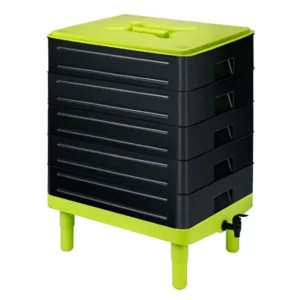
105L 5-Tray Vertical Worm Farm
Original price was: R6,299.R4,995Current price is: R4,995. Made to Order🪱 Large 105L volume vermicomposter!
🪱 5-tray stackable bin for recycling kitchen waste.
🪱 Includes auxiliary tools.
🪱 Suitable for both indoor and outdoor use. -
STS
 📜Reference
MicroFlow CFT | Continuous Flow-Through Vermicompost Starter Kit & Course
Original price was: R1,299.R749Current price is: R749. Read more🛠Handmade, Plug-and-Play Urban CFT Worm Bin.
🛠 Assembled Micro-Flow CFT with Bedding and retaining disc.
🛠 Red Wigglers & VermiBoost3 – to start and maintain a worm bin.
🛠 Includes full Continuous Flow-Through (CFT) Reactor Manual
Socratic Questions:
1. How do Red Wigglers’ natural feeding habits make them ideal for Continuous Flow-Through systems?
2. What critical dimensions are required for a high-capacity CFT worm box, and why are they important?
3. How does the “Layer-Feeding Routine” prevent overfeeding and ensure efficient vermicompost production?
4. Why is Spent Mushroom Substrate (SMS) considered a “trick” for accelerating composting in CFT bins?
5. What are the key differences between managing moisture for worm breeding versus easy casting harvesting in a CFT?