Contamination is not fundamentally a sterility problem—it is a nutrition problem.
Summary
This Lab Note introduces the Third Paradigm Shift: Selective Nutrition, the engineering principle that controls who can access nutrients rather than attempting to eliminate competing organisms. Through the integration of biochar, BAM! microbes, and advanced fermentation, we’ve engineered substrates that defeat contamination and deliver record yields—all without an autoclave. This is the journey from low-tech methods (“Tek”) to full systems engineering (“Teq”), culminating in the practical application of controlled biological systems.
Introduction
During the development of Biochar, BAM!, Super Bokashi and VermiLIN, a recurring pattern emerged. Every successful system shared one characteristic: nutrients were not merely present—they were selectively available.
As with all STS work, this is cutting-edge, empirical, and often bucks conventional scientific precedent.
The Evolution: From Tek to Teq
In the Bundu—where resources are scarce, contamination runs high, and the margin for error is razor-thin—our journey began with “Bundu Tek”: clever, low-cost ways to grow food and fungi. But “just sustainable” wasn’t enough. We needed performance from the waste stream, with the lowest possible overhead.
This led us from “Bundu Tek” (methods) to “Bundu Teq” (systems engineering). The heart of this transition is the Third Paradigm Shift: Selective Nutrition.
The Autoclave Dream—and Its Death
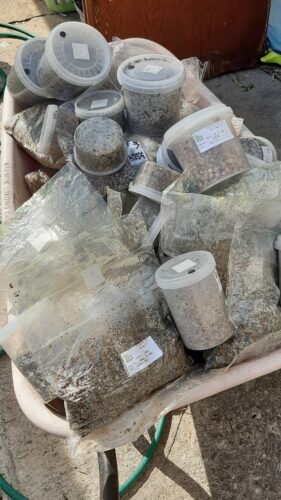
When I started mushroom cultivation, my holy grail was to make mushroom spawn without an autoclave. And we had to Pressure cook everything, from grain to wood, that grail got a name: Bundu Tek.
The Death of the Autoclave Dream
But the quest for a sterile vacuum (the “autoclave dream”) is a battle against nature itself::
Nature abhors a vacuum (horror vacui).
Every sterilized substrate represents an empty ecological niche, ripe for colonization. In the absence of deliberate biological occupation, nature will inevitably fill this vacancy with the most rapid and aggressive competitor present in the ambient environment, often at the expense of our desired cultivation.
Sterilization means any stray spore can claim the entire substrate. The more energy and money we poured into creating sterile conditions—pressure cookers, HEPA filters—the more we realized we were fighting, not collaborating with nature.
In the interim, I’ve mastered the use of super-pasteurization (using both hot and cold principles) with BioaKT. Thus, Bundu Tek was born: a way to double oyster yields using combined hot and cold pasteurization, with 0% contamination—even managing to grow Lion’s Mane on pine pellets – all without an autoclave.
The “Open Buffet” Principle
Traditional supplementation (raw bran, grain) is like leaving your front door open with a feast on the table. You want to feed your fungi, but you’re also inviting in every contaminant: moulds, bacteria, and more.
The usual response?
Spend even more resources on sterilization, or lower supplementation to “play it safe”—both at the cost of yield and resilience.
Bundu Tek proved we can grow on selective Carbon substrates – we flip the coin of the C/N – in Selective Nutrition we looking at Selective Protein [Nitrogen].
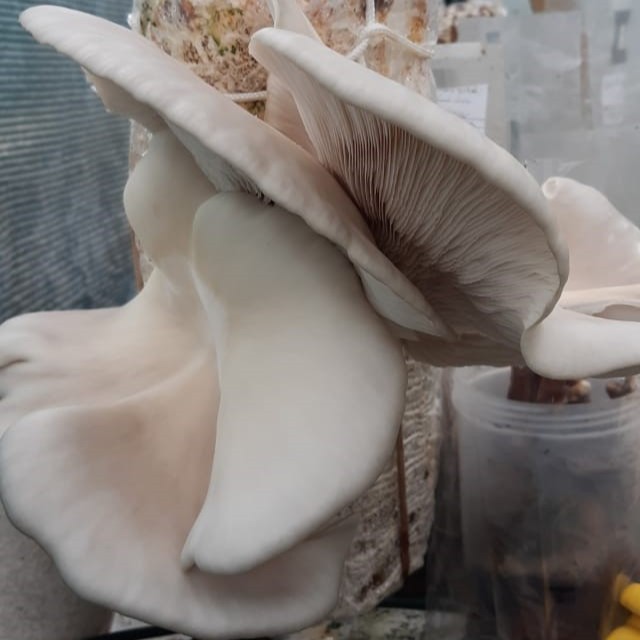
The Teq Solution: Engineer the Gate
Rather than trying to kill everything, we started engineering “the gate.”
Don’t just feed your crop—
decide who you feed.
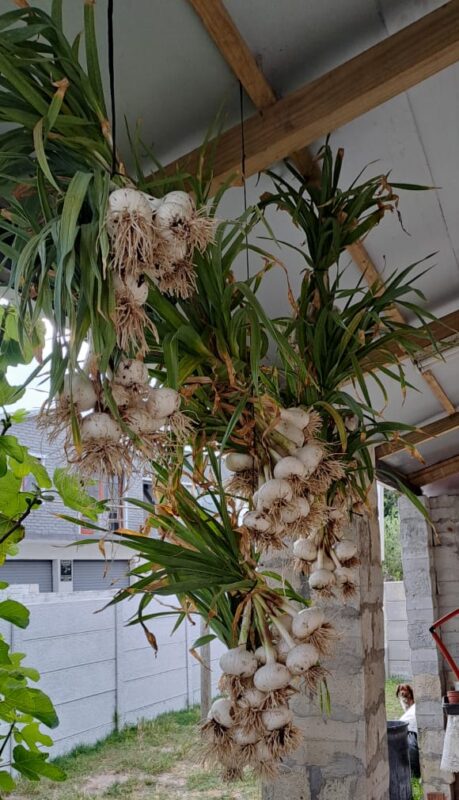
That’s where the paradigm shifts come in.
The First Two Paradigm Shifts
My sabbatical into organic hydroponics (vermicompost-based “vermi-ponics”) revealed the first two paradigm shifts:
- Mineralization: Plants can’t access organic nutrients until they’re mineralized by microbes into soluble forms.
- The Monera Bridge: Worms don’t eat waste—they eat the microbes breaking down that waste. In doing so, they pasteurize the microbial soup, packaging nutrients in a slow-release, humus-bound format.
These insights let us crack organic hydroponics and paved the way for the next leap.
What we found is that well fermented Vermicompost from our Continuous Flowthrough (CFT) systems do not go bad?
Even though the full soil Biome is present?
Why?
BAM! – Biological Active Microbes: The Invisible Engine
BAM! is the “missing link” in the organic cycle: a living, full-spectrum network of beneficial bacteria and fungi, produced by red wiggler worms and refined through our Continuous Flow-through (CFT) systems. Where commercial EM (Effective Microorganisms) are limited to a few carefully selected strains, BAM! (Biologically Active Microbes) represents a true soil biome—a complex, locally-adapted consortium of bacteria, fungi, and protozoa that cannot be replicated in a laboratory. This inherent systemic diversity provides the ‘high-torque’ and resilience needed for robust biological processing.
BAM! is both anaerobic and aerobic, with the worm gut acting as a biological selector and natural pasteurizer.
On a microscopic scale, however, the system is mind-bogglingly complex. It transcends simple bartering; the soil biome also secretes Plant Growth Hormones (PGHs) and specialized enzymes that fortify the plant against disease. This is the “Snake Oil” that made the transition from Tek to Teq possible.
The Third Paradigm Shift: Selective Nutrition
Contamination is fundamentally a nutrition problem.
Raw supplements are an “open buffet” for competitors. Instead, we use SSF, BAM!, and vermicompost fermentation to “lock” nutrients—turning them into a mineralized form only gourmet fungi, with their specialized enzymes, can access.
Traditional agriculture asks:
How do we provide more nutrients?
Selective Nutrition asks a different question:
Which organisms can actually use those nutrients?
This distinction changes everything.
By converting readily available sugars and proteins into biologically stabilized forms, nutrients remain present but become inaccessible to opportunistic contaminants. The desired organism possesses the enzymatic machinery required to unlock those nutrients, while competitors encounter a biological vault rather than an open buffet.
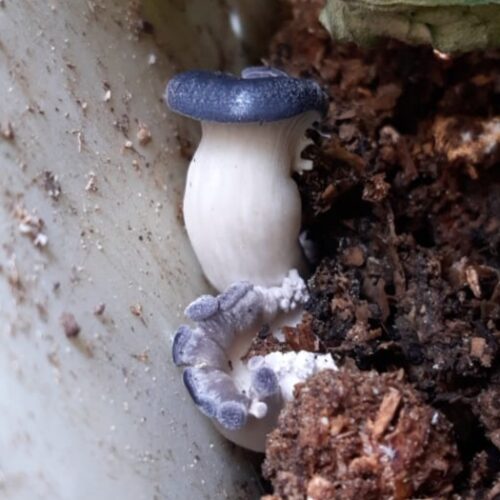
Contamination is therefore not eliminated through sterilization—it is prevented through nutritional engineering.
Proof: The 340g Oyster
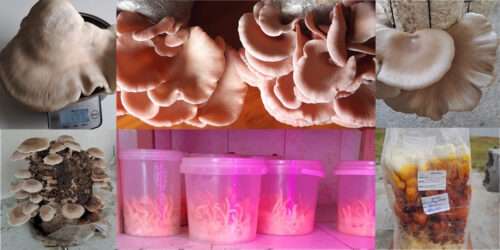
When we stopped using raw supplementation and started fermenting chicken manure pellets (CMP) with vermicompost, blending with pine pellets, and prepping using Bundu Tek, the results spoke for themselves:
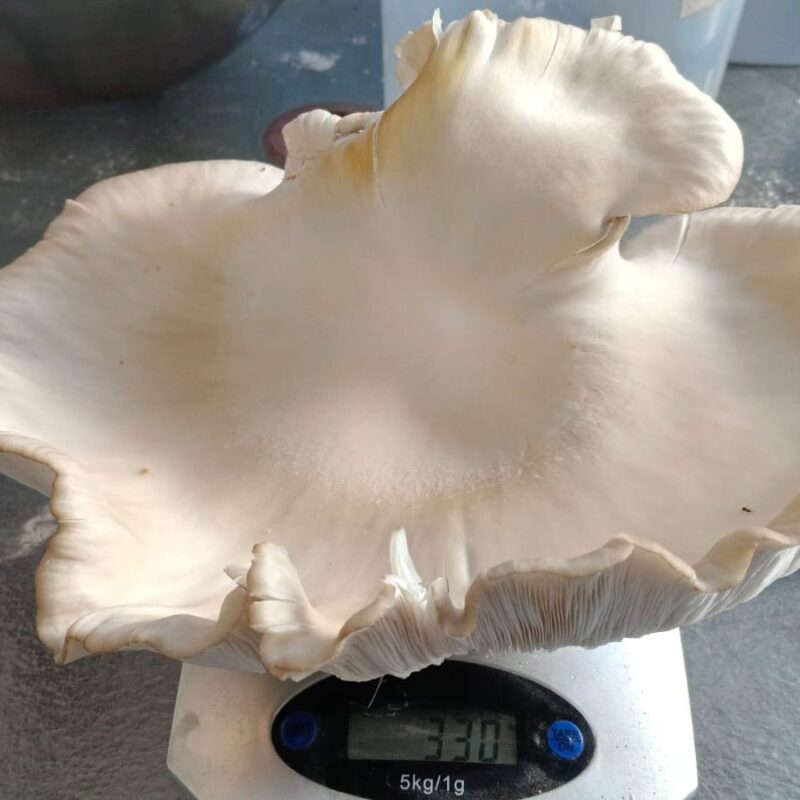
- A single White Oyster mushroom weighing 330g (almost 30% increase over our previous record of 260g on straw with SSF).
- The substrate achieved an impressive nitrogen content (equivalent to a 6.5% protein base, comparable to traditional Master’s Mix), yet, thanks to the principles of Selective Nutrition and Bundu Tek preparation, there was zero contamination..
- The Monera-refined substrate was a “locked gate”—nutrients available only to fungi with the right enzymes.
By fermenting the CMP manure anaerobically using our own Vermicompost as an inoculant, we transformed a “dirty” nitrogen source into a stabilized, fungal-ready fuel. This proved the 3rd Paradigm Shift!
What makes this work is the enzymatic superiority of the mushroom mycelium. While most contaminant molds and bacteria are geared toward rapidly devouring simple sugars and raw proteins, mushroom mycelium comes equipped with a powerful toolkit of proteases, lignocellulases, and chitinases. In essence, the bacteria and fungi of the BAM! do the heavy pre-digestion and mineralization of the nutrients, but only the mycelium holds the master key to the final vault. Contaminants are left staring at a locked gate with an empty plate.
Bundu Teq: The High-Torque Revolution
Bundu Teq is the practical application of the three paradigm shifts across the biological kingdoms of Monera, Plantae and Fungi. Rather than expending vast resources engineering sterility, Bundu Teq engineers biological occupancy and selective nutrient access. This leverages the natural competitive advantages of our target organisms, allowing them to dominate the niche by design, creating systems that are inherently more resilient, less energy-intensive, and truly self-sustaining.
In such a well-orchestrated environment, there is simply no space—and no incentive—for invaders to take hold.
Conclusion: Engineering for Independence
For over a century, contamination has largely been treated as a sterilization problem.
Selective Nutrition proposes a different engineering philosophy.
Rather than attempting to eliminate every competing organism, we engineer environments where only the intended biology can efficiently access available resources.
The goal is not sterile systems.
The goal is selective systems.
That distinction marks the transition from Bundu Tek—a collection of clever techniques—to Bundu Teq, a coherent framework for engineering living biological systems.
-
STS
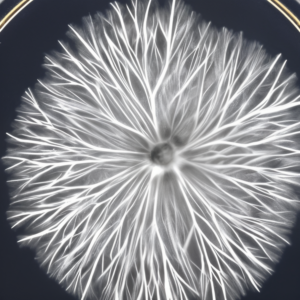
RIA Rhizomorphic Induction Agar – 190g – XA-Midnight
Original price was: R750.R350Current price is: R350. Add to basket🧫 RIA Nutrient Agar premix.
🧫 Engineered for Rhizomorphic Induction.
🧫 Why settle for Tomentose “fluff” when you can have “ropes”?
🧫 XA-Gel Tek with Carbon – makes 7 litres. -
STS

Heavy-Duty 300mm PE Layflat Tubing (75 Micron, Per Meter)
Original price was: R12.R10Current price is: R10. Add to basket🧫Premium 75-Micron Heavy-Duty Gauge
🧫300mm wide, Continuous Seamless Design
🧫Sold per meter.
🧫High-Clarity Low-Density Polyethylene (LDPE) -
STS
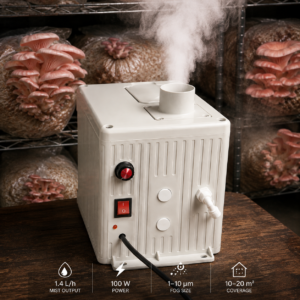
STS 1.4kg/h Industrial Ultrasonic Humidifier – Variable Fan
Original price was: R6,999.R5,599Current price is: R5,599. Add to basket🧫Industrial 24/7 Stainless Steel Ultrasonic Discs
🧫High-Volume 1.4kg/Hour Fog Output
🧫Integrated Variable Fan Speed Control
🧫Ruggedized Corrosion-Proof ABS Chassis -
STS
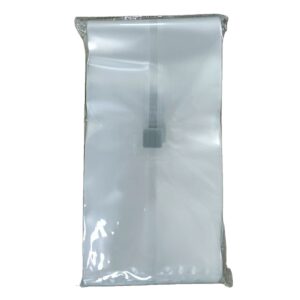
10x8x50cm Gusseted Spawn Bag, Injection Port – SHIP, 0.2μm Filter Patch
Original price was: R375.R269Current price is: R269. Add to basket🧫 Commercial-Grade 60 Micron Polypropylene
🧫 Factory Heat-Sealed Silicone Injection Port
🧫 Bacterial-Grade 0.2µm Filter Patch
🧫 Pre-Packed – 10 spawn bags
Socratic Questions
- Why do mushroom substrates contaminate even after sterilization?
- What is Selective Nutrition in mushroom cultivation?
- How do you prevent Trichoderma without sterilization?
- Can fermentation replace sterilization in mushroom growing?
- Why is Selective Nutrition a paradigm shift in mycology?