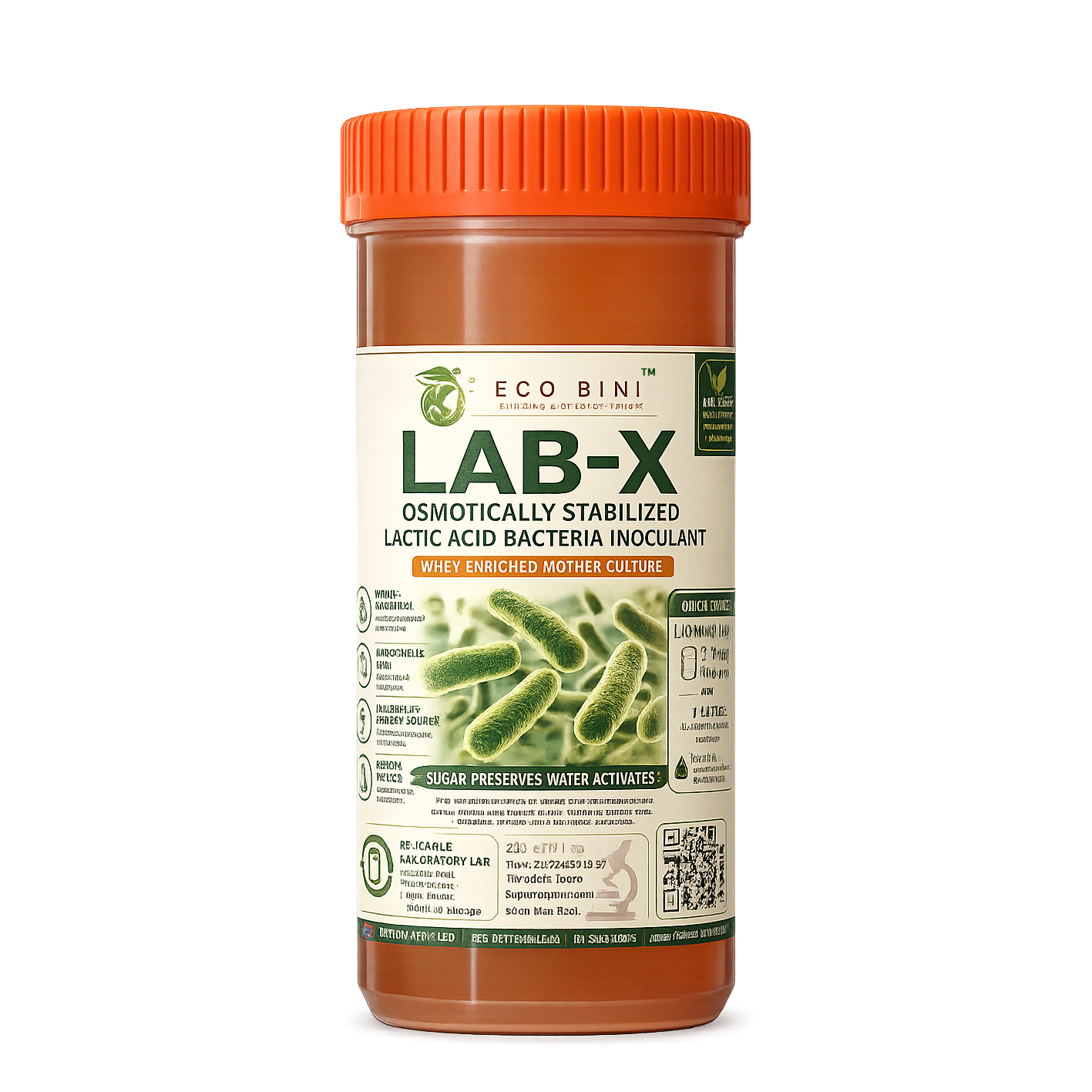
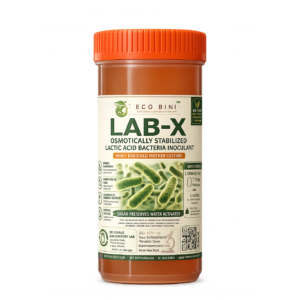
Eco Bini™ LAB-X: Nature’s preservation specialists, harnessing potent Lactic Acid Bacteria with Essential Minerals (270ml)
Unlock Nature’s Fermentation Engine with LAB-X.
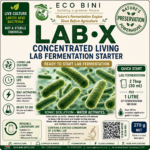
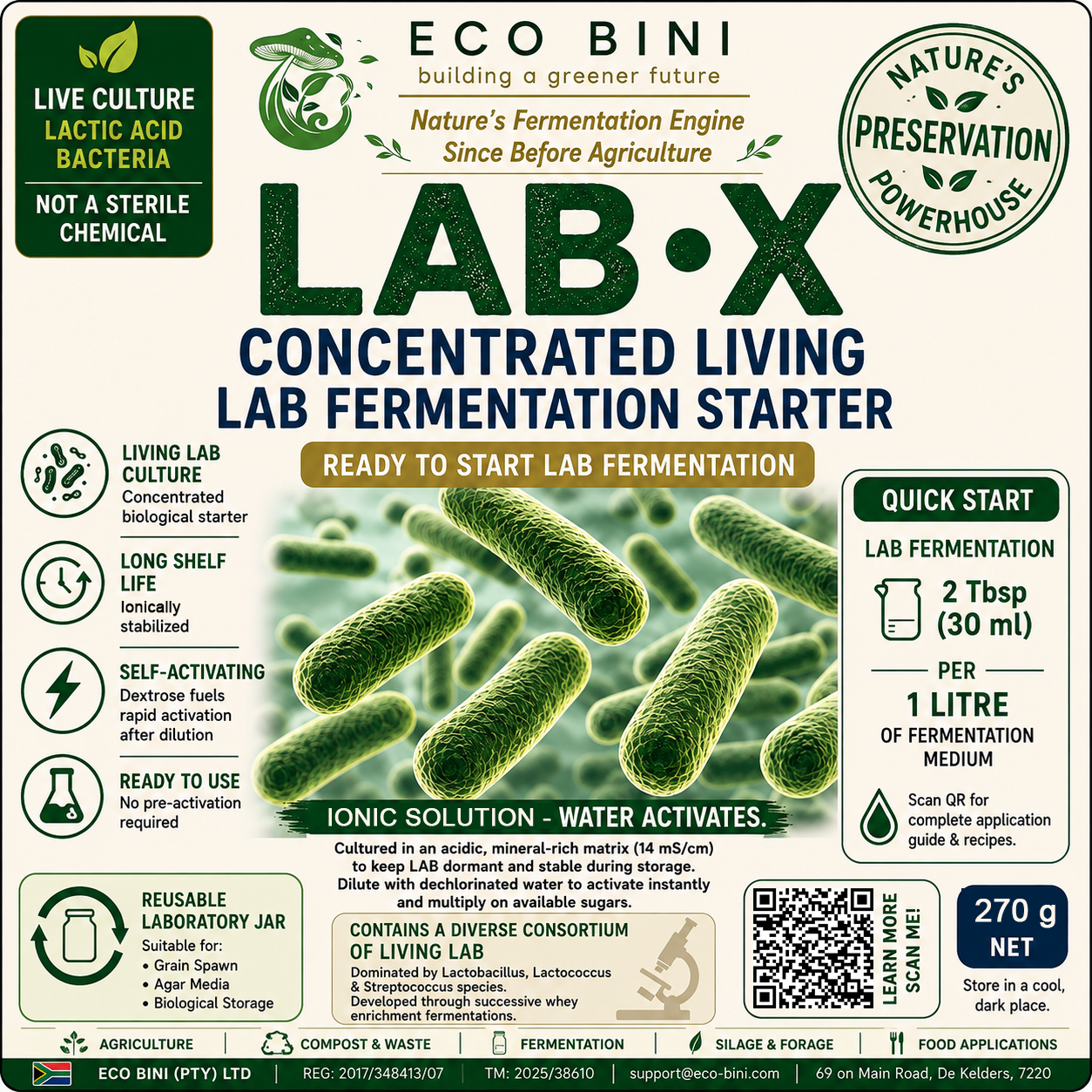
LAB-X is a concentrated, living consortium of Lactic Acid Bacteria (LAB) developed for applications where controlled biological fermentation is the objective.
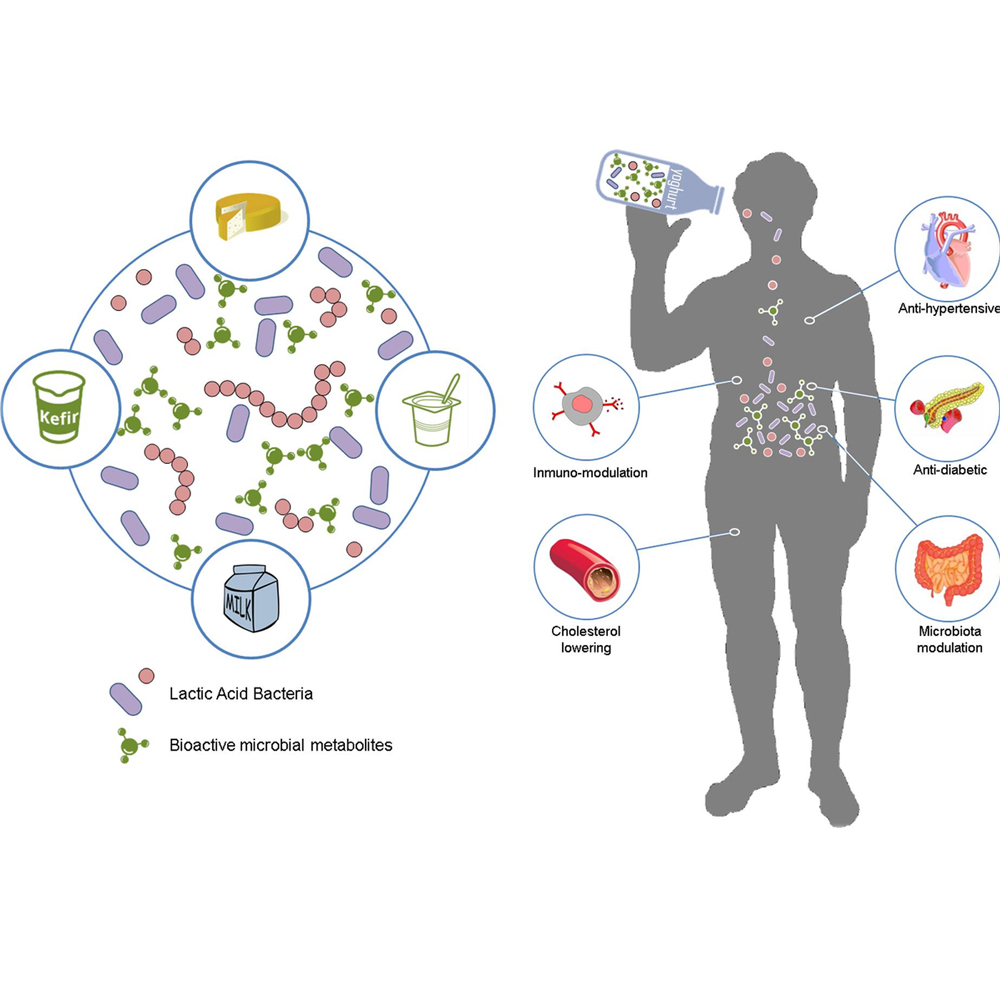
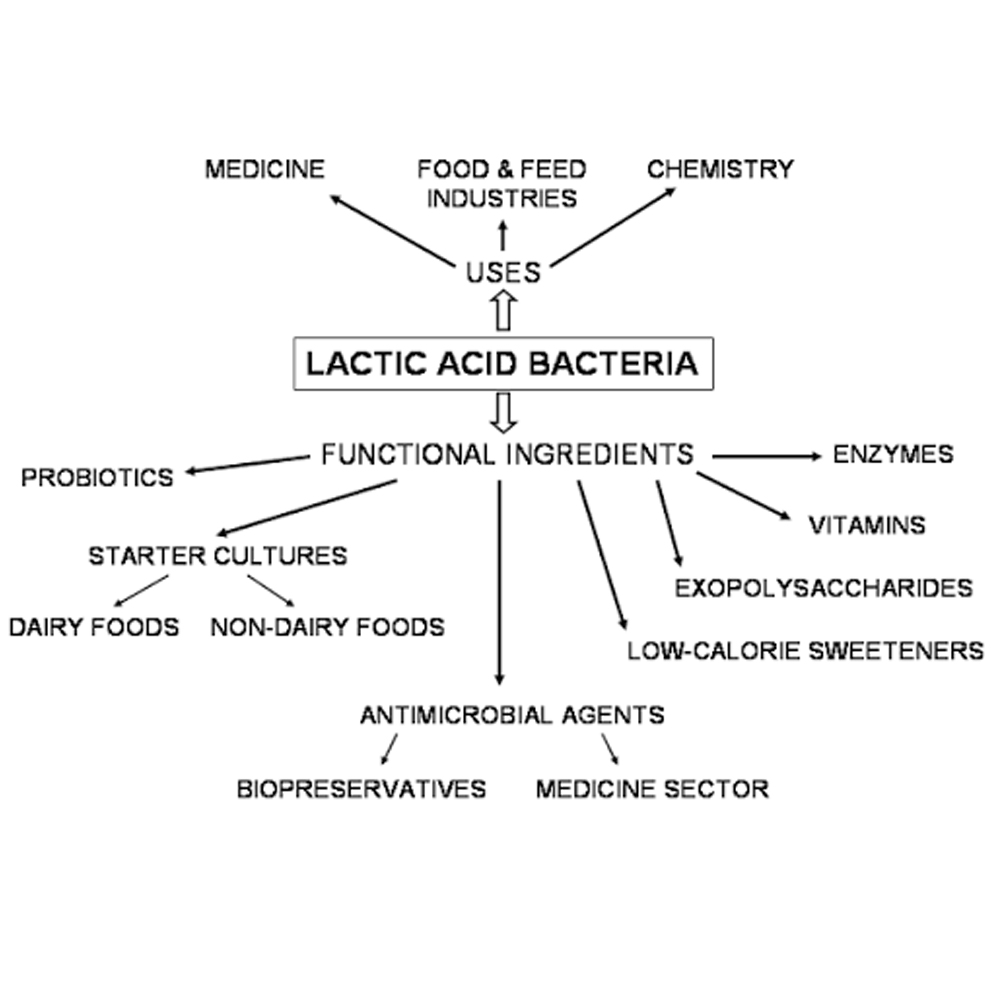
LAB are nature’s preservation specialists. They consume readily available carbohydrates and convert them primarily into lactic acid, rapidly shifting their environment toward acidity. This simple biological mechanism is responsible for some of the world’s oldest fermentation processes — from yoghurt and cheese to sauerkraut, kimchi, sourdough and silage.
LAB-X puts that fermentation engine into a concentrated, ready-to-use biological inoculant.
Developed through successive enrichment of LAB from a parent microbial culture, LAB-X is maintained as an acidic, high-density culture designed for practical application across soil, composting, Bokashi, organic waste treatment and fermentation systems.
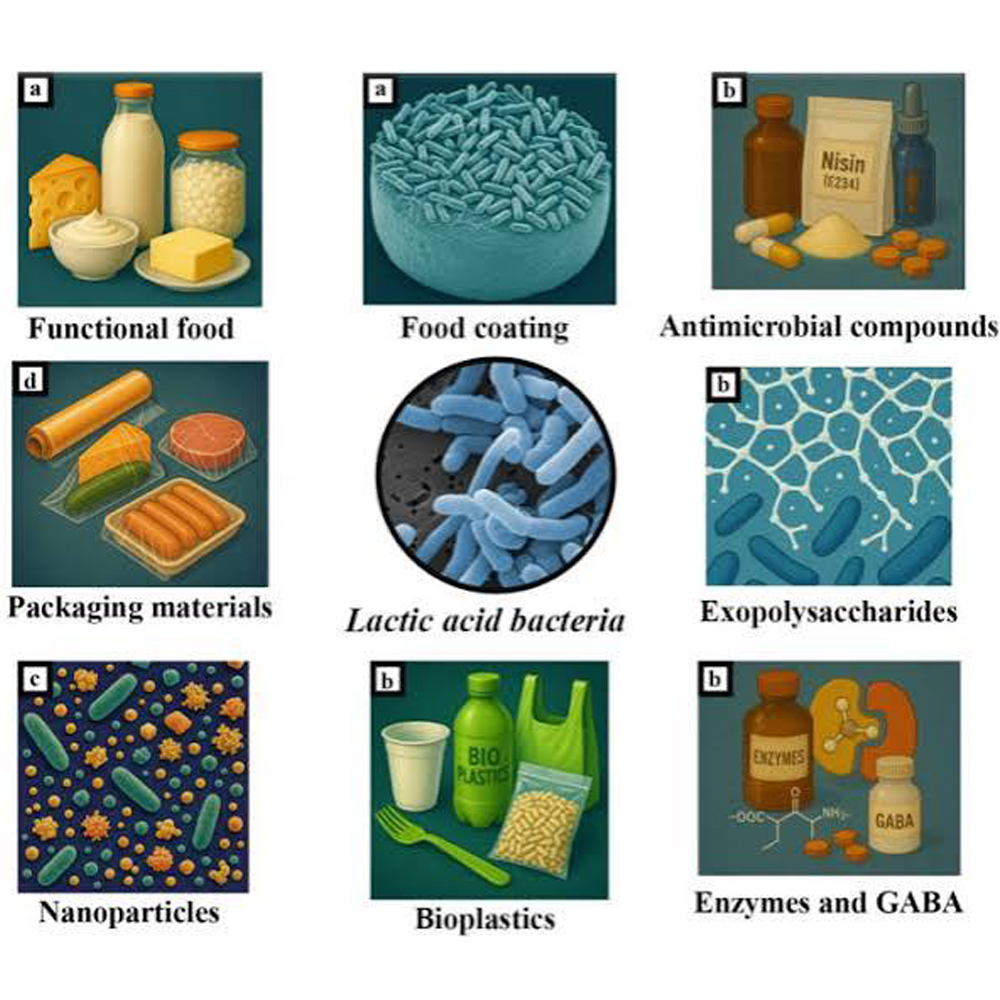
One Culture. Many Biological Applications.
Use LAB-X to:
- 🧫 Start and steer biological fermentations
- 🌱 Inoculate the soil and rhizosphere
- ♻️ Condition compost and organic waste
- 🪣 Drive Bokashi fermentation
- 🌾 Support forage and silage fermentation
- 💧 Assist biological odour management
- 🧪 Explore advanced biological and biomineralisation applications
LAB-X is particularly useful where the objective is to replace uncontrolled putrefactive decomposition with controlled acid fermentation.
Unlike a conventional chemical preservative, LAB-X works biologically: the microorganisms themselves generate the acidic environment that favours fermentation and discourages many undesirable spoilage organisms.
A Living Culture — Not Just Lactic Acid
LAB-X contains living LAB together with the organic acids and fermentation products generated during cultivation. When diluted with suitable water, the bacteria can return to active metabolism and utilize available carbohydrates within the target environment.
Always use dechlorinated water when activating LAB-X.
For detailed information on the LAB consortium, activation, application rates, food applications and experimental uses, see the three technical tabs below.
Why LAB-X?
Concentrated — A little goes a long way.
Living — Contains a functional consortium of lactic acid bacteria rather than simply purified lactic acid.
Versatile — From Bokashi and compost to soil, fermentation and silage.
Biological — Uses microbial fermentation rather than synthetic preservation chemistry.
Stable — Formulated as an acidic preserved culture for practical storage and handling.
LAB-X
Why Lactic Acid Bacteria?
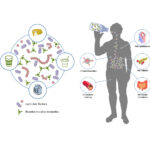
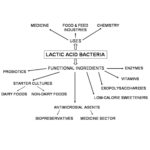
Lactic acid bacteria are nature’s preservation specialists. By rapidly converting sugars into organic acids, they lower pH and create conditions that favour beneficial fermentation while discouraging many spoilage and putrefactive microorganisms. This simple biological strategy has been used for thousands of years in the production of yoghurt, cheese, sauerkraut, kimchi, silage, and sourdough. LAB-X harnesses this same natural fermentation engine for modern biological applications, providing a reliable, high-density starter culture for agriculture, composting, biological waste management, and fermentation-based production systems.
Expected LAB-X Consortium:
LAB-X is developed by enriching the lactic acid bacteria naturally present within the parent microbial culture through successive whey enrichment fermentations. The resulting consortium is expected to be dominated by species commonly associated with traditional whey fermentations, including members of the genera Lactobacillus, Lactococcus, and Streptococcus.
| Species |
Traditional Role & Specialty |
| Lactobacillus acidophilus |
Classic dairy fermenter recognised for vigorous lactic acid production. |
| Lactobacillus bulgaricus |
Traditional yoghurt culture with rapid milk acidification. |
| Lactobacillus casei |
Widely used in cultured dairy and cheese fermentations. |
| Lactobacillus delbrueckii |
Efficient dairy fermenter commonly associated with cultured milk products. |
| Lactobacillus fermentum |
Frequently associated with cereal, vegetable and sourdough fermentations. |
| Lactobacillus plantarum |
Well known for vegetable, silage and traditional fermented meat production. |
| Lactococcus diacetylactis |
Produces flavour compounds that add complexity during dairy fermentation. |
| Lactococcus lactis |
One of the world’s principal cheese and buttermilk starter cultures. |
| Streptococcus thermophilus |
Works synergistically with L. bulgaricus during traditional yoghurt fermentation. |
Although the relative abundance of individual species may vary naturally between production batches, the consortium is expected to remain dominated by lactic acid bacteria adapted to rapid acid production. Working collectively, these organisms establish favourable conditions for beneficial fermentation while suppressing many undesirable putrefactive microorganisms responsible for biological spoilage and offensive odours.
Application
How It Works:
LAB-X is a concentrated consortium of cultured Lactic Acid Bacteria operating under self-generated acidic stasis. Through active lactic fermentation, the culture drives its own environment down to a high acidity (pH < 3.5) medium, entering a natural metabolic pause where putrefactive bacteria cannot survive. In this concentrated, highly acidic form, the microbes remain dormant and stable. Essential minerals, ionic strength of 14mS/cm, aid LAB to maintain a dormant state. Upon dilution with dechlorinated water, the acid concentration drops to operating levels, waking the bacteria instantly to multiply on free sugars in the intended matrix.
⚠️ IMPORTANT NOTICE ON WATER QUALITY:
IMPORTANT NOTICE ON WATER QUALITY: LAB-X is a living consortium of Lactic Acid Bacteria. Care must be taken regarding the water used for dilution. Municipal tap water contains chlorine or chloramines, which will kill the live bacteria. Always use dechlorinated water. You can remove chlorine using three simple methods:
- Static Degassing: Leave water in an open bucket overnight (16–24 hours) for the chlorine to naturally degas.
- Aeration: Use a standard aquarium air pump and airstone to drive off chlorine rapidly within 4–6 hours.
- Thermal / Heat: Boiling water drives off all dissolved gases.
Note: Ensure the water is completely cooled to ambient temperature before adding LAB-X, as heat will kill live lactic acid bacteria.
Applications & Usage Guide
🛡 Biological Fermentation
- LAB Starter Culture (Mother Stock Expansion)
- Purpose: Establishing a dominant, active lactic-acid fermentation for botanical extracts, organic substrates, and biological processes.
- Application Rate: Two Tablespoons (30 ml) LAB-X per litre of dechlorinated water – plus your targeted carbon source (eg 2% brown Sugar) dissolved in.
- Fermented Plant Extracts (FPE) & Botanical Tonics
- Purpose: Stabilizing and extracting soluble bio-compounds from fresh plant material (such as comfrey, nettle, culinary herbs, and garlic).
- Application Rate: Use Tablespoon (15 ml) LAB-X per kg of chopped plant material, alongside your carbon/sugar source to kickstart rapid enzymatic breakdown.
- Bokashi Bran
- Purpose: Inoculating dry carrier material (bran, sawdust, or chaff) for Bokashi fermentation.
- Application Rate: Dilute two Tablespoons (30 ml) LAB-X per litre of dechlorinated water, with carbon/sugar source, then mix thoroughly with the bran to reach the desired moisture content.
- Kitchen / Waste Bokashi
- Purpose: Rapid lactic fermentation of kitchen scraps and organic waste while suppressing putrefactive decomposition and associated odours.
- Application Rate: Approximately one teaspoon (5 ml) LAB-X per kg of organic waste.
Add Waste to bin, spread required LAB-X over scraps, compress to expel air and reseal bin.
🌱 Living Soil & Plant Health
- Soil Drench — Rhizosphere Microbial Inoculation
- Purpose: Introducing active LAB into the soil/rhizosphere matrix to support beneficial microbial networks and biological nutrient cycling.
- Application Rate: Teaspoon (5 ml) LAB-X per litre of dechlorinated water. Apply directly to the root zone every 2–4 weeks.
- Foliar Microbial Application
- Purpose: Applying LAB and its acidic fermentation metabolites to leaf surfaces as a biological conditioning treatment.
- Application Rate: Teaspoon (5 ml) LAB-X per litre of dechlorinated water. Apply as a fine foliar spray during cooler parts of the day (early morning or late afternoon).
- Seed Inoculation / Pre-Soak
- Purpose: Introducing beneficial lactic-acid bacteria to seeds during pre-sowing hydration.
- Application Rate: Teaspoon (5 ml) LAB-X per 10 litres of dechlorinated water. Soak seeds for up to 12 hours prior to planting.
♻️ Compost & Waste Management
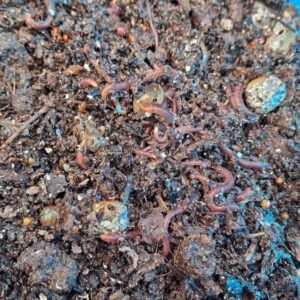
- Compost & Worm Farms
- Purpose: Inoculating composting and vermicomposting systems with robust microbial activity while mitigating putrefactive odours.
- Application Rate: One teaspoons (5 ml) LAB-X per litre of dechlorinated water. Apply sufficiently to thoroughly moisten the organic material.
- Organic Waste & Odour Control
- Purpose: Acidifying fermentable organic residues to suppress the conditions responsible for rotting, decay, and unpleasant smells.
- Application Rate: 5–10 ml LAB-X per litre of dechlorinated water. Spray directly onto problem areas.
- Drains & Grease Traps
- Purpose: Biological conditioning and organic breakdown of accumulated residues in household or commercial drainage systems.
- Application Rate:
- Septic Tank: One tablespooms (15 ml) LAB-X per Toilet Cistern. Flush down the system before low-use hours (e.g. overnight).
- Heavy Duty Deodorizing: Dilute three Tablespoons (45ml) of LAB-X per 1-Litre of water. Apply generously via a pressure sprayer directly onto problem areas, foul-smelling heaps, or animal pens.
🌾 Forage & Silage Fermentation
- Purpose: LAB are a standard industrial inoculant for ensiling green forage. They accelerate lactic-acid fermentation, rapidly drop pH, and suppress undesirable fermentation pathways (such as butyrate production and ammonia generation).
- Application Rate: Established research commonly targets approximately 10⁵–10⁶ viable LAB CFU per gram of fresh forage.
🧪 Research & Experimental Applications
LAB and lactic-acid fermentation pathways are actively researched across advanced agricultural and industrial sectors, including:
- Biochar as a microbial carrier and immobilization matrix
- Lignocellulosic biomass conditioning and pre-treatment
- Enhanced anaerobic digestion for organic-waste systems
- Biological mineral processing and rock dust solubilization
- Calcium-carbonate dissolution and microbial-induced biomineralization
- Bio-based cement and construction-material research
Note: While these are legitimate scientific fields, LAB-X-specific application rates and protocols for these extreme industrial niches have not been formally standardized by SPeS. They are listed here for advanced R&D and experimental exploration.
Food
Proper Inoculation Guidelines for Food
When utilizing a concentrated LAB serum like LAB-X for kitchen/food applications, you use it as a starter inoculant rather than a heavy drench:
- Vegetable Lacto-Fermentation (Sauerkraut, Pickles, Kimchi):
- Rate: Instead of a liquid spray, you typically rely on the wild epiphytic LAB already present on the vegetable surface, supported by a 2% to 2.5% dry salt-by-weight ratio.
- Using LAB-X as a jump-starter: If you want to kickstart a stubborn vegetable ferment or speed up acidification, use no more than 1 ml to 2 ml of LAB-X per kilogram (1 kg) of prepared vegetables (dissolved in your brine water). This gives the beneficial strains a head start without overpowering the taste.
- Meat Lacto-Fermentaion (Salami/Pepperoni)
- Rate: Add LAB-X, along with a simple sugar like dextrose, typically 0.5% to 1% of the meat weight (5-10 g/ml per kg)
- Sourdough Inoculation / Enhancements:
- Rate: Traditional sourdough relies on capturing wild flours’ native microbes. If experimenting with a LAB boost in a pre-ferment or poolish, you would use a microscopic amount—roughly 0.5 ml to 1 ml per 500 g of flour/water mix—strictly to introduce the lactic acid profile, keeping a close eye on yeast activity so the heavy acid doesn’t inhibit your rise.
The Golden Rule: In agriculture, you want to overwhelm the system with biology to steer decay. In food, you are orchestrating a precise biochemical recipe—start small, let the microbes multiply naturally, and let time do the heavy lifting!



Reviews
There are no reviews yet.