Precision nutrient management with PPM, EC, and pH is your key to thriving soil-less gardens.
Summary
Dive into the science behind feeding plants without soil. This guide demystifies the Hoagland Solution, macro- and micronutrients, and the critical role of PPM, EC, and pH. Learn practical steps to measure, adjust, and maintain your nutrient solution, ensuring your plants receive the exact diet they need for vigorous growth, robust health, and abundant yields. Move beyond guesswork to truly professional-grade hydroponics.
The Problem: When Water-Only Becomes a Challenge
Hydroponics offers incredible control and efficiency, eliminating many soil-borne issues and often leading to faster growth with less water. However, this precision comes with significant responsibility. When you remove soil from the equation, you also remove its natural ability to buffer nutrients, regulate pH, and provide a stable environment for roots. In a hydroponic system, you become the soil’s manager. This means every single nutrient your plant needs must be precisely dissolved in your water.
The core challenge is maintaining this delicate balance. If your nutrient solution is too weak, plants will suffer from deficiencies, showing signs like yellowing leaves or stunted growth. They are, quite simply, starving. Conversely, if the solution is too concentrated, you risk nutrient burn, root damage, or nutrient lockout – where nutrients are present but unavailable due to osmotic stress..
Perhaps the most critical, yet often overlooked, factor is the pH – the acidity or alkalinity of your nutrient solution. Plants are incredibly sensitive to pH because it directly dictates which nutrients they can absorb. Even if your solution contains all the right elements in the correct concentrations, an incorrect pH will render many of them inaccessible to the plant’s roots. It’s like serving a gourmet meal that your plants simply cannot digest. Without a clear understanding and diligent management of PPM, EC, and pH, your hydroponic system can quickly transform from a promising venture into a source of frustration, with struggling plants.
The Principle: The Plant’s Precise Diet and Its Measurable Indicators
The very idea of growing plants without soil, what we now call hydroponics, was pioneered by Professor William Frederick Gericke at the University of California, Berkeley, in 1929. His groundbreaking work demonstrated that plants could thrive in water if all their essential nutrients were dissolved in it. Building on this revolutionary concept, his colleague, Dennis R. Hoagland, also at Berkeley, developed what became known as the Hoagland Solution in 1933. This specific formulation precisely defined the balanced ratios of the essential mineral nutrients required for optimal plant growth, quickly becoming the “Gold Standard” for hydroponic nutrient solutions globally. Every commercial hydroponic nutrient formulation available today is, in essence, a variation or refinement of the Hoagland Solution’s fundamental principles.
The core principle in hydroponics is that plants can only absorb nutrients if they are water-soluble.
In hydroponics, plants can only absorb nutrients if they are water-soluble. Unlike soil, where a complex soil food web breaks down organic matter, hydroponics requires nutrients to be immediately available as dissolved salts. This avoids issues like nutrient lockout caused by microbial activity or organic breakdown that can fluctuate pH or bind nutrients in soil.
1. Macronutrients and Micronutrients: What We Are Measuring
The total dissolved salts measured by EC/PPM comprise all the essential mineral elements your plants need. These are broadly categorised:
Macronutrients: These are the primary elements plants need in larger quantities. They form the foundation of plant growth, supporting structure, photosynthesis, and reproduction. Key macronutrients include Nitrogen (N), Phosphorus (P), Potassium (K), Calcium (Ca), Magnesium (Mg), and Sulfur (S). Each plays a distinct role, and imbalances lead to specific deficiency or toxicity symptoms.
Micronutrients: These are needed in tiny amounts but are absolutely vital for enzyme functions, hormone production, and overall plant health. Deficiencies are common in hydroponics if pH imbalances occur, as these can easily lock out trace elements. Key micronutrients include Iron (Fe), Manganese (Mn), Copper (Cu), Zinc (Zn), Boron (B), Molybdenum (Mo), and Chlorine (Cl).
The goal is to provide a balanced profile of all these nutrients, and EC/PPM tell us the total concentration of these dissolved elements.
Beneficial trace elements like Nickel, Selenium, or Silica are sometimes included in advanced formulations or can be absorbed foliarly, but the 15 essential elements (13 nutrients plus Carbon, Hydrogen, Oxygen) are the core focus.
Measuring Nutrient Strength: EC (Electrical Conductivity) and PPM (Parts Per Million)
Nutrient strength must be continuously monitored to prevent under- or over-feeding. These measurements quantify the total dissolved salts (nutrients) in your solution.
EC (Electrical Conductivity): This is the more precise and scientifically preferred measurement. Pure water conducts very little electricity. When mineral salts (your hydroponic nutrients) dissolve, they release ions that conduct electricity. The more dissolved salts, the higher the electrical conductivity. EC is typically measured in milliSiemens per centimetre (mS/cm) or deciSiemens per metre (dS/m).
PPM (Parts Per Million): This is a measure of the mass of dissolved solids per million parts of water. While often easier for beginners to understand, it’s derived from EC and can vary significantly depending on the conversion factor used by the meter manufacturer. Common scales are the 500 scale (EC 1.0 = 500 PPM) or the 700 scale (EC 1.0 = 700 PPM).
For consistency and accuracy, especially when comparing notes or following professional guides, using EC is highly recommended.

Why are they important? Different plants and different growth stages require varying nutrient concentrations.
Low EC/PPM: Leads to nutrient deficiencies, slow growth, and poor yields.
High EC/PPM: Causes nutrient burn, root damage, and potential nutrient lockout due to osmotic pressure, where water is pulled out of the roots.
4. pH (Power of Hydrogen): The Nutrient Gateway
Which brings us to the final, vital aspect of all aqueous solutions in hydroponics: pH. pH is a scale from 0 to 14 that measures the acidity or alkalinity of a liquid. A pH of 7 is neutral (like pure water), numbers below 7 are acidic (like lemon juice), and numbers above 7 are alkaline or basic (like soap). Each step on the scale represents a tenfold change in acidity or alkalinity.
Why is it critical?
- This is the ultimate gatekeeper for nutrient uptake. Even if your EC/PPM is perfectly balanced, an incorrect pH will make essential nutrients unavailable to your plants. Each nutrient has a specific pH range where it remains soluble and can be absorbed by the roots.
- The optimal pH range for most hydroponic plants is generally 5.8 to 6.2. This slightly acidic range allows for maximum uptake of the widest spectrum of macro- and micronutrients.
- For example, at a high pH (e.g., above 6.5), iron and manganese can become insoluble and “lock out,” even if present in the solution. At a very low pH (e.g., below 5.0), phosphorus and calcium availability can decrease.
- When a plant shows symptoms of nutrient deficiency, the very first thing to check is often the pH of your solution. Correcting the pH can often resolve apparent deficiencies without adding more nutrients.
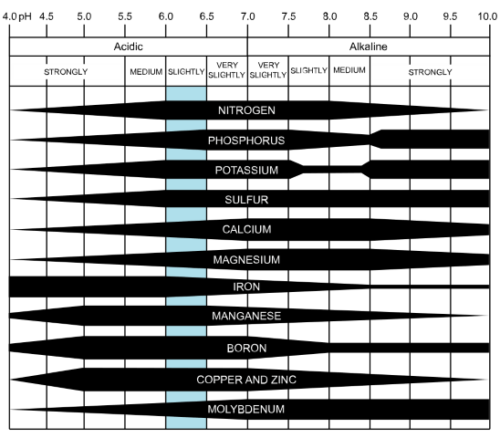
Plant nutrient requirements:
A generic table for hydroponic cultivation crops:
| Crop | EC (dS/m) | TDS (ppm) |
| Asparagus | 1.4 to 1.8 | 896 to 1,152 |
| African Violet | 1.2 to 1.5 | 768 to 960 |
| Basil | 1.0 to 1.6 | 640 to 1,024 |
| Beans | 2.0 to 4.0 | 1,280 to 2,560 |
| Bananas | 1.8 to 2.2 | 1,152 to 1,408 |
| Broccoli | 2.8 to 3.5 | 1,792 to 2,240 |
| Cabbage | 2.5 to 3.0 | 1,600 to 1,920 |
| Celery | 1.8 to 2.4 | 1,152 to 1,536 |
| Carnation | 2.0 to 3.5 | 1,280 to 2,240 |
| Cucumber | 1.7 to 2.0 | 1,088 to 1,280 |
| Eggplant | 2.5 to 3.5 | 1,600 to 2,240 |
| Ficus | 1.6 to 2.4 | 1,024 to 1,536 |
| Leek | 1.4 to 1.8 | 896 to 1,152 |
| Lettuce | 1.2 to 1.8 | 768 to 1,152 |
| Pak Choi | 1.5 to 2.0 | 960 to 1,280 |
| Peppers | 0.8 to 1.8 | 512 to 1,152 |
| Parsley | 1.8 to 2.2 | 1,152 to 1,408 |
| Rhubarb | 1.6 to 2.0 | 1,024 to 1,280 |
| Rose | 1.5 to 2.5 | 960 to 1,600 |
| Sage | 1.0 to 1.6 | 640 to 1,024 |
| Spinach | 1.8 to 2.3 | 1,152 to 1,472 |
| Strawberry | 1.8 to 2.2 | 1,152 to 1,408 |
| Tomato | 2.0 to 4.0 | 1,280 to 2,560 |
| Zucchini | 1.8 to 2.4 | 1,152 to 1,536 |
Conclusion: Cultivating with Precision
Mastering PPM, EC, and pH is the bedrock of successful hydroponics. It’s not merely about adding chemicals to water; it’s about understanding the intricate dietary needs of your plants and providing them with a perfectly tailored meal ticket. This level of precision moves you beyond basic gardening into the realm of biological engineering, where you have direct control over your plants’ environment.
While it may seem technical at first, the routine of measuring and adjusting quickly becomes intuitive. You’ll develop a keen eye for what your plants need, and you’ll possess the tools to respond effectively. This diligence translates into healthier, more resilient plants, fewer problems with pests and diseases, and ultimately, more abundant and higher-quality harvests. By embracing the science of nutrient management, you’re not just growing plants; you’re cultivating life with expertise and pride, building a truly sustainable and productive hydroponic system.
-
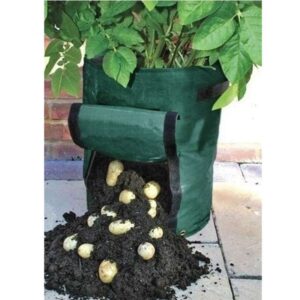
Potato Grow Bag – Heavy Duty (38L) with Harvest Flap
R149 Add to basket🌱 Grow Potatoes anywhere!
🌱 UV-resistant 38L bag with easy-harvest flap.
🌱 Reinforced handles, and aeration holes.
🌱 Ideal for small urban spaces. -
STS
Alpha & Omega [Kratky & Passive Hydro] Nutrient Kit – 2x 500ml
Original price was: R195.R95Current price is: R95. Add to basket🛠 Dual-part liquid Kratky hydroponic nutrient concentrates
🛠 Refined Hoagland solution pre-dissolved in 2x 500ml UV-opaque white bottles
🛠 perfect for passive indoor herb gardens — Just Dose and Grow -
STS
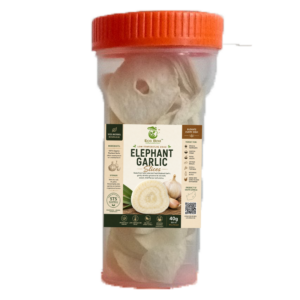
Dried Fermented Elephant Garlic Slices – Sweet, Mild Flavour (40g)
Original price was: R115.R95Current price is: R95. Add to basket🧄Organic Elephant Garlic
🧄Low-temp dried gourmet slices
🧄Naturally sweet & mild
🧄Small-batch South African -
STS
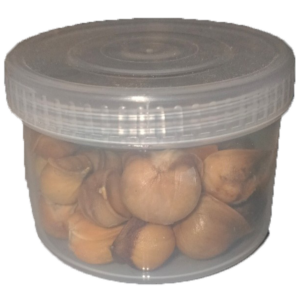
Kashmiri Pearl Poppers & Fermented SAC Extract (300g)
Original price was: R349.R245Current price is: R245. Add to basket🍽️ Lacto-fermented Kashmiri corms in active brine
🍽️ High-potency bio-available S-allyl-cysteine
🍽️ Crunchy whole corms with SAC postbiotic tonic
🍽️Pure shelf-stable dual-action garlic elixir
Socratic Questions (5 Search Terms):
- What is the Hoagland Solution for hydroponics?
- How do I calculate PPM and EC for lettuce?
- What are the 15 essential elements for plant growth?
- How to balance hydroponic macronutrients and micronutrients?
- What is the best nutrient ratio for soil-less gardening?