Master Peracetic Acid (PAA) for hospital-grade cold sterilization without toxic residues or resistance issues.
Summary
This guide explores PAA’s unique chemistry, its brutal oxidative power against all microbes, and its complete breakdown into harmless components. Discover precise dilution targets for diverse applications, from industrial clean-in-place systems to delicate seed treatments, ensuring optimal biosecurity and a perfectly clean slate.
The Problem: Compromised Biosecurity & Toxic Residues
In many agricultural and laboratory settings, maintaining a truly sterile environment without introducing harmful chemicals or fostering microbial resistance is a constant challenge.
Traditional disinfectants like chlorine bleach are effective but come with significant drawbacks. Bleach is highly corrosive to equipment, creates toxic fumes, and leaves behind persistent, carcinogenic residues (trihalomethanes) that require extensive rinsing. This not only adds operational complexity but also poses environmental and health risks. Similarly, while 70% ethanol is useful for quick surface sanitisation, it is ineffective against resilient threats like fungal or bacterial spores and can leave sticky films. The inherent limitations and compromises of these common agents necessitate a more advanced, residue-free solution for achieving high-level disinfection and cold sterilization. The goal is to eliminate all pathogens, including the toughest spores, without harming equipment, the environment, or the end product.
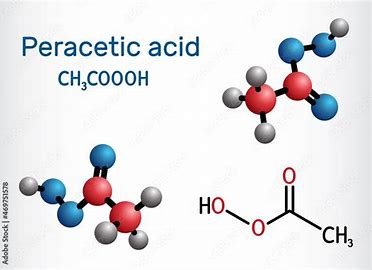
In its concentrated bottle, all four of these components exist together in a permanent balancing act. To keep our baseline concentrate () locked at a stable 5% strength for a long shelf life, it is formulated with a slight excess of peroxide to continuously push the chemical reaction to the right.
The Living Chemistry of Peracetic Acid
Peracetic Acid (PAA), chemically represented as CH₃COOOH, is a powerful oxidizer that stands apart from conventional disinfectants due to its unique “living chemistry” and mechanism of action. Unlike a simple, single compound, PAA exists as a dynamic equilibrium mixture. It is formed by the reversible reaction of highly concentrated Acetic Acid (the active component in vinegar) with Hydrogen Peroxide, typically driven by a strong acid catalyst. The chemical equation illustrates this balance:
[ Acetic Acid ] + [ Hydrogen Peroxide ] ⇌ [ Peracetic Acid ] + [ Water ]
CH₃COOH + H₂O₂ ⇌ CH₃COOOH + H₂O
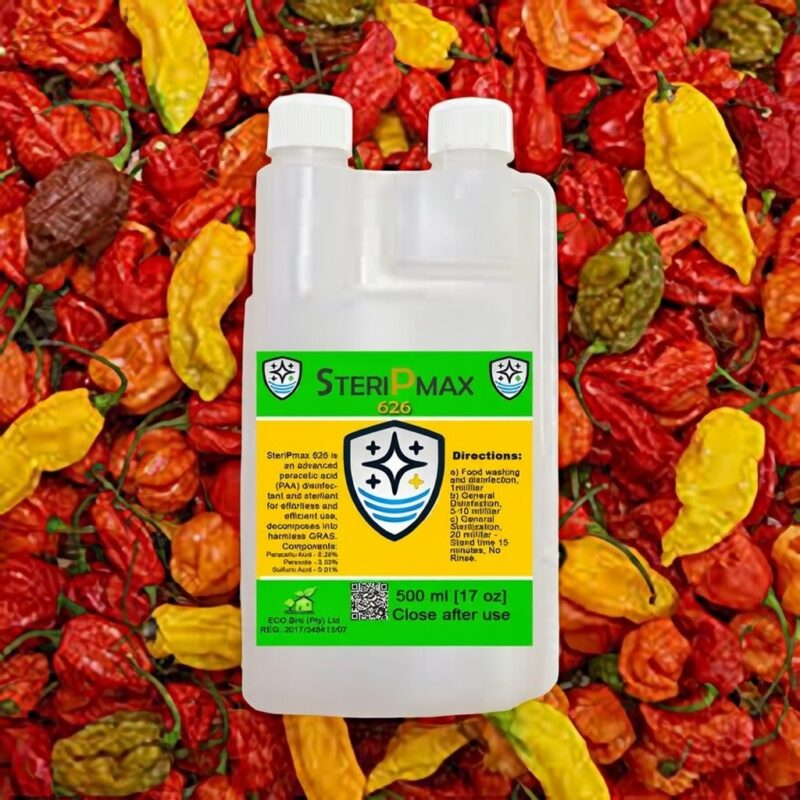
In its concentrated form, such as in our SteriPmax product, all four components coexist in a continuous balancing act. To ensure a stable 5% strength and extended shelf life, the formulation includes a slight excess of hydrogen peroxide. This excess continuously pushes the reaction towards the right, favouring the formation of peracetic acid.
The Biological Burn: Oxidation Potential
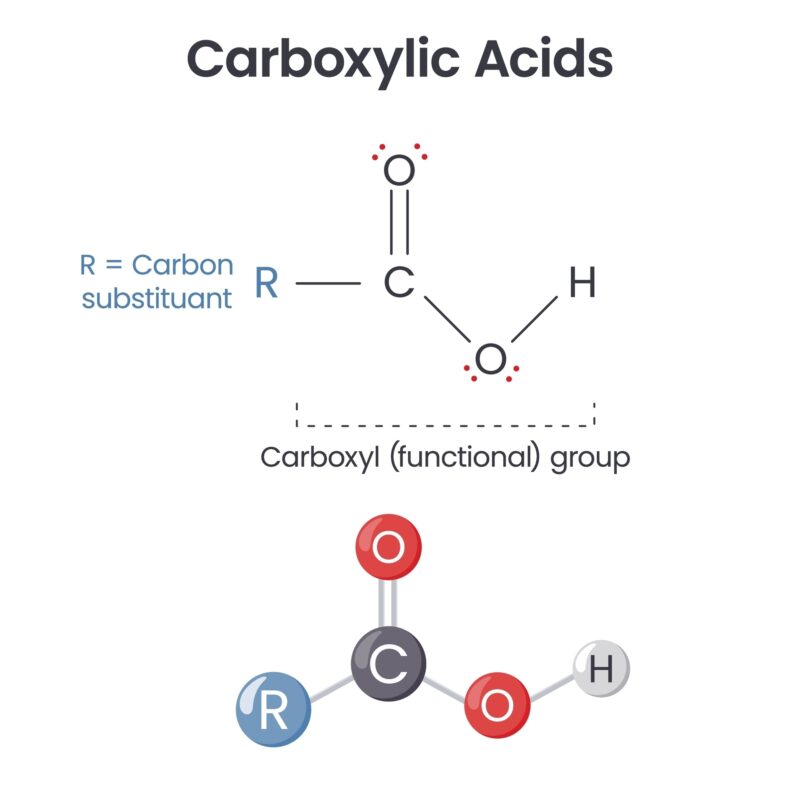
PAA’s efficacy against a broad spectrum of microorganisms stems from its potent oxidation potential. Unlike systemic antibiotics, which target specific biological pathways and can lead to pathogen adaptation and resistance, PAA destroys microbes through sheer brute force. When PAA encounters a microbial cell wall, it aggressively strips electrons away from the structural proteins and internal enzymes of the pathogen. This process, at a microscopic level, is akin to an immediate chemical incineration. It violently disrupts cell membranes and rapidly degrades the protective armour of even the toughest bacterial endospores. This indiscriminate destructive mechanism makes it biologically impossible for any virus, fungus, or bacterium to develop resistance to PAA, ensuring consistent and reliable pathogen elimination.
The Zero-Residue Profile: A Clean Conclusion
Perhaps the most compelling feature of PAA, and a cornerstone of advanced biosecurity protocols, is its decomposition profile. Where chlorine bleach breaks down into toxic salts and carcinogenic byproducts like trihalomethanes, PAA offers a fundamentally cleaner exit. Once PAA has completed its oxidative action or is exposed to open air, it completely decomposes into three harmless, environmentally benign components: water (H₂O), oxygen (O₂), and mild vinegar (acetic acid, CH₃COOH). This makes PAA the ultimate “no-rinse” sterilizer. It efficiently eradicates pathogens on contact and then dissipates without leaving any trace of toxic residue. This characteristic is crucial in sensitive applications such as food processing, hydroponics, and mycology, where chemical contamination is unacceptable.
Application: PAA Across Industries
The food-safe and residue-free nature of Peracetic Acid makes it an indispensable tool across a diverse range of industries, particularly within sustainable agriculture and laboratory environments. Its versatility addresses critical biosecurity challenges without the compromises associated with traditional disinfectants.
PAA vs. The Competition: A Comparative Edge
- 70% Ethanol: While effective for quick surface wiping and sanitisation, it is completely ineffective against resilient fungal or bacterial spores. Denatured varieties can also leave behind a sticky film.
- Chlorine Bleach: A strong disinfectant, but highly corrosive to metals, generates toxic fumes, and leaves heavy, oily salt crusts that necessitate thorough rinsing with sterile water.
- Peracetic Acid (SteriPmax): Offers both liquid and gaseous dual-action sterilization. It effectively destroys spores that bleach misses, leaves zero residue, requires absolutely no rinsing, and is fully biodegradable, making it a superior choice for comprehensive biosecurity.
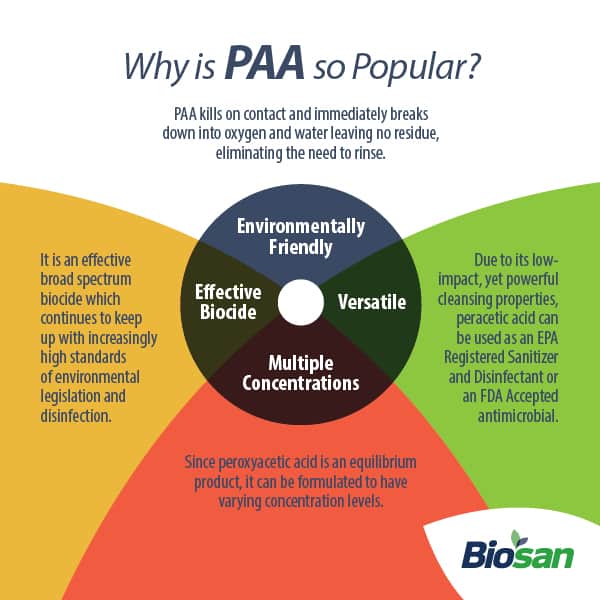
To truly appreciate PAA’s value, it’s essential to compare its performance against common alternatives:
| Feature | Peracetic Acid (PAA) | Bleach | Quats | 70% Ethanol |
| Spore Kill | Excellent | Good | None | None |
| Residue | Zero | Toxic Salts | High (Oily Film) | Minimal |
| Eco-Friendly | Yes (Biodegradable) | No (Fumes/Salts) | No (Aquatic Toxin) | Yes |
| Application | Sterilization | Disinfection | Cleaning | Sanitizing |
| Rinsing | No Rinse | Heavy Rinse | Must Rinse | No Rinse |
Cross-Industry Solutions with PAA
Food & Beverage Lines: PAA is globally adopted in Clean-In-Place (CIP) systems to sanitize extensive stainless steel commercial piping without requiring disassembly. At working dilutions, it does not pit or corrode high-grade stainless steel, ensuring the longevity of expensive infrastructure while maintaining stringent hygiene standards.

- Water Lines & Biofilm Removal: Biofilms – slimy, sugar-based shields spun by bacteria – are a pervasive problem, clogging hydroponic emitters, fouling drip lines, and harbouring root-rot pathogens. PAA is one of the few oxidizers aggressive enough to penetrate and dissolve the biofilm matrix from the inside out. This keeps water lines clear, improves nutrient delivery, and ensures water remains heavily oxygenated, preventing the proliferation of anaerobic pathogens.
- Crop Protection & Seed Prep: Pathogens like Pythium (root rot) and Fusarium frequently contaminate systems via dirty seed coats or cuttings. A rapid, low-dose PAA dip creates a clean biological slate without harming delicate seed embryos. As a foliar spray, PAA effectively halts the spread of Powdery Mildew, Blights, and Rust on contact, offering crucial protection for vulnerable crops.
- Mycology & Culture Labs: PAA serves as a high-level “cold sterilization” soak for tools, scalpels, and workspace surfaces where heat autoclaves cannot be used. At low concentrations (e.g., 100 PPM), it can even be incorporated into agar before pouring, offering an additional layer of protection for delicate tissue cultures (Agar SIP).
Application Guide: Dilution & PPM Targets
In professional settings, precision is paramount. We measure chemical concentrations in Parts Per Million (PPM) to ensure exact biological kill targets are met. A premium 5% PAA concentrate, like SteriPmax, contains a massive 50,000 PPM of active ingredient, meaning a very small amount goes an incredibly long way.
| Application Tier | Target Strength | Concentrate Dose | Contact Time | Primary Operational Use |
| High-Level Sterilization | 2000 PPM | 40 ml per 1L | 10–30 Mins | Destroys stubborn spores, wild yeasts, and viruses on raw tools. |
| Lab & Tool Disinfection | 1000 PPM | 20 ml per 1L | 5–10 Mins | Benchtop wiping, cleanroom prep, and tool-soak tubs. |
| Industrial / Line Clean | 500 PPM | 10 ml per 1L | 10 Mins | Circulating through clogged hydroponic lines and biofilm removal. |
| Submerged Produce Wash | 100 PPM | 2 ml per 1L | 1–10 Mins | Washing harvested produce. No final water rinse required. |
| Agar / System Maintenance | 50 PPM | 1 ml per 1L | Continuous | Drip reservoir maintenance and specialized tissue culture agar plate protection. |
The Bulk Water Rule of Thumb:
If you are managing large volumes, remember this baseline calculation:
- 1 ml of 5% PAA concentrate per 1 Liter of water = 50 PPM of active PAA.
- Example: To hit a 100 PPM produce wash in a 50-liter tank, you need exactly 100 ml of concentrate.
5. The “Freshness Window” & Stability Rules
To ensure professional-grade results, it’s crucial to understand the stability differences between the raw concentrate and your diluted working mixtures.

- The Concentrate (The Bottle): When stored in its original container in a cool, dark cupboard (or a dedicated lab fridge), your 5% concentrate will remain stable for 6 to 12 months. PAA naturally releases tiny fractions of oxygen gas over time; if pressure builds up in the bottle, simply crack the cap slightly to “burp” the container and then retighten it.
- The Working Dilution (The Spray Bottle): The moment PAA is mixed with water, the chemical equilibrium shifts drastically. The PAA instantly begins its work and starts breaking down into vinegar and water. Therefore, your diluted working solutions have a strict 24-to-48-hour potency window. Only mix what you need for that specific day’s work. Never pour used or leftover dilutions back into your main concentrate bottle, as this can contaminate and destabilize the fresh concentrate.
6. The “Per-Alcohol” Synergy Hack
For small labs and mycology benches, this method minimizes chemical waste while maximizing efficacy:
1. Clean: Thoroughly spray the surface with standard 70% rubbing alcohol to degrease the area, clear dust, and wipe away residues.
2. Sterilize: Immediately follow with a freshly prepared 2000 PPM aqueous PAA dilution (40ml per Liter of water). Leave the surface wet. In a clean space, keeping the surface wet entraps any falling airborne spores and destroys them before the liquid evaporates. As the old lab rule goes: the wetter, the better.

CRITICAL SAFETY WARNING: Never mix Peracetic Acid or Alcohol with Chlorine Bleach. Combining these chemical families creates highly toxic chloroform gas. Always keep your chemical inputs completely separate.
7. The Kitchen Mix Myth: Why Homebrew PAA Fails
A common misconception circulating on internet forums is that one can easily manufacture DIY Peracetic Acid by mixing store-bought white kitchen vinegar with first-aid hydrogen peroxide. This is fundamentally incorrect, and relying on such a “homebrew” will inevitably lead to contamination in a professional lab setting.
When standard 5% household vinegar is mixed with 3% first-aid peroxide, even in a 1:1 ratio, two immediate physical failures occur:
1. The Dilution Trap: The moment these ingredients are mixed, their concentrations are immediately halved, resulting in a weak 2.5% acetic acid and 1.5% peroxide mix.
2. The Water Problem: Standard vinegar is approximately 95% water, and first-aid peroxide is about 97% water. Since water is a natural byproduct of the PAA chemical equation, flooding the mixture with such high volumes of water drastically shifts the chemical equilibrium entirely to the left. This prevents the acetic acid and hydrogen peroxide from effectively bonding to form PAA.
Without using industrial-grade, water-free inputs (such as 99% Glacial Acetic Acid and 50% technical peroxide) along with a strong acid catalyst to force the chemical reaction, a homebrew mix will never yield more than a negligible 0.005% to 0.01% PAA. While such a weak solution might clean a kitchen counter, it will be utterly ineffective against stubborn mold spores or plant viruses. For reliable, professional-grade results, always stick to verified equilibrium concentrates like SteriPmax.
Conclusion
Achieving sovereign agriculture and pristine lab environments demands a departure from toxic, persistent chemicals that compromise equipment, crops, and health. By mastering the high-level oxidation potential of Peracetic Acid, you gain access to an industrial-strength sterilization agent that operates aggressively, decomposes cleanly, and consistently leaves a perfectly clean biological slate behind. PAA eliminates the risk of microbial resistance, removes the burden of toxic residues, and streamlines biosecurity protocols across diverse applications. Embracing PAA is a commitment to advanced, sustainable, and uncompromising hygiene.
-
STS
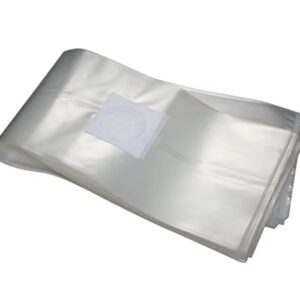
10x8x35cm Mother Spawn Bag [0.2μm Filter]
Price range: R12 through R745 Select options This product has multiple variants. The options may be chosen on the product page📦 Commercial-grade 60 Micron Polypropylene.
📦 Non-woven 0.2µm ePTFE filter patch.
📦 Maximum sterility during grain spawn production.
📦 Gusseted design – Autoclavable up to 126°C. -
STS
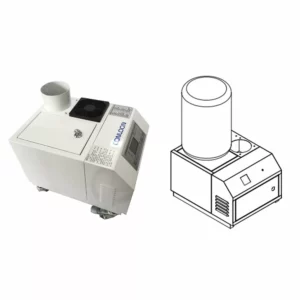
STS 7kg/h Commercial Ultrasonic Humidifier
Original price was: R28,500.R24,999Current price is: R24,999. Add to basket🏗 Commercial 7 kg/h ultrasonic humidifier.
🏗 Dual water supply (autofill or 20L bottle interface).
🏗 Gen³ heads, stainless steel, auto shut-off.
🏗 Smart Humidity control – CE Accredited. -
STS
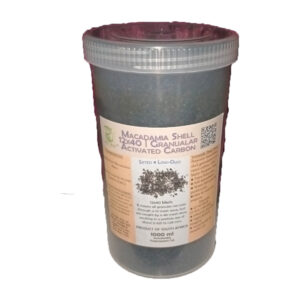
Macadamia Shell Granulated Activated Carbon | 1L Autoclavable Tub
Original price was: R169.R135Current price is: R135. Add to basket🛠️Mesh 12×40 macadamia activated biochar
🛠️Pre-packed in 1L autoclavable tub
🛠️Dual-pore network traps internal primers
🛠️Water filtration, odour removal, or horticultural use. -
STS
Passive Organic Hydroponics Start Kit & Course | Vermiponics
Original price was: R499.R359Current price is: R359. Add to basket🛠 5L Passive Vermiponic Starter System
🛠 Includes 2 dm³ VermiCore Living Growth Medium
🛠 Free STS Practical #11 Digital Manual Included
🛠 Learn to Build & Scale Your Own Vermiponic Systems
Socratic Questions
1. How does Peracetic Acid’s oxidative action prevent microbial resistance compared to antibiotics?
2. What are the critical safety precautions when handling and mixing Peracetic Acid solutions?
3. Can Peracetic Acid effectively remove established biofilms in irrigation systems, and how?
4. What are the best practices for storing and maintaining the potency of diluted PAA working solutions?
5. How can Peracetic Acid be integrated into a comprehensive biosecurity program for a commercial farm or lab?