Smash industrial automation overhead with decentralized nodes that draw less than 1 Watt.
Summary
Learn how simple open-source ESP32 hardware pairs with central AI integration to achieve true resource sovereignty. The Note tracks the evolution from 1980s 8-bit hardware to modern ESP-based WiFi modules, explains the mathematical shift from integration to nodal differentiation, and demonstrates how local AI logic turns low-cost sensors into autonomous environmental managers.
1. Defining the Ecosystem: Regenerative, Closed-Loop, and CEA
To build an automated sustainable farm, we must first map the three core methodologies that govern our structural design:
- Regenerative Agriculture: Farming practices that proactively restore ecosystem health rather than just depleting it slower. It focuses heavily on rebuilding soil organic matter, capturing carbon, and fostering diverse microbial biomes (such as our living BAM! dynamics).
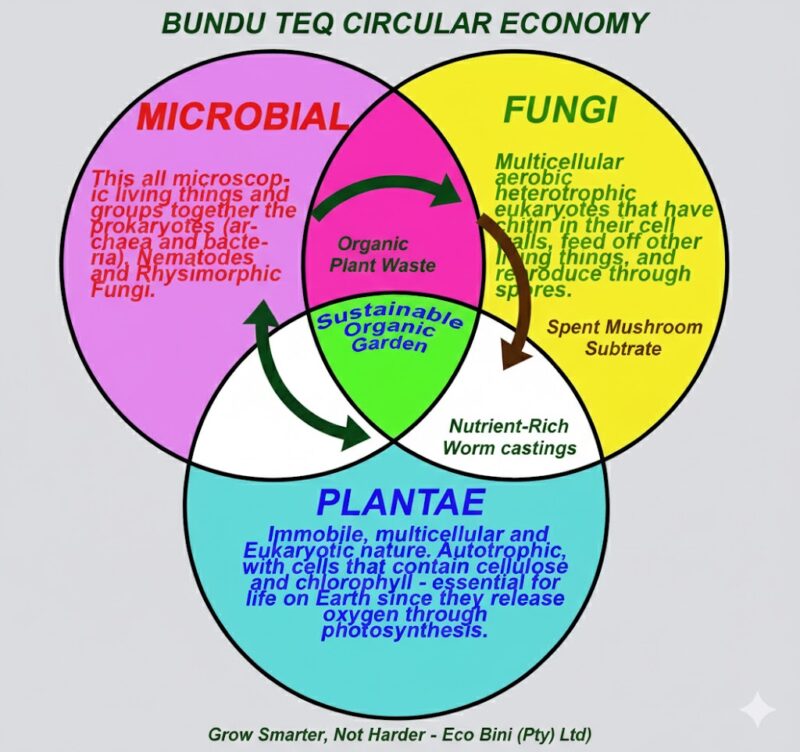
- Closed-Loop Agriculture: A zero-waste operational model where the output of one biological sub-system becomes the immediate input for the next. In our loops, household kitchen waste feeds the vermicomposting earthworms, worm cast fertilizes the plants, plant waste forms the mushroom substrates, and spent mushroom compost resets the soil biology. In Bundu Teq our only input is agricultural waste.
- Controlled Environment Agriculture (CEA): Protecting these biological loops from external climatic extremes using structures like automated greenhouses, grow tents, and indoor incubation cupboards.

Our core vision at Eco Bini is simple: We use open-source AI and IoT to make these complex, highly sensitive biological interactions scalable, stable, and completely achievable for independent operators.
2. From Supercomputers to “Things”: The Hardware Evolution
To understand the power of modern agricultural automation, you have to look at the raw computational physics and history.
In 1945, the world’s first electronic general-purpose digital computer, ENIAC, occupied 167 square meters of floor space, weighed 27 tons, and drew 150 kW of electricity to process basic calculations – for a now dismal clock speed of 100kHz. By 1983, home computers like the Commodore 64, ZX Spectrum, and the Z80-powered MSX machine packed a then-revolutionary 64K of memory and clocked speeds around 4 MHz.

Fast forward twenty years to the birth of the open-source Arduino Uno in 2003. A single, cheap hobbyist development board the size of a credit card packed an 8-bit chip running at 16 MHz with 32K of flash memory—essentially holding the computing power of a 1980s desktop PC on a tiny hacking kit. Because these boards were stripped-down, rugged, and built to talk directly to hardware pins rather than running monitors and keyboards, they earned the title of “Things.”
[ 1945 ENIAC ]                   ──> 27 Tons, 167m² Footprint
  └──> [ 1983 MSX / C64 ]  ──> 8-bit Z80, 4 MHz, 64K RAM
  └──> [ 2003 UNO ]  ──> ATmega328P, 16 MHz, 32K Flash (The "Thing")
  └──> [ Modern ESP IoT Node ] ──> 32-bit, Dual-Core, 240 MHz + Integrated WiFi/BLE
The true, definitive gamechanger hit in 2014 when Espressif Systems dropped the ESP8266 WiFi module (specifically the minute ESP-01). It packed a 32-bit chip running at 80 MHz with 160K of RAM and built-in wireless connectivity onto a board measuring just 21 x 13 mm, costing a fraction of industrial hardware – running with less than 1 Watt maxm consumption.
While the early ESP modules were notoriously fragile—operating strictly on 3.3V and burning out instantly if exposed to a standard 5V industrial relay rail—the evolution to robust, 5V-tolerant developer ecosystem boards (like the NodeMCU and modern ESP32) permanently broke the barrier to cheap, rugged field deployment.
3. The Structural Paradigm Shift: Integration vs. Differentiation
As an engineer looking at automation infrastructure, there are two opposing mathematical approaches to managing a facility:
A. The Legacy Model: Integration
Traditional industrial infrastructure relies on massive, centralized computing systems (such as the sprawling, miles-of-cable intranet networks found in legacy setups like the Majuba Power Station). A single, heavy, expensive Programmable Logic Controller (PLC) sits in a central command room. Every sensor, pump, and valve across the entire facility must be physically wired back to this single brain via heavy copper conduits.
The Failure Point: If the central PLC crashes, or if a single main cable run rots in a high-humidity greenhouse environment, the entire facility goes dark. It is rigid, capital-intensive, and highly vulnerable.
B. The Bundu Teq Model: Differentiation
With low-cost, high-performance ESP microcontrollers, we execute a complete shift toward Differentiating the Farm. Instead of one central brain, the closed-loop system is broken down into a virtual network of small, completely autonomous, isolated wireless nodes.
                          ┌──> [ Node A: Mushroom Sniffer ] ──> (Local CO2 / Temp Logic)
                          │
[ Wireless AP ] ──┼──> [ Node B: CFT Vermi-Probe ]  ──> (Local Moisture / Core Heat Logic)
                          │
                          └──> [ Node C: Hydro Reservoir ]  ──> (Local pH / EC Dosing Logic)
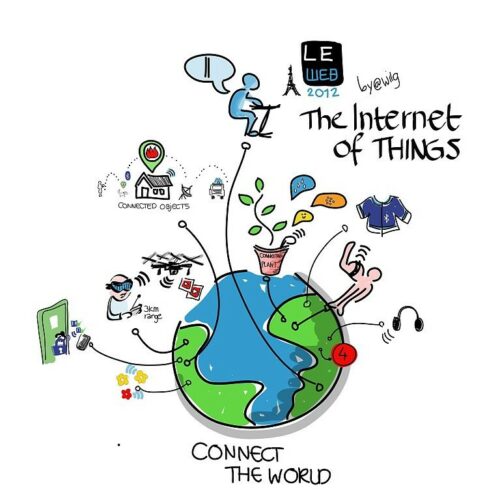
Each node is independent, dirt-cheap to build, and processes its own environmental parameters locally. Because the IPv6 address space opens up unique addresses, every single autonomous node on our urban farm receives its own permanent virtual identity. We allocate dedicated IPs directly to:
- Mushroom Incubation Nodes: Monitoring localized ambient humidity and CO2 exhaustion.
- CFT Vermiculture Nodes: Tracking internal temperature spikes and moisture levels deep within the earthworm bedding.
- VermiPonics Hydro-Nodes: Continuously reading reservoir pH and Electrical Conductivity (EC) to auto-dose organic nutrients.
- Wind Power Nodes: Actively calculating real-time current loads and triggering the 3-phase electromagnetic braking switches on our HAWT masts during storm surges.
If a single hydro-node fails or gets waterlogged, it has zero impact on the rest of the farm. The mushroom tents and wind chargers keep breathing independently while you swap out the single damaged node in under two minutes.
4. The Central AI Integrator: Turning Data Morsels into a Farm Thesis
There is a common misconception that to make an urban farm “smart,” you have to deploy heavy, expensive computing power out into the dirt. That is a step backward. The true elegance of a differentiated IoT architecture is that your field nodes stay incredibly lean, cheap, and low-power.
The Low-Bandwidth Reality
Our autonomous ESP nodes don’t stream massive, high-bandwidth data packages. They communicate in mere morsels—lightweight text packets measuring just a few kilobytes. A single node out in a tent simply blinks a tiny string of raw metrics across the local WiFi network: TEMP: 24.2C | CO2: 850PPM | HUMID: 92% (only 39 bytes). On their own, these numbers are just isolated, static points.
The Power of Centralized AI Integration
The game-changing transformation happens when a centralized AI engine acts as the ultimate Integrator of these differentiated inputs.
[ Differentiated Nodes ] ──> (Tiny Data Morsels: KB) ──> [ Central AI Integrator ] ──> Generates Full Operational Thesis & Predictive Planning

The AI doesn’t live on the fragile node in the humid greenhouse; it sits centrally, collecting these scattered, lightweight words of data from every corner of your loop. Because it understands the complex, non-linear physics and biology of the entire Bundu Teq system, it can take those raw morsels and instantly synthesize a comprehensive thesis of your farm’s real-time health:
- Predictive System Synthesis: If a vermiculture node reports a subtle temperature spike while a hydro-node flags a minor drop in Electrical Conductivity (EC), the central AI doesn’t just see two random numbers. It connects the dots, diagnoses an active microbial shift in the worm beds, and calculates exactly how that shift will alter your organic nutrient reservoir balances three days down the line.
- Macroscopic Forecasting & Planning: Instead of reacting after a threshold is crossed (e.g., waiting for a fan to click on when a room gets too hot), the AI monitors the incoming data trends alongside external barometric shifts. It maps out your environmental adjustments and plans your climate, watering, and feeding schedules hours before the biomes experience stress.
- Actionable Operational Directives: It translates raw engineering data into high-level strategic commands. It takes thousands of data points and hands the grower a clear, actionable game plan for the week—telling you exactly when to flip your biochar activation lines, drop your mushroom harvest windows, or adjust your hybrid inverter load profiles to maximize performance.
By keeping the nodes differentiated and simple, you keep your infrastructure incredibly cheap and rugged. By letting a central AI integrate those lightweight inputs, you get high-level, predictive, industrial-grade intelligence at a fraction of the cost.
Conclusion: Precision Sovereignty at 1 Watt
We have moved past the era of restrictive, expensive industrial automation overheads and into a new age of differentiated control. Because a single, bare-bones ESP32 microcontroller node draws a maximum of only 1 Watt, an entire field deployment node can be completely powered by a tiny, shoebox-sized 3W solar panel.
By pairing the structural principles of closed-loop ecology with the physics of decentralized, open-source hardware, we completely strip out the heavy costs, the tangled cables, and the catastrophic single point failures of traditional automated farming. Yet, we attain a more comprehensive, living picture of the farm than ever before—using a centralized AI to connect the data dots together into a genuine “Smart Agriculture” Gambit. We are handing the tools of high-precision, automated production directly back to the sovereign independent grower.
The Microbial Bridge
Bio-Available Feeding
Mycelial Dominance
SPeS Hardware Hub
Equipping the Circular Revolution with STS-Tested engineering.
Socratic Questions
decentralized iot architecture in controlled environment agriculturehow to use esp32 microcontrollers for smart farming loopsaiot edge nodes for regenerative agriculture monitoringopen source wireless sensor networks for greenhousesipv6 addressing for autonomous smart farm components