Don’t guess your way to a good harvest; feel the moisture right.
Summary
Too wet or too dry, and your mycelium won’t thrive, leading to contamination or stalled growth. This lab note shows you how to get that perfect “field capacity” every time, ensuring plump mushrooms and happy harvests.
The Biological Yield: Why Moisture Dictates Everything
Mushrooms are more than 90% water. Unlike plants with roots, fungi draw all their water directly from the substrate and the air. Get this balance wrong at any stage, and your crop is headed for trouble. This means controlling moisture isn’t just a step; it’s the foundation of a successful grow.
Getting the moisture content of your mushroom substrate just right is a tricky business. Too little water, and the mycelium struggles to spread and absorb nutrients, leading to slow colonization and stunted growth. Too much water, and you create an anaerobic environment, a breeding ground for nasty bacteria and moulds like Baccilus (Sour Spot), which will choke out your precious fungi. This delicate balance, known as “field capacity,” is critical for healthy mycelial development and, ultimately, a successful mushroom harvest. For many years, growers have relied on guesswork or simple “squeeze tests,” which, while useful, can be inconsistent. We need a reliable way to measure and achieve this ideal moisture level, ensuring every batch has the best chance to flourish.
1. Mushroom Spawn Hydration: The Critical Start
The goal is to maximize grain hydration while keeping the exterior hull dry and intact. Refer to Lab Prac on making spawn.
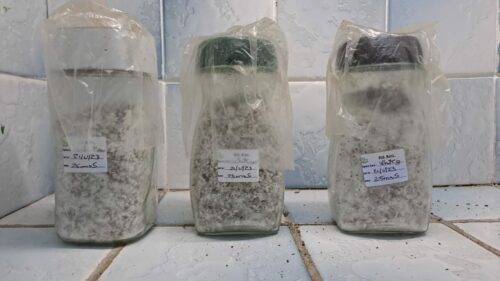
- Over-hydration (“Overcooked” Grain): Excessive surface water breaks down grain structure, turning the kernels mushy. This creates a starchy paste that congeals into an un-shakeable mass. More critically, pooling water at the bottom of a jar or bag creates anaerobic (oxygen-depleted) pockets. This is the ideal breeding ground for Bacillus spp., commonly known as Wet Spot or sour rot.
- Under-hydration: Grains that are dry on the inside cannot support mycelial metabolism. The hyphae will stall, delaying colonization and allowing slower-moving fungal competitor spores to take hold.
Optimal spawn moisture targets vary significantly by grain density and surface-area-to-volume ratios:
- Large Grains: For grains like popcorn, the sweet spot is 49-52% moisture content.
- Small Grains: For grains like sorghum, a moisture content of 42-45% is recommended.
- Tiny Grains: For grains like millet, aim for a moisture content of 30-32%.
2. Bulk Substrate Colonization: Feeding the Mycelium
Once spawn is mixed into bulk substrates like coco coir, sawdust, or straw, moisture dictates how well the mycelium can feed and grow.
Too Dry: Mycelium can’t secrete the enzymes needed to break down the substrate’s cellulose and lignin. Growth slows to a crawl.
Too Wet: Water fills up the air pockets in the substrate, suffocating the aerobic mycelium. This invites aggressive moulds like Trichoderma and bacterial competitors.
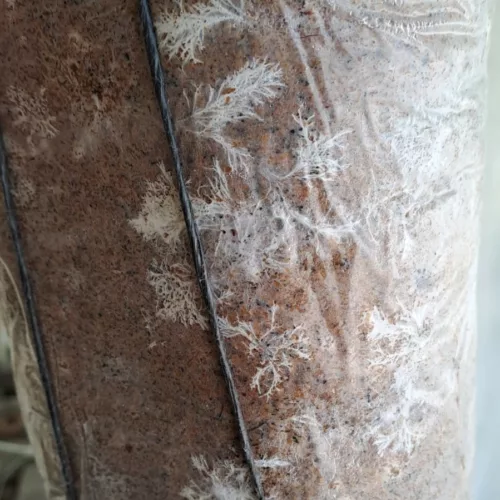
3. The Fruiting Phase & Ambient Air: Triggering the Bloom
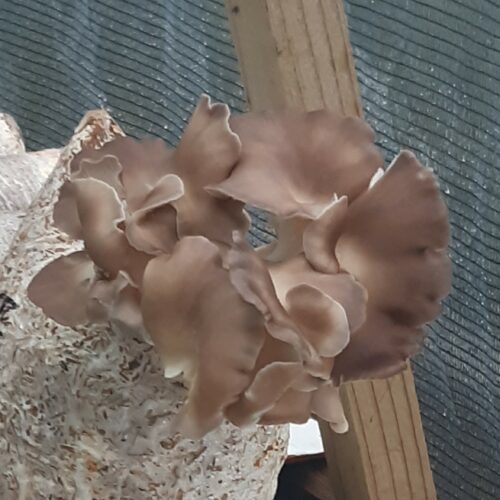
During pinning and fruiting, substrate moisture and the air around it are crucial.
Substrate Exhaustion: A substrate that’s too dry going into fruiting will produce small mushrooms or abort pins before they grow.
Ambient Relative Humidity (RH): Aim for 80% to 85% RH in your fruiting chamber.
The Pinning Paradox: Constant 100% humidity can actually stop pinning. A slight drop to 80-85% RH creates subtle evaporation from the substrate surface. This “evaporative cooling” signals to the mycelium that it has reached open air, triggering pinhead development. Keeping RH below 90% also prevents water from sitting on the mushroom caps, reducing the risk of bacterial blotch.
4. Analytical Tools vs. Field Testing: Finding Your Balance
We use a range of methods to check moisture, balancing lab precision with practical speed.
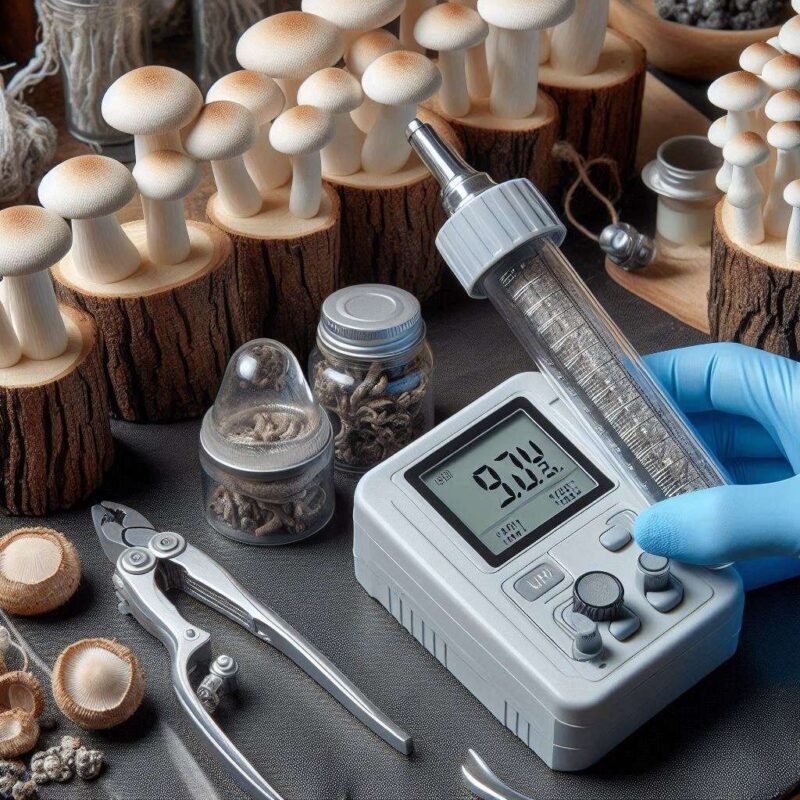
Handheld Moisture Meters (Resistance & Capacitance): These give quick readings by passing an electrical current or measuring dielectric properties. They’re fast for large operations but accuracy depends heavily on substrate density. Regular calibration is essential.
Near-Infrared Spectroscopy (NIRS) & Infrared Analysers: These use heat and light absorption to quickly analyse moisture. They offer high accuracy but are expensive, suited for commercial or lab use.
Karl Fischer Titration: A precise chemical analysis method for labs, not practical for daily farm use.
a) The Low-Tek Farm Standard: The Squeeze Test
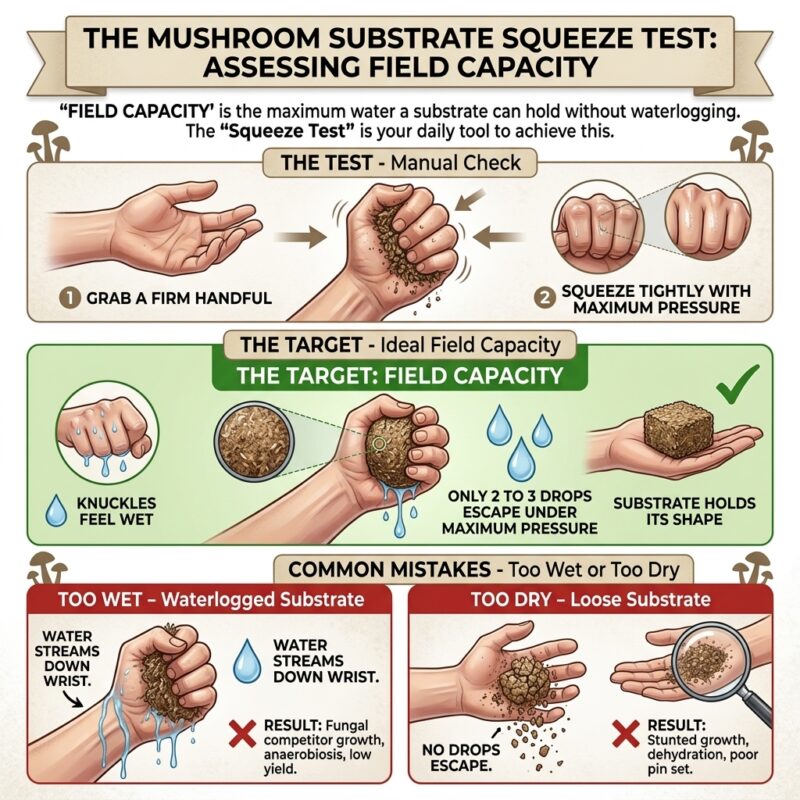
For most growers, the manual “Squeeze Test” is the most practical daily tool for assessing “Field Capacity” – the maximum water a substrate can hold without waterlogging.
The Test: Grab a firm handful of your prepared substrate and squeeze it tightly.
The Target: The substrate should hold its shape when you open your hand. Your knuckles should feel wet, and only 2 to 3 drops of water should escape under maximum pressure.
Too Wet: Water streams down your wrist.
Too Dry: No drops escape, and the material falls apart loosely.
While intuitive, the squeeze test is subjective. For precise numbers, you need Gravimetric Analysis.
b) The Mathematics of Moisture: Gravimetric Analysis
Gravimetric analysis is the scientific baseline for calibrating all electronic moisture sensors. It works by weighing a wet sample, removing all the water with heat, weighing the dry material, and calculating the difference.
The Standard Oven Method:
1. Weigh a clean, heat-safe container.
2. Add a substrate sample and record its Initial Wet Weight (W1).
3. Dry in an oven at 105°C (221°F) until the weight is constant (12-24 hours). This removes all water without burning the organic matter.
4. Weigh the dry sample to find the Final Dry Weight (W2).
The Rapid Microwave Method:
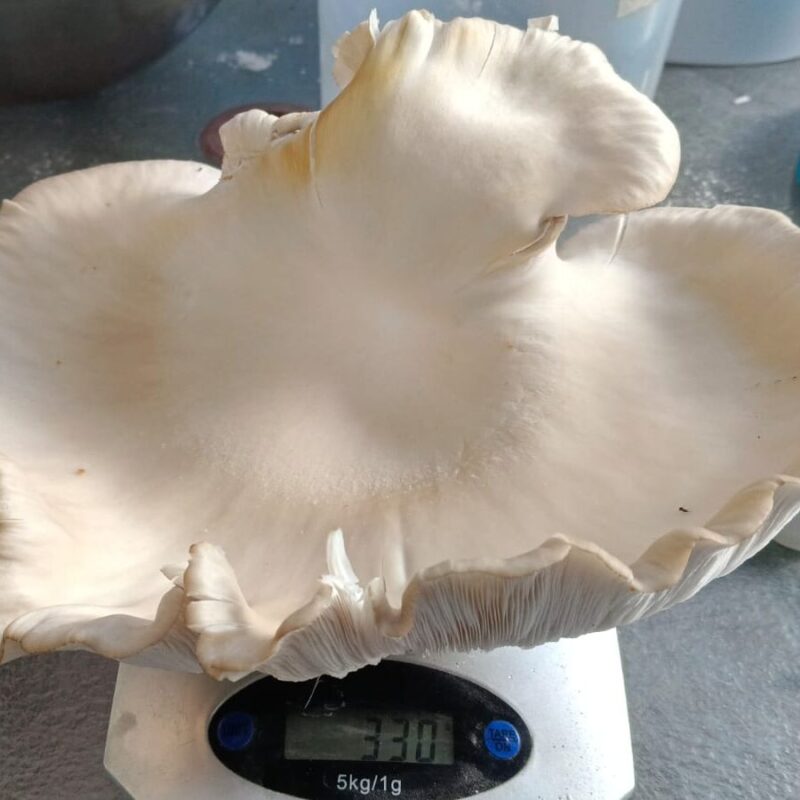
1. Weigh a substrate sample accurately (e.g., 100g for easy math). Record as Initial Weight (W1).
2. Safety First: Place the sample in a microwave-safe bowl. Crucially, put a separate cup of cold water in the microwave next to the sample. This acts as a thermal ballast to prevent the dry substrate from igniting.
3. Microwave on High for 2-3 minutes to remove most surface moisture.
4. Let cool for 60 seconds, then weigh.
5. Continue microwaving in 1-minute intervals on Medium-Low power, weighing after each cycle.
6. The moment the weight stops changing, all water is gone. Record this stable weight as Final Dry Weight (W2).
The Master Moisture Formula:
To find your current moisture percentage:
Moisture Content (%) = [(Initial Wet Weight – Final Dry Weight) / Initial Wet Weight] x 100
Where:
- (W1) = Initial Wet Weight
- (W2) = Final Dry Weight
5. Real-World Cultivation Scenarios
Scenario A: Accounting for Residual Moisture in Raw Grain
Raw, dry grain from a sack isn’t truly dry; it usually holds 10-14% moisture. Ignoring this baseline skews your hydration calculations.
Example: You start with 2000g of sorghum at 12% baseline moisture. After boiling and draining, the total mass is 3250g.
Starting Water: 2000g 0.12 = 240g
Absolute Dry Matter: 2000g – 240g = 1760g
New Water Mass: 3250g (total) – 1760g (dry matter) = 1490g
Final Moisture: (1490g / 3250g) 100 = 45.85%
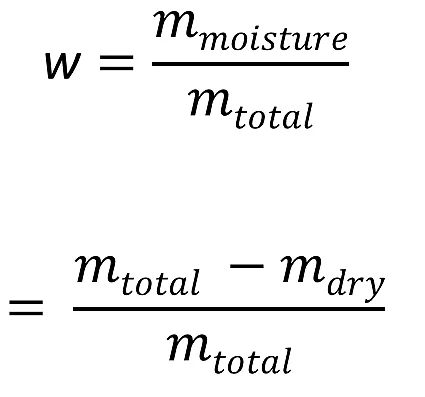
If you assumed 0% baseline moisture, you’d incorrectly calculate 38%. Accounting for it gives you the near-perfect 46% for small grains.
Scenario B: Calculating Exact Water Addition for Substrate Pellets
Processed materials like hardwood pellets typically have a baseline moisture of around 10%. This makes them easy to work with using the target hydration formula.
Example: You have 2000g of hardwood pellets at 10% moisture. You want to reach a bulk substrate field capacity of 60% moisture. How much water do you add?
Dry Matter: 2000g pellets (100% – 10% moisture) = 1800g dry matter.
Target Total Weight: At 60% moisture, dry matter is 40%. So, 1800g dry matter / 0.40 = 4500g total weight needed.
Water to Add: 4500g (target total) – 2000g (starting pellets) = 2500g of water.
The Shortcut Water Calculation Formula:
This formula simplifies calculating water additions for dry pellets:
Water Mass to Add = [(Target MC – Pellet MC) / (100 – Target MC)] x Mass of Pellets
Where:
- Target MC: Your desired final moisture content (e.g., 60).
- Pellet MC: The packaged moisture content of the pellets (e.g., 10).
- Mass of Pellets: The starting weight of un-hydrated pellets (in grams).
Testing the Shortcut: Water Mass = [(60 – 10) / (100 – 60)] x 2000 = [50 / 40] x 2000 = 1.25 x 2000 = 2500 grams of water.
By using these formulas, you eliminate guesswork, dial in field capacity effortlessly, and ensure uniform, high-yielding flushes every time.
Conclusion:
All the calculations and precise measurements boil down to one simple truth: moisture is king in mushroom cultivation. Whether you’re hydrating grain for spawn or mixing your bulk substrate, hitting that “field capacity” sweet spot – that perfect balance between moisture and air – is non-negotiable. It’s the difference between rapid, healthy colonisation and a batch choked by bacteria or mould. By understanding the principles and applying the gravimetric methods, you move from guesswork to predictable success, laying the groundwork for plump mushrooms and abundant flushes every single time.
Don’t just grow mushrooms; engineer their environment for optimal yield.
-

Low-Tek Oyster Log Perforation Wheel
R110 Add to basket📦Rapid Grow Bag Micro-Perforation
📦Hardened Needle-Point Teeth
📦Ergonomic Wood Handle
📦Deter Fungus Gnats (Sciaridae) -
STS
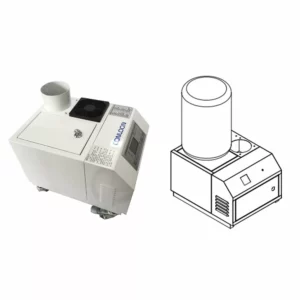
STS 7kg/h Commercial Ultrasonic Humidifier
Original price was: R28,500.R24,999Current price is: R24,999. Add to basket🏗 Commercial 7 kg/h ultrasonic humidifier.
🏗 Dual water supply (autofill or 20L bottle interface).
🏗 Gen³ heads, stainless steel, auto shut-off.
🏗 Smart Humidity control – CE Accredited. -
STS

STS 5kg/h Industrial Humidifier (Dual Outlet, Var Fan)
Original price was: R13,999.R11,995Current price is: R11,995. Made to Order🧫Industrial Stainless Steel Ultrasonic Discs
🧫High-Volume 5kg/Hour Fog Output
🧫Integrated Variable Fan Speed Control
🧫Ruggedized Corrosion-Proof ABS Chassis -

Yellow Sticky Fruit Fly & Fungus Gnat Traps
R11 Select options This product has multiple variants. The options may be chosen on the product page🏗️Bright yellow colour attract flying insects
🏗️Odourless, Safe and Non-toxic
🏗️Durable – UV resistant and Waterproof
🏗️Easy to Use, Plant and Peel
Socratic Questions (5 Search Terms):
- How do I calculate “Field Capacity” for mushroom substrates?
- What is the ideal moisture content for sawdust vs. straw?
- How to prevent “wet spot” (bacillus) in grain and sawdust spawn?
- Does my substrate need more water? (The Squeeze Test guide)
- Mathematical formula for adjusting moisture in dry mushroom bulk?