
If the Monera Kingdom is the biological workforce, and the Plantae Kingdom captures solar energy, then the Fungi Kingdom performs one of nature’s most remarkable engineering feats:
It unlocks carbon.
Fungi occupy a unique and critical position within the living world. Through powerful extracellular enzymes, they are nature’s carbon engineers, uniquely capable of penetrating and transforming recalcitrant materials like dead wood, straw, leaves, and other lignocellulosic matter. They break down these complex structures, unlocking the stored solar energy and carbon, and converting them into accessible biological resources that re-enter the cycle of life. Within the Bundu Teq framework, fungi are indispensable architects of sustainability.
Within the Bundu Teq framework, fungi are our essential carbon architects. They actively transform low-value, carbon-rich waste into high-value outputs: nutritious food (the mushrooms themselves), living biomass (mycelium), and biologically enhanced substrates. These substrates, even after harvest, continue to support the Natural Refinery, completing the regenerative loop and demonstrating the principle of turning waste into perpetual value.
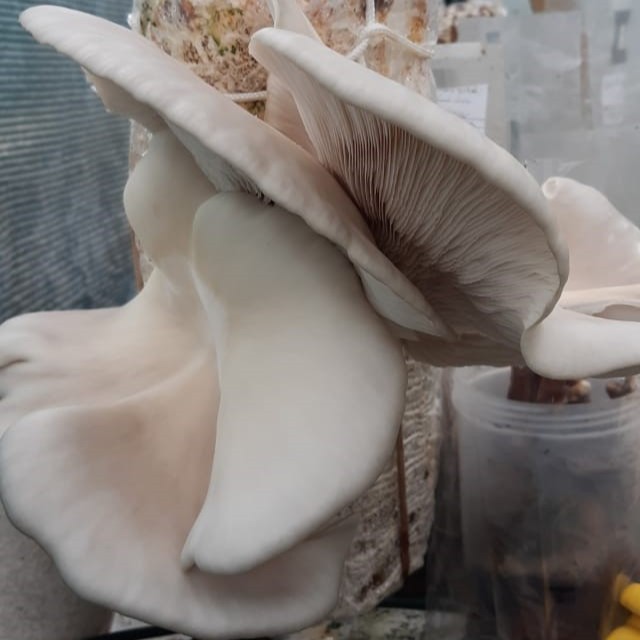
Without fungi,
- vast reservoirs of carbon in woody materials would remain locked away,
- forests would stagnate,
- plants would struggle to access essential mineral nutrients,
- and the biological cycle would remain incomplete.
Fungi are the crucial bridge that allows carbon to flow back into the living biosphere.
Three Kingdoms – One Natural Refinery
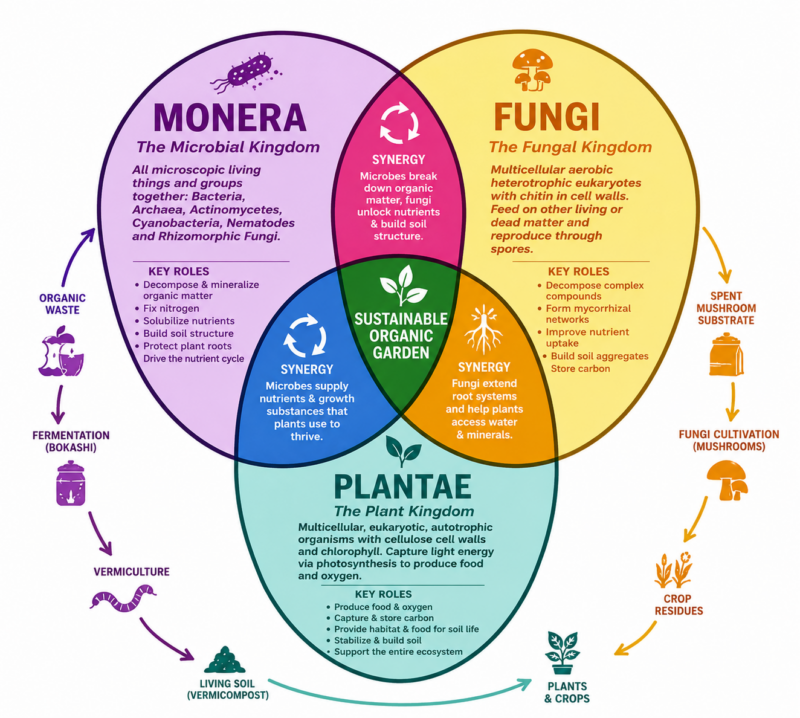
Monera — The Biological Workforce
Monera acts as the essential biological patch cable, bridging nutrient cycles between raw organic inputs and the uptake pathways of Plantae and Fungi. Through processes like N-fixation, mineralization, and fermentation, they make locked-up energy and matter available to higher life forms, enabling closed-loop productivity and system resilience. This kingdom is the primary processor, transforming waste into bio-available fuel.
Fungi — Nature’s Carbon Architects
Fungi are nature’s indispensable carbon architects, uniquely breaking down recalcitrant materials like wood and straw. They unlock vast reservoirs of carbon and stored solar energy, making them accessible to other life forms. Fungi extend biology into places microbes alone cannot reach, forming crucial subterranean networks that facilitate nutrient transport and support plant growth, thereby completing the carbon cycle.
Plantae — The Solar Harvesters
Plants are nature’s primary solar infrastructure, capturing sunlight and atmospheric carbon dioxide to manufacture new biomass. Every leaf, stem, root, fruit, and seed is a product of photosynthesis. This biomass fuels the entire biological cycle, providing the energy and foundation for both Monera and Fungi kingdoms. They are the crucial link converting raw solar energy into usable biological matter.
Rather than independent systems, together they create a regenerative biological engine in which nothing is wasted and every output becomes the next biological input.
Nature’s Carbon Recycling Specialists
Unlike animals, fungi digest their food externally.
Instead of consuming material directly, fungal mycelium releases powerful enzymes into the surrounding environment, breaking complex organic structures into smaller molecules before absorbing the resulting nutrients.
This remarkable strategy allows fungi to decompose lignin and cellulose — the structural framework of wood and plant fibres that few other organisms can efficiently utilise.
In doing so, fungi perform one of the planet’s most important ecological services:
They return locked carbon to the living biological cycle.
Beyond Mushroom Cultivation
Most people think mushroom cultivation is about producing food.
At the Sustainability Testing Station we discovered something much larger.
Growing mushrooms is actually an exercise in carbon engineering.
Every straw bale, cardboard box, pruning branch and sawdust pile represents stored solar energy captured by plants.
Fungi unlock that stored energy.
The harvested mushrooms are only one product.
The biologically transformed substrate may be even more valuable.
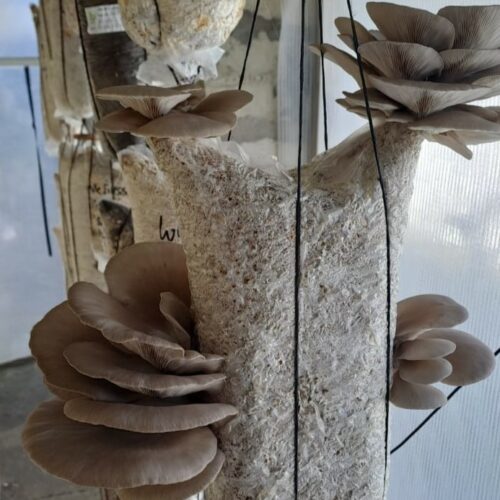
Selective Nutrition
One of the defining engineering principles developed at the STS is the concept of Selective Nutrition.

🧬Paradigm Shift #3: Selective Nutrition
Old Thinking: Contamination is a sterility problem requiring Autoclaving.
New Reality: Contamination is a nutrition problem – by pre-digesting nutrition through Monera systems, we create fungal substrates where gourmet mycelium thrives while contaminants remain locked out.
Conventional mushroom cultivation has traditionally treated contamination as primarily a sterilisation problem.
Our experience suggested something different.
Contamination often begins because we unintentionally provide competitor organisms with abundant, easily accessible nutrition. Rather than fighting contamination solely through increasingly sterile techniques, the STS investigates how substrate chemistry can favour gourmet fungi while making conditions less favourable for unwanted competitors.
Instead of asking:
“How sterile can we make the substrate?”
we ask:
“How selectively can we feed the target organism?”
That question continues to shape our ongoing research into substrate design, artificial spawn systems and biological cultivation methods.
Engineering Biological Efficiency
The objective is not to eliminate biology but to engineer its direction.
Every substrate we prepare is a meticulously designed biological environment where fungi, the substrate structure, and our microbial allies (Monera) interact synergistically to determine productivity.
By understanding these complex relationships, we engineer for improved biological efficiency, reducing reliance on unnecessary inputs, minimizing energy-intensive sterilization, and achieving resilient, high-performance results without complex laboratory infrastructure.
The goal is not sterile perfection, but engineered biological performance.”
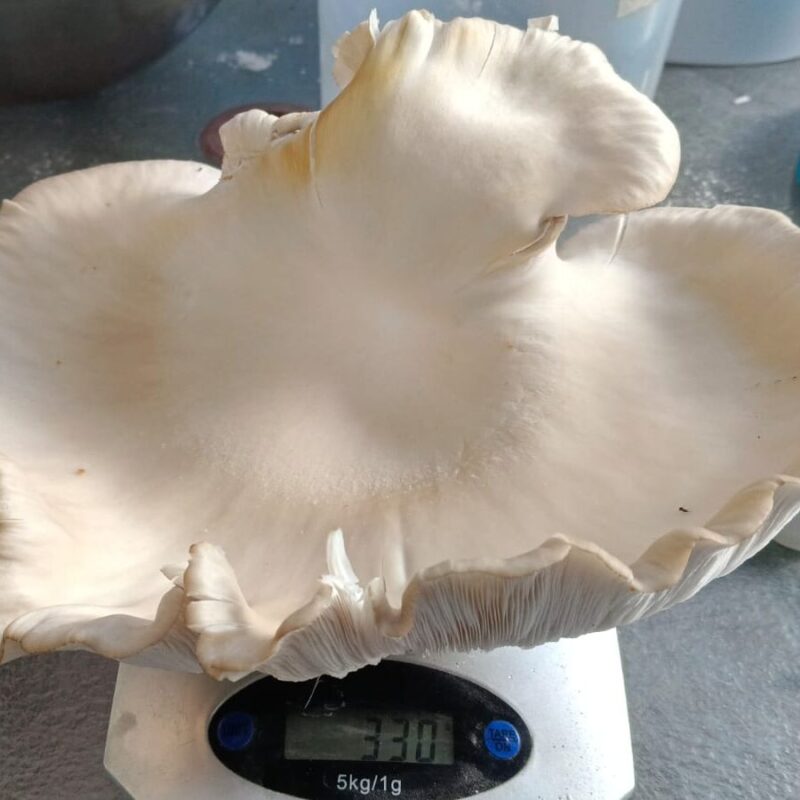
Completing the Carbon Cycle
Within Bundu Teq, fungi complete the first stage of the biological loop.

Agricultural residues become mushroom substrate.
Fungi convert carbon-rich waste into nutritious food.
The remaining spent mushroom substrate becomes an ideal feedstock for vermiculture.
Earthworms engineer new microbial communities.
Those microbial communities support plant growth.
Plants capture more atmospheric carbon.
Completing the Carbon Cycle is where Fungi truly shine within Bundu Teq. They act as the critical intermediate stage, efficiently processing agricultural residues into gourmet food and biologically active substrates. This spent material then seamlessly feeds the Monera Kingdom (vermicomposting), which in turn supports Plantae, thereby closing the loop. This engineering of resource flow ensures nothing is wasted; carbon simply transforms, making the entire system stronger with each cycle.
STS Research
The Sustainability Testing Station continues to investigate practical methods that improve fungal cultivation under real-world conditions.
Current areas of research include:
- Selective Nutrition
- Artificial spawn systems
- Carbon lattice engineering
- Biochar as biological infrastructure
- Low-technology substrate preparation
- Biological efficiency optimisation
- Closed-loop mushroom production
Each project contributes toward the same long-term objective:
Engineering resilient biological systems that remain productive under practical, low-resource conditions.
More Than Mushrooms
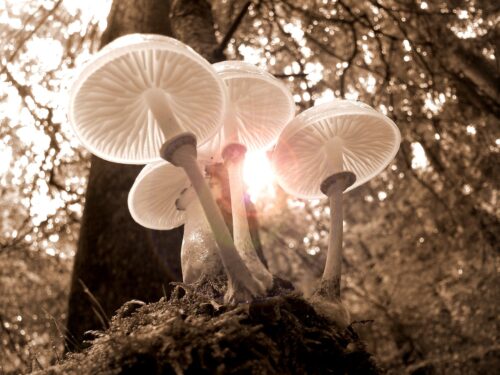
Within the Bundu Tek ecosystem, fungi are not merely a crop;
they are indispensable carbon Architects.
They unlock resources inaccessible to other kingdoms, transforming waste into food, food production into soil enrichment, and soil into a foundation of living biology.
This process ultimately builds system resilience, allowing the entire Bundu Teq framework to function as a true regenerative ecosystem.
You have navigated the entire loop.
- Tier 1 processes your raw domestic waste and transforms it into living biomes and solid castings.
- Tier 2 takes those liquid biomes into pump-free, off-grid capillary planters to generate high-yield crops.
- Tier 3 imports heavy woody waste to produce high-value gourmet mushrooms, returning the spent substrate back to Tier 1 to restart the cycle with exponentially higher biological momentum.
- Back to Bundu Teq Introduction or Our Story.
You are no longer an off-grid consumer trying to survive. You are an ecosystem architect running a high-torque, sovereign biological refinery.
-
STS
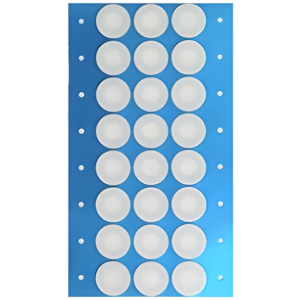
ePTFE Filter Patch Stickers – 0.25µm filtration (24)
Original price was: R140.R95Current price is: R95. Add to basket🧫 Professional 0.25µm filtration
🧫 20mm synthetic filter stickers
🧫 Ensure clean GE for jar lids.
🧫 Autoclavable glue. -
STS
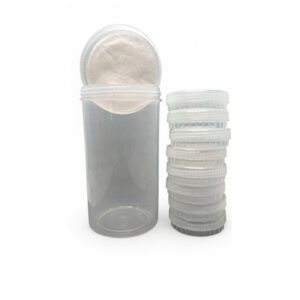
Reusable Autoclavable Petri Dish Kit System
Original price was: R399.R195Current price is: R195. Add to basket🧫 8 × 70 mm Autoclavable Screw-Top PP Petri Dishes
🧫Durable, reusable lab essential
🧫Autoclavable for sterile use
🧫Deep dish for more media
🧫Integrated storage & transport -
STS
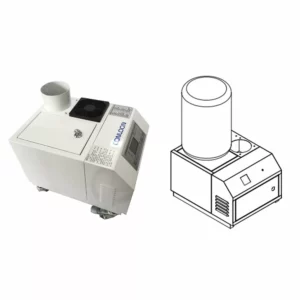
STS 7kg/h Commercial Ultrasonic Humidifier
Original price was: R28,500.R24,999Current price is: R24,999. Add to basket🏗 Commercial 7 kg/h ultrasonic humidifier.
🏗 Dual water supply (autofill or 20L bottle interface).
🏗 Gen³ heads, stainless steel, auto shut-off.
🏗 Smart Humidity control – CE Accredited. -
STS
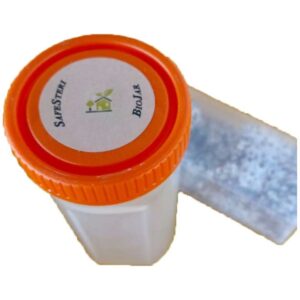
Mushroom Spawn Jar 320ml – Sterilized Sorghum Grain
Price range: R150 through R720 Select options This product has multiple variants. The options may be chosen on the product page📦 Sterilized Sorghum Grain Mother Spawn Jar
📦 320ml Reusable BioJar, Shatterproof PP5.
📦 Positive-Seal (No Gaskets).
📦 0.25μm ePTFE filter.