







Turkey Tail (Trametes versicolor) | The “Forest Pharmacy” Immune Support
🌈 A Multi-Colored Medicinal Marvel
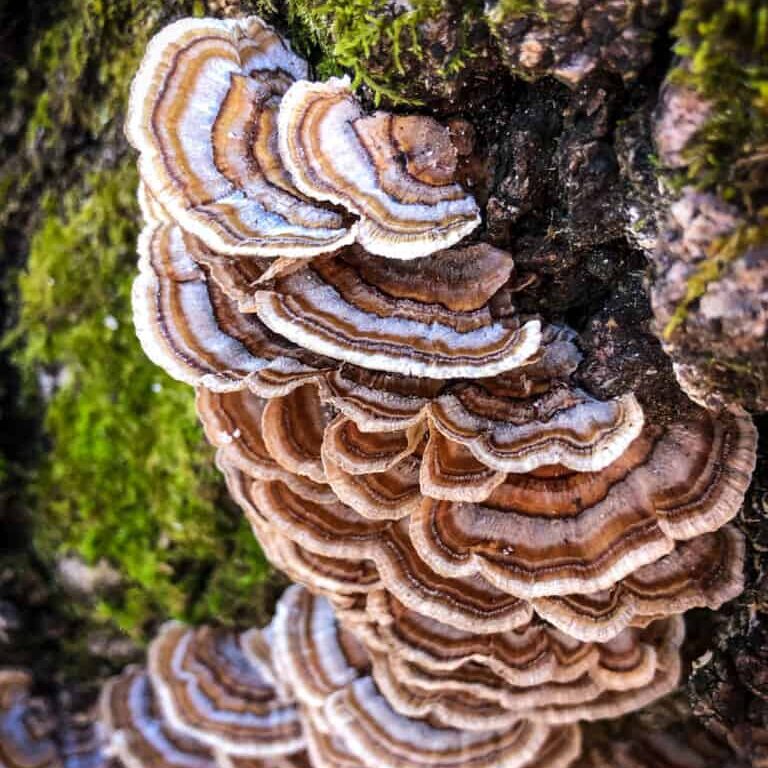
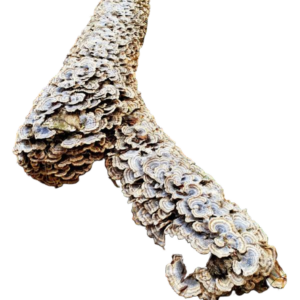
Also known as Yun Zhi (Cloud Mushroom) in traditional Chinese medicine, the Turkey Tail (Trametes versicolor) gets its name from its beautiful, concentric rings of varying colors—ranging from browns and greys to blues and oranges—resembling the tail of a wild turkey. But beneath its striking exterior lies a biological powerhouse. It is famous for containing two specific polysaccharides: Polysaccharide K (PSK) and Polysaccharide Peptide (PSP), which have been used globally in clinical trials to support patients undergoing conventional immune-stressing treatments.
🛡️ The Ultimate Immune Modulator
Turkey Tail is not a “gourmet” mushroom; its texture is leathery and woody. It is cultivated specifically for extraction.
-
Dual-Extraction Tinctures: Most growers process Turkey Tail into a concentrated liquid extract using both alcohol and hot water to unlock the full spectrum of its medicinal compounds.
-
Healing Teas: The dried “shelves” can be simmered in hot water to create an earthy, health-boosting tea.
-
Gut Health: Emerging research suggests Turkey Tail acts as a powerful prebiotic, helping to balance the microbiome.
🇿🇦 STS Cultivation Insights: The “Bulletproof” Polypore
At the Sustainability Testing Station, we’ve found Turkey Tail to be exceptionally hardy. It is a primary decomposer that is not picky about its environment.
-
Aggressive Mycelium: It colonizes substrate rapidly and is highly resistant to contamination, making it an excellent choice for beginner medicinal growers.
-
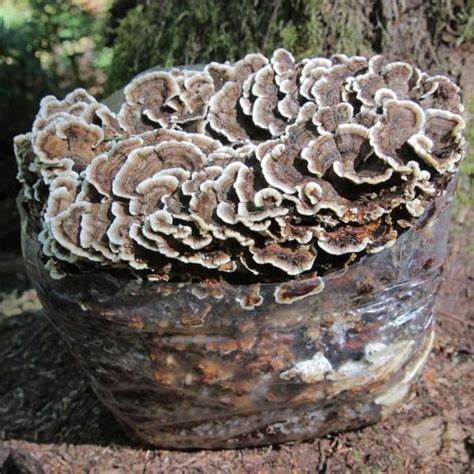
Fruiting Habit: Unlike the “Deerhorn” Reishi which you grow in a closed bag, Turkey Tail prefers to be “side-fruited.” Simply cut small slits in the side of your substrate bag, and the beautiful “fans” or shelves will emerge.
-
Substrate: It thrives on almost any hardwood waste, especially Oak, Birch, or Bluegum (Eucalyptus) sawdust.
🎨 The “Everlasting” Harvest
One of the best parts about Turkey Tail is its durability. Once harvested, the fruit bodies dry easily and maintain their vibrant colors and structural integrity indefinitely. They are a “shelf-stable” crop that you can store for years once dried properly.
Quick Cultivation Facts:
-
Scientific Name: Trametes versicolor
-
Growth Form: Decorative Shelves (Fans).
-
Fruiting Temp: 15°C– 25°C (Very wide range; perfect for SA).
-
Pro Tip: For the most vibrant colors, provide a small amount of indirect light (like a window) during the fruiting stage. This triggers the production of the beautiful concentric pigments in the “tail.”
Reviews
There are no reviews yet.