



Brown Oyster Mushroom
(Pleurotus pulmonarius var. Stechangii)
The “Phoenix-Tail” Pedigree
📜 The Mystery of the Phoenix-Tail
The Brown Oyster is perhaps the most historically significant yet taxonomically misunderstood mushroom in modern cultivation. Often labeled as Sajor-Caju, its true identity is rooted in a fascinating piece of mycological history. In 1974, a unique fungus was discovered in the Himalayan foothills growing on Euphorbia royleana. By 1980, two culture bottles of this strain were gifted to the legendary Professor S.T. Chang. He dubbed it the “Phoenix-Tail Mushroom” and distributed it globally, forever “muddying the waters” of its scientific naming.
While some classify it under the Sajor-Caju complex, our STS-refined strain—Pleurotus pulmonarius var. Stechangii—is distinct. It is not the tough, leathery Lentinus sajor-caju found in textbooks, but a succulent, high-yielding gourmet powerhouse with a story to tell.
🍴 The “Whole Mushroom” Gourmet Experience
What sets the Brown Oyster apart from its White and Grey cousins is its culinary efficiency. While the stems of most oyster mushrooms are woody and usually discarded, the Phoenix-Tail boasts tender, fully edible stems.
-
Texture: Meaty and firm, holding its shape better than White Oysters during high-heat cooking.
-
Flavor: A deeper, more “earthy” umami profile that shines in stir-fries, stews, and grilled skewers.
🇿🇦 Adaptability: The All-Season Champion
If you are looking for a mushroom that survives the extremes of the South African climate, this is it.
-
Extreme Temperature Tolerance: While famous for its ability to fruit in summer heat ($24text{°C} – 30text{°C}$), our STS trials in the Western Cape have proven it equally successful in the dead of winter. It simply refuses to stall.
-
Agricultural Waste Specialist: Reportedly achieves some of the highest Biological Efficiency (BE) on unconventional substrates. If you have shredded paper, cardboard, or tough agricultural waste, the Brown Oyster is your best candidate for conversion.
🚀 Cultivation Notes
-
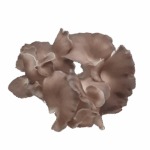
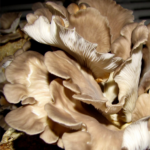
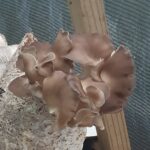
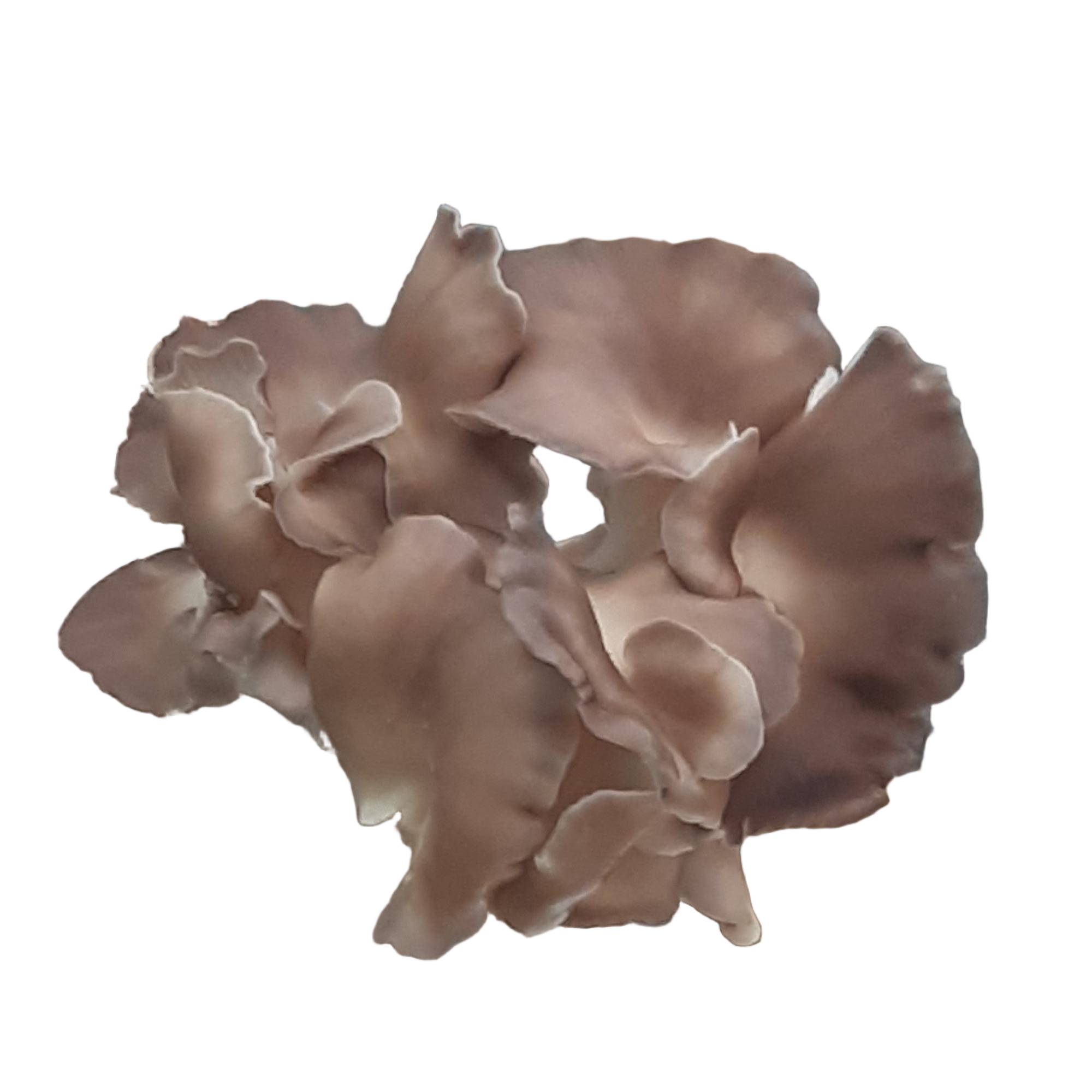
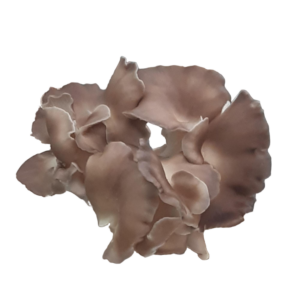
Morphology: Produces beautiful, dense clusters of tan-to-dark-brown caps with elegant, elongated “tails.”
-
Growth Speed: Aggressive colonization that rivals the White Oyster, making it highly resistant to common contaminants.
-
FAE Requirements: Moderate. While it appreciates fresh air, it is more tolerant of slightly higher $CO_2$ levels than the White Oyster, making it easier for home-growers to manage.
Quick Cultivation Facts:
-
-
Other Names: Indian Oyster, Phoenix-Tail, Sajor-Caju (Eastern name).
-
Unique Feature: Edible Stems – Zero waste in the kitchen.
-
Ideal For: Beginners, off-grid growers, and commercial farmers seeking year-round stability.
-

Reviews
There are no reviews yet.